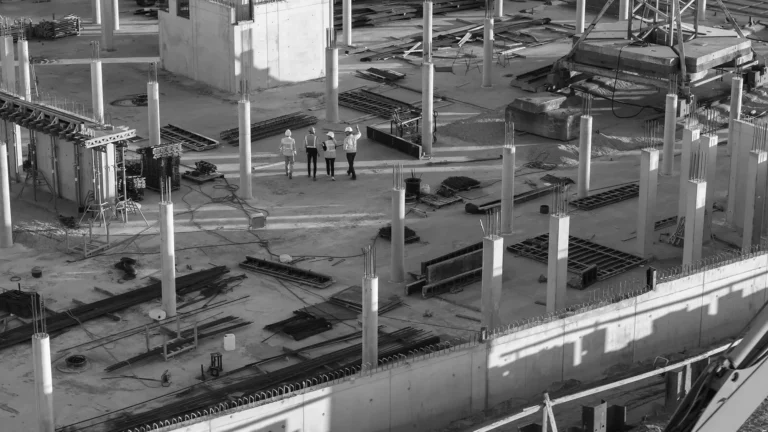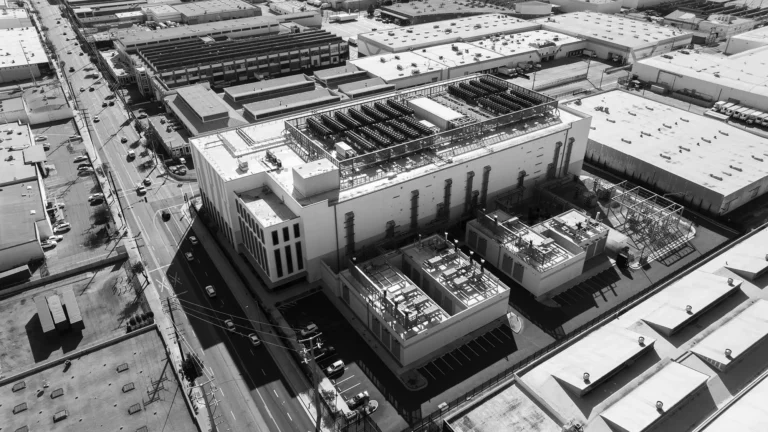







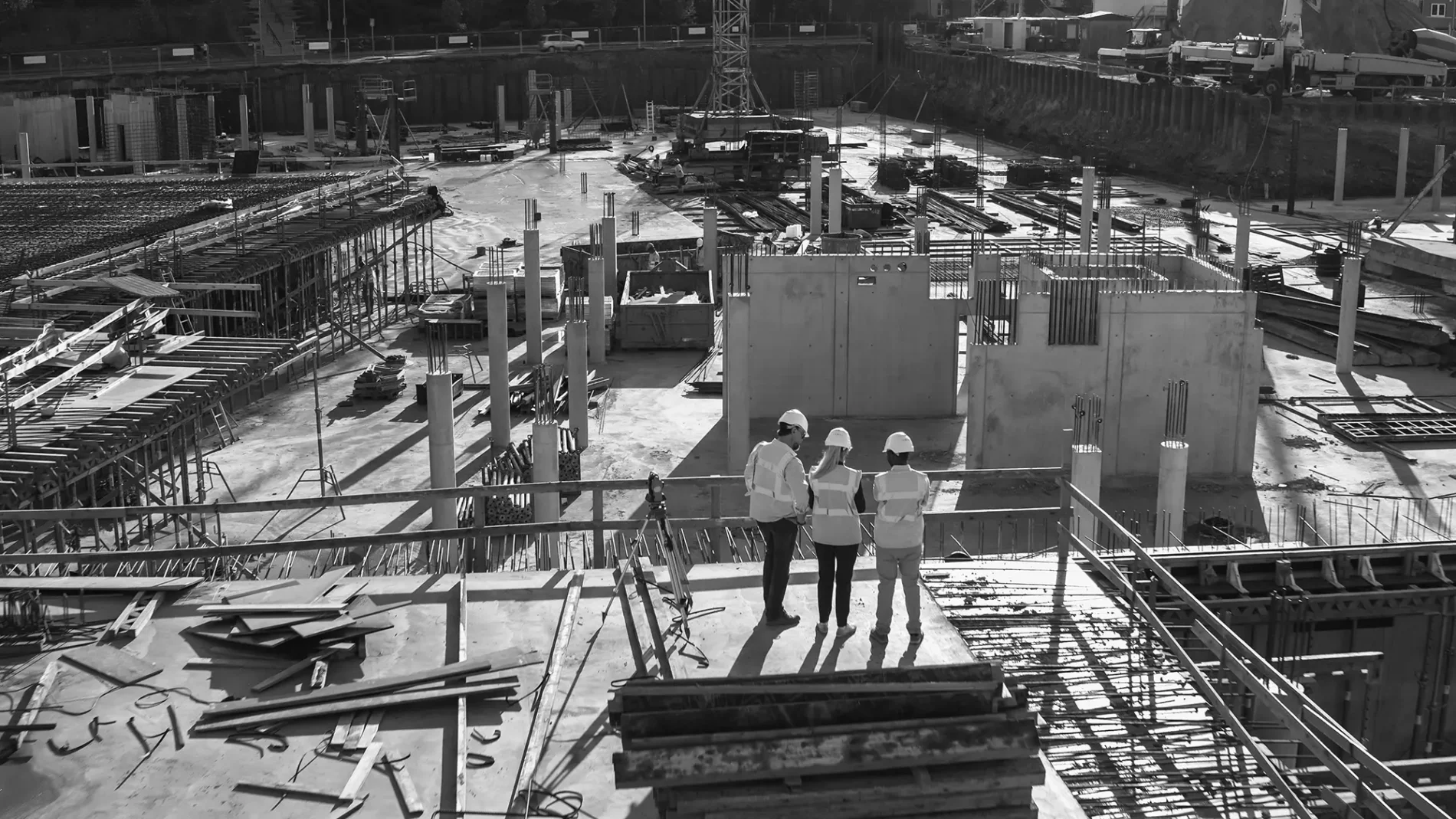
Across the North American construction market, scale is no longer the whole story. The industry is still building big, and in some sectors, bigger than ever. Data centers, power facilities, utility projects, manufacturing sites, public infrastructure, and other large-scale programs continue to drive headlines and reshape regional construction pipelines. But behind the cranes, crews, and billion-dollar announcements, a more disciplined reality is taking hold. Contractors are not simply chasing size. They are weighing risk with a sharper eye, pricing uncertainty more carefully, and rethinking how they pursue complex work in a market where opportunity and volatility now arrive together.

The result is a construction economy defined by contradiction. Major projects are helping to keep momentum alive, but the broader market remains uneven. In March 2026, Dodge Construction Network reported that total construction starts rose 12.8 percent to a seasonally adjusted annual rate of $1.22 trillion. Nonresidential building starts grew by 6.3 percent, residential starts improved by 2.6 percent, and nonbuilding starts rebounded by 37.9 percent. Yet the same report noted that year-to-date total construction starts were still down slightly through March, underscoring the stop-start character of the market.
As Eric Gaus, Chief Economist of Dodge Construction Network, put it, “A few strong categories overcame slight weakness in all the others in March.” His assessment captures the mood of the moment. Construction is not stalled, but it is not broadly surging either. Growth is increasingly concentrated in select categories, and for contractors, that makes strategic discipline more important than ever.
Megaprojects have become one of the clearest symbols of this split-screen economy. They can transform a company’s backlog, anchor regional employment, and create years of associated work for subcontractors, suppliers, engineers, and specialty trades. They can also stretch balance sheets, test procurement strategies, and expose weaknesses in labor planning, scheduling, materials management, and contractual risk allocation. In a market shaped by borrowing costs, policy uncertainty, tariff concerns, labor shortages, and volatile material pricing, building big now demands a level of commercial discipline that goes far beyond the jobsite.
The strongest growth areas tell their own story. Data centers continue to dominate the conversation, driven by artificial intelligence, cloud computing, and the growing physical demands of digital infrastructure. But the story does not end with the buildings themselves. The data center boom reaches electrical contractors, mechanical firms, steel fabricators, concrete contractors, civil teams, utility specialists, and the manufacturers and distributors supplying the systems that keep these facilities running.
Power is part of the same story. The Associated General Contractors of America and Sage reported that contractors have “dampened” expectations for 2026 in many parts of the market, but identified surging demand for data centers and power facilities as clear exceptions. That trend is not surprising. Artificial intelligence, electrification, advanced manufacturing, EV infrastructure, and grid modernization all depend on reliable power. As a result, construction demand is moving toward the physical backbone of the digital economy: substations, transmission systems, generation assets, cooling infrastructure, and the electrical work required to connect it all.
Still, the opportunity is not evenly distributed. FMI Corporation expects construction spending to end 2026 up just 1 percent from 2025, describing a market where “growth remains selective rather than broad-based.” In the same release, Chris Daum, President and CEO of FMI, said, “Leaders are being forced to make sharper choices about where to compete and how much risk to take on.” That sentence may be one of the clearest summaries of the current market. The question is no longer simply whether work is available. It is whether the available work matches a contractor’s capacity, expertise, labor pool, financial position, and risk appetite.
“Leaders are being forced to make sharper choices about where to compete and how much risk to take on.”
That shift changes how companies pursue projects. In stronger markets, contractors may be tempted to fill their backlog quickly. In today’s environment, the smarter firms are likely to be more selective. They are looking not only at project size, but at owner strength, contract terms, schedule realism, escalation protections, labor availability, payment risk, design completeness, and supply chain exposure. A billion-dollar project can be attractive. It can also become dangerous if the risk profile is misunderstood.
This is where preconstruction has moved from a supporting role to a strategic one. On complex projects, early planning is no longer just about estimating cost. It is about identifying risk before it becomes embedded in the contract. Contractors are being asked to model escalation, test procurement sequences, evaluate alternative materials, plan labor curves, assess long-lead equipment, and determine whether the proposed schedule is actually buildable. The old question — can we win this job? — has been joined by a more important one: can we deliver it profitably?
That question is especially urgent in sectors where equipment and materials can dictate the schedule. Data centers, hospitals, manufacturing plants, water facilities, and energy projects often depend on specialized systems with long procurement windows. Switchgear, generators, transformers, mechanical systems, steel packages, and control technologies can all become critical-path items. If those components are delayed, the entire project can be affected. If they rise in price, margins can evaporate. If specifications change late, contractors and owners can find themselves renegotiating under pressure.

Labor adds another layer of complexity. The industry is not only dealing with demand; it is dealing with capacity. AGC noted that contractors are facing challenges finding qualified workers, even as many firms continue to plan for hiring. Jeffrey Shoaf, the association’s chief executive officer, said, “While there are pockets of optimism in select private-sector markets, contractors’ overall sentiment has dampened notably compared to last year.” He added that one reason for those lowered expectations is that contractors are increasingly concerned about the broader economy, recession risk, and materials costs.
For megaproject delivery, those concerns are practical rather than abstract. Large projects require concentrated labor at the exact moment many markets are already stretched. The issue is not simply whether there are enough workers in the industry. It is whether the right workers, with the right certifications and experience, are available in the right location at the right time. On technically demanding projects, labor quality, safety performance, supervision, and coordination can matter as much as raw headcount.
For specialty trades, this can be both an opportunity and a challenge. Electrical, mechanical, civil, concrete, steel, and utility contractors may see strong demand from megaprojects, but they must also protect their existing relationships and avoid overcommitting. Taking on too much work can create a cascade of problems: missed milestones, excessive overtime, safety risk, quality issues, and damage to reputation. In that environment, restraint becomes a competitive advantage. The best contractors are not always the ones with the largest backlog, but the ones with the clearest understanding of what their teams can realistically execute.
Owners, too, are adapting. The more complex the project, the greater the need for early contractor involvement, transparent budgeting, collaborative scheduling, and realistic risk-sharing. Traditional low-bid approaches may struggle where design is evolving, supply chains are constrained, and specialized labor is limited. Delivery models that bring builders, designers, trade partners, and owners together earlier can reduce uncertainty, but only when the commercial structure supports honest communication. Collaboration is difficult when every party is quietly carrying risk it cannot control.
In this climate, contract language has become as important as construction methodology. Escalation clauses, contingency structures, allowances, schedule relief, force majeure provisions, insurance requirements, and change management processes all shape the true economics of a project. For contractors, the fine print can determine whether a megaproject becomes a milestone or a burden. For owners, fair risk allocation can be the difference between attracting strong bidders and watching qualified firms walk away.
The public sector faces similar pressures. Infrastructure work remains one of the more stable areas of the market, supported by long-term need and public investment. Dodge reported that nonbuilding construction starts jumped 37.9 percent in March, with three megaprojects helping to drive a sharp monthly increase in the electric power and utilities segment. Over the 12 months ending March 2026, total nonbuilding starts were up 15.8 percent, while utility and gas starts increased 52.3 percent. But infrastructure delivery still depends on permitting, funding timing, labor, materials, engineering capacity, and coordination between agencies, designers, contractors, and communities. Even when the need is obvious, execution is rarely simple.
For the industry as a whole, the lesson of 2026 may be that growth alone is not enough. The market is producing real opportunities, especially in power, data centers, utilities, infrastructure, and selected manufacturing categories. But opportunity now comes with a demand for greater discipline. Contractors must understand their exposure before signing. Owners must recognize that risk does not disappear when it is transferred on paper. Project teams must plan earlier, communicate more clearly, and price work with the realities of the market in mind.
The companies best positioned for this moment will be those that combine ambition with restraint. They will pursue large projects, but not blindly. They will invest in estimating, preconstruction, workforce development, procurement planning, safety, and project controls. They will build relationships with owners who value transparency over wishful thinking. They will know when to chase, when to negotiate, and when to walk away.
America is still building big. The cranes are still rising, and the next generation of infrastructure, energy, manufacturing, and digital capacity is taking shape in real time. But the defining skill of this market is not simply the ability to build at scale. It is the ability to manage complexity before it becomes crisis. In 2026, the smartest builders are asking how high, how fast, or how much. They are asking what the risk is, who owns it, and whether the project can be delivered with the same confidence with which it was sold.
That is the new risk calculus behind America’s megaprojects. The work is there. The demand is real. But in a market where growth is selective, costs remain uncertain, and skilled labor is stretched, the contractors who succeed will be the ones who understand that building big only works when they also bid smart.