







For six decades, the Subcontractors Trade Association has operated at the intersection of construction, policy, and business reality in New York. What began in 1966 as a small coalition of subcontractors has developed into an organization representing more than 350 union firms, with a role that now extends beyond advocacy into workforce development, education, and industry collaboration.

That evolution reflects both the changing demands of the construction market and the persistent challenges faced by subcontractors. “Over the past 60 years, STA has evolved from a small coalition of subcontractors into a leading voice of more than 350 union firms across the construction market,” said Felice Farber. “We’ve built a meaningful legislative record, but just as importantly, we’ve expanded our role beyond advocacy.” Today, that role includes convening owners, agencies, and contractors, as well as investing in long-term initiatives such as a technology mentoring program, an education platform, and a newly established scholarship program aimed at supporting the next generation of industry professionals.
“We’ve built a meaningful legislative record, but just as importantly, we’ve expanded our role beyond advocacy.”
Legislation has been a central part of the association’s work, with more than 40 pieces of state legislation advanced over its history in partnership with the Empire State Subcontractors Association. While that record is extensive, Farber points to a consistent theme across the most impactful reforms. “The laws that matter most to our members are the ones that protect their ability to get paid,” she said. Early efforts to void lien waivers on public policy grounds marked a turning point, while more recent reforms around retainage have had a direct impact on cash flow by reducing the amount of money withheld and tying payments more closely to project progress.
Cash flow remains the defining issue for subcontractors, particularly within a layered payment structure where funds move from owner to general contractor and then to subcontractor. As financing costs have increased, delays in payment have become more expensive to absorb. “If you’re not getting paid timely, it hurts,” Farber said. “You’ve got to pay your employees, your union benefits, your suppliers. No one’s waiting to get paid.”
That pressure is compounded by rising insurance costs, which in some cases are approaching or exceeding 20 percent of revenue. At that level, the issue shifts from a manageable expense to a structural challenge. “When insurance approaches 20 percent of revenue or higher, it stops being a manageable expense and becomes a structural problem,” Farber explained. “Many of our members are already at the point where premiums exceed what they’re allowed to recover in overhead on change orders.” The broader impact extends beyond contractors themselves. “It’s not just a tax on subcontractors, but a tax on every New Yorker,” she added, noting that increased costs are ultimately passed through to the price of construction.
The issue is closely tied to New York’s Scaffold Law, which has long been cited as a driver of elevated insurance premiums. While reform has been debated for years, progress has been limited. According to Farber, however, the conversation is beginning to shift. “The reality is the scaffold law does not make workers safer,” she said, emphasizing that worker safety remains a priority but that the current framework can enable abuse. “It has become a tool primarily for trial lawyers that can enable abuse, including fraudulent claims.” With insurance costs reported to be significantly higher than in comparable states, the economic implications are becoming increasingly difficult to ignore.
Alongside insurance, contract structure remains another area of focus. STA has argued that insurance should be treated as a direct project cost rather than overhead, particularly where additional work increases payroll and associated premiums. While state agencies have begun to recognize this approach, broader adoption remains uneven. “This should be a question of simple fairness,” Farber said. “Insurance related to additional work is clearly documentable. It’s a project-specific expense and should be treated as such.” Until that shift becomes standard practice, subcontractors continue to absorb costs that are not fully accounted for within project agreements.
Market conditions over the past year have added further complexity. Volatility in material pricing, driven by global factors such as tariffs and geopolitical conflict, has created uncertainty in project costs. At the same time, delays in project timelines and slow approval processes for change orders have placed additional strain on contractors. “Subcontractors are often directed to proceed with extra work, but then wait a year or more for that work to be approved and paid,” Farber said. In some cases, approvals can take significantly longer, leaving contractors to carry costs over extended periods while managing rising interest rates on lines of credit.
The challenge is particularly acute in public sector projects, where approval processes involve multiple layers of review and documentation. Even when a change order is agreed in principle, final approval can be delayed by administrative procedures. “You can’t wait a year to do the work,” Farber noted. “The owner directs you to proceed, and you hope you get paid for it.” This disconnect between project delivery and payment timelines continues to be a key area of concern for the association.
In contrast, federal infrastructure funding has been more stable for projects that have already been approved, with most moving forward as planned. The greater uncertainty lies in projects that were anticipated but have yet to be funded, particularly in areas such as electric vehicle infrastructure. In response, STA has focused on maintaining engagement with public agencies and policymakers while providing members with real-time information. “The goal is to minimize disruption, ensuring that firms who have already committed resources to projects are not left exposed,” Farber said.
Beyond financial and regulatory challenges, the association has also expanded its focus to include workforce well-being. Through a partnership with the American Foundation for Suicide Prevention, STA is supporting initiatives aimed at addressing mental health within the construction industry. “We are beginning to see a meaningful shift in how mental health is addressed across the construction industry,” Farber said, noting that suicide remains one of the leading causes of death in the sector. The introduction of peer-based support programs and targeted training is helping to move the conversation from awareness to action, equipping workers with practical tools to support one another on job sites.
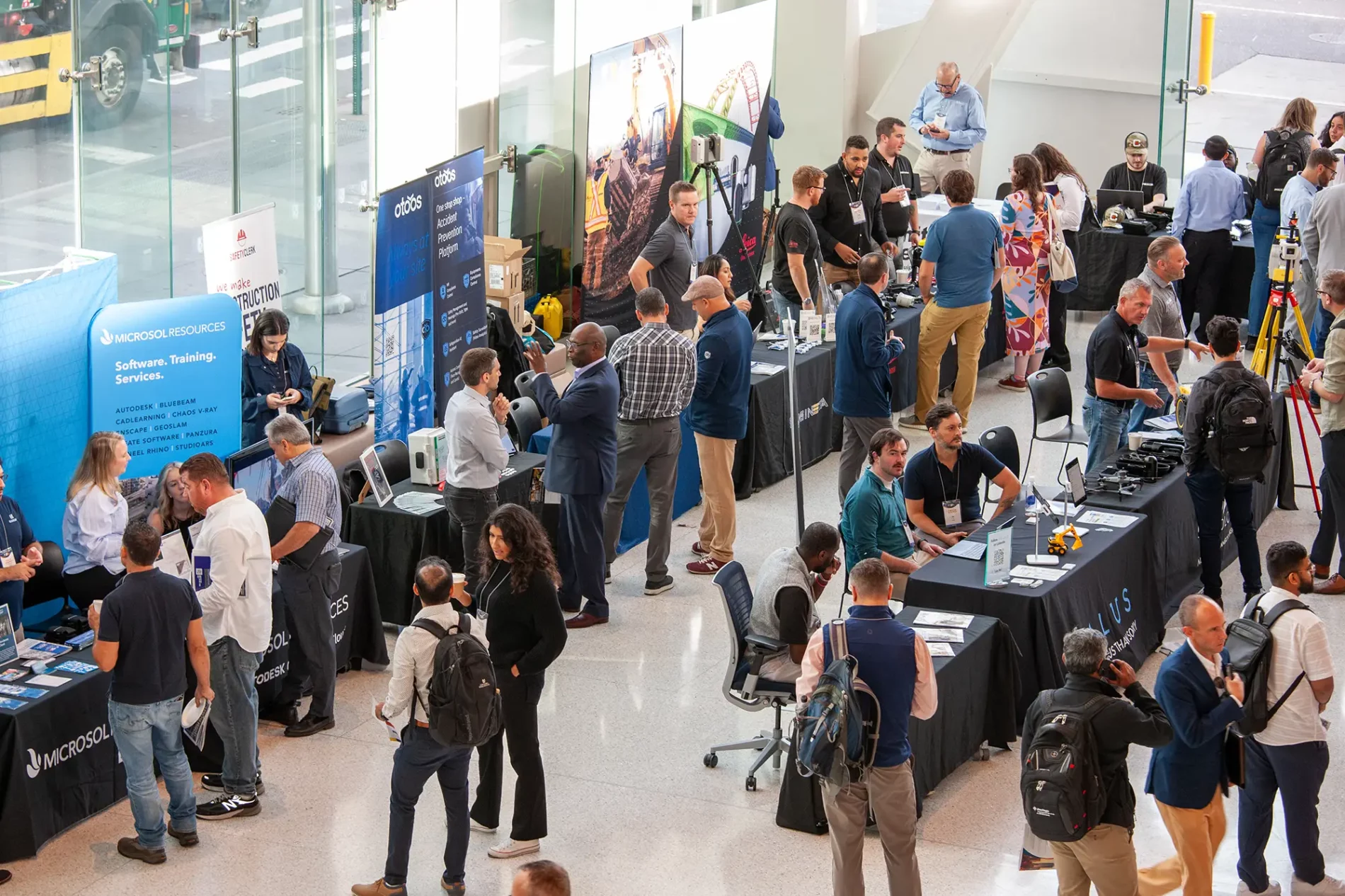
Technology is another area of increasing focus, particularly as the industry works to improve productivity and visibility across projects. STA is actively working to bridge what it describes as a growing technology divide, helping members adopt tools that provide better insight into job site performance, financial management, and overall business operations. This effort is supported through initiatives such as a technology expo scheduled for October 15, 2026, which will bring together contractors and solution providers to share knowledge and explore new approaches.
Despite these developments, the core issue facing subcontractors remains consistent. “The central challenge hasn’t changed,” Farber said. “It’s ensuring that subcontractors are treated fairly relative to the risk they carry.” Today, that challenge is reflected in insurance costs, contract terms, payment timelines, and the allocation of risk across project structures. While the specifics may evolve, the underlying question of fairness continues to define the association’s work.
As the Subcontractors Trade Association marks its 60th anniversary, its role within the industry remains focused on balancing advocacy with practical support. Through legislative engagement, workforce initiatives, and a growing emphasis on technology and collaboration, the organization continues to address the conditions that shape how subcontractors operate. In doing so, it remains closely aligned with the realities of a market where financial pressure, regulatory complexity, and operational demands intersect on every project.