



Axis Construction did not broaden its business by trying to become everything to everyone. From its Long Island base, the company has spent more than three decades moving in the opposite direction: identifying technically demanding markets, building specialist expertise around them and getting involved early enough to help clients shape projects before construction begins.
President and CEO Ralph Lambert is the third generation of his family in construction. Axis was formed in 1993 by Lambert, his father Royal, following an earlier family business established by Lambert’s father and grandfather in the 1970s to serve defense and manufacturing clients. The experience gave Axis a foundation in general contracting, but Lambert soon began looking for a market where specialization could distinguish the company.
Healthcare provided that opportunity. With a background in business and marketing, Lambert sought advice after Axis was established and decided to diversify into healthcare construction as hospitals across Long Island and the New York City boroughs were confronting aging facilities alongside rapidly changing medical technology. “The hospitals here on Long Island – in the New York City boroughs – were aging, and with all the new technology that was coming to the forefront, I received some good advice to become a specialist in it,” Lambert said. “And the way I did that was to surround myself with seasoned leaders and professionals in the healthcare construction industry.”
“The hospitals here on Long Island – in the New York City boroughs – were aging, and with all the new technology that was coming to the forefront, I received some good advice to become a specialist in it. And the way I did that was to surround myself with seasoned leaders and professionals in the healthcare construction industry.”
Healthcare has remained a major part of Axis’ work, while the same preference for specialized markets has carried the company into higher education and modular construction. Lambert said Axis does not approach the market as a contractor looking to bid indiscriminately. Instead, it pursues assignments where the knowledge of its in-house engineers, architects and long-serving industry professionals can have the greatest impact. “We’re constantly looking at niche markets,” he said. “We are not a public-bidding machine where we’re looking to bid on anything and everything. We tend to focus on the projects … that are the most technical and need the specialty of our organization.
Early involvement is part of that approach. Axis works with clients from the initial stages of a planned facility, renovation or expansion, allowing its team to participate while design, schedule and budget decisions are still being formulated. Rather than limiting its role to construction after the major decisions have already been made, the company can provide pre-design consultation, on-site project management and post-construction support.
Modular construction has become one of the clearest expressions of that model. Axis established its modular division 27 years ago, and Vice President John Buongiorno oversees work that frequently combines the logistical demands of prefabrication with the technical requirements of healthcare, dormitory and other institutional environments.
“The best projects for us are the more complicated projects, the ones that nobody else wants,” Buongiorno said. “We’ve done some of the most complicated health care modular buildings that the industry has seen and won numerous awards.”
For Buongiorno, one of modular construction’s principal advantages is predictability. Axis says moving a suitable project from conventional construction to modular can reduce the schedule by approximately one-third if not more, particularly in markets such as healthcare and student housing. Fabrication can proceed away from the project site while other work advances, creating opportunities to compress the overall program.
The value of that time depends on what the finished building is intended to do. “Whatever the need is, when you can get to market or start using it [the building] that much sooner, not only do we drive the cost certainty, but now you’re also picking up … the benefit of getting people working or producing revenue that much quicker,” Buongiorno said. “And that’s a lot of money, particularly in health care.”
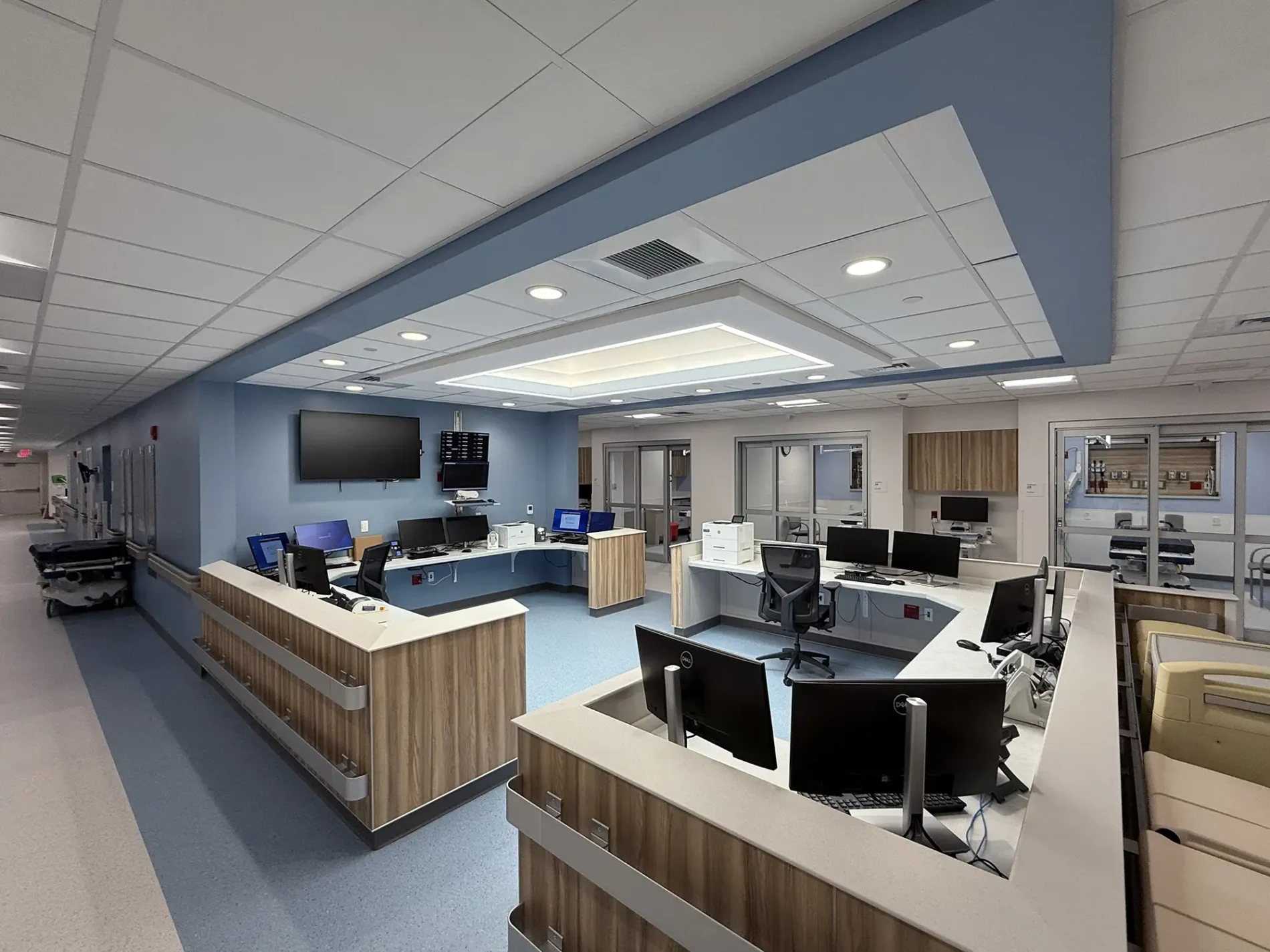
The Beth Israel Deaconess Hospital-Milton emergency department expansion demonstrates the scheduling advantage in more practical terms. Axis installed 24 modules, including 19 outpatient rooms, over a period of only a few days despite cold and snowy conditions. According to the supplied account, the modular approach allowed work to continue through winter without losing a day to weather-related delays.
The hospital relationship also extended beyond a single assignment. Beth Israel had previously engaged Axis for an emergency department expansion at Beth Israel Deaconess Hospital in Plymouth, Massachusetts, where the emergency room remained operational during construction. For a company that built much of its specialization around healthcare, those projects combine two recurring challenges: technically specific environments and the need to deliver new space without unnecessarily interrupting ongoing operations.
At Odyssey House Behavioral Health Facility on Ward’s Island in New York, modular construction addressed a different constraint. Preconstruction was complicated by an unusually shaped site and limited working area. The manufacturer fabricated 71 modules over 10 months and Axis placed them on the site in approximately 10 days, allowing the overall project to be completed in less than a year. The modules incorporated bedrooms, staff and lounge areas along with healthcare-standard HVAC, energy-efficient insulation and high-efficiency lighting.
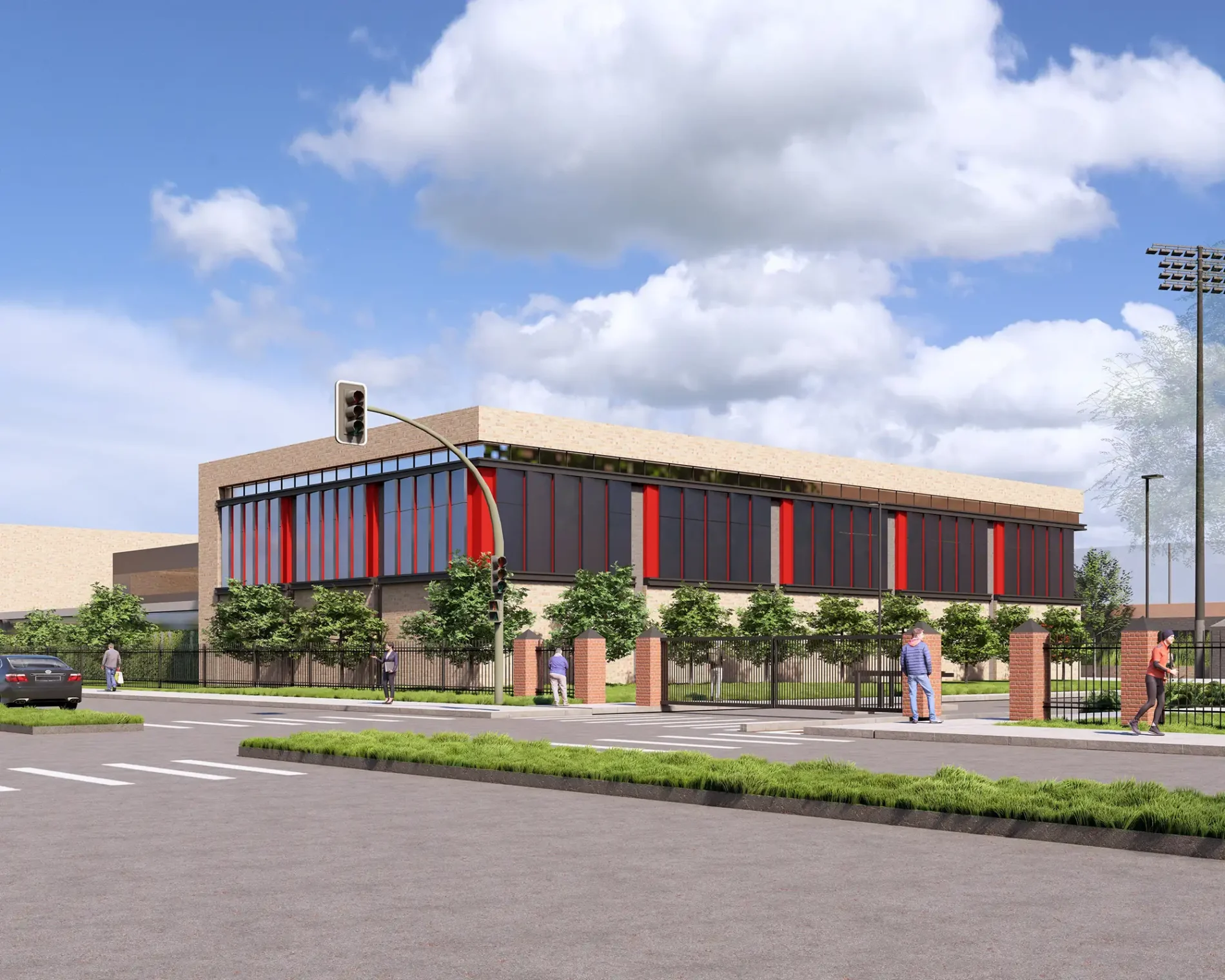
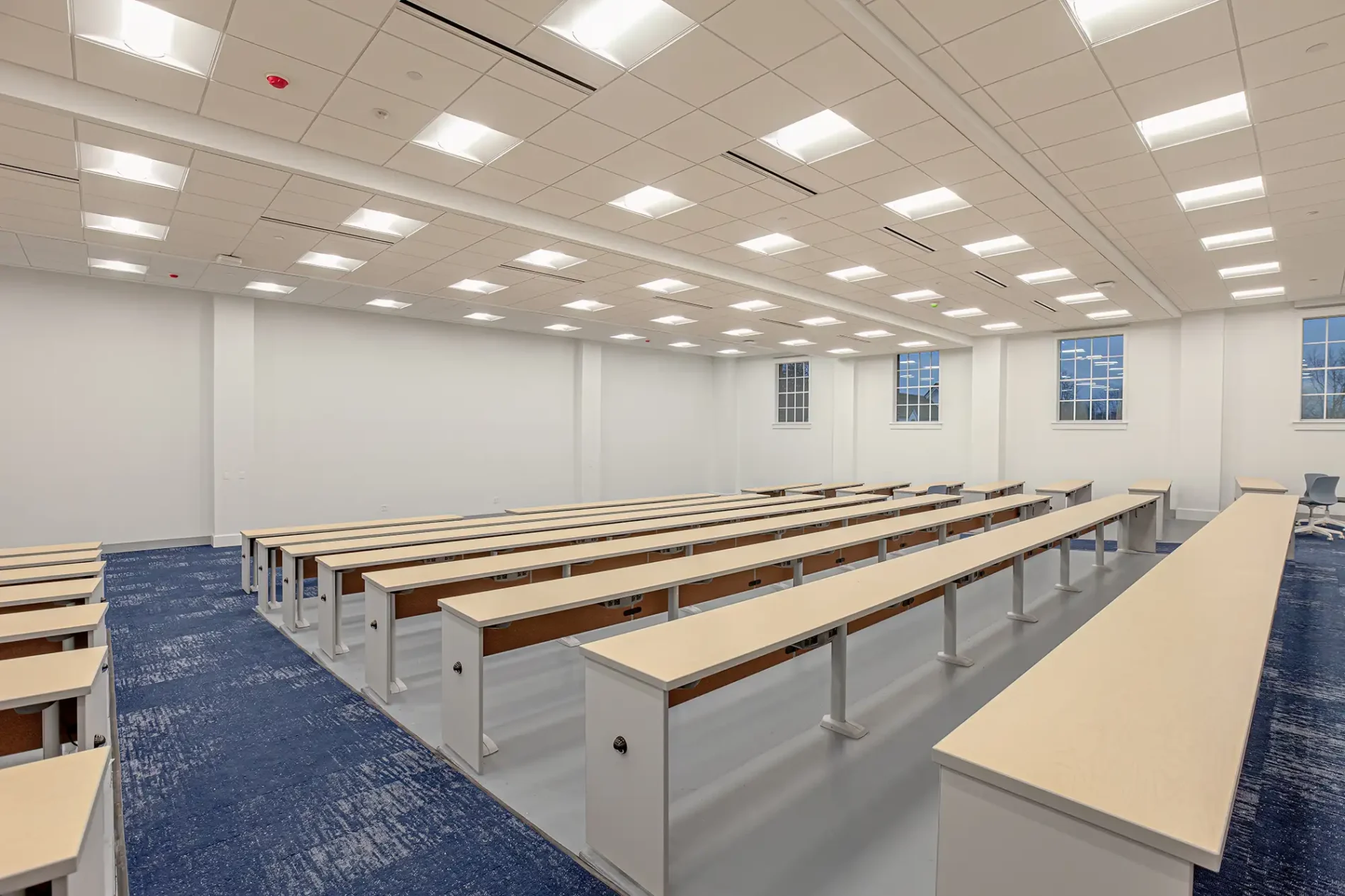
Conventional construction remains an equally important part of Axis’ portfolio. At Long Island University’s College of Veterinary Medicine Learning Center, the company delivered a 33,000-square-foot facility with SBLM Architects. The building incorporated a columned entrance and red-brick facade intended to relate to the surrounding campus, as well as laboratories, lecture and classroom spaces and an animal simulation suite with surgical, examination and medical-imaging areas.
Jake’s 58 Casino on Long Island required another combination of systems and uses. The 43,600-square-foot renovation involved gaming areas alongside maintenance rooms, surveillance-technology spaces, offices, concessions, bars and food-preparation areas. The project also included substantial electrical work coordinated with PSEG, together with changes to roofing and HVAC systems.
Across projects of very different types, the common thread is the complexity Axis actively seeks. Healthcare facilities, educational buildings, casinos and modular installations present different technical demands, but each gives the company an opportunity to bring specialized teams into the planning and delivery process rather than competing primarily on volume.
Geographic expansion is now part of the next stage. Axis plans to grow its divisions nationally and is also considering opportunities in the southern Caribbean and the Virgin Islands. The modular business expects further activity across the United States and Canada, particularly in the Northeast, through joint ventures and larger assignments for universities, hospitals and healthcare groups.
Continuity inside the family business is developing alongside that expansion. Lambert’s four sons are now involved with Axis, creating the prospect of a fourth generation taking a larger role in the company. For an organization whose roots stretch back to the contracting business established by Lambert’s father and grandfather, succession provides another link between the company’s history and where it intends to go next.
Axis has changed considerably since 1993, but its approach has remained selective. The company’s growth has come through choosing markets where technical knowledge, early involvement and careful project management matter most, then adding capabilities such as modular construction when they strengthen that proposition. Whether the solution is built conventionally or fabricated in modules, Axis continues to pursue the kind of projects Buongiorno describes most simply: the complicated ones.