








Wahoo Docks may be widely recognized for its residential aluminum docks, but the company’s capabilities run far deeper. For more than 20 years, it has been actively shaping the commercial marina sector, drawing on a foundation of innovation, precision engineering, and in-house development. Founded in the late 1980s as a modest family-run operation, Wahoo Docks has since evolved into a leader in the aluminum dock industry, known for delivering highly customized and durable dock systems. With a growing national footprint and a strong dealer network, Wahoo Docks is now preparing for what may be its best year yet, powered by proprietary technology, unique design systems, and a focus on quality over cost.
Originally launched as a small shop, Wahoo Docks began as a localized operation serving residential customers. Its turning point came around the early 2000s, when engineers Tim Osby and Chip Hawkins acquired the business and began systematically transforming its product line. “They are the ones who really put forth the efforts to grow Wahoo into the company that it is today,” said Michael Hallock, Operations Manager at Wahoo Docks. “They spent a lot of time developing patents, custom extrusions and developing an aluminum dock that was unique to the market and offered strength and durability that wasn’t previously seen in aluminum docks.”
Their efforts laid the groundwork for the company’s long-term differentiation. With a product line built around patented components and exclusive extrusions, Wahoo Docks carved out a defensible niche in the marketplace that prevented competitors from duplicating its systems.
In 2018, the company was acquired by Tuckahoe Holdings, a Virginia-based investment firm. This move brought Wahoo into the Meeco Sullivan family of dock manufacturers, giving the brand a broader platform for national expansion.
Wahoo Docks’ engineering-first approach has shaped every part of its operations. The company handles most of its design and technical development internally, maintaining full control over its quoting, drafting, and quality assurance systems. “We have a dedicated team of 14 CAD engineers, and every dock we build is fully custom,” he said. “That means each design is developed in-house before heading to our production floor.” Hallock said.
To support this workflow, Wahoo Docks developed its own proprietary software platform. This internal system streamlines everything from quote generation to shop drawings and helps ensure that finished docks float level and perform as intended once installed.
Though manufacturing is kept in-house, installation is outsourced through the company’s dealer network. This model enables Wahoo to maintain a high rate of production. On average, the team delivers around 15 custom residential docks per week. The most common dock type typically includes typically includes a 1,000-square-foot platform, a roof, an upper deck, and a gangway. According to Hallock, the company’s success hinges on continuous innovation and a refusal to compromise on durability. “[The key to] the success we’ve seen has been innovation,” he said. “The fact that we hold those patents means we offer a unique product that competitors can’t simply replicate.”
“[The key to] the success we’ve seen has been innovation. The fact that we hold those patents means we offer a unique product that competitors can’t simply replicate.”
While aluminum is often associated with lightweight construction, Wahoo Docks developed what Hallock refers to as a heavy-framed aluminum system. This distinction is critical in the marina industry, where docks must withstand constant movement, impact, and environmental exposure. “Our docks are comparable in weight to steel, which is ideal for the marina industry,” he said. “You want something solid underfoot that won’t shift or move with wave action.” Although Wahoo Docks is best known for its residential systems, it has been building commercial marinas for two decades. In recent years, the company has taken on increasingly high-profile commercial and government projects.
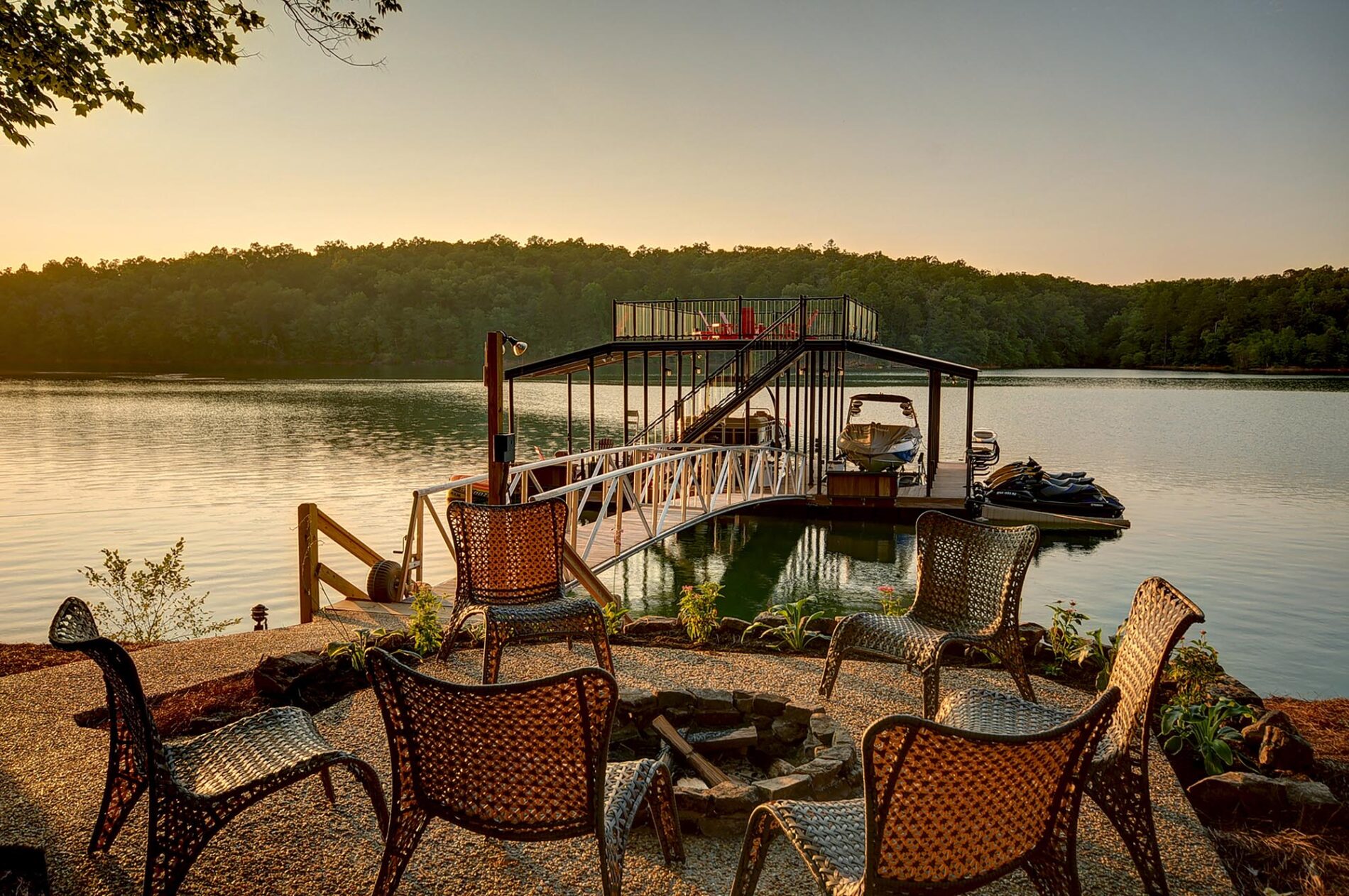
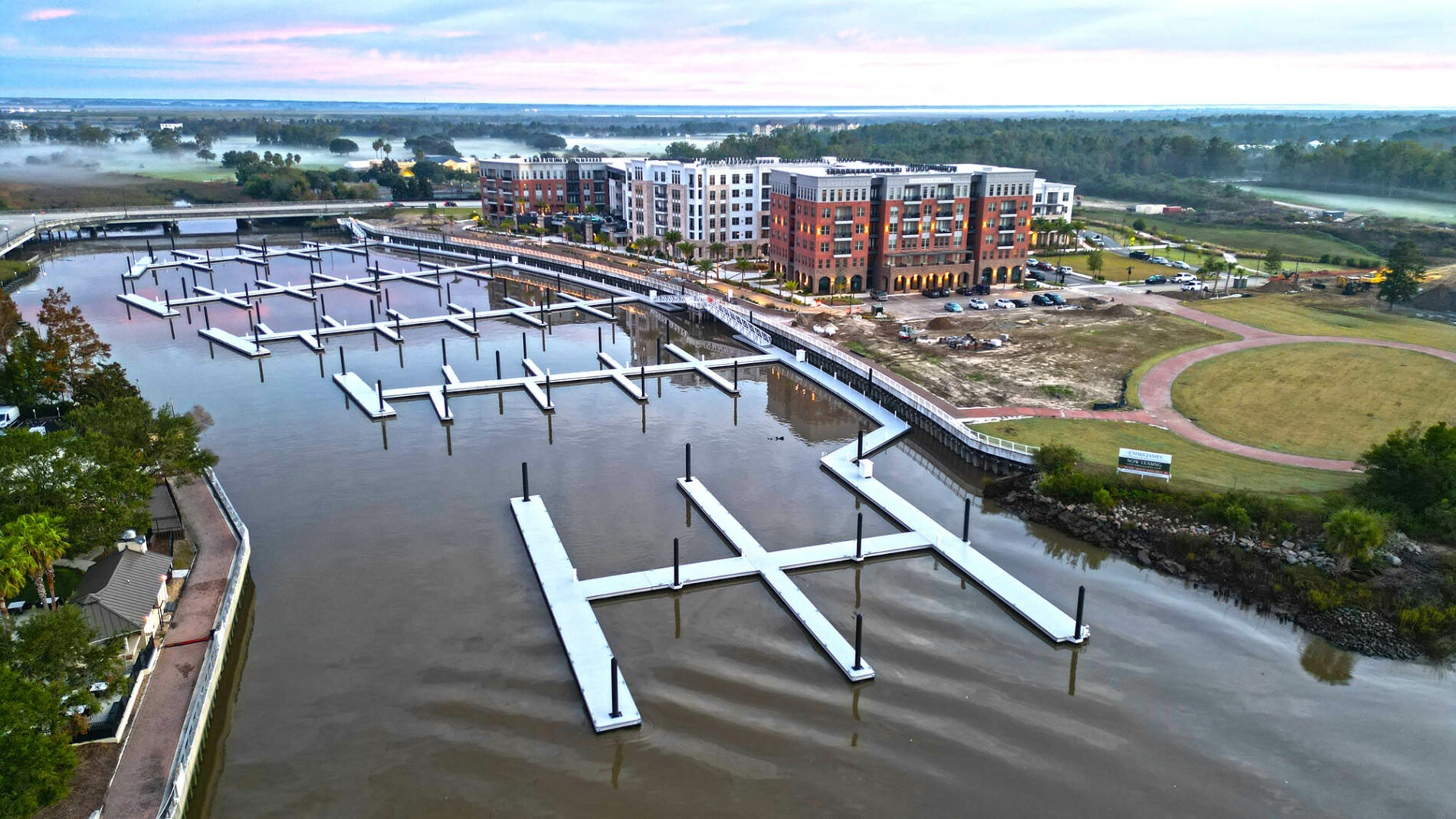
One standout example is the Savannah Dock project, described by Hallock as one of the company’s most substantial commercial builds to date. Wahoo has also worked on contracts for the U.S. Navy and completed smaller commercial projects for clients like the Georgia Aquarium, Coca-Cola, and Bud Light. “We’ve done projects for quite a few higher profile celebrities and sports stars as well,” Hallock added. “A lot of them being residential docks that have been sold and installed through our dealer network.”
“With a growing commercial presence, the company serves clients throughout North America.” Its capabilities extend beyond docks to include wave attenuators—structures designed to reduce wave action and protect marina infrastructure. Wahoo currently has multiple installations in high-traffic locations like Lake of the Ozarks.
The integration with Meeco Sullivan expanded Wahoo’s reach well beyond its own aluminum systems. Through this partnership, the company now provides clients with a broader range of dock materials and solutions, including timber and steel. “Through Meeco Sullivan, we’re able to sell not only through our dealer network, but also through internal sales representatives who specialize in aluminum, steel, and timber dock systems,” Hallock said. “It has allowed us to expand into the commercial marina industry and offer a wider range of solutions. Instead of just one product type, we can now provide customers with quotes for multiple systems, giving them more flexibility and better options.” This flexibility strengthens Wahoo’s position in a competitive market, especially when dealing with large-scale marina projects where material selection can affect both cost and long-term maintenance.
Despite widespread concerns about economic volatility, Wahoo Docks is forecasting strong performance in 2025. According to Hallock, the company’s high-end clientele and long product lifecycle insulate it from broader market fluctuations. “We’re focused on continued growth and excited to keep that progress going,” he said. “Despite a lot of the issues with the economy right now, it doesn’t seem to really be affecting our target market.”
Wahoo Docks positions its products as long-term investments, emphasizing value over price. While not the least expensive on the market, the docks are built to last across generations; an attractive proposition for customers focused on durability and performance. “Wahoo Docks may not be the cheapest option, but they’re among the highest quality docks you can buy,” Hallock said. “You’re purchasing an investment that’s going to last for many generations.”
Wahoo Docks has built more than docks. It has built a reputation rooted in engineering rigor, innovation, and a dedication to quality. From its patented aluminum systems to its expanding commercial footprint, the company continues to evolve without compromising its core values. As it looks to 2025, Wahoo Docks is poised not only to grow but to lead, setting the standard for what dock systems should be in both the residential and commercial markets.