


Associations

city ahead on a road at night

Civil Engineering & Infrastructure

modern concrete structure

Concrete

design build drawing with construction tools

Design Build | CM | GC

multiple excavators parked in a row

Equipment

green tree outside office building

Green Building

thumbs up

Positive News

toolbelt construction tools

Specialty Contracting

Steel

Bridges to Prosperity

View in E-mag

The construction industry is one that is borne from necessity; a simple equation that has served its customers and the wider world very well indeed. If something is needed, a solution is provided. While this may seem like a reductive way of viewing the vast contributions that construction has provided around the world, it has an element of truth to it. Simply put, innovation and progression within construction invariably comes from challenging situations and projects. This is itself is certainly not a negative thing, however. Historically, civilizations have grown and fallen through their ability to meet emerging challenges successfully. The modern age is different. The interconnected nature of our world should now ensure that the rising tide does indeed lift all boats. Our success is theirs, our innovation is shared. It is surprising then, that a very severe gap still exists around the world in terms of infrastructure. Not only that, without the most basic infrastructure tools in place such as buildings and roads, certain societies are not only limited in the industrial advancements they can make, they are eliminated from experiencing success or growth at all.

Residents of the United States are eagerly awaiting the commencement of infrastructure work that could potentially amount to trillions of dollars. Given the precarious condition of certain aspects of the U.S. infrastructure network, this is work that will undoubtedly improve the standard of living for millions. If we take a step back from this macro view however, we can see a different picture emerging. Similarly, it can be easy to overlook the standard of living that North Americans currently enjoy. While cracks have undoubtedly appeared as roads and pipes age, the quality that we have access to is hard to dispute. Despite the concerns that Americans currently have, from a relative point of view, we are the lucky ones.
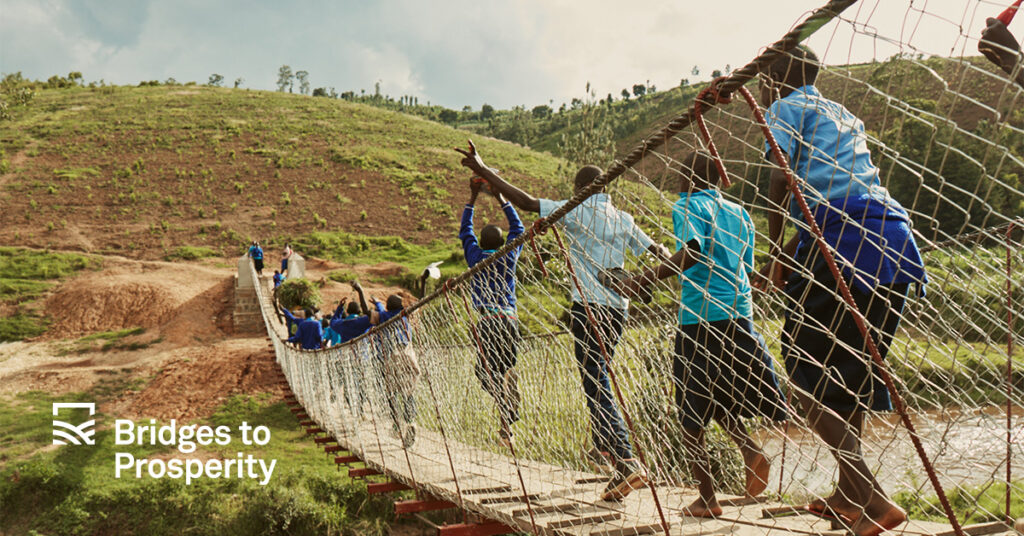
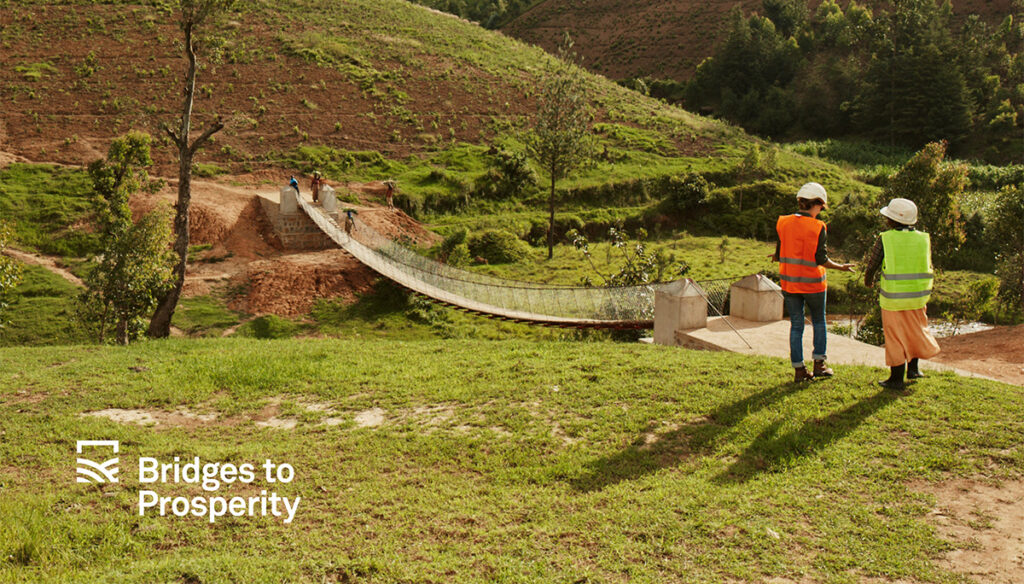
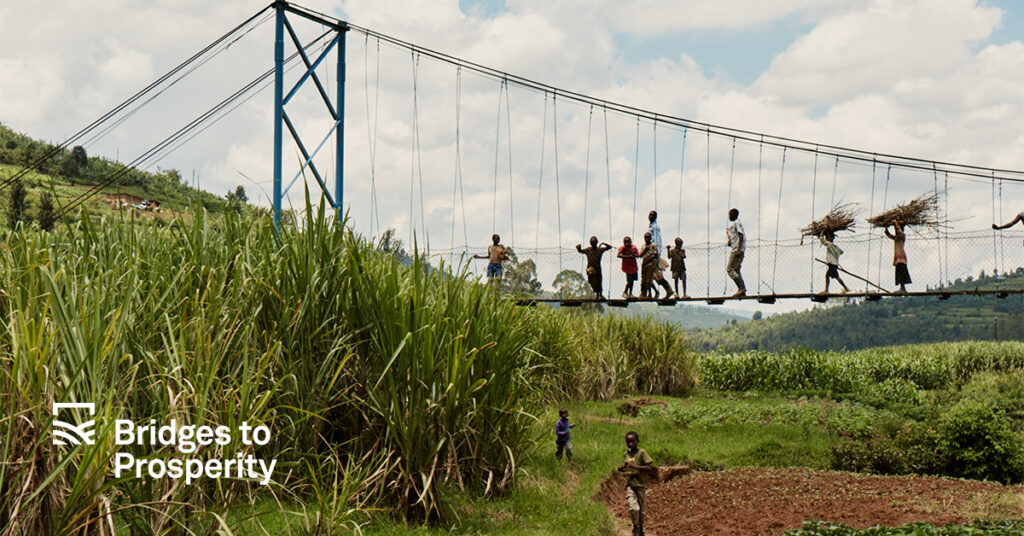
Looking at the global picture, however, makes for staggering reading. Numerous studies have shown the detrimental effects, both socially and financially, that rural isolation has on communities around the world. While it may not be possible to bring infrastructure levels up to the levels seen across North America and Europe in the short term, there are certain challenges that can be addressed which will instantly assist rural communities in ways that many of us might find unfathomable. To contextualize this, we are not talking about high-speed internet or even underground electricity; the issues that people in remote, rural villages face are on a far more basic level. According to Bridges to Prosperity, a Colorado based company that works with communities in the most remote areas around the developing world, ‘’Almost one billion people around the world don’t have access to critical resources like health care, education, or employment due to an impassable river.’’ This geographical quirk, the route that a river can take, leaves massive numbers of people isolated, sick and poor. Thankfully, skills and knowledge that have been acquired by U.S. construction workers are now being redirected to give people living in these locations a fighting chance. Bridges to Prosperity aims to “work with isolated communities to create access to essential health care, education and economic opportunities by building trail bridges over impassable rivers.”

When something is needed, a solution is provided and, interestingly, it was a photograph published by National Geographic in March 2001 that proved to be the impetus for Bridges to Prosperity. The image, men hanging precariously from a rope as others tried to assist them in crossing a collapsed bridge over the Blue Nile River in Ethiopia, led company founder Ken Frantz to take action. Ken, who owned a construction company at the time, brought together a team of supporters full of enthusiasm and skill. The inaugural project to repair this bridge was only the beginning of a story that has changed the lived experiences of many people in areas such as this. The burgeoning group worked with Helvetas (now HELVETAS Swiss Intercooperation), an independent organization that is “committed to a just world in which all men and women determine the course of their lives in dignity and security, using environmental resources in a sustainable manner” to develop the bridge design and to develop a community training program. This partnership ensured that B2P has expert perspective and input to ensure it would get off on the right footing.

“Solutions only work if people can access them.”

While it may seem that these communities have needs greater than bridges, the logic behind this work is simple. All the supports in the world mean nothing if people cannot access them. It is acknowledged that governments, charities and individuals are working tirelessly to provide a multitude of programs for isolated communities in the areas of healthcare, education and employment. However, according to B2P, this only solves half the problem and, through the continued omission of this one key component, their focus and work is as necessary as ever. “Solutions only work if people can access them. A community health worker cannot be effective if she cannot reach the community. A new school cannot be effective if children can’t cross the river to get there. Agricultural programs cannot be effective if farmers can’t sell their crops at a market. Connection leverages the potential of these solutions to create opportunity.”
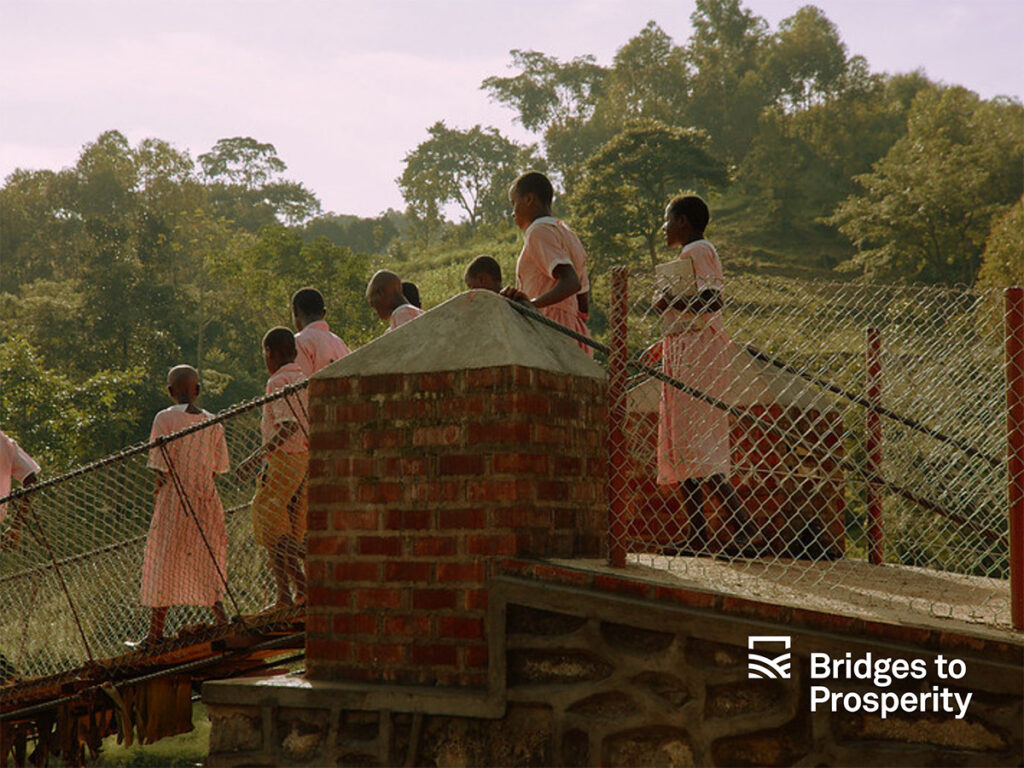
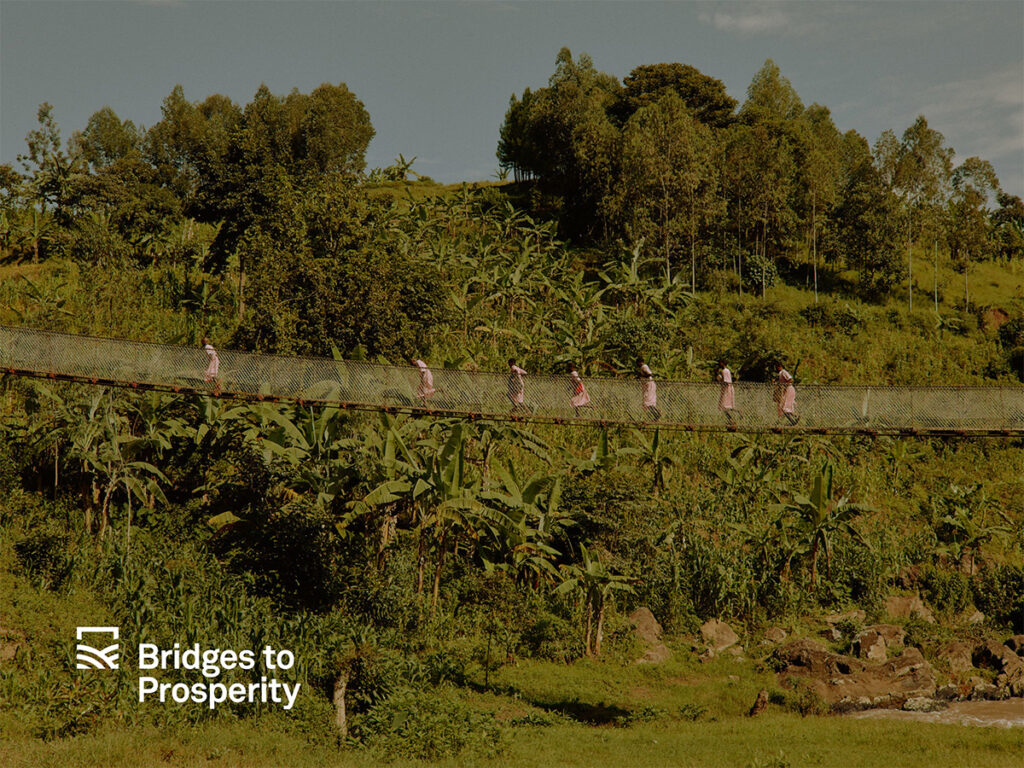
The benefits of a bridge to an isolated community is incalculable. It is one small change that spreads far and wide, leading to enormous opportunity, development and more positive outcomes. Two areas in which this is most evident is through healthcare and economic opportunity. According to B2P, easier access to healthcare has a positive knock-on effect on the behaviors in a community. Better access leads to increased care-seeking behavior. Their figures show that “when a community has safe access to a clinic, there is an 18% increase in visits. In an emergency, easier access means a more likely positive outcome. A healthier individual is better able to work or attend school.” Additionally, the benefits of safe access outside their own community are far reaching. By ensuring that people can travel safely, the benefits are enormous. “Safe access unlocks economic opportunity for a community. Farmers are able to sell their crops at outside markets or access agricultural inputs like fertilizer or seed. Bridges ensure consistent access to non-agricultural jobs. Women save time on household activities, spurring an increase in women entering the work force. Last mile connectivity goes beyond transforming local economies. When a rural community is networked to the world around them, they participate in the national and global economy, bringing transformation to the greater population as well as to their local community.” While the work is just getting started, successful projects have been completed in Rwanda, Nicaragua, Bolivia and numerous other countries. Workers in these areas are experiencing a general increase in wages of 35.8% and farmers have reported 75% higher rates of profitability. In addition to this, over 60% more women are entering the labor market. When looking at the need for infrastructure around the world, it is clear that we are not dealing with a level playing field. Yes, the U.S. has a failing infrastructure network in need of rejuvenation and investment and also yes, we are in a privileged position because of what we already have in place. These two things can simultaneously be true. Either way, it is unconscionable for us to ignore the positive effects that basic infrastructure can have on isolated communities. Clearly, this is not a magic bullet however. There is a huge body of work to be completed in these countries in addition to bridges. That is not to be disputed. Evidently however, the work being done by Bridges to Prosperity in providing this simple piece of infrastructure is having transformative effects on local communities and is, both figuratively and literally, a link towards more positive life experiences for people with the greatest levels of need.

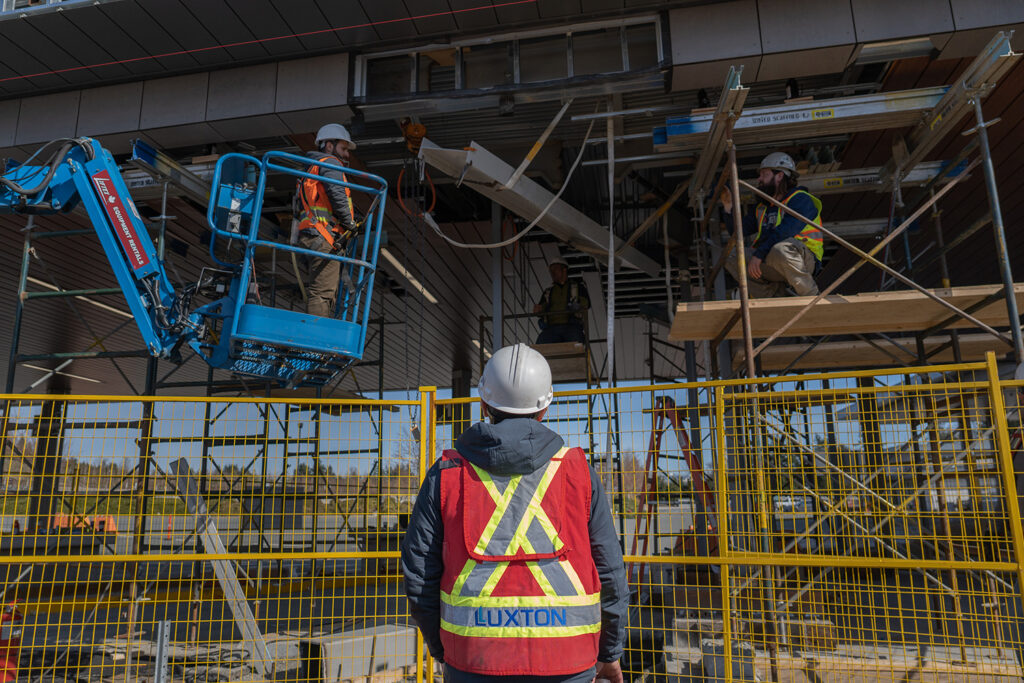
The Personal Touch from Big-Thinking Luxton

View in E-mag
View Brochure

You might call it the “sweet spot”. A company that is easy to work with, where the organizational style ensures clients receive that “personal touch” – yet where the management expertise and the systems in place are those of a much larger organization. Whatever it is – the “sweet spot”, the “X-factor”, it seems Luxton has found it. And like all great achievements it started with a simple premise.

Principal / Director of Operations, Pedram Farzadmanesh tells us: “Amir (Amir Kassaian, Principal / General Manager), Bill (William Puranen, Principal / Chief Estimator) and myself had worked away from home in the oil and gas and infrastructure industry – travel in, travel out. We did this for ten-plus years working for the giants of our industry in top managerial positions.” 

Luxton workers on bridge project site

Apart from this shared experience, the trio, it turned out, had many other things in common. One of these was, “the urge to make a living in our hometown of Vancouver”. Hence the birth of Luxton Construction, offering construction services based out of the Metro Vancouver area in British Columbia, Canada. It proved to be a decision more conducive to a manageable work-life balance and would also put to good use the skills picked up through working for the largest construction companies in Canada – applying such learnings to a smaller, leaner organisation. This was about taking that giant-company-mindset and applying these methodologies and thought processes to a setting where environment, safety, community, people and a special set of core values were prioritized alongside professional excellence.

The result of all of this – the “Luxton way” – represented a powerful combination which saw the organization experience a one-hundredfold growth in the first four years of creating revenue. “We turned out to be the second-fastest growing construction company in Canada and the fastest growing in western Canada,” says Pedram, adding that this is all barely the start per their envisioned growth plan.

The sectors they focus on here are Heavy Civil, Buildings and “last but not least”, says Amir, Marine. A fourth area might be termed “Specialty Projects” for want of a better descriptor; Luxton’s projects can tend to read like a list of locations for the latest blockbuster movie. For instance, working in the frozen Arctic, atop iconic city bridges or deep beneath the ocean floor with a microphone installed on the seabed to monitor noise levels on account of the marine life – just the usual passing whales and orcas! The latter was on a project for the city of Vancouver – the Victoria Outfall. It involved drilling thirty-six-inch diameter piles into the ocean floor. The point is, wherever Luxton finds itself, it brings an energetic, can-do attitude along with bags of enthusiasm.

“We turned out to be the second-fastest growing construction company in Canada and the fastest growing in western Canada,”

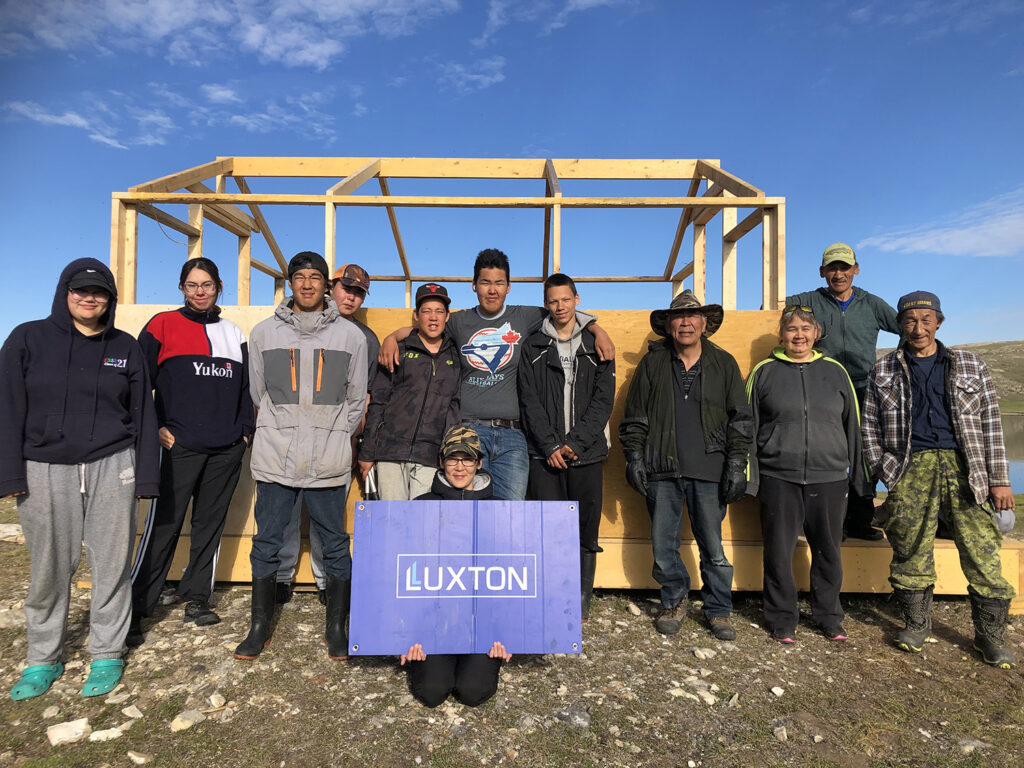
Bill cites another good example. The setting: “just east of Tuktayuktak”, a base camp in Tuktut Nogait National Park, the sort of place you have to fly into on float planes. Think: the setting for one of those popular “survival”-type TV shows. Here, members of the local indigenous population take youngsters to learn traditional skills. Only, they had no real facilities to speak of – besides one tent structure, recalls Bill. “So, they put out a tender to build two bathrooms, a shower facility and kitchen. The logistics meant we had to build the facilities in Edmonton and put them on a barge – and then, four months later, they arrive on site.” Executing the project on site entailed being dropped off by plane with a promise that it would return in a week!

Part of the draw for Luxton is a shared love of puzzle solving and finding solutions. This is backed up by a culture of “no ego”. “It is not a problem for us to say we don’t know something,” says Pedram. “However, we have the tools to draw on to be able to take on a challenge and solve it. And that is a joy we take, day-in, day-out, from showing up to work. When we talk about the skillsets of our people we don’t say we need carpenters, labourers or whatever. We say: ‘we need problem solvers’. And that is what we have here.”

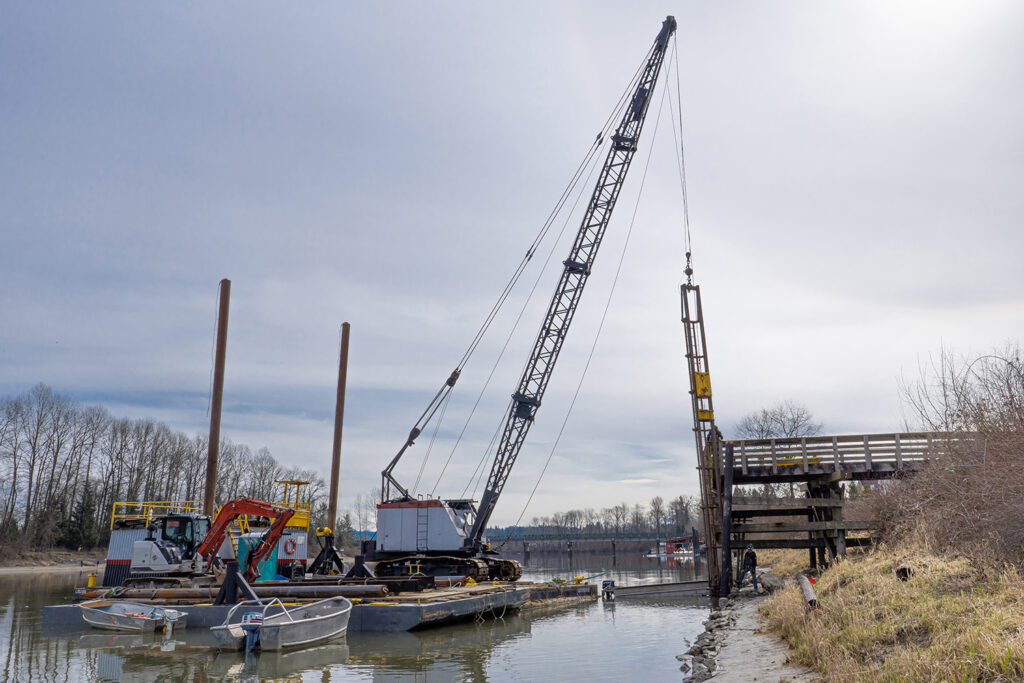
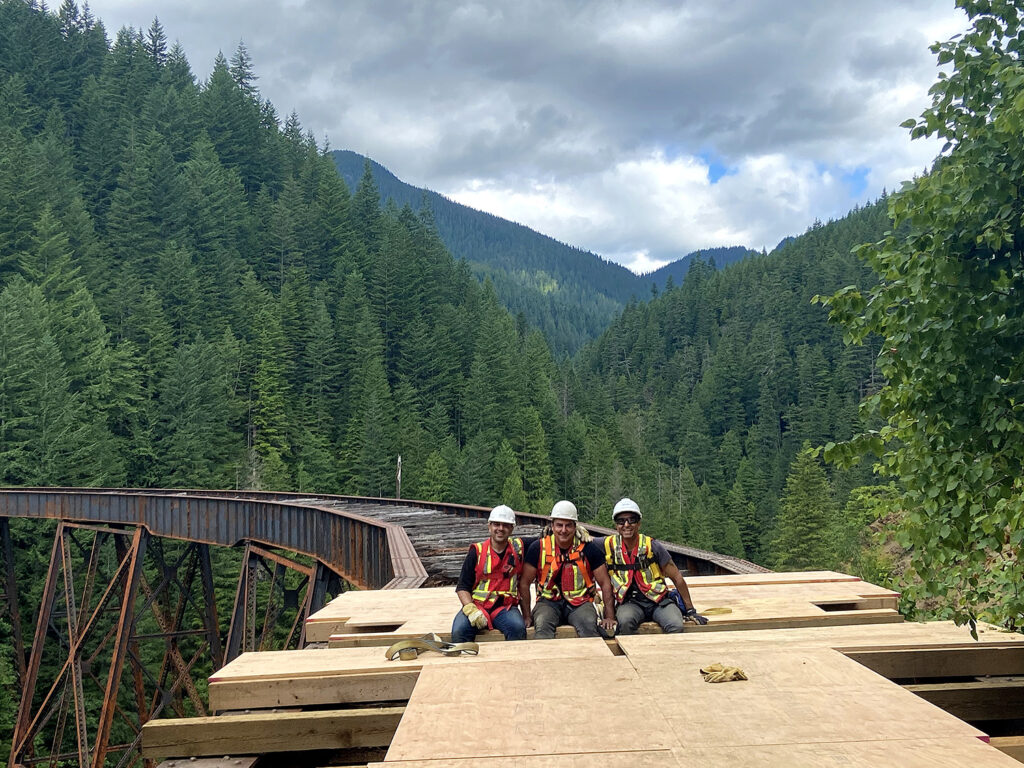
It is not surprising that the company found itself working on major projects soon after it was established. One of the earliest was the Anderson Creek bridge project, a vehicular bridge for the city of Surrey. This involved demolishing an existing bridge and replacing it with a much larger 18m precast girder bridge. Another one is the seismic repairs on the Granville Bridge currently ongoing. After just three years in service, taking on such a project – on an iconic structure in Vancouver – was a big moment for Luxton.

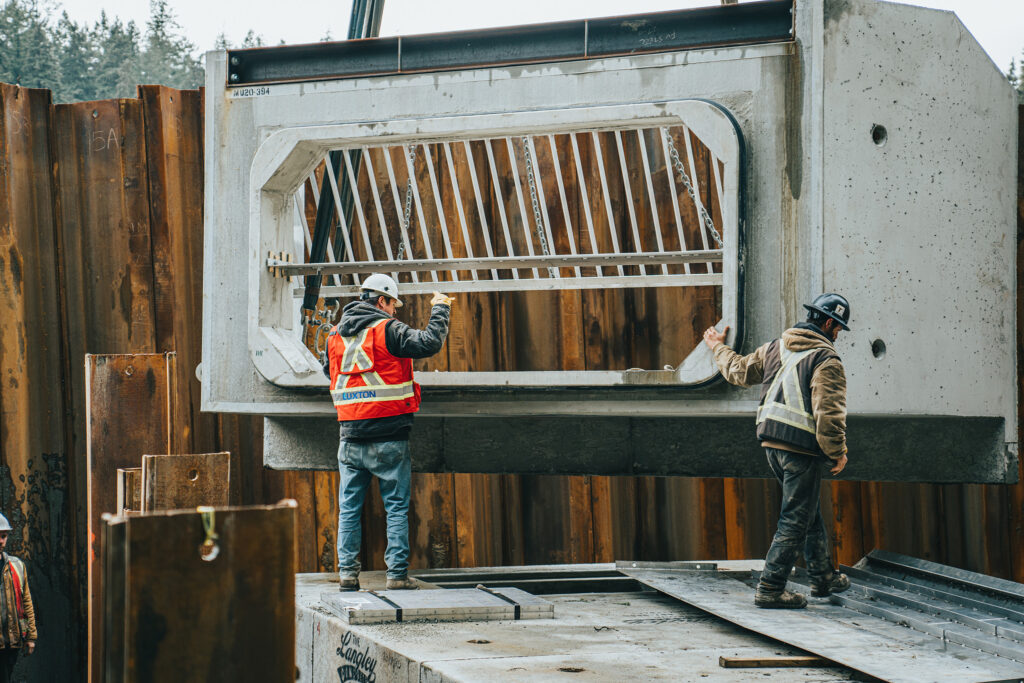
Projects like the Stanley Park Box Culvert Placement, “the beaver deceiver” job, meanwhile, allowed Luxton to demonstrate ability to execute sensitive sites successfully on time and within budget. Work here involved replacing a culvert by Beaver Lake which kept being filled up by the super-industrious mammals. This was actually drying up the adjacent creek and “a huge problem for the city”, says Bill. What you have here is both a highly important ecological zone and a culturally significant site for indigenous groups. “We had to go in and drive sheet piles,” says Bill. Clearly it was potentially very invasive. “We had archaeological monitoring,” adds Amir. “We also had to take account of old growth trees and maneuver between them in order to be environmentally compliant.

As well as several projects on different army bases at the moment, spanning the full range of services they offer, Luxton recently completed a major SAR building (Search and Rescue) on a floating barge to facilitate search and rescue in remote areas. Again, while the logistics and challenges were significant, they were tackled head-on. “There is a 170 x 55-foot concrete float. We built fully functional offices, work areas, shower facilities, full mechanical and electrical control”, says Bill. “This is going to be pulled to Hartley Bay.”

“Together we are building an organization that will benefit communities and also provide growth and mentorship opportunities.”

The indigenous community is mentioned a lot in the work of Luxton which brings us to Luxton Construction Plains Inc. Under a government initiative, certain contracts are set aside for indigenous-only construction companies. “You have to meet certain criteria”, explains Bill. “We reached out to an indigenous company and created Luxton Construction Plains Inc. It is fifty-one percent owned by the indigenous party and forty-nine by Luxton. Together we are building an organization that will benefit communities and also provide growth and mentorship opportunities.”

Through all of this work the same values hold true, and the same priorities are key – listening and delivering on their client needs, taking care of their people, delivering a quality product, safely and with respect to the environment while supporting the surrounding communities. “Our clients are federal, provincial, and local municipalities – the Coastguard, Department of National Defence, Parks Canada, Ministry of Transportation to name a few. All of these groups hold themselves to the highest execution standards”, points out Amir. “So, in order for us to be first awarded the contract our past experience, systems and procedures always get vetted by the awarding party.”

With employee growth as central aim, a firm foundation was laid early on at Luxton. Amir stresses how the processes and systems that are in place support that. “We have some of the best performing systems in the industry”, he says. “I have been part of rolling out systems for some of the largest construction companies in Canada and we are rolling out some of those same systems here.” One is Procore. It is a construction management software and covers aspects like management of drawings, budgeting and forecasting, invoicing, daily logs, time sheeting, safety management and so on. Amir explains. “There is Hilti ON!Track for asset management. We do SAP Concur which is a major player in accounting and expense management. We also just rolled out an AP processing system, Beanworks. We have SiteDocs, a safety management module that’s well-known in the industry. And Bid 2 Win is our estimating software, which is quite powerful.”

At Luxton there is no doubting the first few years have been hugely successful and paved the way for strong growth. “We have fifteen people in the office and about forty in the field now”, says Pedram. “We have a series of meetings we attend called ‘Vision2030’ – and under that vision our office is going to be around 50-strong and our field employees will number in the region of 200.”

Yet one thing will not change at Luxton: “The professionalism of an industry-leading company, as related to high revenue”, says Pedram, “yet personable – a family environment with the mindset and desires and growth path of a giant of industry. That is the plan and we are not shying away from doing what is needed to get there.”

Bridging the Border

View Brochure

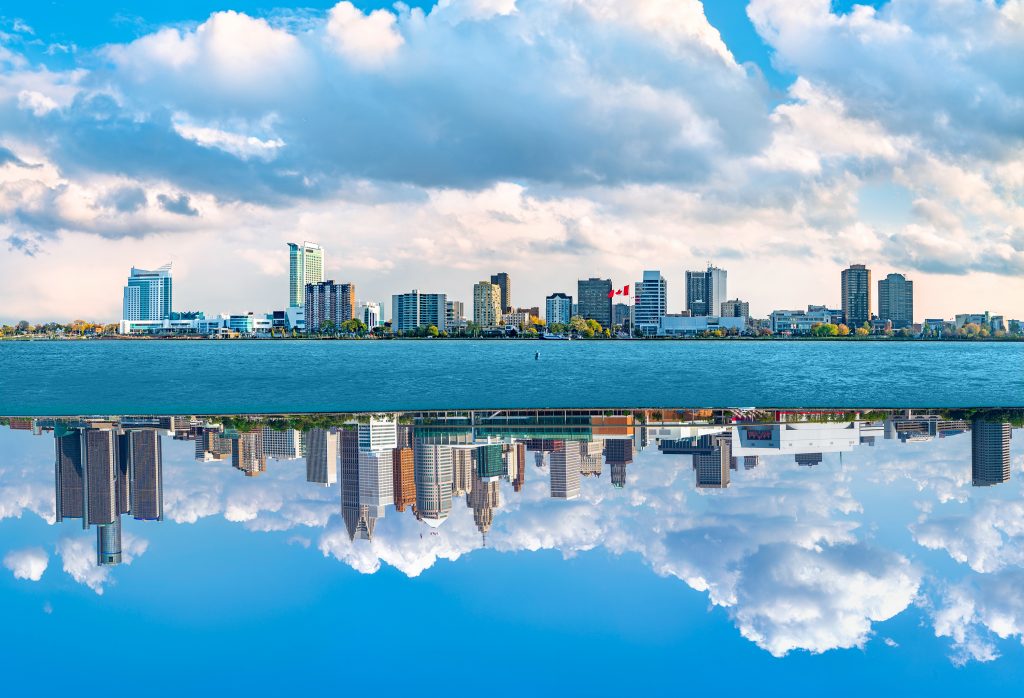
Stretching across the Detroit River, a new project, almost twenty years in the making, is aiming to strengthen historical, sporting and trade links between Canada and the United States.

Around one and a half miles of water separate the cities of Windsor, Ontario and Detroit, Michigan. The Detroit River slices between the two, creating a border that was originally bridged by Gordie Howe back in 1946. Howe, the Canadian professional ice hockey player played twenty-five seasons for the Detroit Red Wings, leaving an indelible mark on the city and the sport itself. He was the only player to play in five decades of the NHL and his records are still unrivalled, finishing in the top 5 for goal scoring in 20 consecutive seasons, a record unsurpassed by any other hockey player. When a plan was developed to link the two cities with its first publicly owned bridge, it is unsurprising that the name Gordie Howe was considered a worthy choice. His son Marty agreed, highlighting the symbolism of the bridge being named after a Canadian man who spent the best years of his NHL career in Detroit.

With global concerns continuing to dominate the thoughts and plans of people across all sectors of business and life, the concept of developing and strengthening connections and links are more worthwhile than ever. Notwithstanding that, the bridge construction also makes solid economic sense. Trade relations between the United States and Canada are the second most valuable in the world. The goods and services passing between the US and China is the only trade connection that is consistently on a larger scale. Currently, trade through the region passes over the privately owned Ambassador Bridge. However, the opportunity to utilize this border crossing has huge benefit to local economies; trade across the existing bridge alone is equivalent to the trade relationship between the US and several other countries. First proposed in 2004, and due for completion in 2024, the Gordie Howe International Bridge will also span the waters between Windsor and Detroit, two and a half miles downriver from the existing crossing.

The Windsor-Detroit Bridge Authority (WDBA) CA$5.7 Billion-dollar fixed price bridge project is projected to be two and a half kilometres long. Comprising of two towering 220m A shaped structures on the riverbanks of each city. When completed it will be the longest cable-stayed bridge structure in North America. Traffic will be able travel across it over six lanes and there is also provision for a multi-use cycle and walking path. Unlike the Ambassador Bridge which links to the city streets of Ontario, the bridge will offer the additional benefit of uninterrupted traffic flow, seamlessly connecting to Highway 401.

Despite a series of legal challenges from rival interests, the project was eventually green lit in 2018 and awarded to a consortium of companies. Aecom, Dragados, Fluor and ACS Infrastructure operating under the business name ‘Bridging North America’ were named as design, build, operations, and maintenance of the project.

“The benefits to the local community and economy continues apace with at least 2500 job opportunities and 150 local businesses becoming involved in development and construction.”

Throughout various stages of its development, the bridge has gone by various names and titles. The Detroit River International Crossing and New International Trade Crossing being two. David Bradley of the Ontario Trucking Association proposed naming the bridge after a sporting legend, one that has been a huge facet of life for people on both sides of the Detroit River. The logic was evident, a physical structure to connect communities that have been linked for generations by this man and his achievements. The bridge was finally named the Gordie Howe International Bridge in 2015.

The project has received much admiration in industry quarters and in 2019 won the prestigious Oracle Project of the Year award in Engineering Category. Bryce Phillips, CEO – WDBA was understandably proud of the achievement. ‘We are honoured to be this year’s recipient of the prestigious Oracle Project of the Year award in the Engineering Project category from CG/LA. The Gordie Howe International Bridge project is significant both in its scope and its engineering complexity. WDBA is proud to work with our private-sector partner, Bridging North America, in delivering North America’s longest cable-stayed bridge.’

While trade and design are massive aspects of this project, it was important that the bridge would include positive community features also. One example of this was the need to incorporate sustainable targets and benefits. As a result of this, the project has received praise for its positive environmental and community impact. The multi-use path for pedestrians and cyclists, LEED V4 Silver for Buildings rating and community benefits plan has been lauded as a design success.

Bryce went on to explain that the Windsor – Detroit Bridge Authority’s determination to sustainable is unquestionable ‘WDBA is committed to sustainability in the construction and operations of the Gordie Howe International Bridge project. Sustainable development is important not only to us, but to the Government of Canada and our stakeholders. As such, it is our duty to them to consider the financial and nonfinancial impacts of our operations by integrating environmental, social, and economic dimensions in our management approach. The future success of the Gordie Howe International Bridge project depends on the sustainable work we do today and in the years to come.’

Clearly, sustainable processes are of benefit to the industry and local community. However, by including sustainable features at design stage, the bridge will continue to benefit both local and transient wildlife into the future. LED lighting across the entire bridge span means that in addition to a high level of energy efficiency and low maintenance, the bridge avoids excessive light spill and does not unduly affect the patterns of migratory birds. These include Peregrine Falcons, a species of special concern on Canadian Shorelines. For this purpose, the bridge will also include Falcon Boxes to aid in nesting and further enhance its environmental commitment.

The benefits to the local community and economy continues apace with at least 2500 job opportunities and 150 local businesses becoming involved in development and construction. Many of these jobs being allocated to local citizens of the Detroit and Windsor metropolitan areas.

The funding for the substantial investment involved is coming solely from the Canadian Government and is expected to hit CA$6 Billion when the overall totals are finalized. Tolls estimated from the crossings yearly are expected to surpass CA$70 Million and the Canadian Government will receive all this revenue for the next 50 years. The amount of traffic crossing the border daily is expected to increase from approximately 17,000 currently to about 26,000 in 2025.

While COVID-19 impacted some of the productivity in the early months of 2020, construction has thankfully resumed. Officials involved in the project are confident they are still on schedule. There is also a firm belief that even if a second or third wave strikes they can stay on track. A spokesperson for the WDBA recently stated ‘The spacious footprint of the project lends itself to social distancing. With a requirement of face masks for employees, minimal close contact and virtual meetings the development and construction can continue relatively unabated.’

Despite challenges that effect all corners of the globe, creating obstacles that many never saw coming, Bryce Phillips has witnessed genuine innovation and dedication throughout the construction project. Mr Phillips is very grateful to all the parties for their perseverance with the project ‘Despite the need to change the way we all both live and work because of the COVID-19 pandemic, we have not slowed down. I would like to take this opportunity to thank WDBA and Bridging North America staff, as well as our contractors, for their dedication over the last two years.’

In 1974, almost thirty years into his career, Gordie Howe was named Most Valuable Player. This came at a time of his life where he had already come out of retirement to score over 100 points in two separate seasons. His dedication to his craft, coupled with the respect he earned as a person outside the game, makes Gordie Howe an ideal person to represent positive connections between Detroit and Canada. When informed about the naming of the bridge in June 2015 by his son –Howe was unable to attend the naming ceremony due to ill health—the 87-year-old’s reply was, ‘That sounds pretty good to me.’ Gordie Howe died a year later in June 2016.

The Gordie Howe International bridge is currently one of the largest infrastructure projects in North America and if the huge undertaking stays on target the Detroit – Windsor river skyline could have a very different view in the late part of 2024.

More Stories

Forty Years of Foundations, Family and Forward Motion

Kershaw Builders Inc. — By Emma Kilcawley Hemani

For forty years, Kershaw Builders Inc. has played a foundational role in South Carolina’s development. Established in 1985 as a family-owned operation in Kershaw (…)

A Third Generation Prepares to Expand Water-Utility E...

Dunigan Bros. — By Elizabeth Howell

Safe drinking water remains one of the most urgent infrastructure needs across the United States, and for the Dunigan family, meeting that need has (…)

Lean & Local in New Hampshire

Weaver Brothers Construction — By Aoife Chaney

In the early 1950s, not long after Weaver Brothers Construction (WBCC) was incorporated, the Interstate Highway Era began in the State of New Hampshire. (…)

Building on 76 Years: How Gordon Barr Limited Balance...

Gordon Barr Limited — By Emma Kilcawley Hemani

For more than three-quarters of a century, Gordon Barr Limited has been a cornerstone of Kingston’s construction landscape. Founded in 1949 by Gordon Barr (…)

Building Bridges, Expanding Horizons

Clearwater Structures — By Emma Kilcawley Hemani

For twenty years, Clearwater Structures Inc. has stood at the forefront of Canada’s heavy civil construction industry—building, repairing, and reimagining the country’s bridges and infrastructure. From (…)

Expertise with a Collaborative Spirit

Freyssinet Inc. — By Elizabeth Howell

Freyssinet Inc. is celebrating its 30th anniversary this year, marking three decades of work that spans bridges, stadiums, and some of the most complex (…)

Built on Hard Work and Family Values

R&D Paving — By Emma Kilcawley Hemani

In 1990, Richard and Donald DuBreuil left their jobs as superintendents at Pike Industries and set out to build something of their own. They (…)

Built From the Ground Up

Western Earthworks — By Emma Kilcawley Hemani

When Jack Henderson-Adams started Western Earthworks, he had $200 to his name and a vision shaped more by grit than by a safety net. (…)

Family Values, Civil Excellence, and a Vision for the...

Williams Fence and Excavating — By Emma Kilcawley Hemani

For many people, the dream job is one that doesn’t feel like work. At Williams Fence and Excavating, that vision is reality. What began (…)