





ModuTech’s story began with two friends, a shared carpentry background, and a willingness to follow the work wherever it led. Forty years later, the company has grown into a leading turnkey framing contractor with a long record of multifamily, student housing, military housing, and large wood-structure projects across the United States.
Founded in Houston, Texas, in 1986 by Ed Heil and Rick Hughes, ModuTech started as a rough carpentry company at a difficult time for the regional market. Both founders brought deep experience to the business. Heil learned the trade through his family’s framing company Ed worked for his father Tex and uncle Gebo, while Hughes gained his early experience working with Ed’s uncle Fitty Heil. That practical foundation shaped the company from the beginning, giving it a field-driven understanding of framing, scheduling, materials, and labor.
The late-1980s recession and crude oil price collapse had a major impact on Houston, and the founders quickly recognized that remaining tied to one local market would limit the company’s future. In response, they began looking beyond Texas. In the early 1990s, ModuTech partnered with Trussway as its truss supplier, allowing the company to travel nationally and work on projects where Trussway supplied materials. This also allowed ModuTech to bring its Texas-style subcontracting approach into new markets.
“Houston was literally in a recession for a decade, and there wasn’t any work there, so they started traveling to other parts of the country looking for work,” said Scott Stevens, President and CEO of ModuTech.
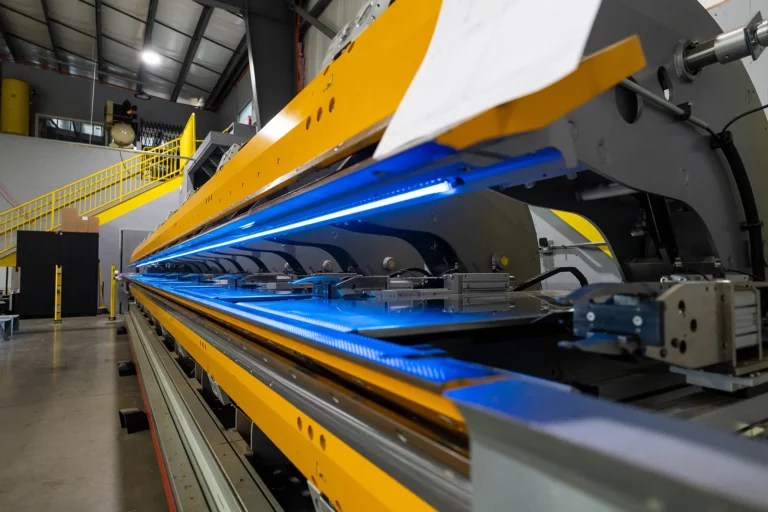
That willingness to adapt led to one of the most important turning points in the company’s history. While working on a tight-site project in Washington, D.C., with Lincoln Properties, Heil was introduced to the need for off-site wall panel fabrication. The jobsite did not have sufficient delivery area, forcing the team to think differently about how framing components could be produced and delivered. “The project in Washington, D.C. required them to fabricate off-site wall panel systems because there was no storage area on the site,” Stevens said. “Ed found a manufacturing plant that had gone out of business, purchased some wall panel manufacturing equipment, and started making wall panels. The company never left that physical location; we’ve been there ever since.”
Building on that success, the team moved to Baltimore, Maryland, where it purchased wall panel equipment from Arundel Housing, a company that had recently gone bankrupt. In 1990, ModuTech secured a facility at 1200 East Patapsco Avenue, which remains home to the company today.
With its Baltimore facility established, ModuTech expanded beyond rough carpentry and began developing a more integrated framing model. In the early 1990s, the company started manufacturing its own wall panels, floor trusses, and roof trusses while also supplying the full rough lumber package under a single installation contract. It also founded a lumber yard to provide materials for both the manufacturing plant and active jobsites. The ability to purchase directly from the mill and wholesale markets provided some cost advantages. At the time, few companies were offering that type of turnkey package.
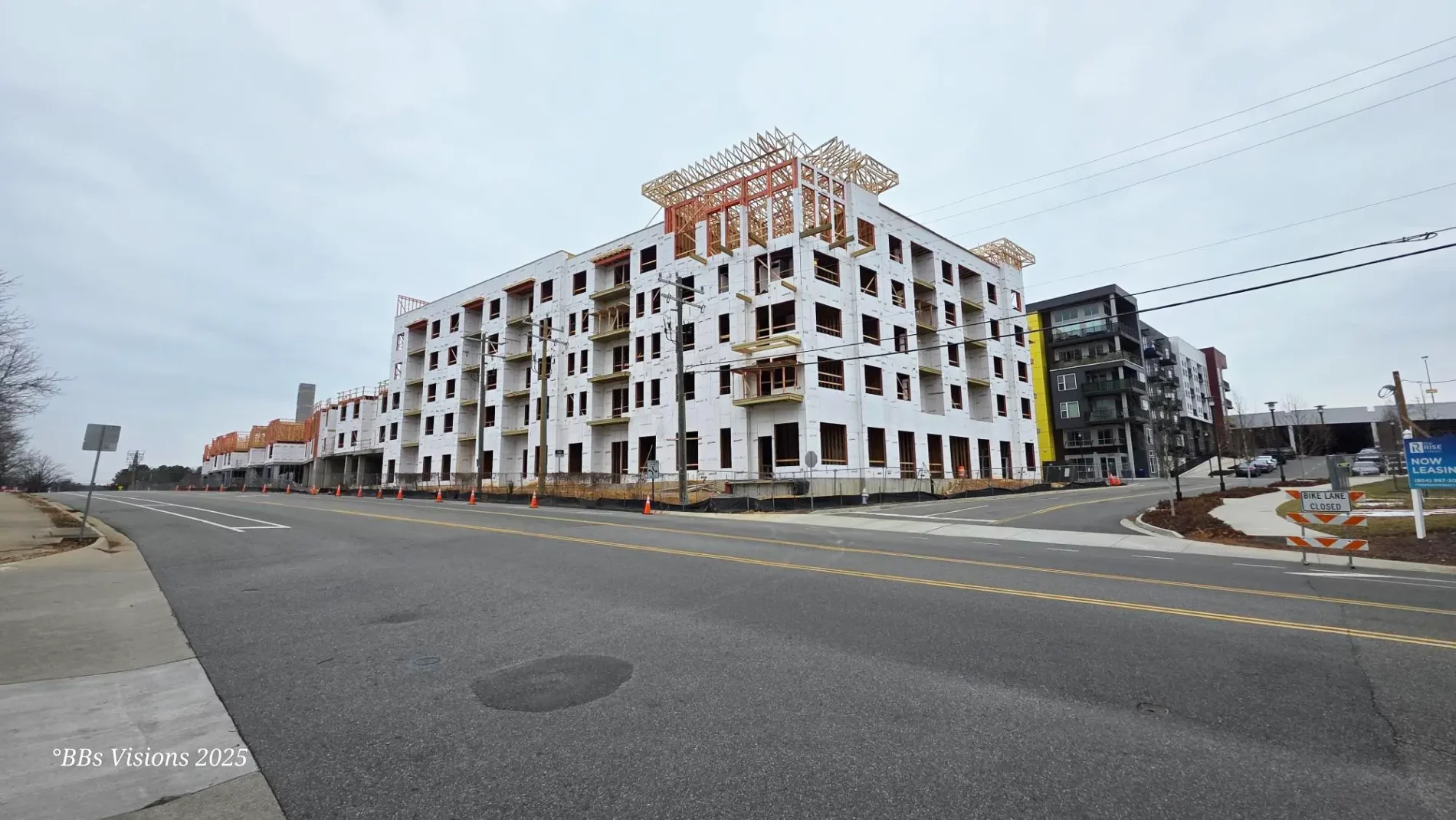
Today, ModuTech provides framing for apartments, assisted living facilities, student housing, military housing, and large wood structures. The company supplies rough lumber, hardware, building wraps, fasteners, floor trusses, roof trusses, and other wood components, all under a guaranteed turnkey installation price. “We supply that at a turnkey guarantee and installation price,” Stevens said.
Since its founding, ModuTech has framed more than 125 million square feet of wood structures, with a primary focus on multifamily apartment construction. The company has worked in more than 15 states as a licensed contractor, building a reputation around quality, efficiency, pre-construction planning, and field execution.
The company’s process is built around resolving as many issues as possible before crews arrive on site. Detailed plan review, trade coordination, and pre-construction planning all form a critical part of the company’s model. By identifying discrepancies early and coordinating material needs before installation begins, ModuTech aims to reduce wasted labor, minimize delays, and keep projects moving efficiently.
The establishment of the company’s first truss plant was a pivotal milestone, signaling a shift from labor-only framing toward a more controlled and integrated delivery model. Another important development came in 1992, when ModuTech launched its payment and performance bond program. At the time, this was unusual for an installation framing contractor and gave general contractors additional confidence that the company could complete its work. “Back then, it was pretty rare that an installation framing contractor would have a bond or supply material,” Stevens said. “The general contractor usually bought his own material and gave it to the framer. We turned that around and said, ‘well, we’ll bring all that material with us’ – we thought it would give us more control over having the right materials there at the right time.” Establishing the bond program forced the company to maintain reviewed financial statements and strong fiscal discipline.
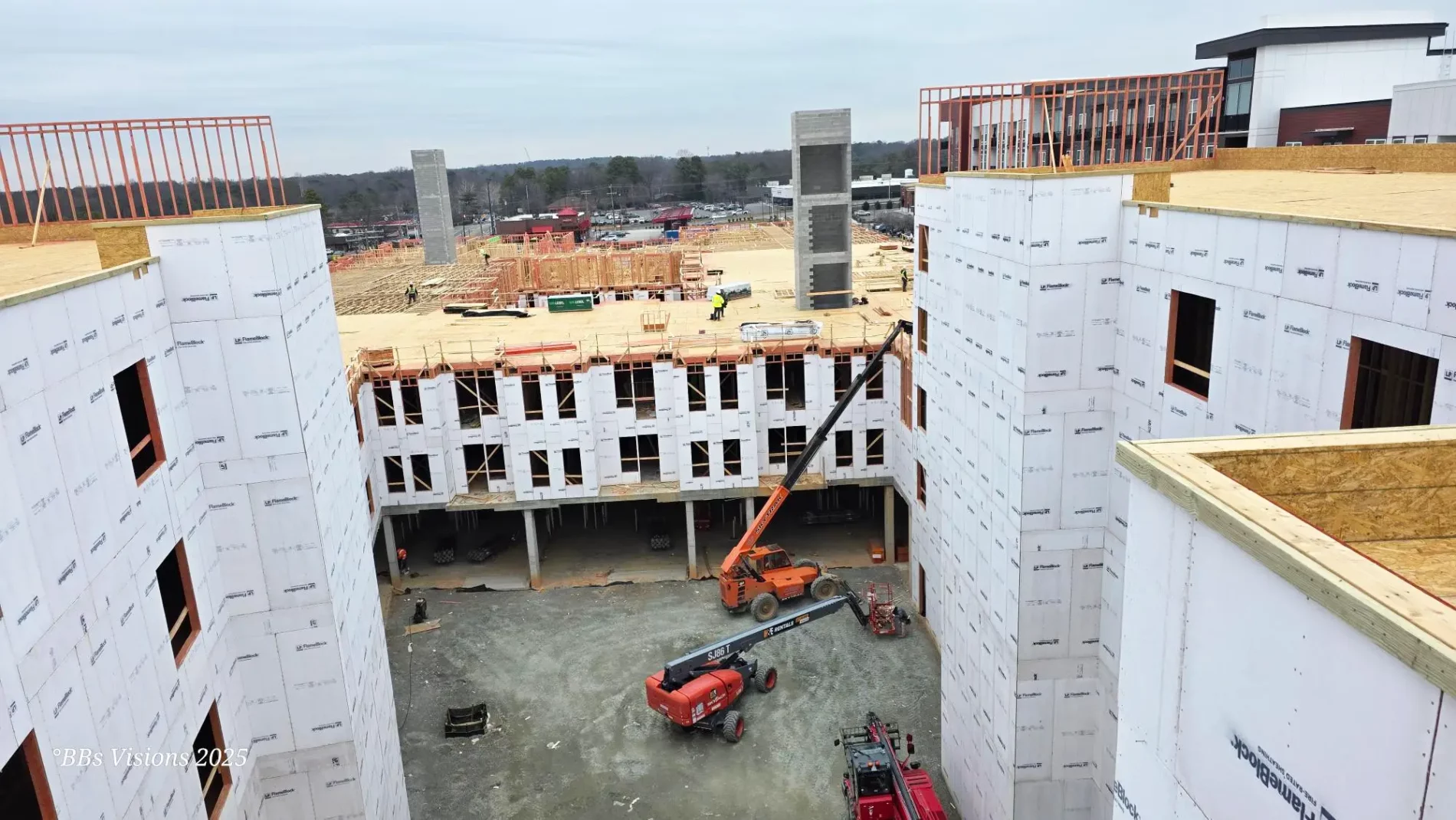
That decision helped distinguish ModuTech in a competitive market. By controlling the supply of materials, manufacturing, and installation, the company was able to better manage sequencing and reduce the risks that can occur when framing crews are dependent on others for material availability. The timely delivery of the correct materials without any confusion about installation details directly impacts the speed and quality of the installed framing.
The period after 1992 brought further growth. In 2005, the company launched its general contracting division, Housing Tech, which went on to complete more than $250 million in work. ModuTech also developed its proprietary wall panel software, Wall Plus, which was later sold to MiTek in 2015. In 2019, the company partnered with Stark Forest to launch Stark Forest Baltimore, strengthening its truss fabrication capabilities and further expanding its manufacturing operations. Recently Modu Tech has changed direction again and it no longer a partner in this business.
For Vice President Mark Wesling, two additional milestones stand out: the company’s ability to navigate the COVID-19 pandemic and its ability to continue after the loss of founder Ed Heil. “I think one of the milestones is that we survived COVID extremely well – we were well-positioned beforehand, and we survived the death of our founder, Ed Heil,” Wesling said. “One of the main things that a lot of people don’t know about a framing contractor is they don’t last very long – yet we’ve survived, and we’ve continued to not only have a long relationship ourselves, but our subcontractors have long relationships with us also.”
This continuity is visible in the company’s labor relationships. For much of its history, ModuTech has worked with the same framing contractors, and in some cases, the next generation of those companies after the businesses passed from parents to children. In an industry where turnover can be high and framing companies often struggle to survive long-term, that stability has become one of ModuTech’s defining strengths. Stevens credits that longevity to the discipline instilled by the founders. “Many of the competitors make a lot of money, go out and spend it, and then they get in trouble, and they don’t have any resources,” he said. “I think Ed and Rick were always very frugal and careful. They didn’t take money out of the business that they couldn’t afford. There’s always been a discipline that was instilled by Ed and Rick that has kept the company in business for 40 years.” That discipline has supported a lengthy project list. One of the company’s early defining projects was Woodbridge Naval Housing in 1991, a large turnkey project for Harkins that totaled 880,000 square feet. “That was the first large turnkey project that Harkins, the large general contractor, ever built,” Stevens said.
More recently, ModuTech completed a major project at Keesler Air Force Base in Biloxi, Mississippi, framing 1,200 homes for the Navy across 2.5 million square feet. The company is currently finishing a student housing project at George Mason University for Whiting-Turner, delivering 400,000 square feet of work valued at $12 million. It is also completing Regency 2 in Richmond, Virginia, a large mixed-use framing project.
As ModuTech celebrates 40 years in business, Stevens points to experience as one of the company’s greatest advantages. “Even though we’re really a small company, we collectively have hundreds of years of experience in the carpentry scope,” he said. “We’ve made a lot of mistakes, which haven’t put us out of business, so I think the key really is our experience of past performance, doing so much work in so many different states and different locations. We’ve seen a lot of things over the years.”
“Even though we’re really a small company, we collectively have hundreds of years of experience in the carpentry scope.”
The outlook for the rest of 2026 is strong, with a backlog of work already extending into 2027. At the same time, ModuTech is exploring major expansion plans, whether through a merger, sale, partial sale, or new strategic relationship designed to position the company for the next generation. “We’re going to try to merge, expand, sell part, and make a big, bold corporate move this year, so the younger generation can continue,” Stevens said. Technology is also expected to play an important role in the company’s future. ModuTech is researching a range of AI programs, particularly for document management, scheduling, planning, estimating, design, and takeoff. “We think that the transformation for a lot of design and takeoff responsibilities that have been so labor-intensive for us all these years is going to go away quite quickly with some of the AI products that are being offered,” Stevens said. “We’re going to continue to focus on our safety, the strength of our labor crews, and the development of our people. We’ve got some younger people on our staff now, and we’re providing them training and opportunities, trying to reinvest our knowledge and experience using AI, not only as a tool, but also bringing up the next crop of leadership.”
Looking further ahead, ModuTech sees opportunity in mass timber construction. Mass Timber allows some opportunities to expand the types of projects we frame. The continued integration of AI-driven tools across the design and construction process. As technology reshapes the industry, the company remains focused on innovation, pre-construction discipline, and jobsite supervision.
The installed framing market is highly competitive, with major players such as Builders FirstSource, The Home Depot, and 84 Lumber expanding their installed services. Even so, ModuTech believes its advantage remains clear: 40 years of experience, deep pre-construction detail, strong supervision, and long-standing field relationships. For a company that began with two friends searching for work beyond a struggling local market, ModuTech’s story remains one of adaptation and discipline. Its growth has come from knowing the trade, controlling the process, and staying ahead of the next shift in construction.