






For 40 years, Heritage Restoration has operated within one of the most technically demanding segments of the construction industry, building a reputation across New England through restoration, waterproofing, masonry, and structural repair work. Based in Rockland, Massachusetts, the company works as a specialty contractor and subcontractor for major construction management firms throughout the region, delivering projects that range from smaller targeted repairs to complex, multi-million-dollar restoration programs.
The restoration sector occupies a unique position within construction. Unlike new-build projects, restoration work often requires contractors to operate within existing structures where hidden conditions, aging materials, and active occupancy introduce additional layers of complexity. Heritage Restoration has spent decades refining its ability to navigate those conditions while maintaining quality, schedule, and safety standards.
Founded in 1984, the company initially focused on masonry restoration, parking garage restoration, waterproofing, and coating repair. Over time, its capabilities expanded alongside the broader demands of the market. Today, Heritage Restoration provides structural strengthening, concrete restoration, masonry restoration, above- and below-grade waterproofing, concrete coatings and sealants, carbon fiber reinforcement, historical masonry work, and precast parking garage restoration.
That growth has taken the company from a small operation working primarily with a single client to a business generating between $30 million and $35 million annually, at one point reaching approximately $55 million in revenue. According to CEO Brandon Nadeau, however, the company’s scale today reflects a deliberate balance rather than aggressive expansion. “That seems to be the sweet spot for our area and how our company is set up,” he said.
Leadership continuity has also shaped the company’s trajectory. Heritage Restoration was founded by three partners before Charlie Sweetman assumed ownership early in the company’s history. After Sweetman’s passing in 2019, CEO Andy Bear continued to grow the company until his retirement in 2024, when Nadeau stepped into the role. While leadership has evolved, the company’s broader philosophy has remained consistent, centered on long-term relationships, service, and quality execution.
“We started at the Prudential Center, working in the below-grade parking garage there,” Nadeau said. “The biggest milestone is expanding from one client to working for all the major GCs.”
That expansion reflects both the technical nature of the company’s work and the increasing demand for restoration services throughout the Northeast. Across Boston and the surrounding region, aging institutional, commercial, and infrastructure assets continue to require rehabilitation, waterproofing, and structural upgrades. Much of New England’s building stock dates back decades, with many facilities operating under conditions never anticipated when originally designed. Restoration contractors now play a central role in extending the lifespan of those structures while helping owners avoid complete replacement.
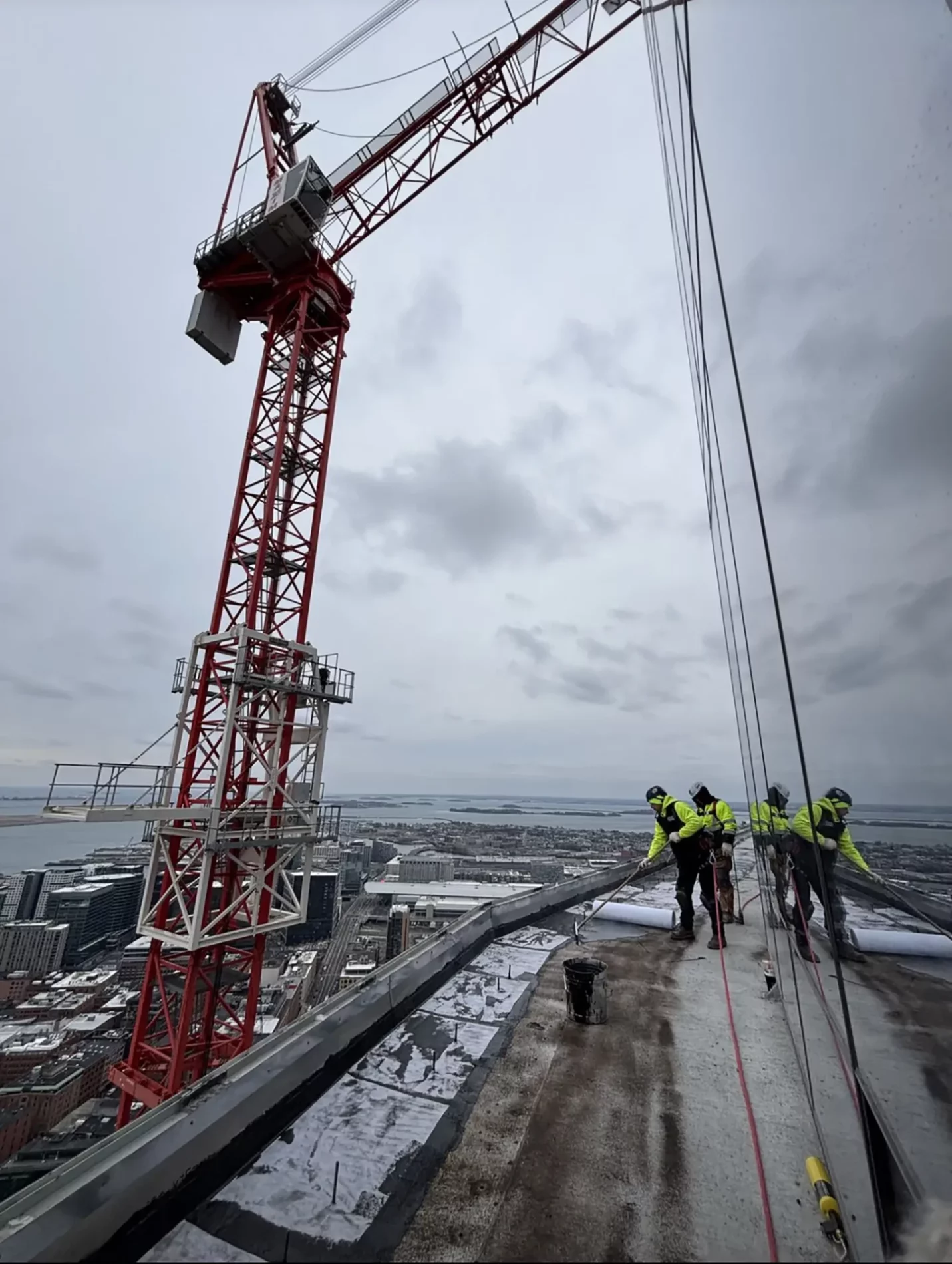
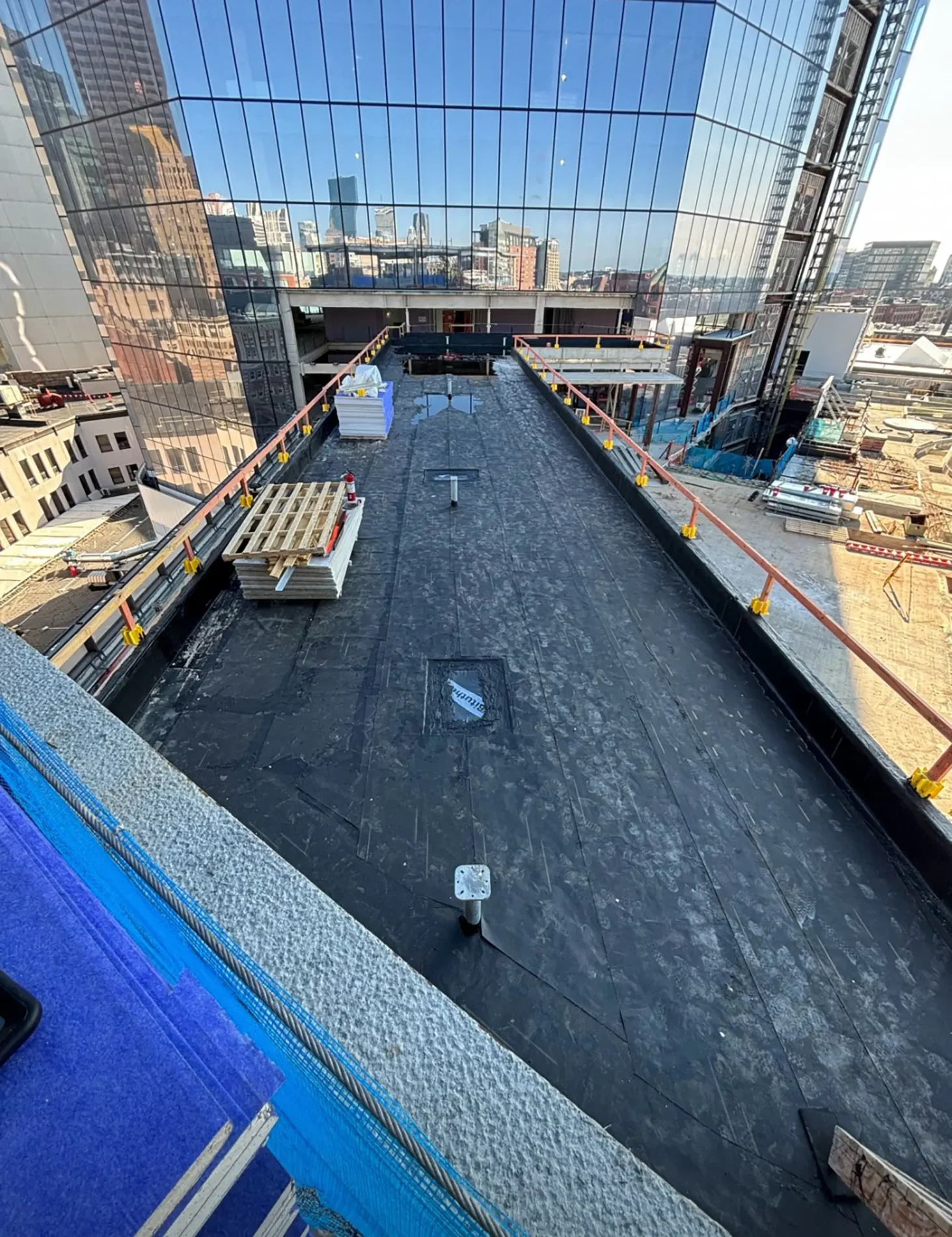
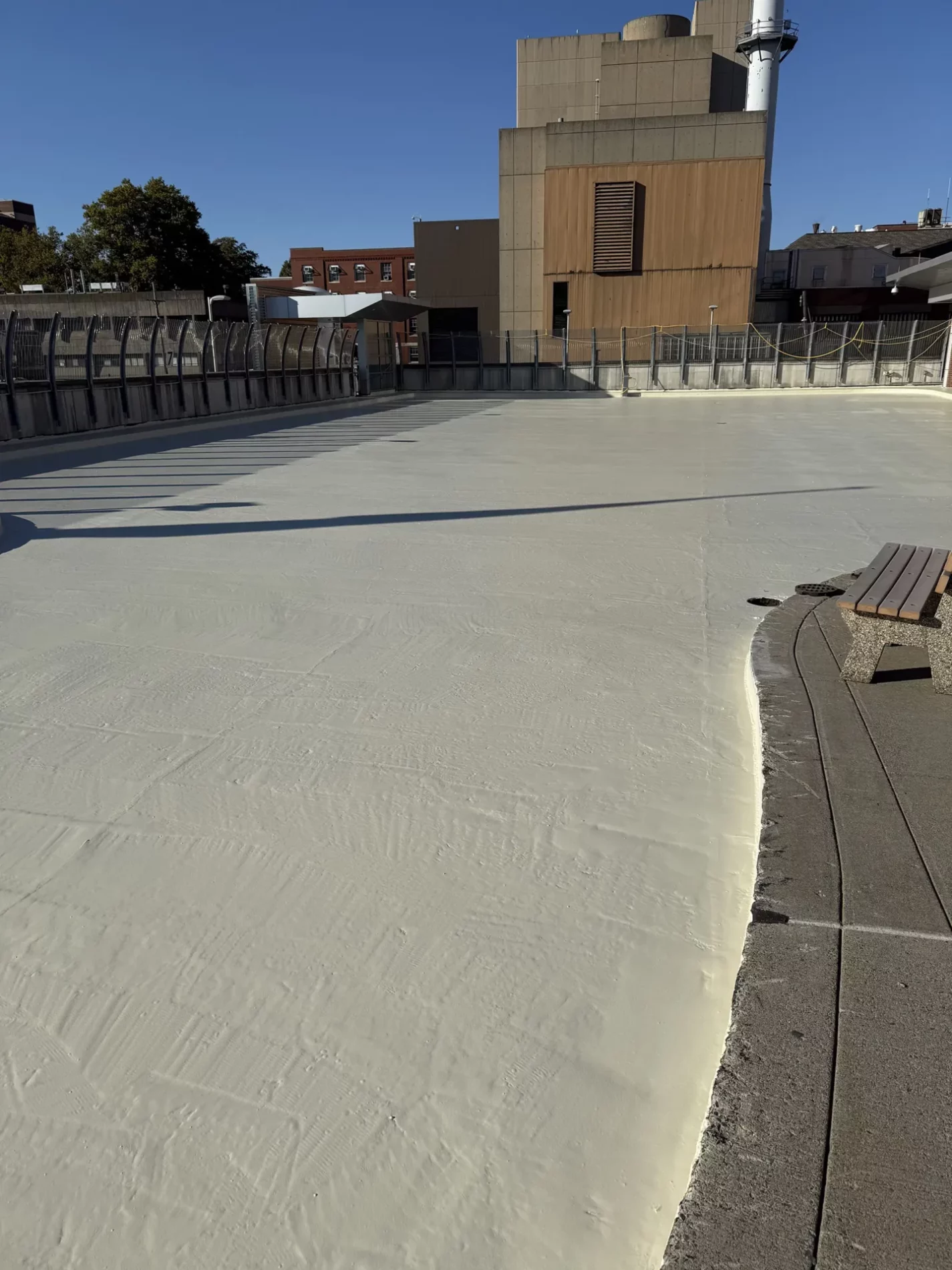
Waterproofing, in particular, has become increasingly critical within urban construction. Modern developments often involve deep foundations, below-grade parking structures, podium decks, and complex envelope systems, all of which require sophisticated waterproofing strategies to manage groundwater intrusion and long-term durability. Heritage Restoration’s expertise in these systems has positioned the company within some of the region’s highest-profile projects.
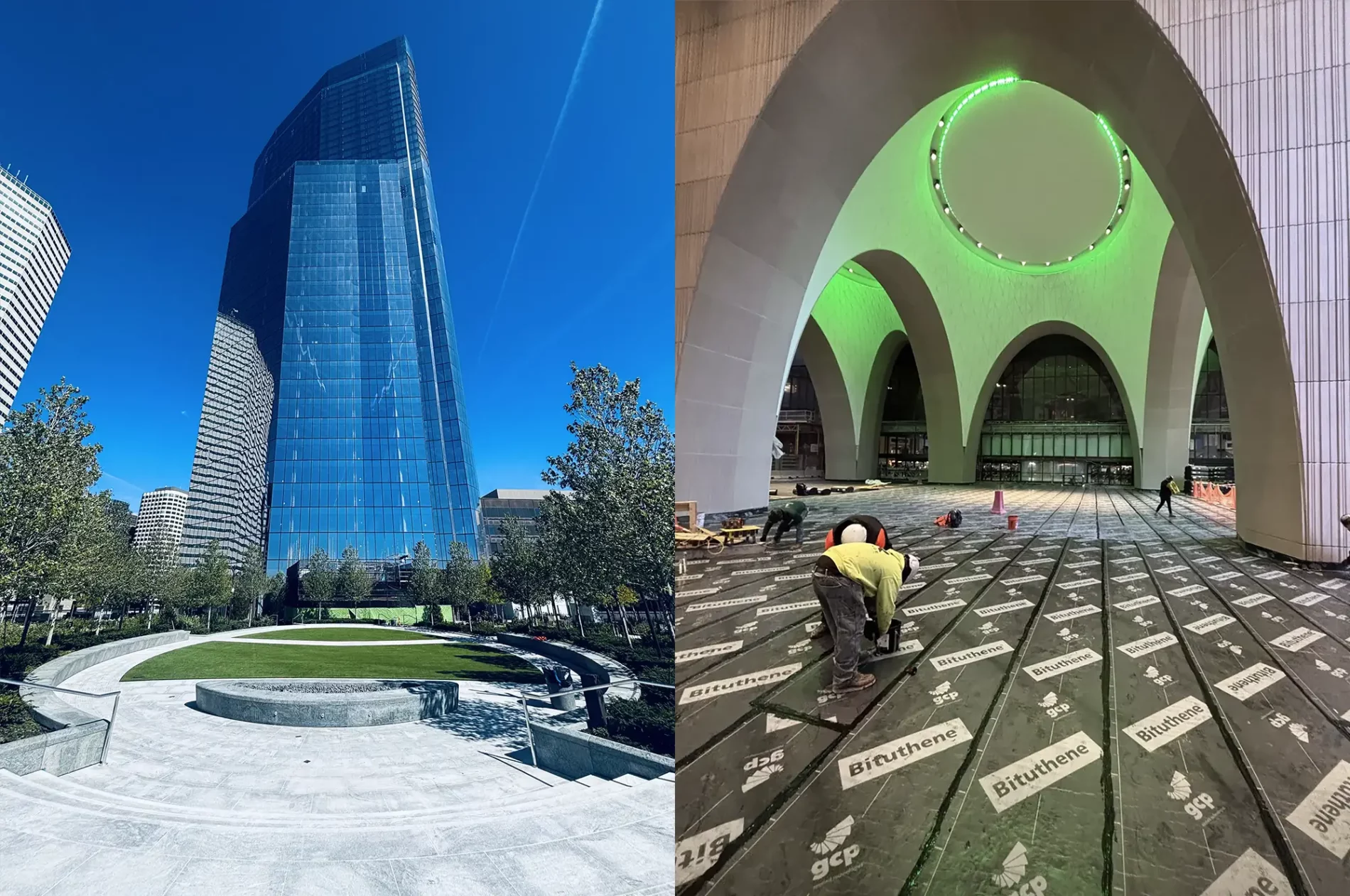
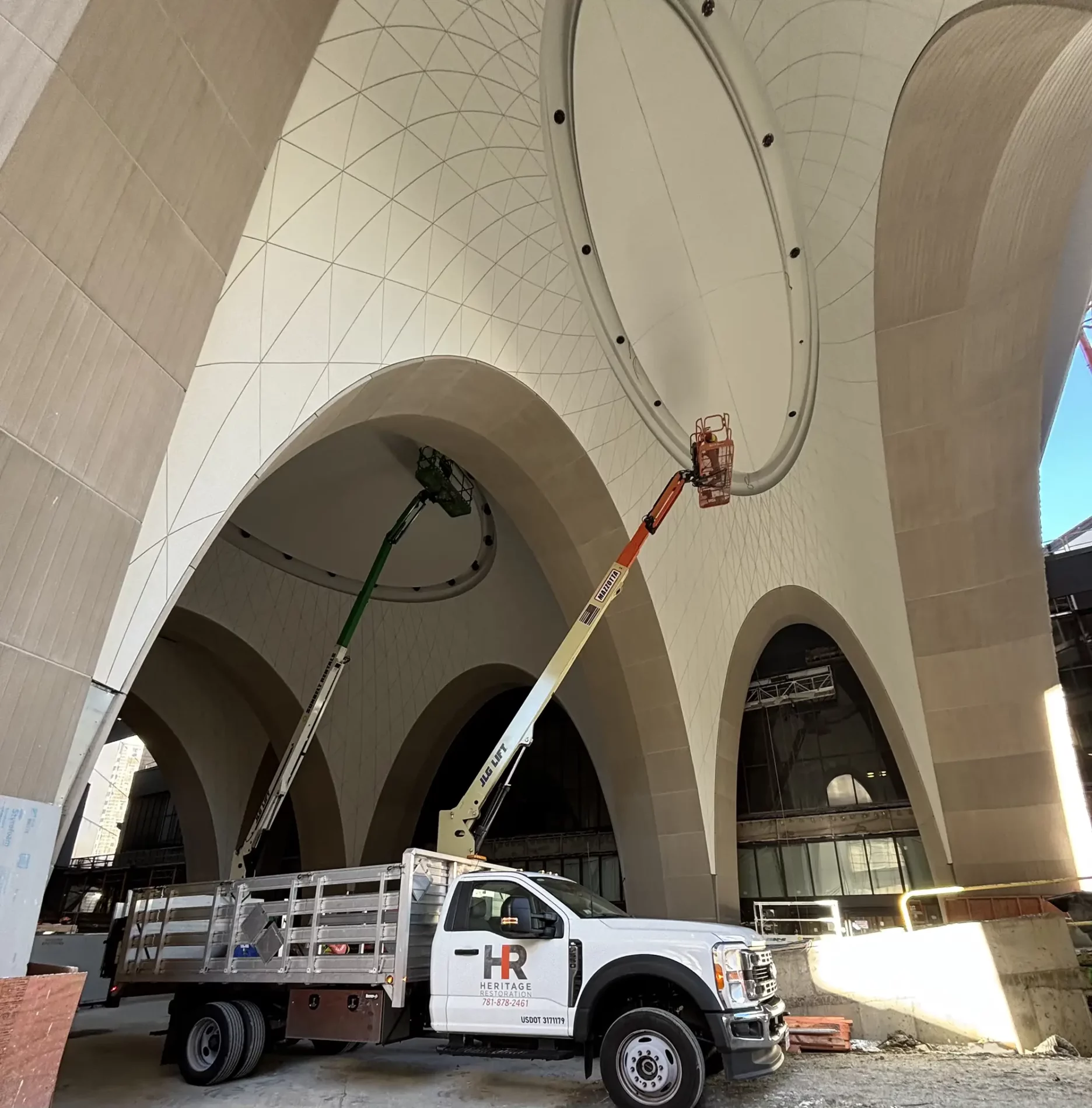
One of the most significant examples is South Station Tower in Boston, delivered alongside Suffolk Construction. Heritage Restoration’s scope included below-grade waterproofing, blind-side waterproofing, expansion joints, air-vapor barrier systems, and traffic coating installations.
The project represented a major milestone for the company, both technically and professionally. South Station Tower sits adjacent to one of Boston’s busiest transportation hubs, requiring coordination within an active urban environment while integrating new construction with existing infrastructure. Waterproofing systems on projects of this scale are especially critical because failures can compromise structural performance, interior finishes, and long-term operational costs.
The work earned Heritage Restoration the Sika Project of the Year award in the waterproofing category, marking the first major industry award in the company’s history. “That was the first time we’ve ever won an award like that,” Nadeau said. Within the company, South Station is now viewed as its most high-profile project to date.
The company has also received recognition for its masonry restoration work. At Worcester Polytechnic Institute, Heritage Restoration completed masonry-related work during 2022 and 2023 that resulted in another industry award. “It wasn’t heritage specific, but that was a proud moment for us,” Nadeau said.
Currently, the company is working with Suffolk Construction once again on 585 Kendall in Cambridge, Massachusetts, where Heritage Restoration is responsible for both waterproofing and masonry scopes. Projects in Kendall Square reflect a broader trend within Greater Boston, where life sciences, institutional expansion, and mixed-use developments continue to reshape the urban landscape. Cambridge remains one of the country’s most active biotech and research markets, increasing demand for technically sophisticated construction and restoration contractors.
Across these projects, Heritage Restoration operates within an industry that has become increasingly shaped by economic volatility. Rising material costs, supply chain disruptions, and inflationary pressure have altered project budgets and schedules across the Northeast. According to Nadeau, broader economic uncertainty has also affected development activity within Massachusetts.
“With the ongoing war prices are increasing, and there is also the rent control bill floating about Massachusetts, which means developers are reluctant to move forward with bigger jobs,” he explained.
Rather than aggressively pursuing expansion during this period, Heritage Restoration is focusing on operational refinement. “We’re trying to move with the economy this year,” Nadeau said, describing a strategy centered less on growth and more on strengthening internal systems and execution standards before adjusting further into 2027.
That process includes significant investment in technology and operations. The company has recently implemented a new ERP system while continuing to modernize internal workflows and project management systems. “There’s a lot going on internally trying to make our company better, more efficient and up-to-date with the technology that’s available today,” Nadeau said.
Technology adoption has become increasingly important within restoration work, particularly as contractors seek to improve documentation, scheduling, budgeting, and quality tracking across projects involving multiple phases and unpredictable conditions. Heritage Restoration has also continued investing in equipment and workforce development to maintain technical standards within a highly specialized field. “Heritage Restoration is constantly investing in new equipment and technology,” the company stated. “We believe it is critical that our employees have the tools and skills necessary to stay at the forefront of our industry.”
“We believe it is critical that our employees have the tools and skills necessary to stay at the forefront of our industry.”
The workforce itself is another major area of transition. Like much of the construction industry, Heritage Restoration is navigating retirements and generational turnover while integrating younger workers into the business. Nadeau described the current staff as “very young,” following significant retirements over recent years.
At the same time, the company retains a workforce of more than 175 skilled workers, allowing it to remain flexible and responsive across multiple projects. “It is nice to see some new blood in the company, and a lot of talent,” Nadeau said. “I’m excited about what the future brings with our current staff; we’re just kind of catching a new groove here with some new platforms.”
Maintaining culture and consistency through that transition remains central to the company’s long-term outlook. For Heritage Restoration, service remains the defining differentiator within a highly competitive market. “The key to our success is our service,” Nadeau said. “We have several competitors that do the same scopes as us, but one area where we can be better is servicing our clients and making sure that we put out a high-quality product at the end of the job. That’s been the key to our longevity and success for sure.”
That emphasis on service aligns closely with the realities of restoration work itself. Unlike commodity construction scopes, restoration projects often require ongoing collaboration between engineers, architects, owners, and contractors as conditions evolve during demolition and repair. Communication, adaptability, and trust become just as important as technical capability.
The company’s clients include engineers, architects, property managers, and general contractors, many of whom rely on Heritage Restoration for projects involving occupied buildings, historic structures, parking garages, and institutional facilities. According to the company, “Our clients consider the Heritage Restoration team one of the most stable, accomplished and experienced in the industry. I am very proud of the team and am excited for what the future holds.”
As Heritage Restoration moves beyond its 40th anniversary, its direction reflects a company focused less on rapid expansion and more on long-term sustainability. By investing in technology, workforce development, operational efficiency, and client relationships, the company is positioning itself to continue operating within a restoration market that remains essential to the future of New England’s built environment.
In a region defined by aging infrastructure, dense urban construction, and historic building stock, the demand for restoration expertise is unlikely to diminish. Through four decades of specialized work, Heritage Restoration has established itself as part of that ongoing process, helping preserve, strengthen, and extend the life of structures across the Northeast while continuing to refine the systems and relationships that support its work.