

What do an oil extraction camp in Alberta and a five-story apartment block in Vancouver Island have in common? On the surface, not much. The truth is, however, that they are more similar than they may seem. In this case, both facilities are made of modular units, a building method that represents a more cost effective and faster alternative to traditional construction. This technology might sound like a novelty, but modular buildings have been around for almost two centuries. Modular units are fully fitted and furnished rooms – or boxes – that can be combined to build any kind of facility. Edmonton-based company Northgate Industries has been in this business for over half a century, harnessing the potential of modular structures for industrial, commercial, civil, and residential purposes.
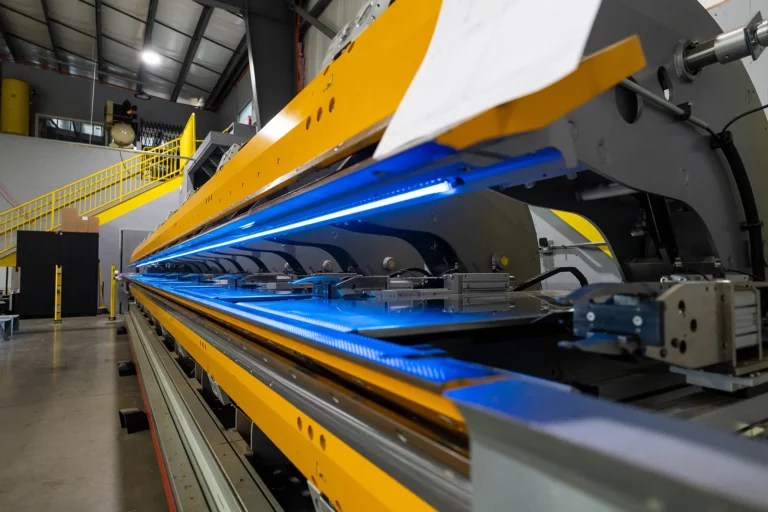
The company President, Cheryl Watt, explains that one of the most significant benefits of modular units is its short production and installation timelines. Improved production and installation saves 30-50% on schedule deadlines in comparison to regular site construction. The units are built indoors in a controlled environment. This ensures that a project can be completed in a single location while being sheltered from potentially harsh weather conditions. In addition, once the wooden units are built, they don’t need to be disassembled and reassembled, but they can be transported to the installation site as they are.
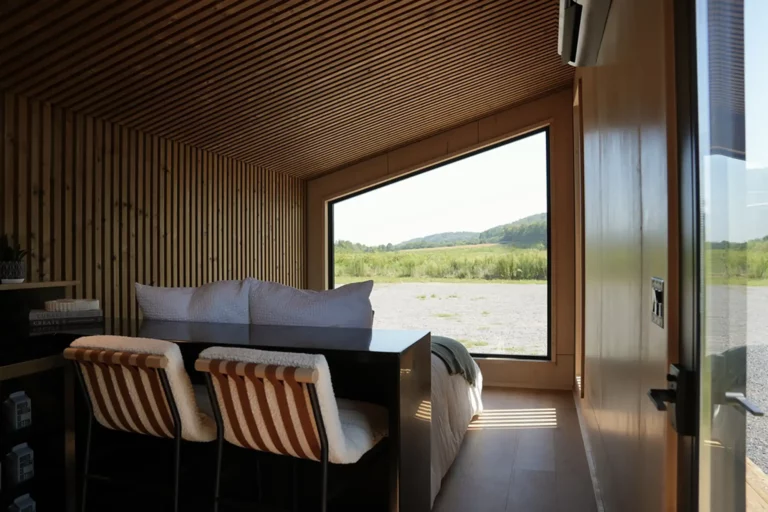
Modular units are very popular among industrial and construction companies working in remote areas where hotels, multi-family housing and other facilities are scarce. They are the perfect solution to set up entire temporary camps, including offices, accommodations, workout rooms, restrooms, medical centers, and any other indoor space the workers might need. Once the job on a site is finished, the units can be transported to the next site. However, as Watt explains, there is more to modular buildings than temporary facilities. The advent of permanent modular structures has allowed Northgate Industries to successfully use this construction system to build schools, hotels, and social housing. “(We) can bring it in quickly and in difficult areas. So, bringing modular (to the city) makes perfect sense.” The construction of small and affordable residential units in overcrowded cities where inflation is skyrocketing sounds indeed like a perfect marriage.
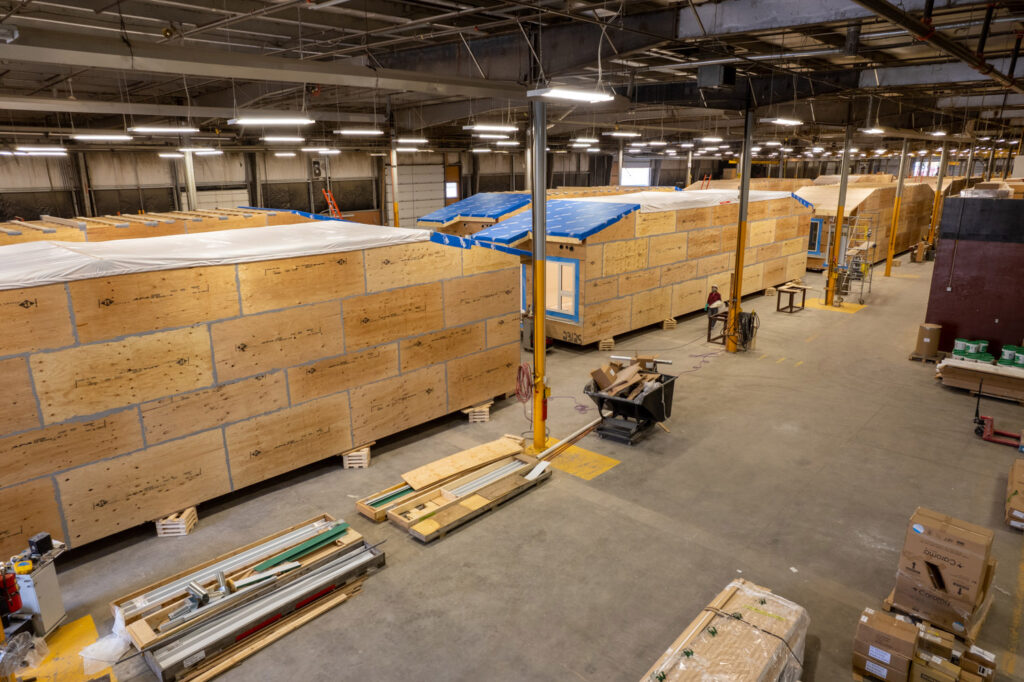
Northgate Industries was founded by Dutch immigrant Sid Braaksma in Alberta in 1970. Initially, its business was limited to servicing and leasing industrial modular units. In 1976, Braaksma brought Northgate Industries to the next level by inaugurating a manufacturing plant for modular structures. This addition allowed the company to diversify its business and take on big projects building industrial trailers and full industrial camps.
Over a few short years, the manufacturing business grew exponentially, creating the need for additional space. In the early 80s, the company moved into a 40,000-square-foot facility and in 1986, Northgate Industries was awarded the first of many international contracts to manufacture modular structures for a US military base in Nevada. Soon after, Braaksma decided to open a second manufacturing facility, this time in Poland, from which Northgate Industries supplies modular buildings to various locations worldwide up to this day. Watt is Braaksma’s daughter, and she remembers how her father had recognized the versatility and capabilities of modular buildings from the beginning. “My dad was very much an entrepreneur. He started with one avenue and from there he branched out.” The company kept growing throughout the 90’s, serving mainly Canada’s oil and gas companies. In 1991, it opened its first turn-key camp solution in Calling Lake, Alberta, and in 1999 it moved into an even bigger manufacturing site on Yellowhead Trail. By 2010, the company had added yet another facility in Acheson, bringing its total manufacturing space to 200,000 square feet.
While most Northgate Industries’ customers come from the oil and gas industry, in the early 2000’s, the company started looking at the residential and social housing market.
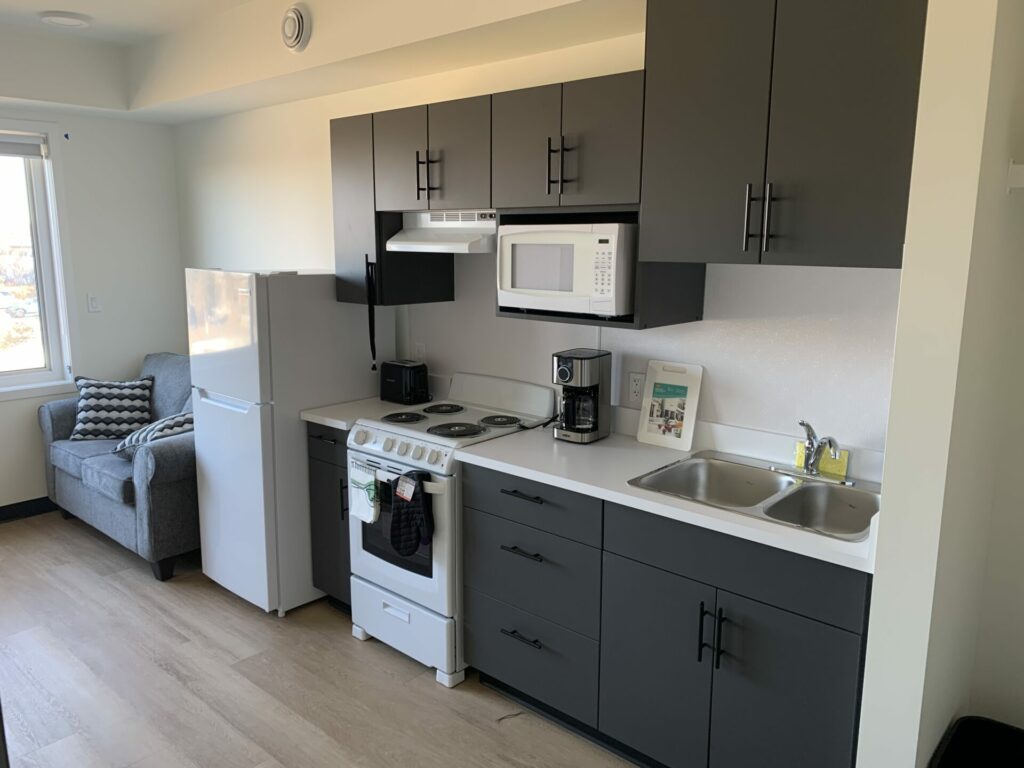
During this period, the company built its first modular apartments, a four-story apartment building in Edmonton which was a first for Edmonton. Since the late 80’s Northgate had worked on projects with a wide variety of requirements. From permanent modular and single-family homes to apartments, two-story office complexes and a First Nation health center, the list is endless. In 2020, Northgate focused primarily on the permanent modular side of the business. Recently in 2021, Northgate manufactured five apartments for Social Housing where each building comprised of one-bedroom, studio suites, and barrier-free modular units, totaling over 33,500 square feet.
“Northgate Industries provides its clients with full-service solutions, from design and manufacturing to transportation and installation.”
Northgate Industries provides its clients with full-service solutions, from design and manufacturing to transportation and installation. By working completely indoors, the production process allows the company to keep materials in a controlled environment, maintain stringent quality control and assurance systems, and minimize waste. In addition, it grants employees a safer and more comfortable work environment. Clients benefit because working on-site allows for less disruption for the residents, safer conditions for the crew, while being less environmentally damaging.
The production schedule for permanent modular units can be up to 50% quicker than in traditional construction, depending on the purpose of the building. This is made possible by building and servicing the site’s foundation at the same time that the units are being manufactured in Northgate Industries’ facility. Once ready, the units are trucked to the site and lifted into place. “A five-story building usually takes about five days,” says Watt. “If somebody wants to buy a hotel or apartment, they can install it quite quickly on colder days as well. You have people in the colder elements for a shorter period of time.”
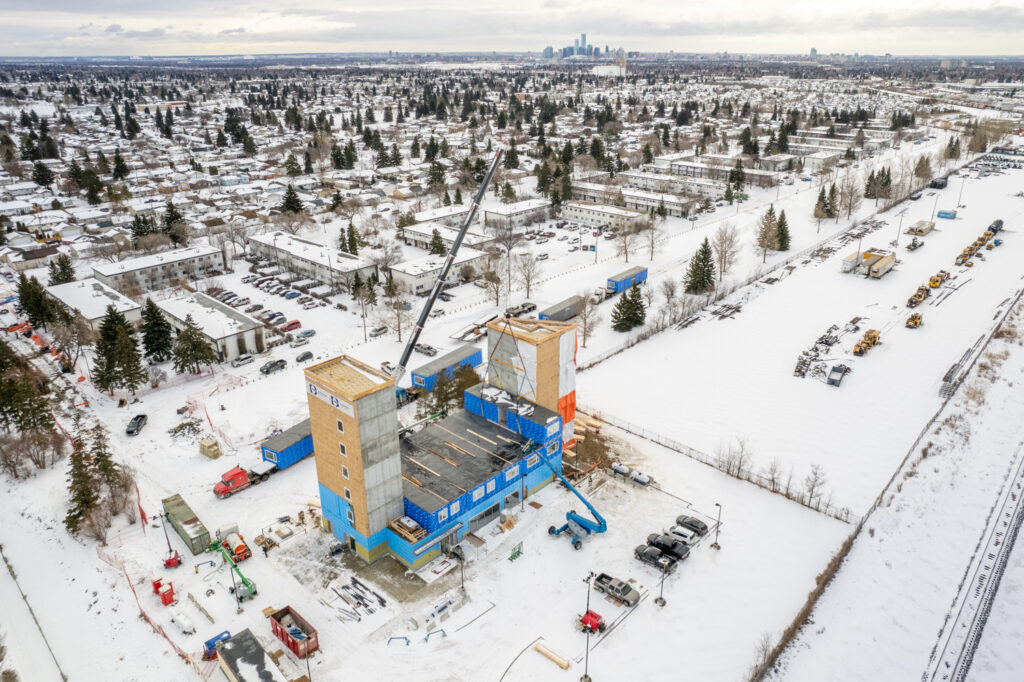
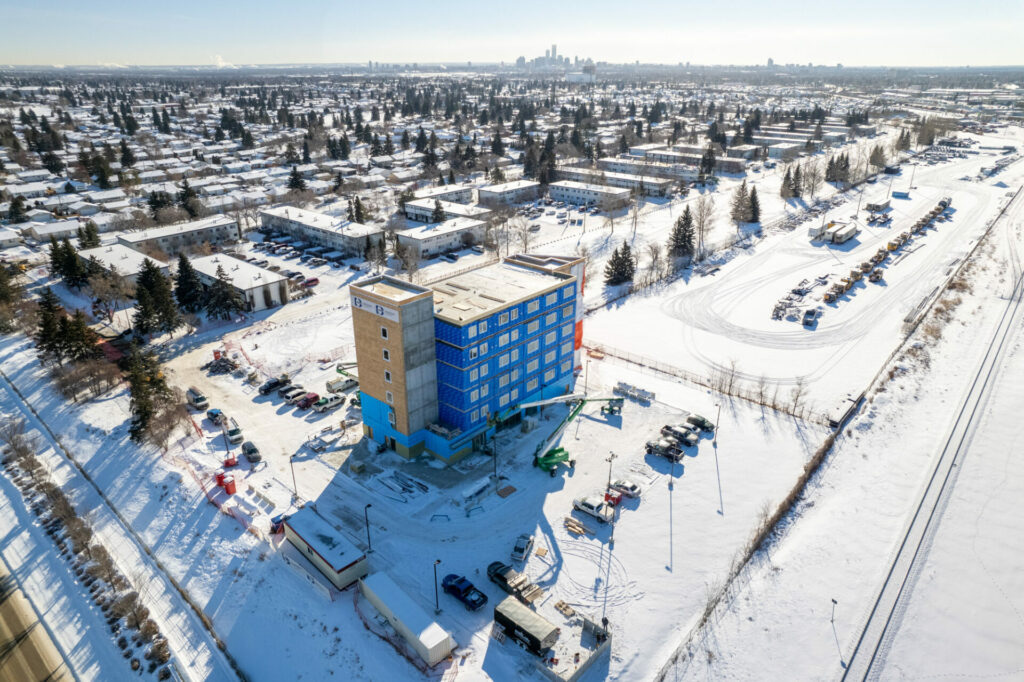
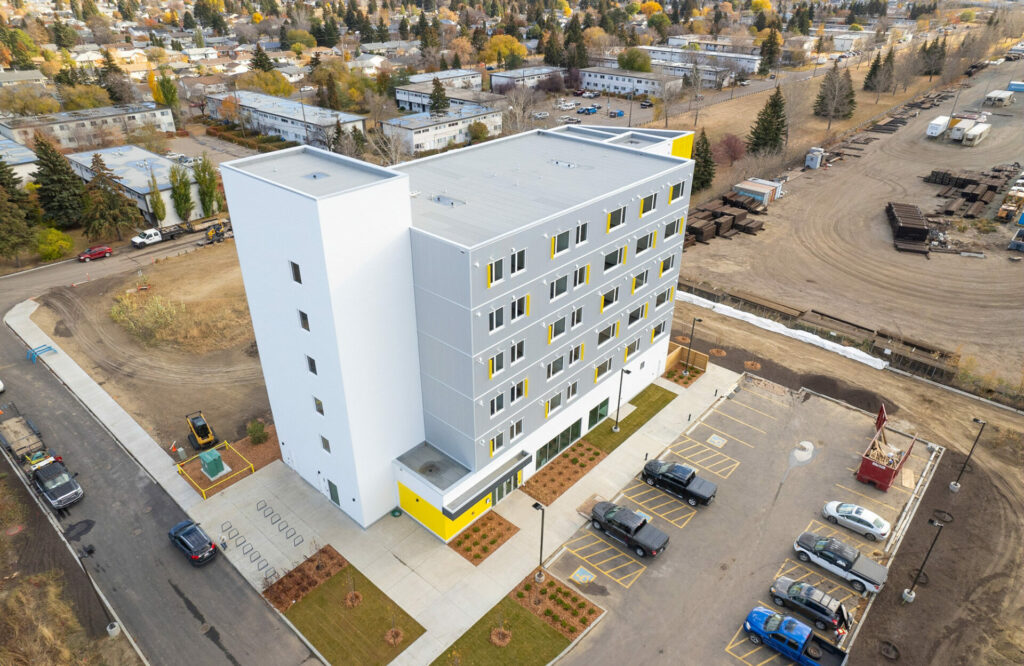
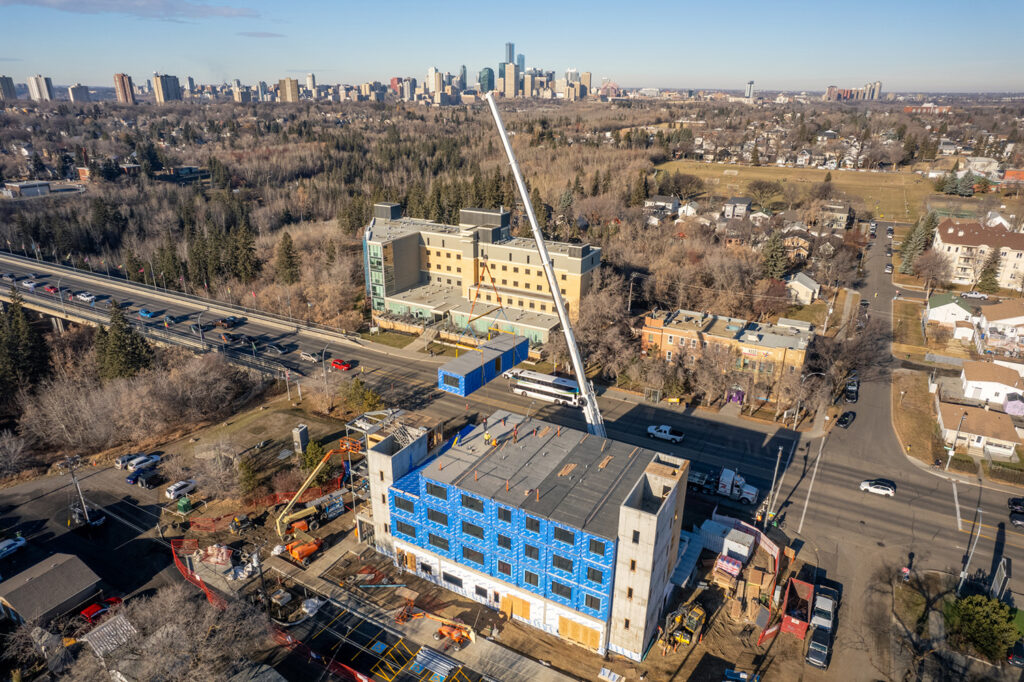
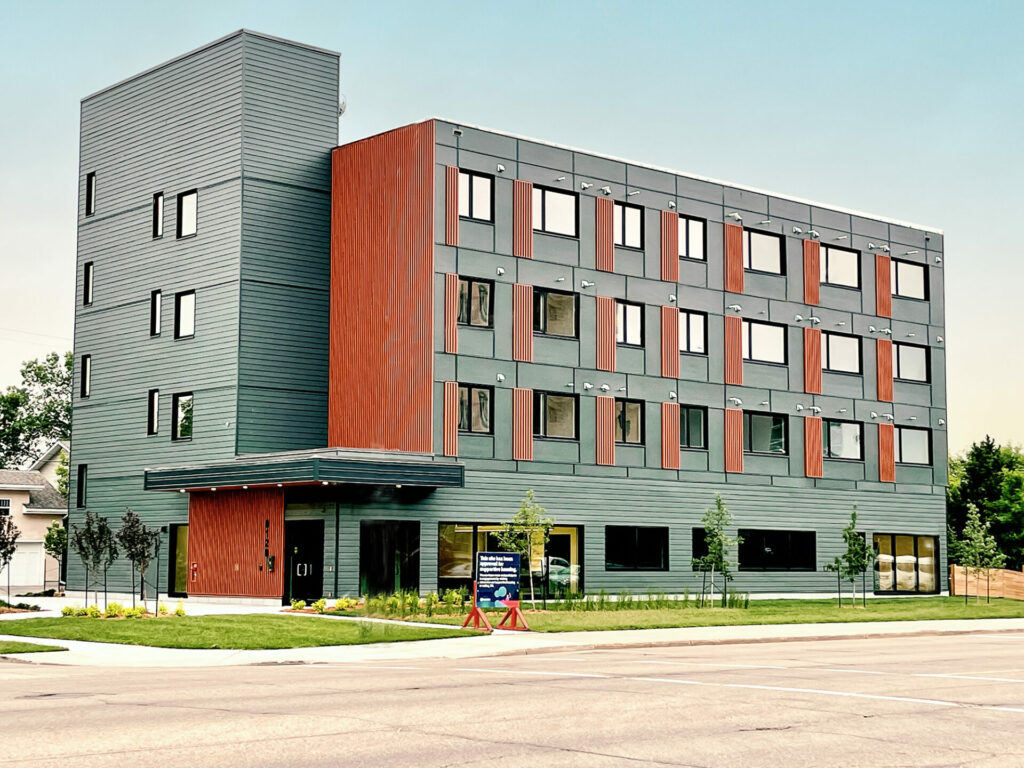
Thanks to this cost-effective construction system, Northgate Industries has been involved in many social housing projects. One of the most recent was a five-story apartment in Duncan, Vancouver Island. The company was also involved in another remarkable permanent modular project for producing a state-of-the-art office complex in Manitoba. The 3,600 square feet building features a pitched roof with vaulted ceilings, a common area with a kitchenette, partition walls with glass inserts, a boardroom with a folding glass wall, offices, and washrooms. The exterior will have a modern look thanks to Hardie board sidings and triple panel windows, while the interior will sport a dropped ceiling. The complex is made of 4 units in total that were loaded onto trucks and delivered to their new home 1,100 km away from Northgate Industries’ facility, where the installation crew completed the job on site.
In terms of longevity, these permanent modular structures have the same life span as traditional buildings. “It does take slightly more materials, but you’ve got a stronger structure. So, in my opinion, it would last longer than a standard construction,” says Watt. “At the end, the units are put together. So, you’ve actually got two walls instead of one wall system.”
With fast production time, affordable costs, ease of transportation and installation in remote as well as in very busy areas, permanent modular ticks all the boxes to become a mainstream construction system. In particular, Watt sees enormous potential in the social housing market in Canada and worldwide with the huge shortage of housing in Canada and the US. Looking to the future, Northgate Industries has plans to further expand its permanent modular business in the US and Northwest Territories and is also considering the acquisition of an additional manufacturing plant. “We’re 140 employees wanting to keep that legacy (Braaksma’s) going and head off into permanent modular as well.” With a process that is streamlined for success, you wouldn’t bet against them.