




With housing affordability under pressure and demand outpacing supply, the modular construction sector is seeing a new wave of attention. In Ontario, one company is not just keeping up, it’s leading the charge. Guildcrest Homes, the Ontario division of Profab, brings over four decades of experience to the modular housing conversation, with a proven track record of delivering efficient, flexible, and high-quality builds across the province. Whether it’s rental housing, First Nations communities, or innovative portable schools, Guildcrest is applying its deep roots and expertise to meet the province’s most urgent housing needs.
Guildcrest Homes didn’t start as a modular home builder. Founded nearly 50 years ago by Dutch immigrants, the company began as a window manufacturer before evolving into the modular construction business it is today. That legacy, built on craftsmanship and adaptability, remains a core strength. “We have 45-plus years under our belt here in Ontario alone, with over 8000 homes built in various configurations,” says Sean Kelly, Sales Marketing Manager at Guildcrest. “We have a good foothold here, and we’re seeing a lot of emphasis now on modular as a solution to the housing crisis.”
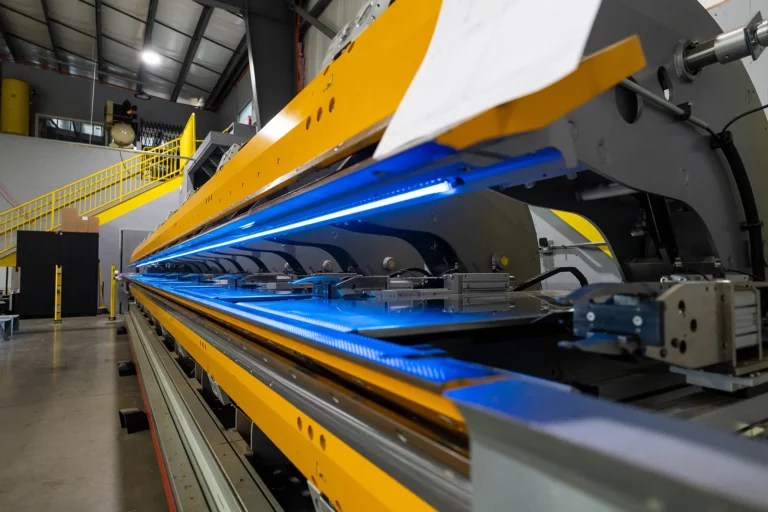
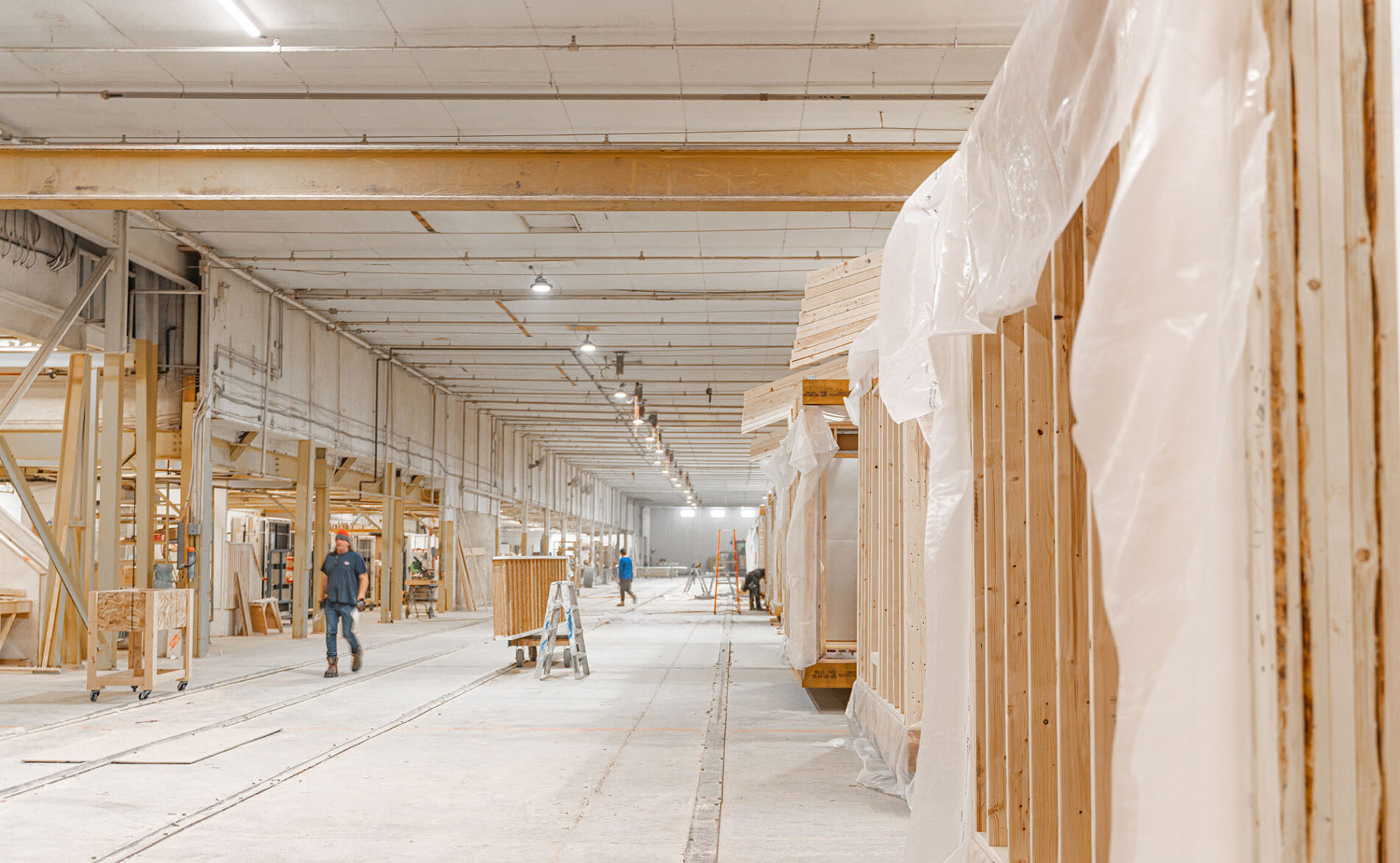
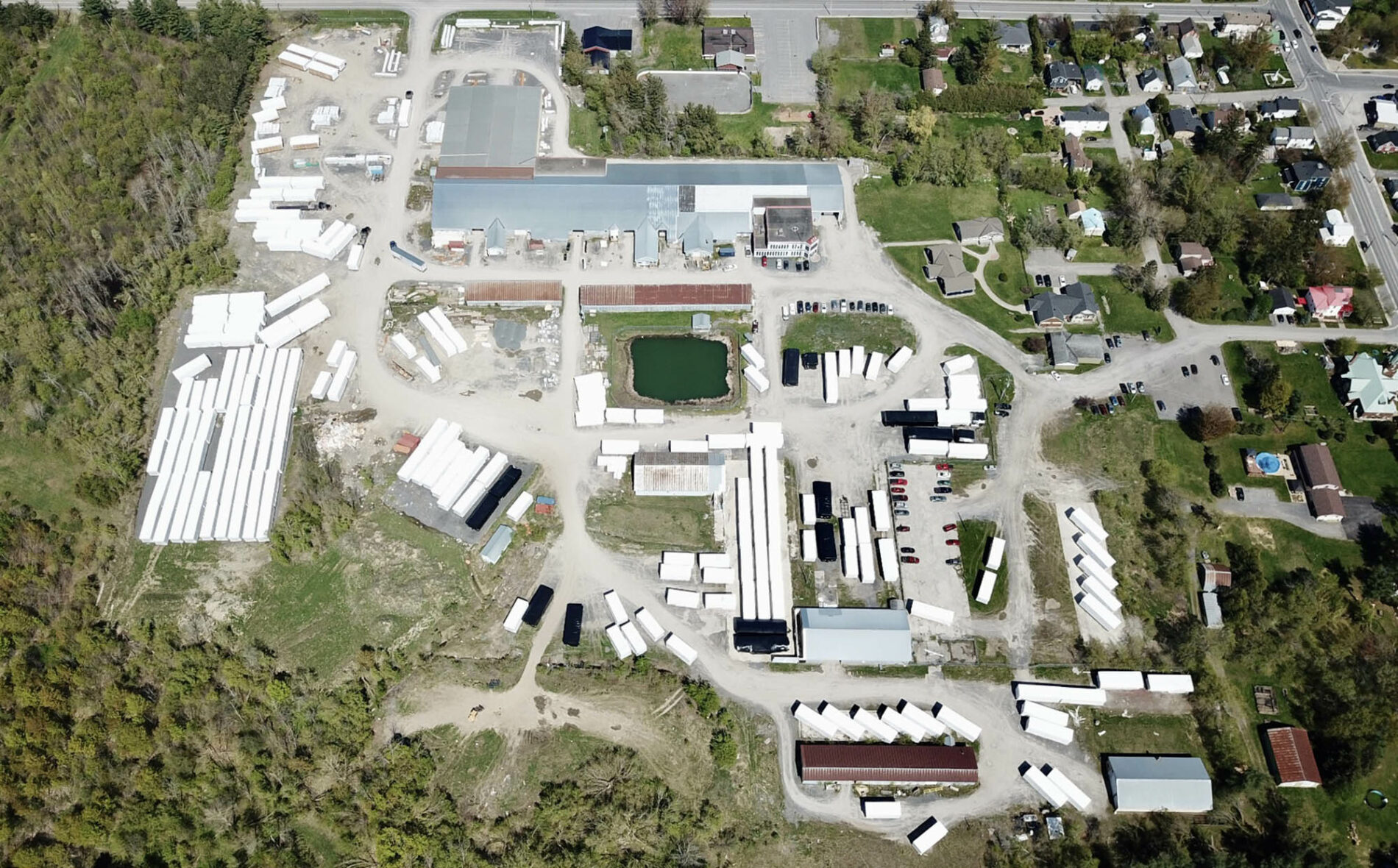
As part of the Profab Group, Guildcrest operates out of a 100,000-square-foot factory in Ontario, with a sister facility in Quebec. Combined, the two sites have the capacity to produce up to one million square feet of living space annually, and they’re ready to scale if demand increases.
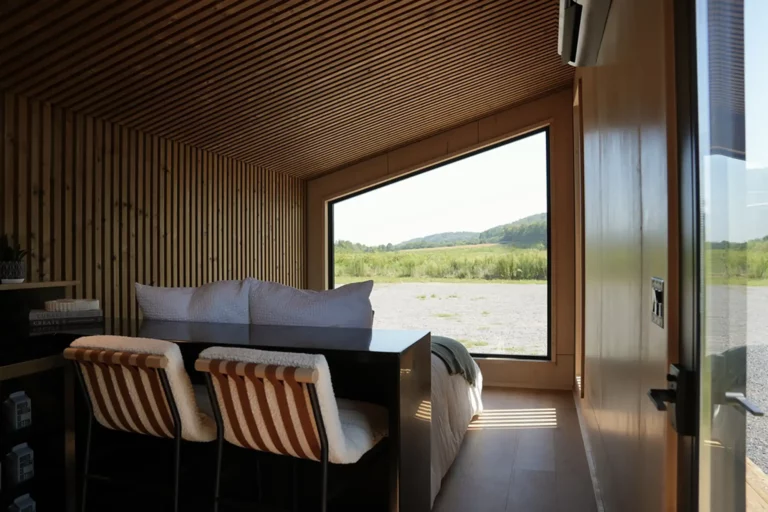
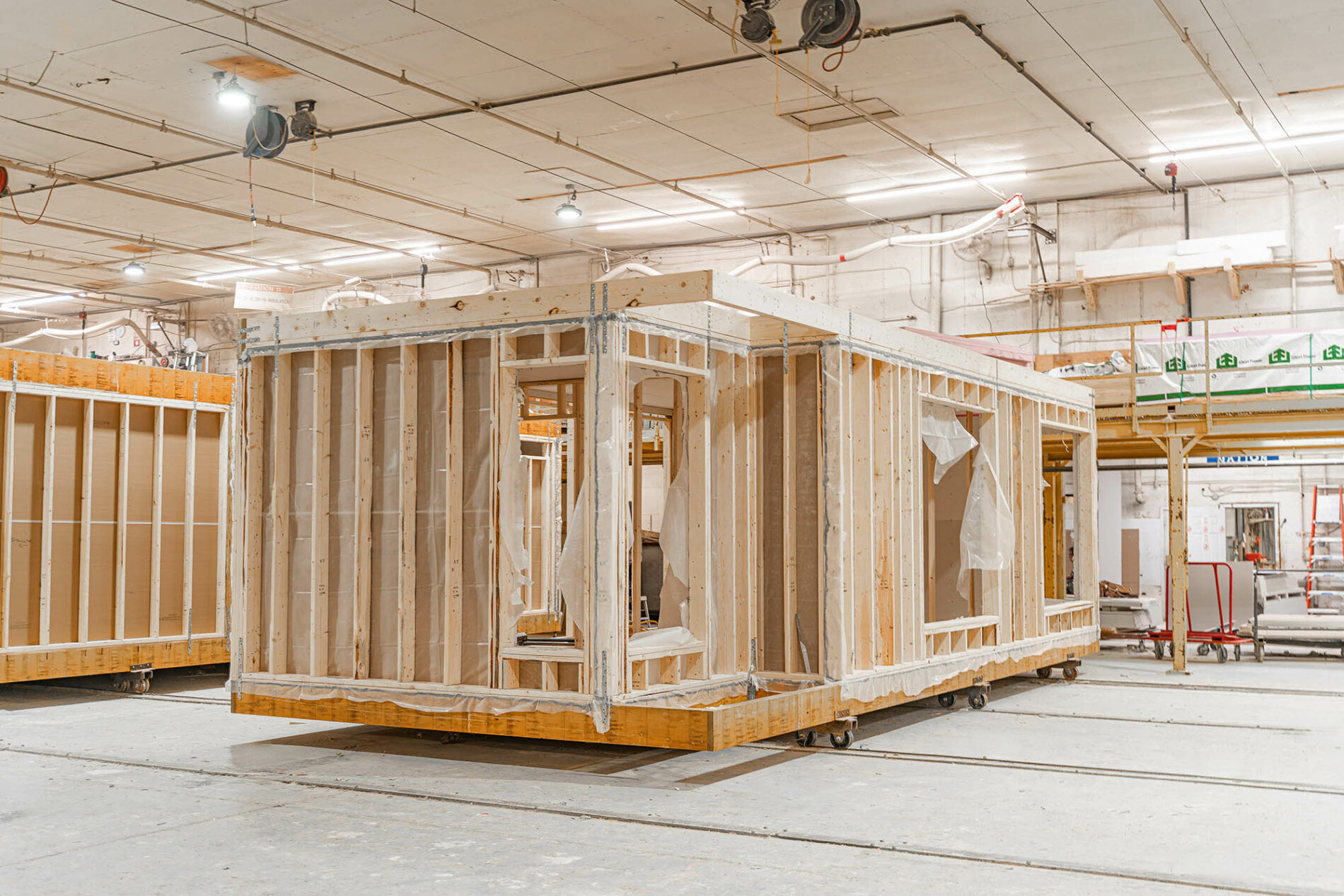
Guildcrest’s product range is wide. From compact single-wide homes (400 to 850 square feet) to large multiplexes that reach up to six storeys, the company’s modular builds are tailored to a variety of housing needs. Each unit is prefabricated in the factory to approximately 75 to 85 percent completion, then transported and assembled on site, a process that saves time, money, and risk for developers and homeowners alike. “We build everything from single-unit homes to multifamily complexes,” Kelly explains. “For urban infill or suburban developments, modular offers speed and efficiency without compromising quality.”
“We’ve provided input on various government energy efficiency programs. We’re involved in those conversations because we’ve been doing this a long time.”
One standout example is a current project in Quebec: a modular school composed of stacked units that can be relocated based on shifting demographics. “They’re not your typical portables,” Kelly notes. “These are high-quality educational spaces that can be redeployed as needed. Rather than leaving a brick-and-mortar school empty, they just move it to where the kids are.”
In a market defined by volatility, one of Guildcrest’s biggest advantages is predictability. Unlike conventional construction, where costs often balloon during the build, Guildcrest offers clients a fixed-price contract from the outset. “In terms of financing, this makes the process much easier for our clients,” says Kelly. “That level of certainty is one of the greatest aspects of modular building. We control the cost for the client.”
The build process itself has numerous benefits. A typical multi-unit modular development of three to six storeys be completed 50% faster. In addition to this, utilizing the factory helps maintain a small carbon footprint and generates 90% less waste. That speed is vital in a province facing a critical housing shortage.
Guildcrest’s “Tarion” model also gives clients a partial turnkey option. For projects up to three hours outside the Ottawa area, the company will handle everything from pouring the foundation to handing over the keys, with only site preparation left to the homeowner or developer.
With thousands of homes completed and a loyal workforce, many employees have been with the company for over 30 years, Guildcrest’s reliability is a major asset. It’s also what sets them apart in a market now flooded with startups trying to capitalize on modular’s rising popularity. “Some new companies may be successful, but quite a few are not,” says Kelly. “You need a well-structured team that understands both the factory side and the logistics of transportation and site delivery. We’ve built that capacity over decades.”
Due diligence is baked into every project. Guildcrest conducts site meetings early in the planning process to flag any potential delivery issues, from access restrictions to ground conditions, that could interfere with installation.
Guildcrest’s modular systems don’t just build homes, they build community. The company has worked extensively with Indigenous communities across Ontario, delivering high-quality, culturally appropriate housing for First Nations partners. “We’re very proud to be able to support them,” says Kelly.
Guildcrest also contributes to major charitable initiatives. It has partnered with the Children’s Hospital of Eastern Ontario on its lottery program, donating modular cottages to help raise funds. And as governments at all levels look to modular construction to accelerate housing development, Guildcrest is helping shape the future. “We’ve provided input on various government energy efficiency programs,” says Kelly. “We’re involved in those conversations because we’ve been doing this a long time.”
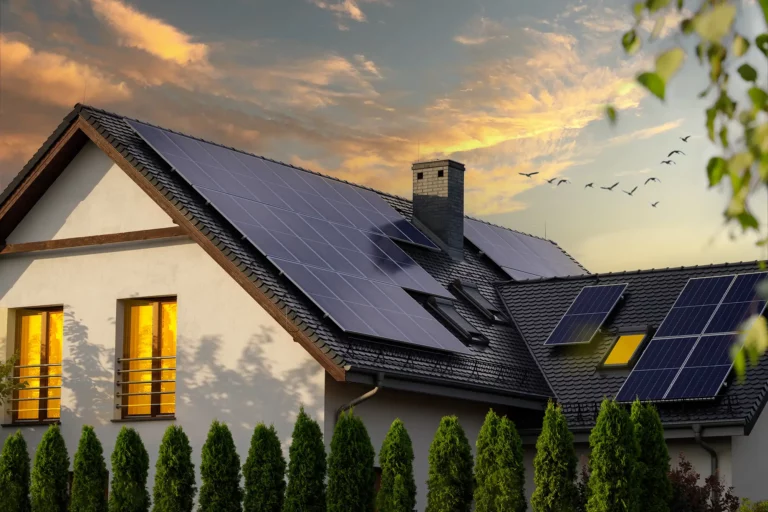
Their homes are already designed to be energy efficient, approaching net-zero levels directly out of the factory, another selling point as sustainability becomes central to new construction.
At the core of Guildcrest’s philosophy is transparency, with clients, with developers, and with partners. “We’ve always been very transparent with our clients,” Kelly says. This customer-first mindset is another reason the company has maintained strong relationships and a solid reputation throughout Ontario and Quebec.
The outlook for the rest of 2025 is robust. Guildcrest is ramping up capacity and ready to meet market demands. “We still have capacity left for the year, and if demand grows beyond the one million square feet we can currently produce, we can bring on another shift at either factory,” Kelly says.
The company is also building out its own portfolio of rental units to contribute directly to the housing supply. A recent 46-unit project in Rama First Nation is one example of the kind of high-impact work Guildcrest is scaling up.
But the long-term vision is even broader. “We want to align ourselves across the full range of homebuilding,” says Kelly. “That means modular, multi-unit, and even panelized systems. We know modular is part of the solution to the housing crisis, and we want to be part of that solution.”
Guildcrest is actively working with municipal and provincial governments to help meet ambitious housing targets, offering input backed by decades of hands-on experience. “With 45 years in Ontario, we’ve got the professionalism, service, and history to deliver,” Kelly says. “We’re not just building homes. We’re building a path forward.”