






There is no single construction market in the United States right now. Contractors chasing data centers, power work and major infrastructure packages are struggling to find enough electricians, mechanical trades and specialty subcontractors to keep pace, while firms exposed to conventional office, manufacturing and residential work are watching opportunities thin out. Both conditions are playing out at once, and the difference between them is becoming more important than the national headline.

Total U.S. construction spending fell 0.5% from June to July and was 3.8% lower than a year earlier. Private nonresidential construction was down 3.3% year over year, while private residential spending fell 7.3%. Yet Associated General Contractors of America Chief Economist Ken Simonson noted that three categories were doing much of the work of holding up the broader market: “Only three categories are propping up construction spending: data centers, power and highway projects.”
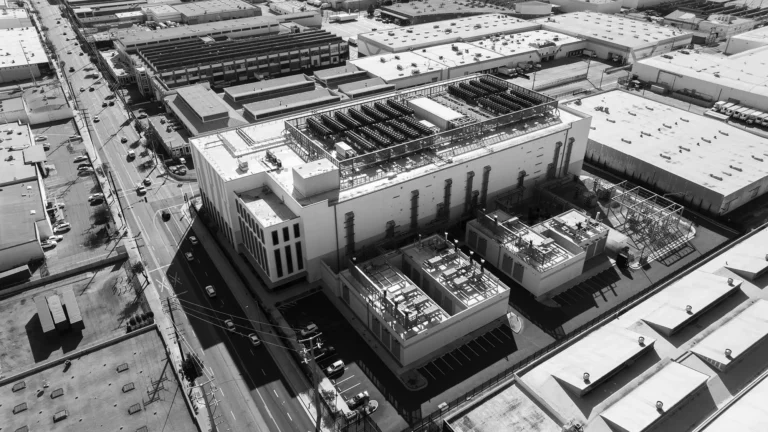
Data centers are the most striking example. Private office construction, the federal category that includes them, was up 21.3% from July 2025. Strip data centers out of that number, however, and conventional private office construction was down 10.6%. Data-center spending itself had risen 57.2% over the year, while manufacturing construction—one of the defining growth stories earlier in the decade—was down 21.7%.
Those numbers create very different realities from one contractor to the next. Associated Builders and Contractors reported that its Construction Backlog Indicator rebounded to 8.5 months in August, but contractors with data-center work carried 9.9 months of backlog compared with 8.3 months for firms without it. Roughly one in six ABC members was under contract on a data-center project, the highest share the association had recorded. “Data centers continue to keep contractors busy even as activity softens in other segments,” said ABC Chief Economist Anirban Basu.
The scale of the boom has begun to reshape the construction map. Between mid-March and late August, the number of planned U.S. data-center projects increased sharply, while operating facilities also multiplied. Virginia remains the largest concentration, but projects are moving into a broader range of states as developers look for land, power and permitting capacity.
For contractors already established in mission-critical work, the opportunity is obvious. The sector demands much more than a building shell: electrical distribution, backup generation, cooling, controls, fiber and utility infrastructure all carry enormous weight in both the schedule and the eventual performance of the facility. Long-lead electrical equipment can determine when a project actually becomes operational even after much of the physical building is complete.
One industry executive told Construction Dive that electrical gear was frequently running at lead times of 40 to more than 60 weeks, creating situations in which a shell could be complete and mechanically roughed in while the project still could not be energized. Delays of that kind ripple through procurement, commissioning and turnover, giving experienced electrical and mechanical contractors a particularly important role.
Labor is becoming just as constrained. Construction employment increased in fewer than half of U.S. metropolitan areas between July 2025 and July 2026, yet contractors working on data centers, power projects and advanced manufacturing facilities continued to report difficulty hiring qualified people. “Demand for workers is currently very unbalanced,” Simonson said.
The contradiction is less surprising when viewed locally. A contractor in one market may be reducing headcount while another, only a few states away, cannot find enough electricians or pipefitters to staff the work already under contract. National employment figures compress those experiences into one number, but the decisions inside construction firms are far more specific to region and specialty.
AGC and NCCER found that 28% of surveyed contractors had performed data-center construction during the previous 12 months. Among those firms, 58% said the work had increased competition for skilled workers, while 49% reported additional wage pressure. More than a third identified worker or subcontractor availability as their biggest obstacle to pursuing or delivering data-center work.
This uneven demand is also showing up in contractor confidence. ABC’s August survey showed stronger expectations for sales and profit margins, while staffing expectations weakened. The share of contractors expecting to reduce staffing reached 12.3%, its highest level since late 2025. At the same time, firms with data-center work continued to report longer backlog and tighter access to specialty trades.
“Contractors attached to the strongest markets are competing for people and capacity; others are dealing with softer demand.”
ABC economist Zack Fritz described the situation as a “haves and have nots” dynamic. Contractors attached to the strongest markets are competing for people and capacity; others are dealing with softer demand. The temptation is to follow the work, but entering a booming sector is rarely as simple as adding a new line to the company website.
Mission-critical construction requires technical experience, relationships, systems and procurement knowledge that take time to build. An electrical contractor accustomed to schools or conventional commercial work may have the craft capability to enter the sector, but redundancy requirements, commissioning expectations and compressed schedules can expose gaps quickly. General contractors face the same calculation: winning a project only matters if the organization can actually execute it.
Manufacturing offers a useful reminder of how quickly the center of gravity can move. Semiconductor plants, battery facilities and other advanced manufacturing projects drove extraordinary construction activity earlier in the decade. By July 2026, manufacturing construction spending was down more than 20% from a year earlier. Contractors that built substantial capacity around that wave are now operating in a different market from the one they entered.
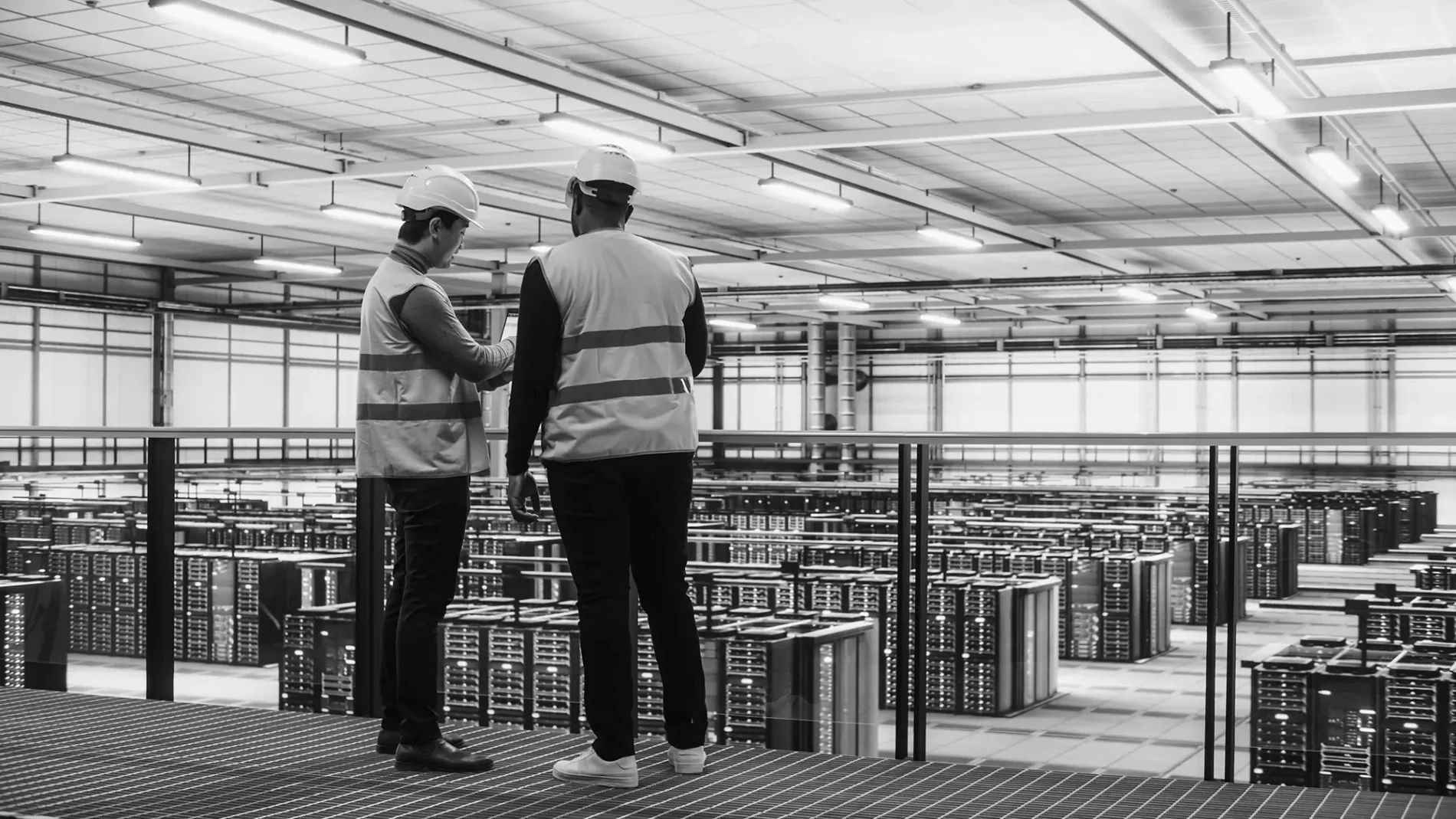
Even data-center planning showed a modest pause in August. Dodge Construction Network’s Momentum Index slipped 0.4% for the month, largely because data-center planning weakened from July. Institutional planning improved enough to keep the broader index relatively steady, but Dodge noted that commercial activity would look much softer without the data-center pipeline. “Weaker data center planning predominantly drove the flatter trend, while most other sectors saw an acceleration in planning momentum,” said Sarah Martin, Dodge’s director of economic research.
While the slight cooling does not signal the end of the boom, but it is a reminder that no growth market should be treated as permanent. Contractors deciding whether to invest in new people, offices, equipment or specialties have to weigh today’s backlog against the time required to build capability and the possibility that demand will shift again.
Power construction provides another area of strength, with spending up 6.5% year over year in July. Highway and street work was 4.5% higher. Both markets also overlap with data-center growth through utility infrastructure, site development and heavy civil work, increasing competition for some of the same contractors, equipment and skilled workers.
For firms positioned to capture those opportunities, the next several years may feel nothing like the national construction numbers. Others face a harder strategic choice: whether to move into unfamiliar markets while they are hot, acquire expertise, expand geographically or stay disciplined around sectors they already understand.
The answer will not be the same for every contractor, and increasingly neither is the economy they are operating in. One company can have a soft commercial division and a packed mission-critical group. An electrical contractor can see tenant-improvement work slow while turning away power-intensive projects. A civil contractor can benefit from stronger highway activity while nearby private development stalls.
Construction has always moved in cycles. What is unusual now is how much activity is concentrated in a relatively small group of sectors, and how strongly those sectors are influencing labor, equipment and infrastructure demand beyond their own jobsites.
For contractors, the more useful question is no longer simply whether construction is growing. It is whether the construction they know how to build is growing, and whether following the work elsewhere is worth the risk.