

Long before Wind River Built occupied a 100,000-square-foot facility or employed as many as 120 people during peak periods, Travis Pyke was building a tiny home for himself and his fiancée on a trailer purchased through Craigslist. The work took a year, completed during nights and weekends while he balanced college with a job, but the project gave him more than a place to live. It revealed a housing model that combined affordability, craftsmanship and careful use of limited space. “That’s really where the company was born,” Pyke said.
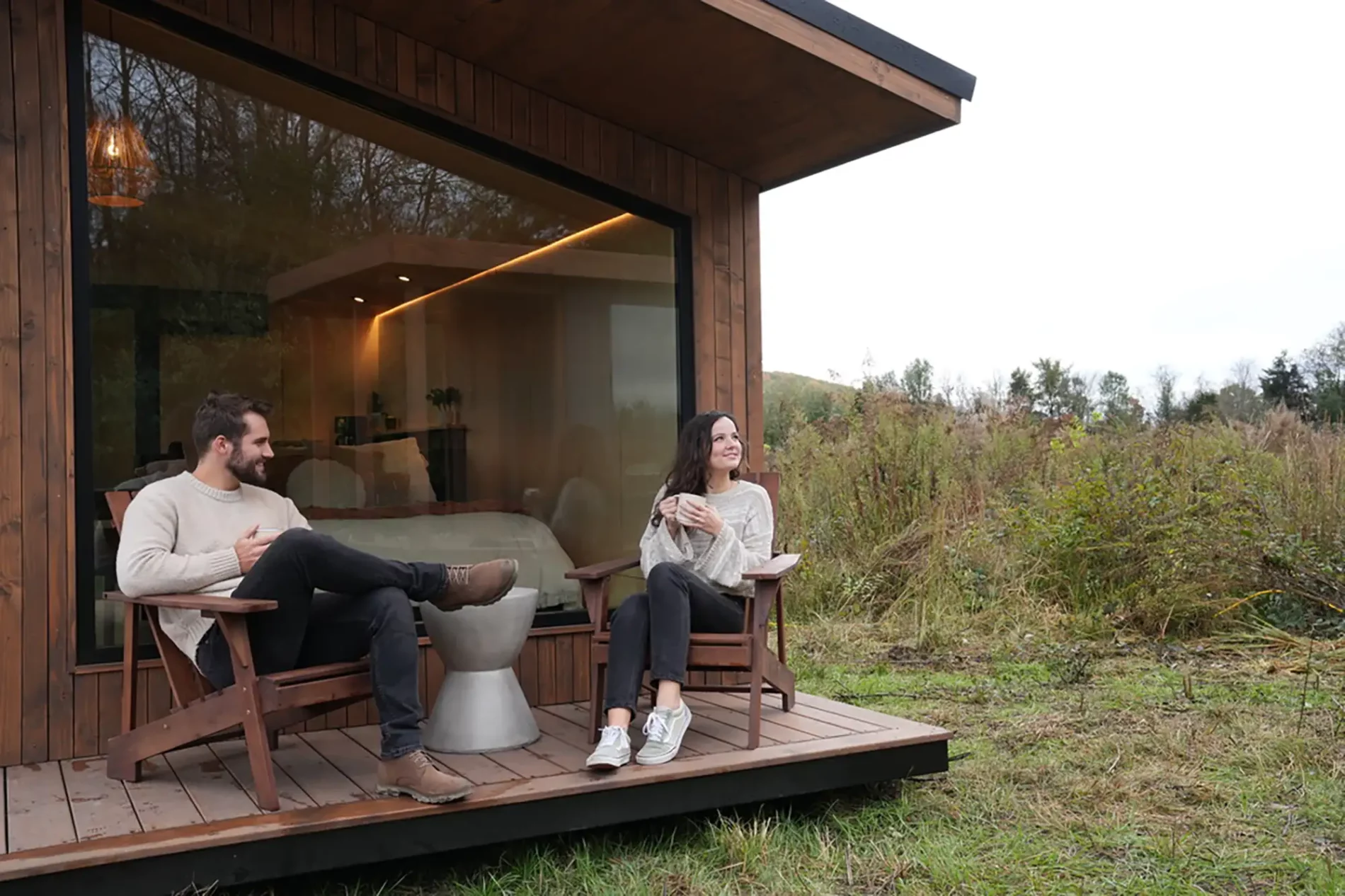
Wind River’s subsequent growth has been shaped by that first experience. The Tennessee manufacturer remains closely associated with the tiny-home movement, but its story is not simply one of scaling a niche product. Over nearly 12 years, the company has gradually expanded the principles behind tiny living —efficient design, controlled construction and an emphasis on practical quality— into a wider modular platform serving homeowners, developers, educational institutions and hospitality clients.
Pyke’s route into construction began much earlier. A craftsman carpenter and now Wind River’s CEO and chief design officer, he comes from a family with deep roots in the trade. His grandfather, a retired builder and carpenter, built their family home along with Pyke and the rest of his family while homeschooling his 7th grade year. That year gave him the flexibility to continue his education while spending valuable time learning the building trades while working alongside his grandfather on their family home build.
By his teenage years, he was already combining construction with entrepreneurship. When he encountered an article about the emerging tiny-home movement in 2012, the concept immediately felt familiar. The homes were modest in scale and more attainable than conventional housing, but their appeal also came from the discipline required to make a small space function well. “It was practical,” Pyke said. His reaction was equally direct: “I could totally build this myself with the skill sets I’ve learned over the years.”
Living in the completed home gave him a perspective that could not have come from design drawings alone. He experienced how storage, circulation and daily routines worked within a few hundred square feet, and he understood where craftsmanship mattered most. Small buildings leave little room to conceal poor planning. Every cabinet, opening and transition must earn its place. The experience also changed his plans. “I did not go back to school the next year. I dropped out and decided to start a tiny home company. And I like to joke that I’ve been in school ever since.”
Wind River initially grew through friends, referrals and word of mouth. Pyke describes the company’s development through three distinct iterations. Wind River 1.0 consisted of a small group producing approximately eight to 10 tiny homes each year out of an open-air pole barn in the country. A growing reputation supported the progression of purchasing land and building a 10,000 square foot shop, while the workforce expanded to roughly 30 people and annual production increased to between 20 and 30 units.
Tiny homes brought the company national visibility, including an appearance on the television program Tiny House Nation, but exposure alone did not determine its direction. As outside interest increased, Pyke and his team considered investment opportunities while remaining selective about the people with whom they would grow.
“The TV show helped put us on the map,” he said. “We had some investor opportunities that just didn’t feel right. And then one came along – a private family that loved us as people, and the quality homes we were building. They saw a niche and decided to invest in us to really grow and scale.”
“We had some investor opportunities that just didn’t feel right. And then one came along – a private family that loved us as people, and the quality homes we were building.”
That investment helped establish what Pyke calls Wind River 3.0. Capital and strategic support gave the company the ability to increase production, but expansion also required a larger addressable market. Tiny homes had demonstrated the value of off-site construction and efficient design; modular housing offered a way to apply the same expertise to buildings governed by more widely accommodating codes and zoning requirements.
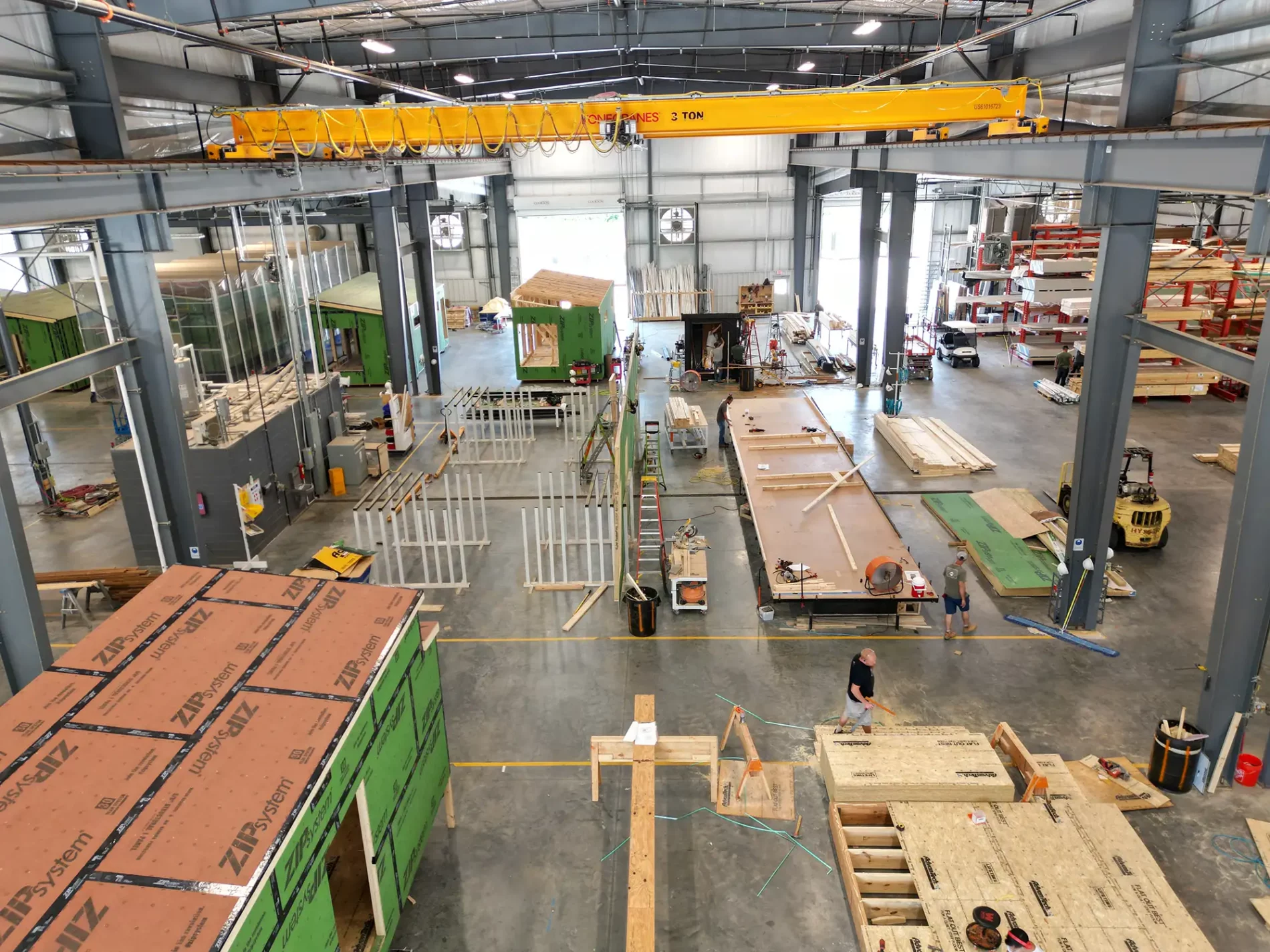
The transition did not require Wind River to abandon its identity. It required the company to reinterpret it. The skills developed within the tiny-home market—designing compact spaces, coordinating multiple trades and maintaining finish quality inside a controlled facility—could be transferred to larger residential and commercial buildings. “We can take our expertise and design and craft, do quality, and just build the same thing—just to a different code a different way. And all the sudden the market got bigger,” Pyke said.
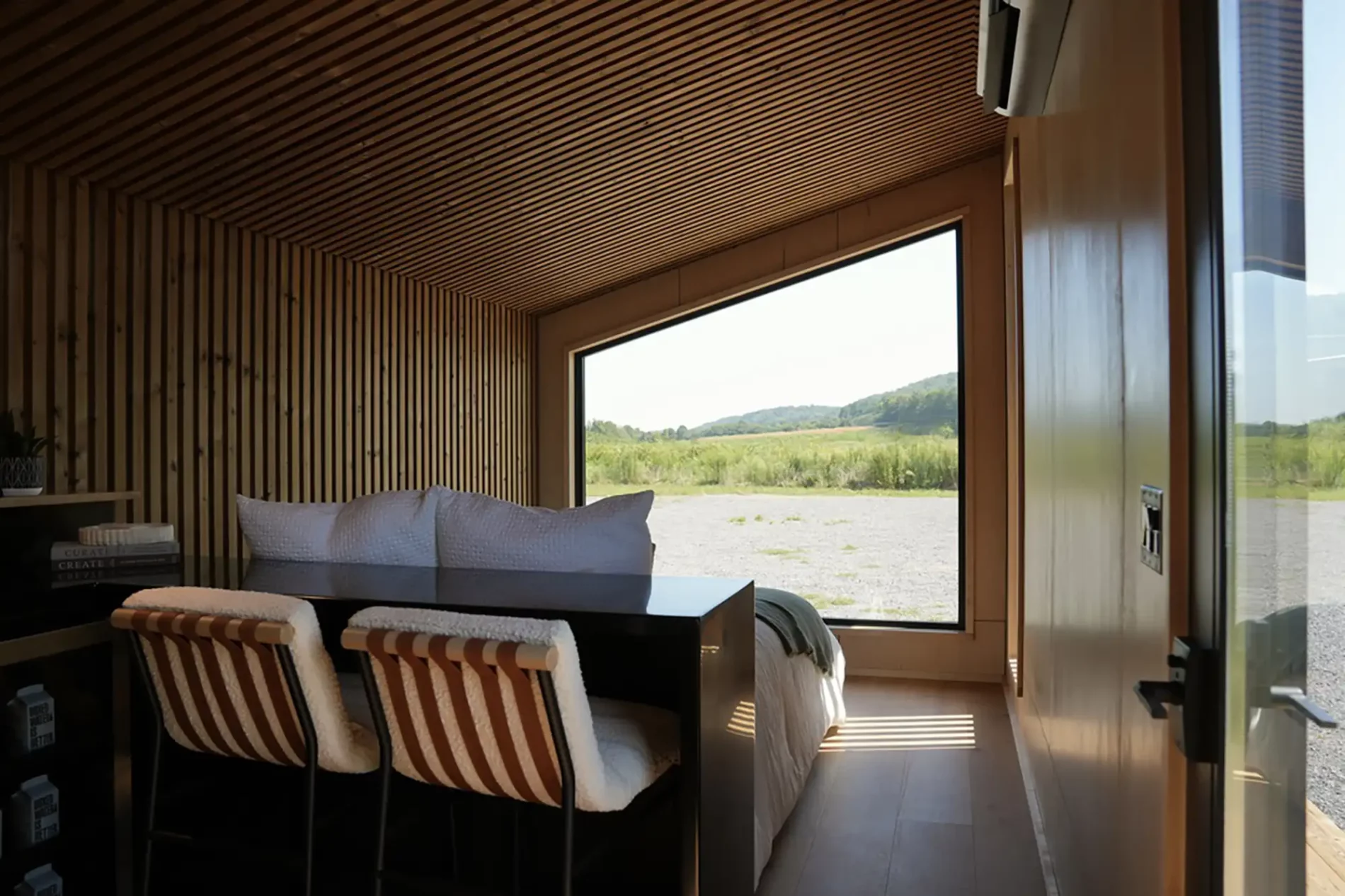
Tiny homes now account for approximately 20 to 30 percent of Wind River’s business, with modular construction representing the remainder. The company’s residential offering is organized into three lines. Signature provides predetermined design elements intended to simplify decisions and accelerate delivery. Tailored allows clients to customize portions of those designs, while Bespoke offers a fully individualized process.
That range supports more than individual homebuilding. Wind River has expanded its operations to serve developers, investors and institutions seeking to deliver residential communities and larger developments at scale. Standardization can improve efficiency, control costs and reduce uncertainty across multiple units, while the company’s different levels of customization allow each project to respond to its market, site and intended residents. The result is a model capable of retaining the quality and flexibility of a personalized home while producing the volume required for larger residential programs.
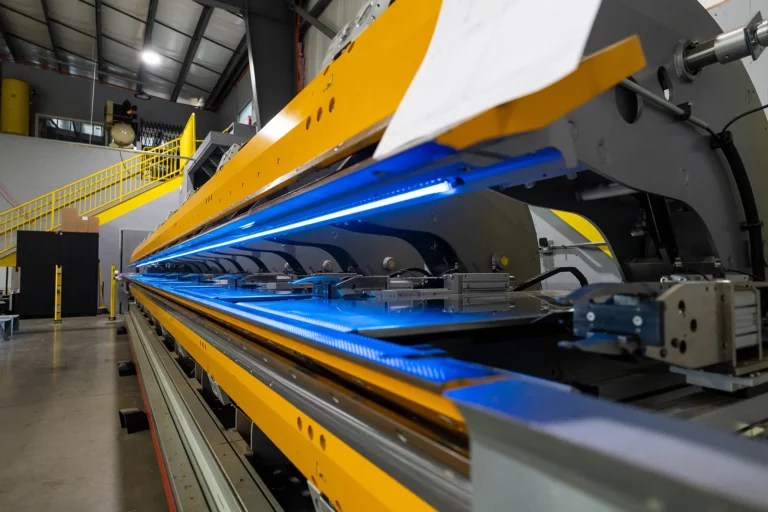
Its larger facility also enables Wind River to maintain direct oversight of all the building trades through vertical integration. The company currently has the manufacturing capacity to construct more than 250 modules per year, with room to expand its facilities further. Paint, cabinetry, electrical, plumbing, steel fabrication and many other trades are among the capabilities kept in-house, allowing the team to coordinate work closely and protect the level of finish associated with its earlier homes. That vertical integration is particularly important as the company takes on projects involving repeated units or compressed schedules. A local university offered one such test when an unexpected rise in enrollment created an urgent need for safe student accommodation. Wind River delivered 26 units capable of housing approximately 100 students. “It was ready in nine months,” Pyke said.
The project demonstrated more than production speed. It showed how modular construction can respond when demand appears faster than a conventional construction program might reasonably accommodate. The buildings could be produced in a controlled setting while other elements of the project progressed, helping the university address an immediate capacity problem without treating the solution as temporary or disposable.
A hospitality development near the Great Smoky Mountains required Wind River to deliver 75 identical cabins. The repeated design made factory production a natural fit, but consistency did not lessen the need for craftsmanship. In hospitality work, every unit must create the same guest experience, and small discrepancies can become increasingly visible when repeated across an entire development.
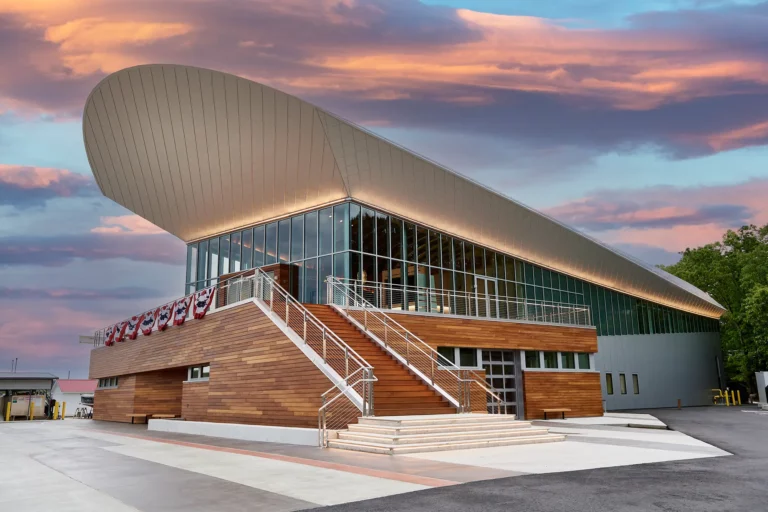
A different form of adaptability shaped the company’s work for the Chattanooga Lookouts baseball team. The organization wanted a roughly 3,000-square-foot retail store that would give fans a more welcoming experience on a historic property near the ballpark. Modular construction helped the project navigate the site and zoning conditions while respecting the character of its setting. Rather than standing apart as an unrelated commercial venture, the store showed how Wind River’s residential design instincts could carry into another market.
Hospitality currently forms the foundation of Wind River’s business, providing the company with significant traction and a growing reputation for delivering high-quality projects at scale. Building on that experience, Wind River is gaining momentum in the residential sector and working to demonstrate its capabilities to developers and investors seeking alternatives to the large, expensive homes that dominate much of the market. Pyke describes the opportunity as the “missing middle”: well-built homes for people who do not require 3,000 or 4,000 square feet. “We’re very passionate about residential,” he said. “We started the company wanting to provide a housing type at a price point that didn’t exist, so that’s referred to a lot as the ‘missing middle’.”
The potential customer base is broad. It includes individuals, couples, empty nesters and first-time buyers, each drawn to a smaller footprint for different reasons. For some, the priority is affordability. Others want less maintenance, a more efficient layout or a home that reflects the way they actually live rather than a conventional expectation of size. “Individuals, couples, empty nesters, first-time home buyers—we feel like that is kind of the niche we want to fall into,” Pyke said.
Serving that market at greater scale requires more than increasing factory output. Wind River is continuing to strengthen its architecture, engineering, compliance and logistics capabilities, with particular attention to the early planning that allows modular projects to move smoothly. State-level plan certification can provide a significant advantage, but it also demands coordination before production begins. Investment in front-office staff has therefore accompanied investment on the manufacturing side. As the company grows, its ability to guide clients through design, approvals and delivery becomes as important as its ability to fabricate walls, cabinets or steel components. Pyke believes that broader internal capacity is helping Wind River avoid some of the disruption that can follow rapid expansion. When a customer or developer arrives with a concept, he said, “we can pick it up, whatever you bring to us, and we’ve got the right team to execute on it for sure.”
Wind River’s future may involve larger buildings, broader partnerships and more complex modular programs, but its development still traces back to the questions posed by Pyke’s first tiny home: How much space does a person genuinely need? How can design make that space work harder? How can quality remain attainable?
The scale has changed considerably since he built that home on a secondhand trailer. The underlying idea has not. Wind River grew by recognizing that small homes were not merely a product category. They were a demanding construction discipline, one that taught the company how to plan carefully, build efficiently and treat every square foot as valuable. Its modular expansion is now giving those lessons room to grow.