





Associations

city ahead on a road at night

Civil Engineering & Infrastructure

modern concrete structure

Concrete

design build drawing with construction tools

Design Build | CM | GC

multiple excavators parked in a row

Equipment

green tree outside office building

Green Building

thumbs up

Positive News

toolbelt construction tools

Specialty Contracting

Steel

Forty Years of Foundations, Family and Forward Motion

View in E-mag

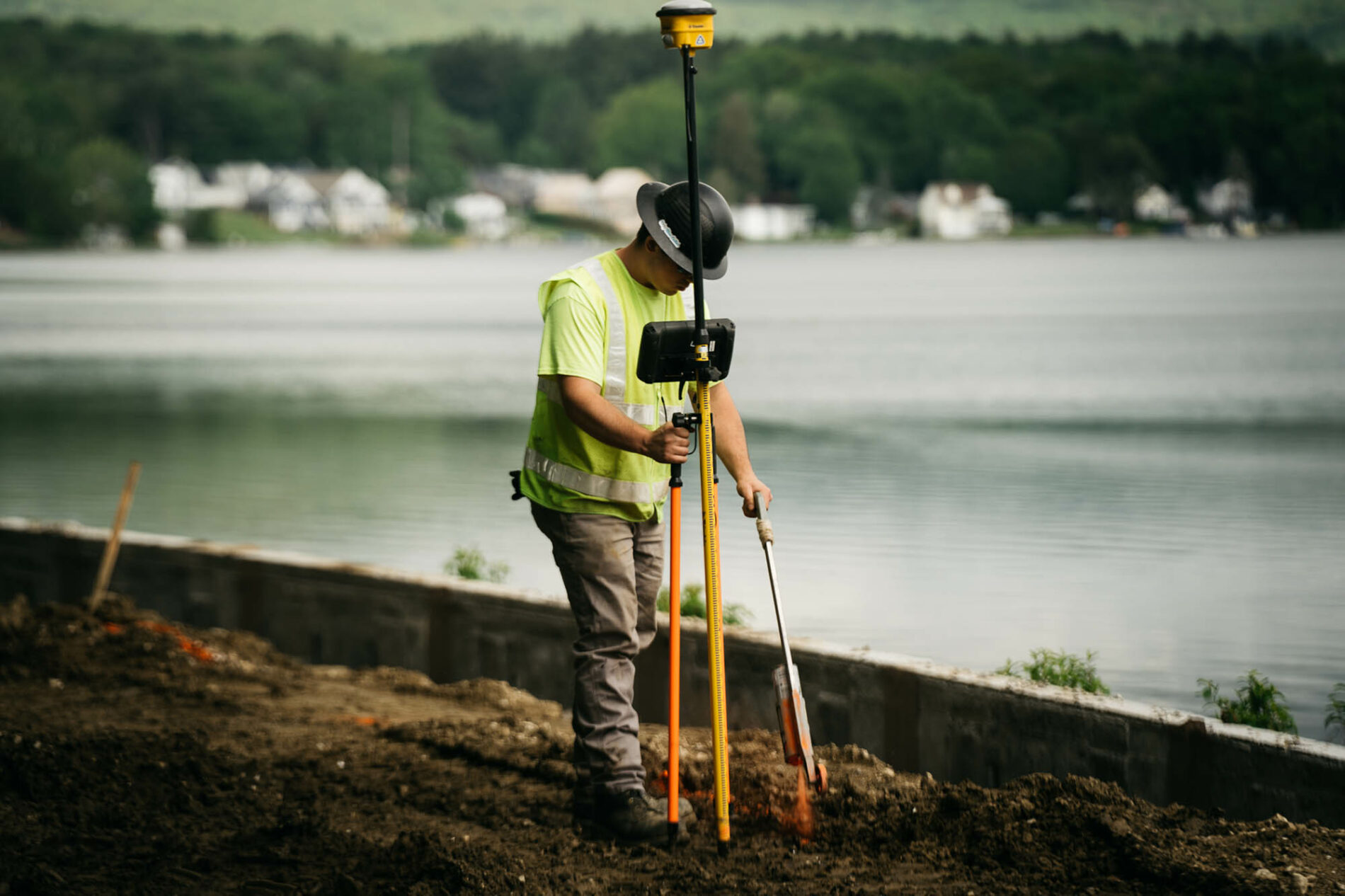
For forty years, Kershaw Builders Inc. has played a foundational role in South Carolina’s development. Established in 1985 as a family-owned operation in Kershaw County, the company has grown into a specialized sitework and utility contractor with nearly 100 employees, serving municipalities, general contractors, and developers across the region.

While much of their work lies below grade — underground utilities, storm systems, mass grading and site preparation — its impact is highly visible. Schools open on time. Parks welcome families. Roads expand to support growth. Communities function because the infrastructure beneath them was built correctly.

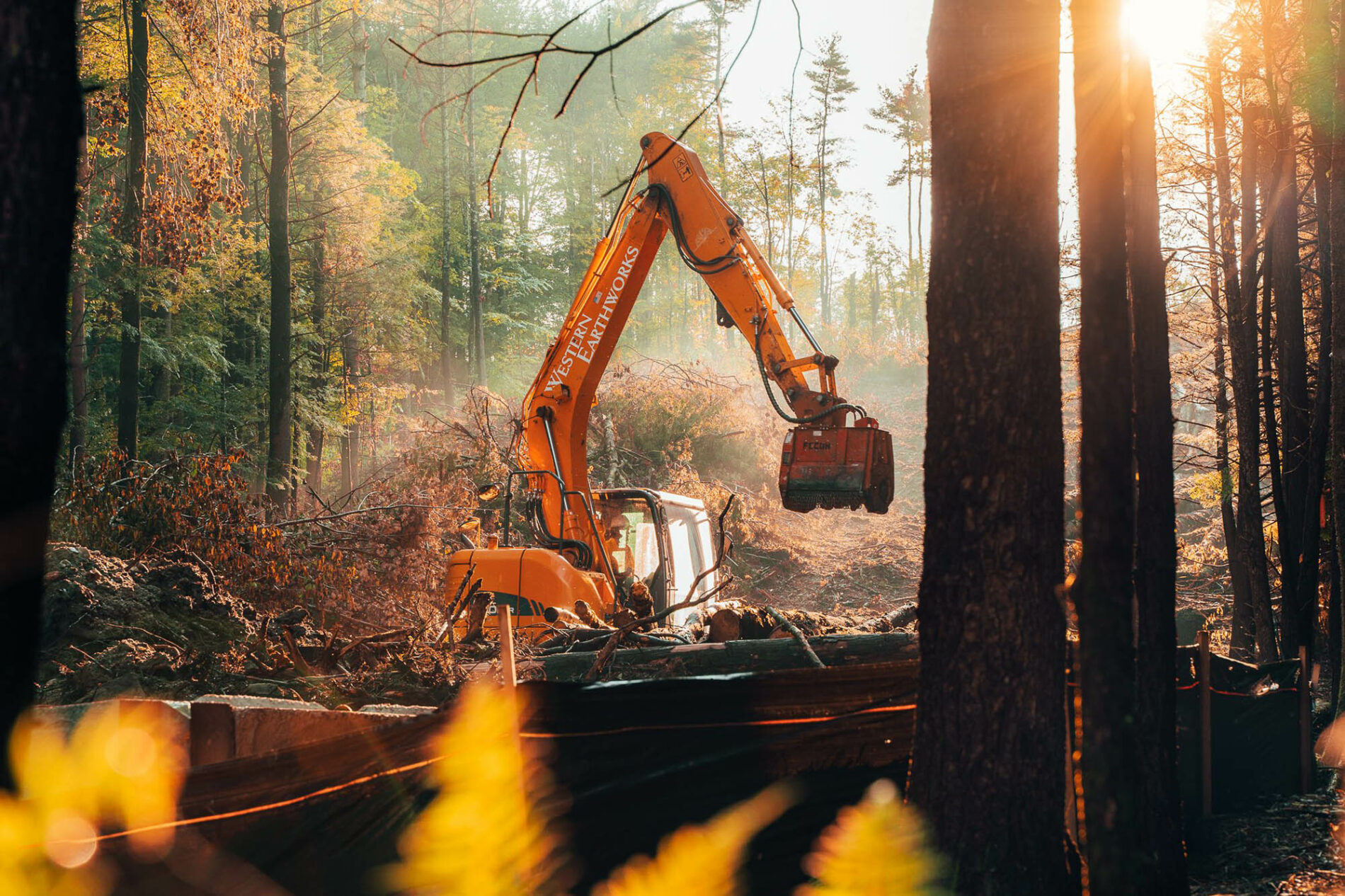
Kershaw Builders’ work is foundational in the truest sense. The company specializes in clearing, grubbing, grading, asphalt paving, concrete paving, water and sewer installation, storm drainage and utility infrastructure. From roadside cleanup to complex site preparation, its projects form the base layer upon which communities expand and modernize. The company’s trajectory shifted notably in 2011 when Wilbert Blizzard’s health started to decline. Leadership transitioned to his son, Robin Blizzard, who remains Vice President today. Reflecting on that period, he explains, “I took the company over in 2011, and shifted direction from being a general contractor to a site work contractor.”

That strategic pivot narrowed the company’s focus while strengthening its identity. Today, Kershaw Builders is recognized as a woman-owned business operating in partnership with the State of South Carolina, the Office of the Governor and the South Carolina Department of Transportation. Those relationships underscore the company’s credibility in public-sector infrastructure and utility work.

The milestone of forty years carries particular weight because the business has remained anchored in family. Robin Blizzard emphasizes that continuity: “40 years in the business – we’re family owned and operated, and we have some key family members still working for the company today. My mom still works here every day, and I run the company’s day-to-day operations. My son Hunter works here as our COO, along with my wife, Amy, who does accounts payable, and Hunter’s wife, Ashleigh, who is the head estimator. 40 years in the making and we’ve continued growing.”

That multigenerational presence reinforces a culture built on long-term accountability. Decisions are not framed around quarterly cycles but around decades of presence in Kershaw County and beyond.

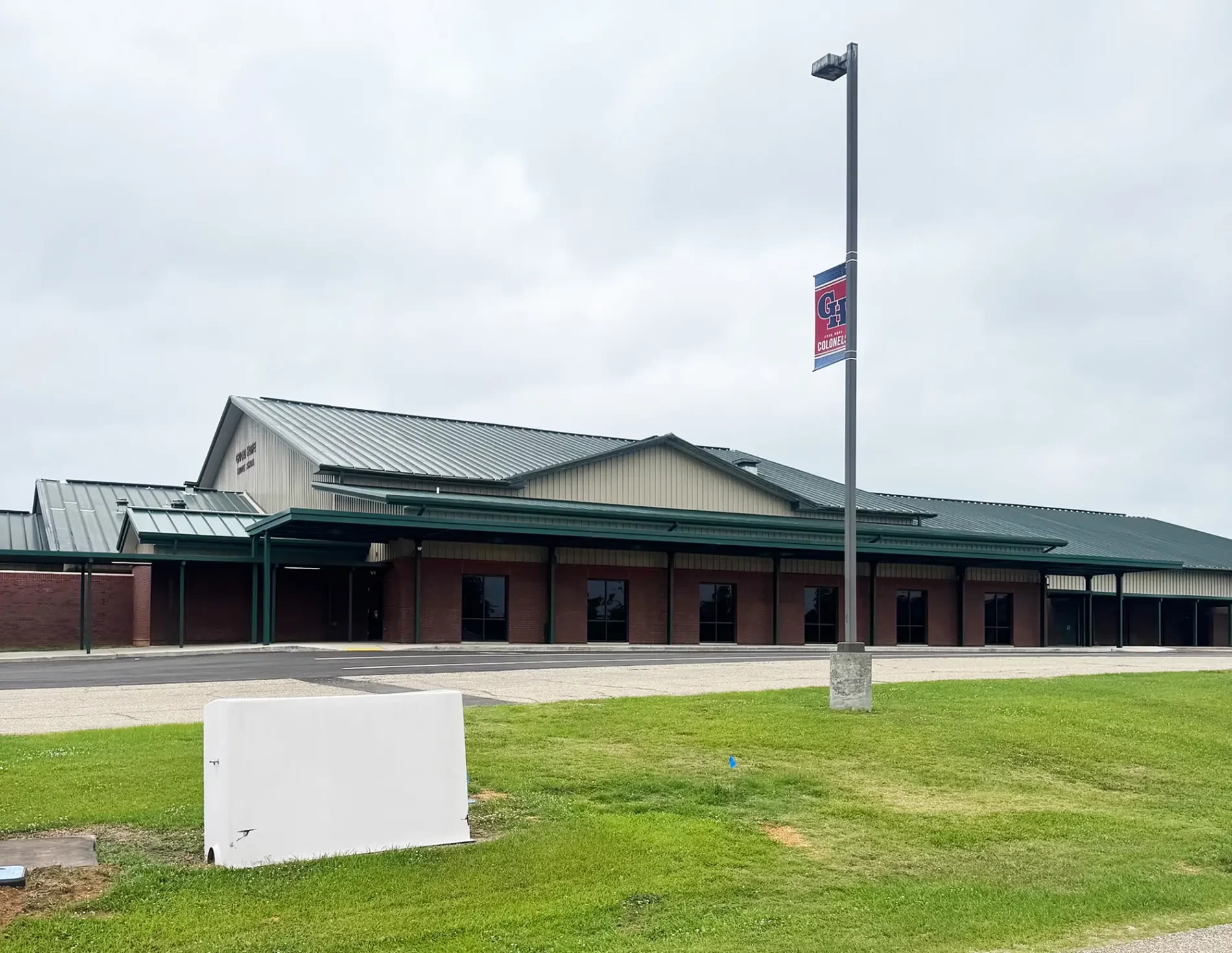
Over the years, Kershaw Builders has taken on a range of high-profile assignments that illustrate both scale and adaptability. One such project was the Horse Creek Academy charter school in Kershaw County. A grammar school set on 13 acres, which required delivery on a compressed timeline to ensure completion before the academic year began. Robin describes the pressure and coordination required: “It’s one of the first of many in our area. It’s a good-sized school. We completed the sitework. It will eventually expand to middle and high school. It was a pretty rewarding project. It was one of the jobs that we were on a tight schedule – we started the job in May and only had three months to complete it. It took a significant part of our workforce to get it done, but we were able to get it completed, paved and ready for the kids on time.” Meeting that deadline required mobilizing equipment, labor and subcontractors with precision. It also demonstrated the firm’s capacity to deliver community-critical facilities under time constraints.

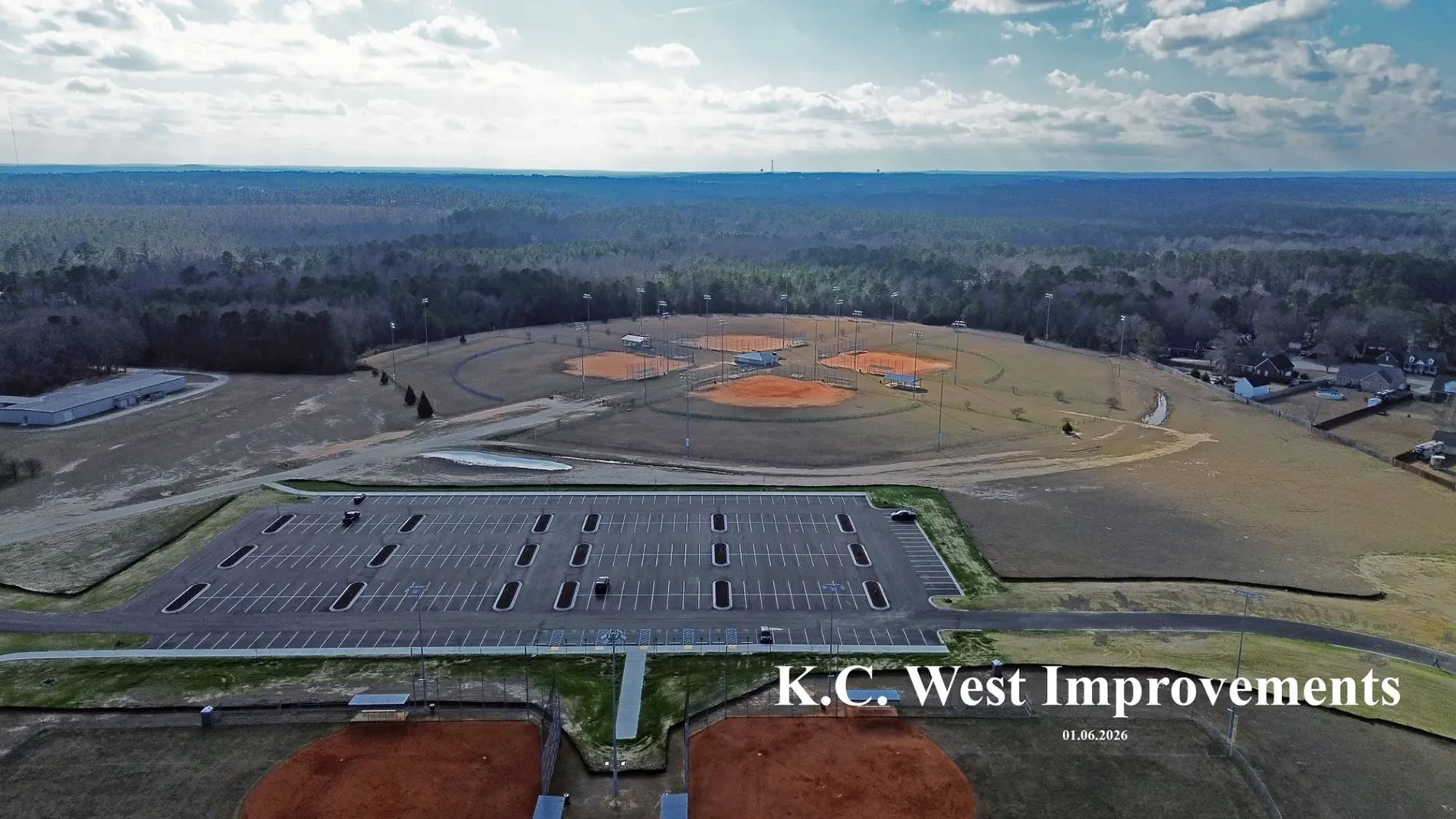
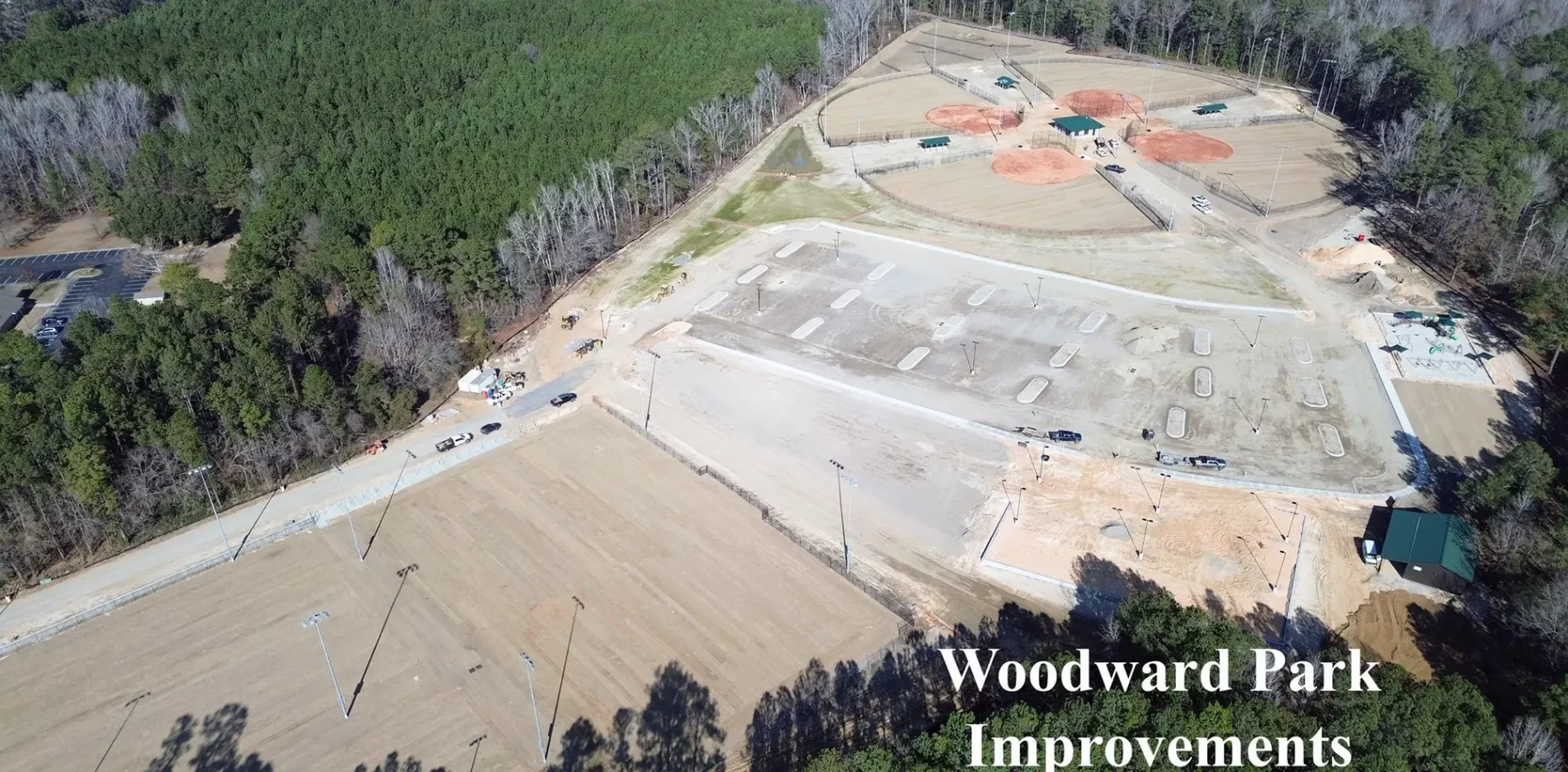
Another landmark undertaking was Woodward Park, one of the company’s largest projects to date. The $8 million sports complex spans 18 acres and includes baseball, soccer, basketball and disc golf facilities. The scope extended well beyond surface improvements. Robin outlines the transformation: “It was a pretty good undertaking, with an existing ball field there to start with. We tore it down, cleared it and demoed everything, raised the site up about a foot, put all new concession stands in, new bathrooms and made everything handicap accessible.” The project exemplified the company’s ability to handle demolition, grading, infrastructure installation and site accessibility in a coordinated program, all while maintaining community engagement.

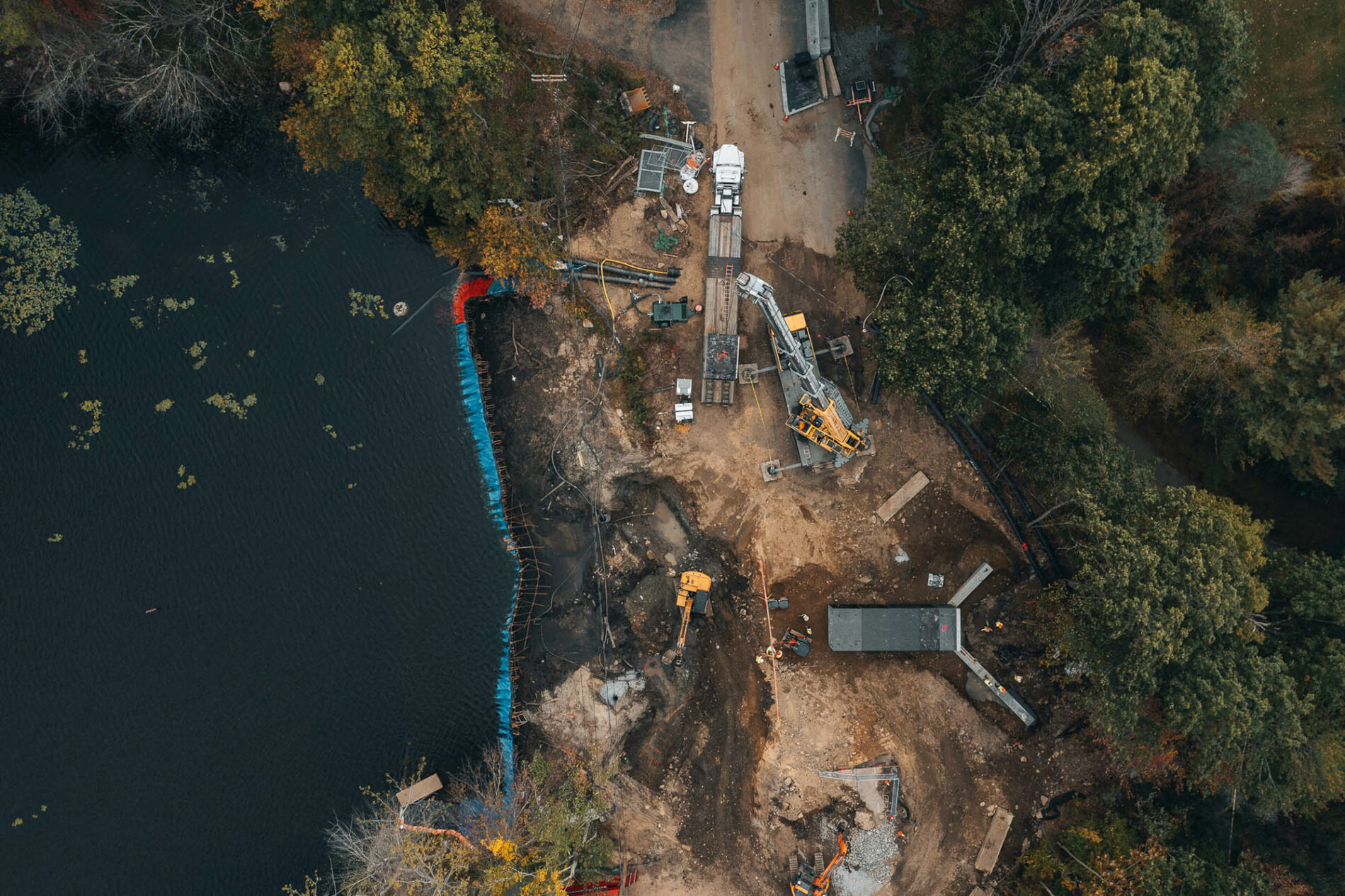
Kershaw Builders is also currently involved in significant interstate infrastructure improvements. On Interstate 20, which runs through South Carolina and Kershaw County, the firm is performing dirt work, storm systems and utility relocation in preparation for the construction of a new bridge over the Wateree River.

Robin explains the scale and complexity: “We’re doing everything but the paving up to the bridge abatements. That’s a good-sized job here because requesting Interstate closure and lane shifts and helping build infrastructure for new bridges.”

Such work demands meticulous coordination with transportation authorities and public safety stakeholders. Lane closures, traffic shifts and utility relocation introduce layers of logistical challenge that test field management and planning.

Asked about the core of Kershaw Builders’ success over forty years, Robin points to mindset and availability. “It’s down to hard work and dedication to getting the job done, having the right tools, and not being afraid to take on jobs. Being able to jump in with both feet, understanding and continuing to learn, taking jobs on that way, so we continue to educate ourselves, and always being available. This isn’t a nine-to-five job; being able to answer the phone after hours is vital. We do a fair amount of emergency repair for local municipalities; you must be able to answer the call and jump into it. It is so important to continually educate yourself and take on jobs nobody else wants to do.” That willingness to respond outside standard hours reinforces municipal trust, particularly when emergency repairs are involved.

“It’s down to hard work and dedication to getting the job done, having the right tools, and not being afraid to take on jobs.”

Looking ahead, 2026 is positioned as another record year. The company plans to reinvest in people, equipment and technology while expanding its service radius beyond its traditional 60-mile footprint. “Our 2026 plans are to continue our growth, keep trying to reinvest in the company, reinvest in our employees, equipment and technology, as well as continuing education, trying to make our employees have a better benefit package,” Robin says.

Geographically, that expansion could extend operations to a 75-, 80- or even 100-mile radius. “We’re trying to expand our coverage area – we used to try to stay within about a 60-mile radius of our office, but in 2026 we’re expanding that to probably a 75/80-mile radius, maybe even a 100-mile radius,” he notes. Such growth introduces new markets and competitive dynamics, but the company’s identity remains rooted in Kershaw County.

Robin concludes with a blend of ambition and continuity: “So in 2026, we’re reaching out, getting to broaden our horizon a little bit. We’re just trying to continue our growth, we just want to keep working, get our name out more, do a little better marketing to paint a better picture for people. We still have people in our hometown who don’t know what we do, even though we probably have about 100 employees, so expand our community involvement. We have a good foothold in Kershaw County where we’re located, but we’re trying to get a little bit of a foothold in our local counties that are adjacent to us. We’re 40 years in the making, and we hope to be here another 40 years or more.”

In an industry defined by cycles, consolidation and constant change, Kershaw Builders’ forty-year arc stands as a testament to focused specialization, family stewardship and steady reinvestment. The ground they shape today reflects not only technical capability, but a long view built on continuity and commitment.

Restoring Brownstones, Rebuilding Craft

View in E-mag

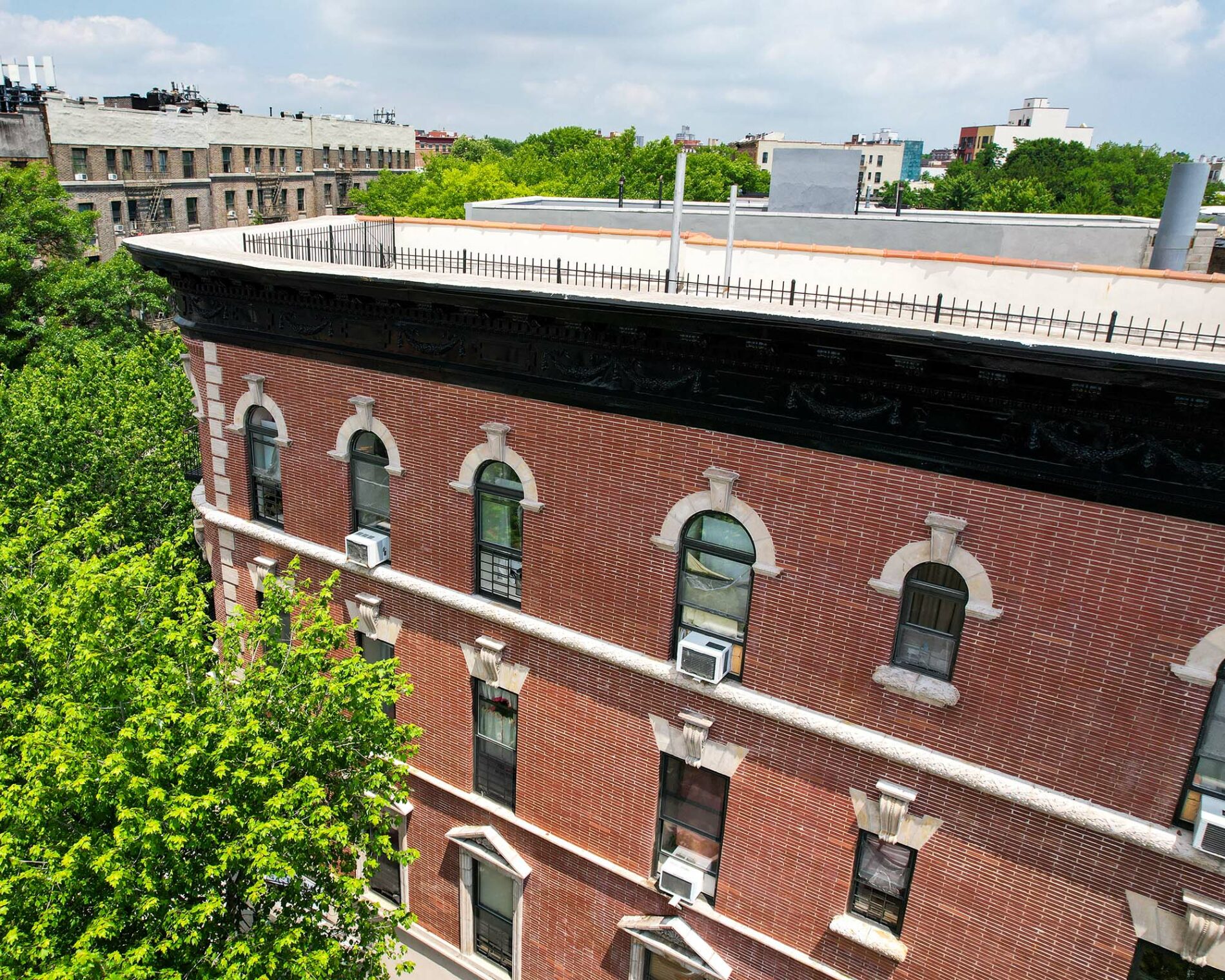
New Wave Design & Contracting’s rise within New York City’s brownstone market is rooted in a simple beginning. Founded in 2006 by Antoin O’Duibhir, the company started with just two laborers taking on bathroom and kitchen work, handling every aspect of each project themselves. From those early jobs, the business has grown into a recognized name in luxury brownstone restoration and renovation, working across some of the city’s most architecturally distinctive properties.

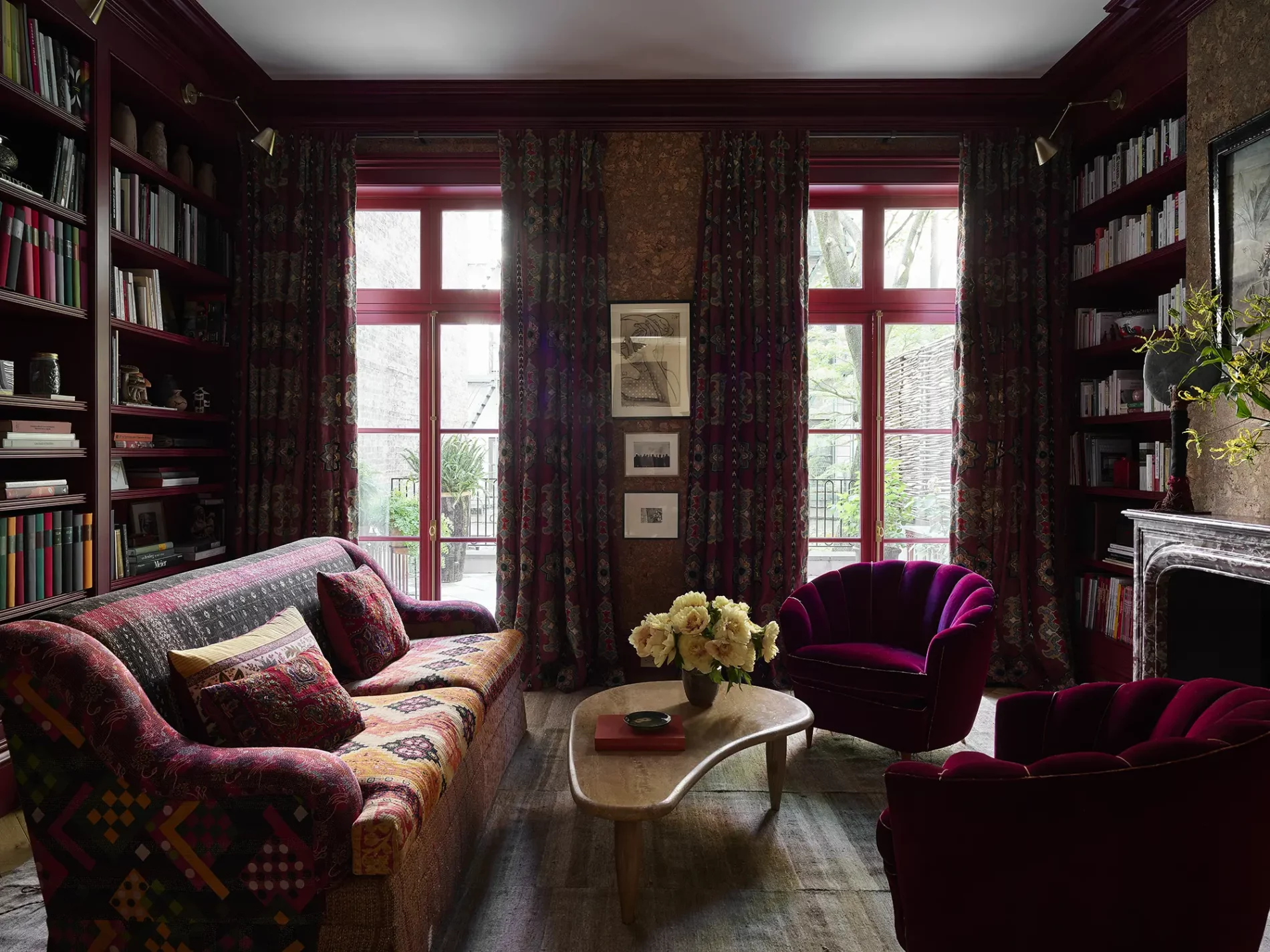
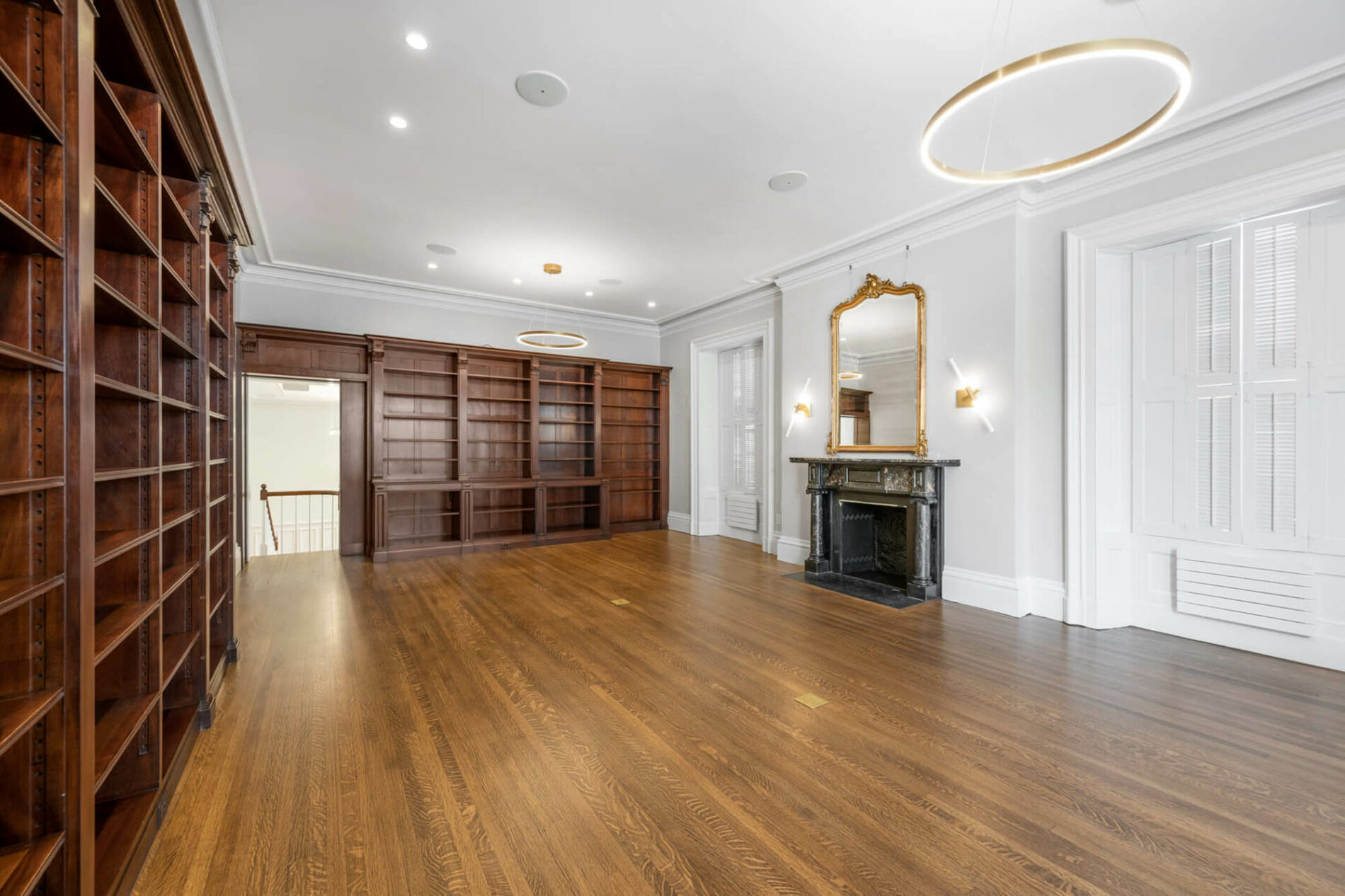
That growth has been shaped by a clear focus on a specific type of building. “New York City has 100-year-old, brownstone buildings,” Antoin explains. “We will come in and do gut renovations. We also do – and it’s a large part of what we do – the restoration. People love the old charm of these homes.” The work involves balancing complete modernization with preservation, upgrading mechanical, electrical, and plumbing systems while maintaining original features such as plaster moldings, doors, floors, and the character of the building itself.

“The work involves balancing complete modernization with preservation, upgrading mechanical, electrical, and plumbing systems.”

While brownstones remain the company’s core focus, its work extends into high-end luxury apartments across Manhattan, as well as select projects within the broader luxury market, including high-end bars. Even as the portfolio has expanded, the emphasis has remained on detailed, high-quality residential work.

The company’s direction was shaped early on by experience gained in the field. “We started out just the two of us, a couple of laborers, working on bathrooms and kitchens. Then we started to grow and got into a lot more commercial work a couple of years after we had started,” Antoin says. A defining moment came with his first independent brownstone project in Park Slope, Brooklyn. “I did my first brownstone by myself in Park Slope, Brooklyn – that was my education into the business of brownstones. I don’t think we made any money on that job, but fast forward 10 years, and that’s the brownstone that is now in the hit series Billions.”

That project marked a turning point, establishing a foundation for the company’s long-term focus on brownstone restoration. Over time, work on both interiors and exteriors helped position New Wave Design & Contracting as a specialist within this niche. As the business grew, however, the demands of scaling required a shift in how projects were managed. “We have been at that now for 20 years. About 14 years into it, I felt like the business had changed a lot. We’re still very good at what we do, and we’re craftsmen, but then we needed to bring in systems,” Antoin explains.

That shift came in 2020, when Kerry O’Duibhir joined the company, bringing with her a background in franchise-style hotel operations and a focus on structured systems. Her arrival introduced new processes designed to improve efficiency and support growth. “I came more from a franchise-type of hotel background. I was big into systems because once you have the proper equipment in place and the right people, it should be good. General contracting is hard to systemize, but we implemented that and we’re now working with a company that does AI in construction.

“We’re trying to make our team’s jobs more efficient, so that, along with AI, has really pushed us to a different level, and we can handle a lot more with fewer people – but nobody’s replacing a carpenter.”

Since its foundation, the company has reached a series of milestones that reflect both steady growth and a willingness to adapt. In its early years, New Wave Design & Contracting reached $1 million in gross revenue within the first five years. By year 15, that figure had grown to between $4 and $5 million. For Antoin, those milestones have come in cycles. “I feel like every five years we have a different milestone. We’re hitting 20 years in June, which is a milestone on its own. I’ve been in business for that long in this industry, so I think restructuring our business was huge – we were commercial and residential, and now we really specifically do luxury residential.”

Recent projects reflect both the technical complexity of the work and the evolving nature of brownstone development in New York City. In Carroll Gardens, the company completed a double townhome combination, a project type that is becoming more common. “Most of the properties we work on are landmarks – they’re preserved. What the new double town home combination means is when you’re looking at the outside of the house, you’ll see two separate town homes, but on the interior, it’s one combined home,” Antoin explains. The approach preserves the streetscape while reconfiguring the interior to meet modern expectations.

At Brooklyn Heights, the team is working on a brownstone on Remsen Street, a project distinguished by its carriage house at the rear. “What makes this different is, it’s just a beautiful brownstone with a carriage house at the back,” Antoin says. The work is being carried out in phases, with two floors taken at a time while the family continues to live in the property. The project is being delivered in collaboration with architect Elizabeth Roberts, a long-term partner on high-end residential work. As Kerry notes, “We don’t only do the general contracting end of things; the whole house is being designed by an architect and designer as well. From a design luxury perspective, it’s definitely different.”

In the West Village, the company is also undertaking work on West 11th Street, where structural constraints have shaped the design approach. “This one is a little bit more involved, a lot more structural in that area. It’s landmarked, but they frown upon increasing, which means you can’t really go up,” Antoin explains. Instead of adding height, the solution has been to extend the building below and to the rear, excavating the basement and creating additional space within the existing footprint. “That one’s a lot more structured work. It’s a full gut and brand new – not much restoration on that job, just complete gut new.”

Across these projects, the company’s approach remains grounded in experience and persistence. “I think the quality of the work is a big part of it, and our experience in this niche market of the brownstones. We’ve been doing this a long time, and we understand what it takes to get a job finished,” Antoin says. That understanding extends beyond the technical demands of construction to the realities of managing challenges as they arise. “We’ve had some ups and downs through the years, but I think something that stands to us is that we don’t run away from problems. We sit down, we figure it out, and we stand by our clients to the very end.”

Looking ahead, the company is entering a new phase of expansion. New Wave Design & Contracting has recently moved into Monmouth County, New Jersey, extending its geographic reach beyond New York City. At the same time, it is preparing to take on its first ground-up development project with a new Netflix studio. “We’re knocking it down at the end of the month, so that’s exciting because we’ve never done ground up.

“That’s going to be a new thing for us, and also getting brownstones to renovate and flip in Manhattan. Flipping our own brownstones and expanding into New Jersey is something we’re looking forward to,” Kerry explains.

Alongside these developments, the company is also building a new networking business aimed at contractors, designers, architects, and others within the build environment. Six months into its development, the initiative reflects a broader ambition to engage with the industry beyond individual projects, creating additional opportunities for collaboration and growth.

As it approaches its twentieth year in business, New Wave Design & Contracting continues to balance craft and structure, tradition and adaptation. What began with two laborers working on small residential jobs has developed into a company defined by its specialization, its systems, and its ability to evolve while remaining closely connected to the buildings it restores.

Working Together

View in E-mag

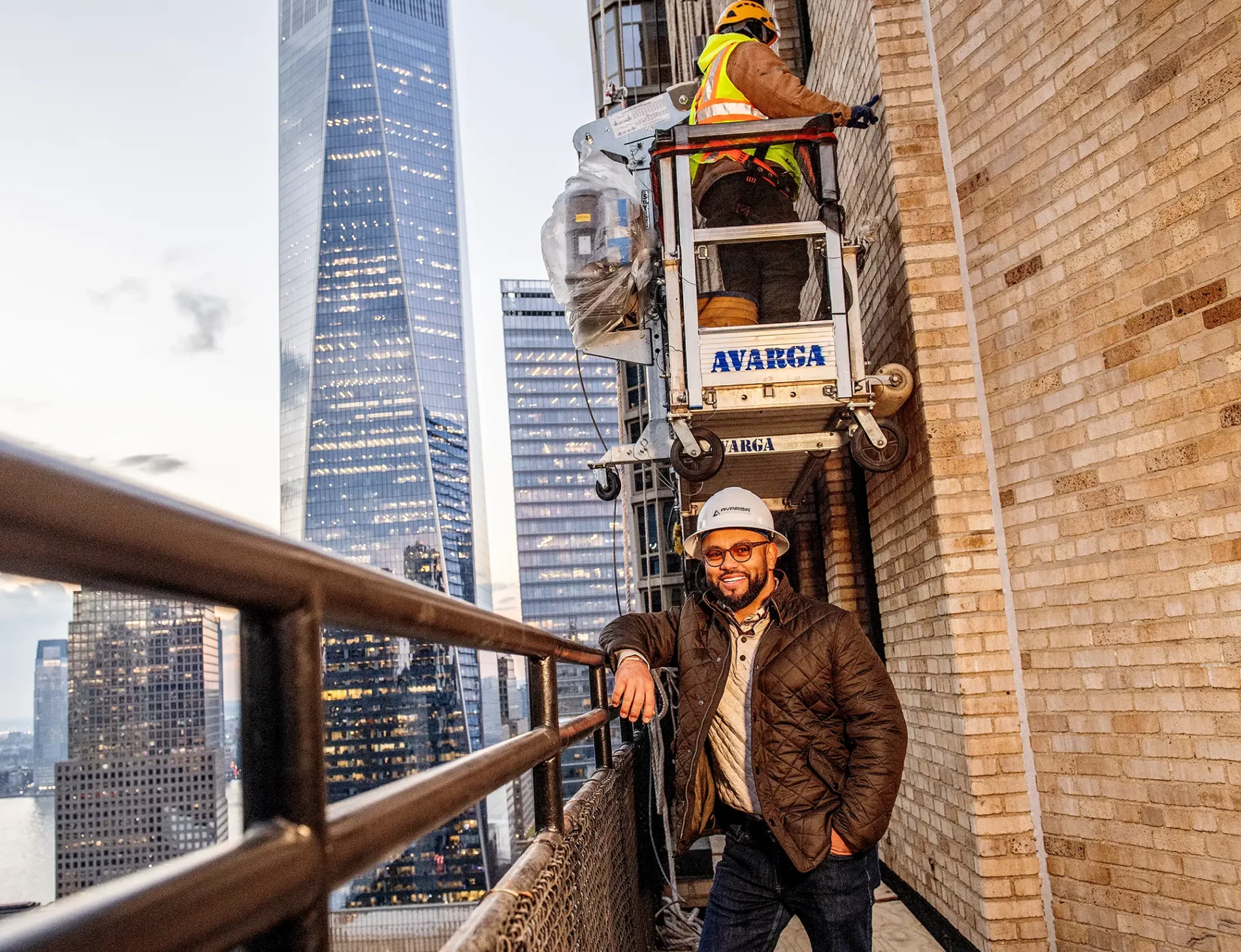
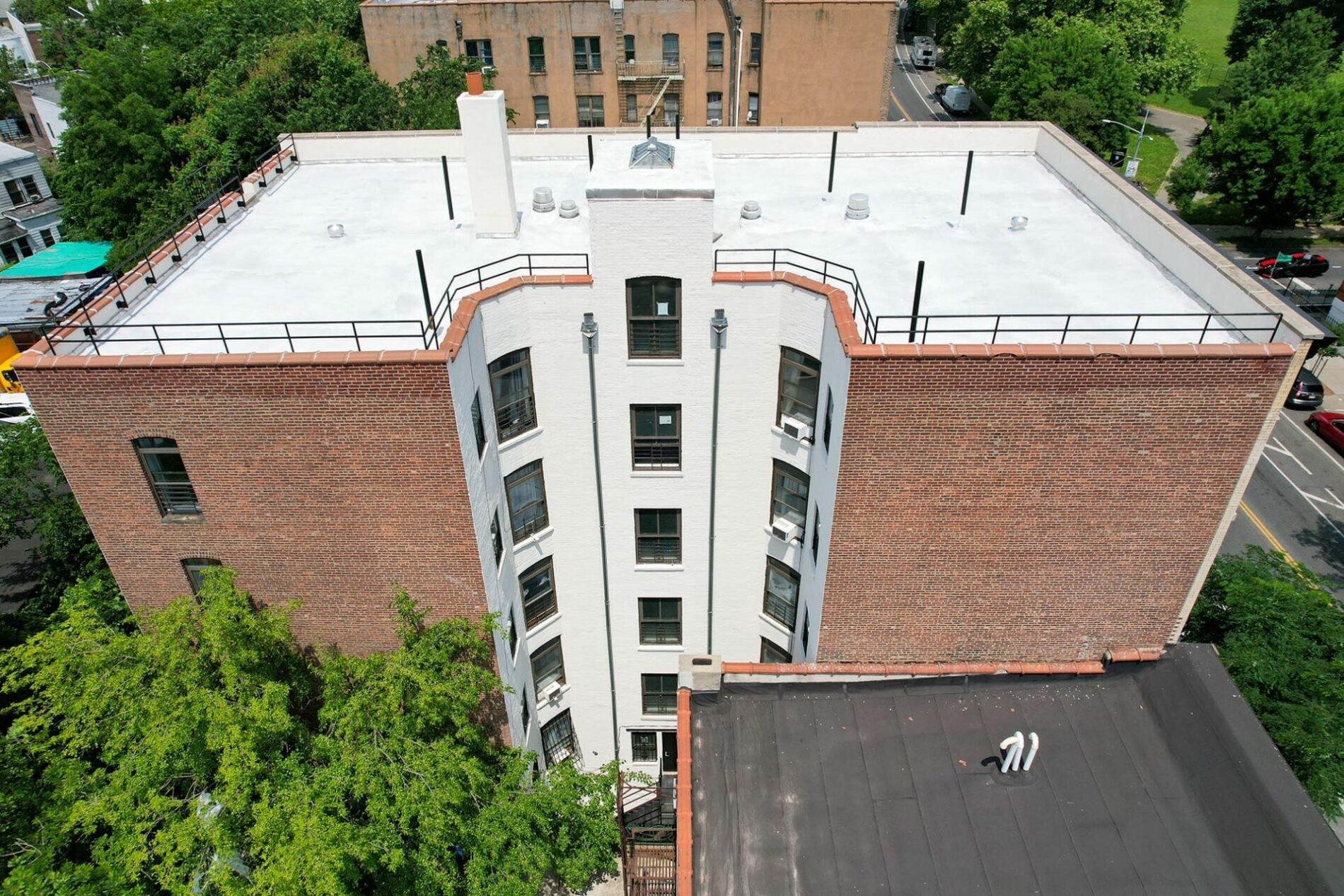
Avarga Construction’s story begins in a home office in New York City, where founder Hansel J. Gonzalez set out in 2011 to build a company rooted in restoration work. Fifteen years later, that modest starting point has given way to a multi-million-dollar operation working across all five boroughs, with a reputation shaped by consistency, hands-on delivery, and a clear understanding of how buildings endure and, over time, fail.

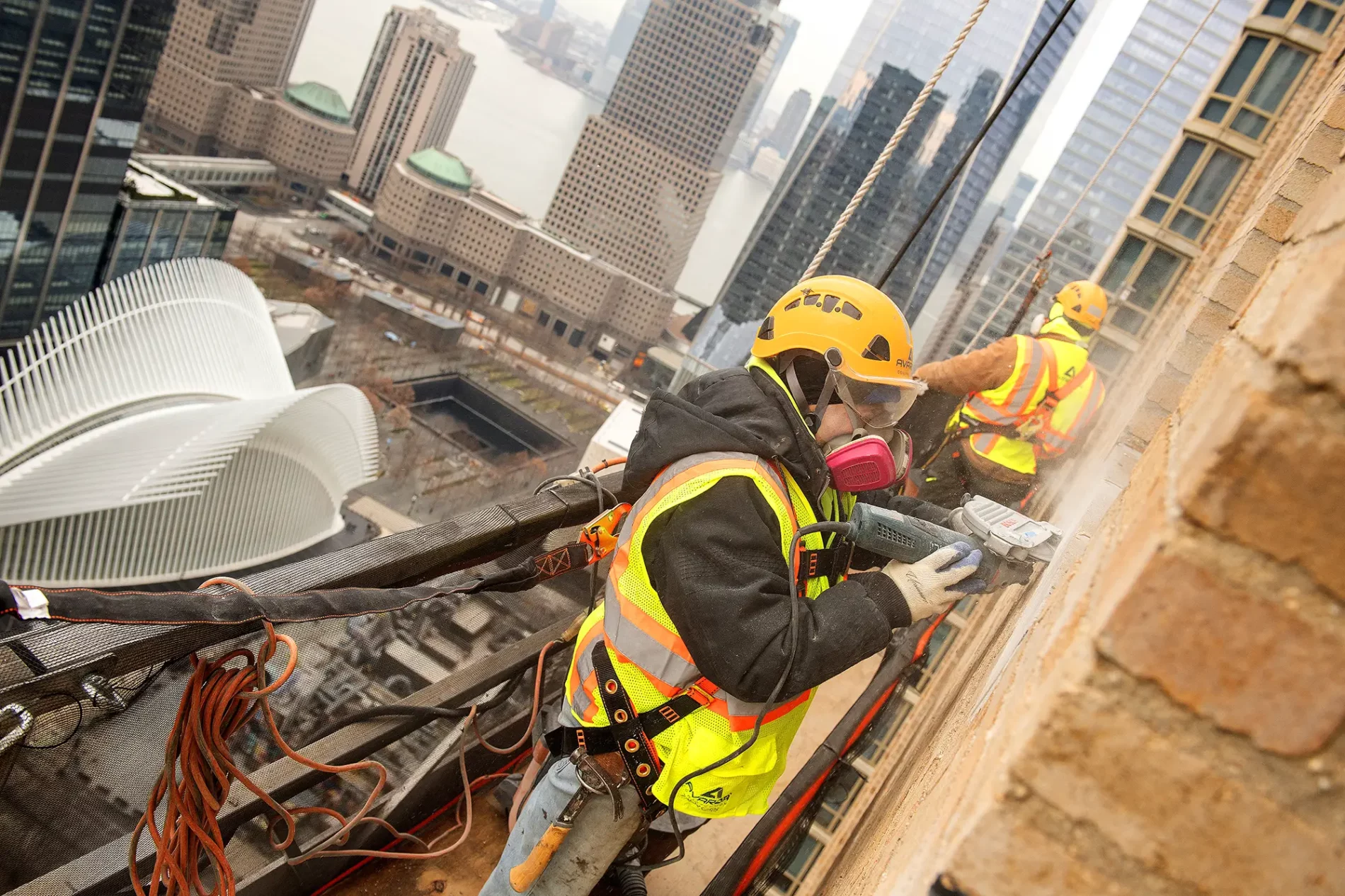
At its core, the company focuses on the restoration of the city’s built fabric, carrying out waterproofing and façade upkeep on commercial, residential, and landmark structures. The work is practical and immediate, often beginning with the infrastructure required to access it. As Antonio M. Seabra, Executive Vice President at Avarga Construction, puts it, “We hang the scaffolds in the buildings and do the actual work as well.” That dual responsibility, managing both access and execution, reflects an approach that remains closely tied to the realities of the jobsite.

Over time, Avarga Construction has expanded its capabilities to include roofing, façade touch-ups, masonry, sidewalk repair, scaffolding and sidewalk sheds, parking garages, and landmark building restoration. These services are delivered through a Design Build Project Delivery method that brings projects under a single contract and a single point of responsibility. As the team explains, “We simplify the construction process through our Design Build Project Delivery method. This approach means you only need to manage one contract, with a single point of responsibility for the entire project.

“Our management team owns the process, providing cohesive recommendations that align with your schedule and budget.

“Over the years, we’ve found that the Design-Build method consistently outperforms other delivery systems in terms of cost, schedule, and overall construction speed.”

The company’s work is closely tied to New York City’s regulatory environment, particularly the inspection cycles mandated under various Local Laws. Every five years, buildings must be assessed and brought into compliance, creating a recurring need for detailed restoration work. “In New York City, there are Local Laws that require buildings to be inspected on a five-year cycle,” Antonio explains. “Basically, what happens is that it gets bid out, we give them our quote, and of course, we get awarded the project. Then, we get a contract signed, and we do the work. Once the work is complete, then everybody signs off, the building becomes safe, and they don’t have to go through that for another five years.”

That cycle of inspection and restoration has helped shape the company’s philosophy. Each project, regardless of scale or building type, is approached with an emphasis on durability rather than appearance alone. “Whether restoring a landmark façade, a modern residential tower, or a commercial property, we approach every project with the same principle: honor the original workmanship and restore it to last.

“No temporary fixes. No cosmetic patchwork. Just comprehensive restoration that protects both appearance and structure.”

Antonio joined the company 13 years ago as a project manager and now serves as its executive representative, a trajectory that mirrors the company’s own development. “Basically, it’s turned into a multi-million-dollar company at this point. The company has had a lot of success and a lot of clients.

“Our main goal here is to serve our clients with our customer service – that’s what we provide, and that’s what got us here.” His perspective reflects a business that has grown steadily without losing sight of the relationships that underpin its work.

For Antonio, the most significant milestone is not tied to expansion or revenue, but to the consistency of service delivered over time. “I think our best milestone is the service that we give to the client, the repetitive good work, our communication to the client, to the visit, to the building, to the engineers – I think that’s the biggest milestone we have achieved, and that’s why we’re here and have gotten to this point.”

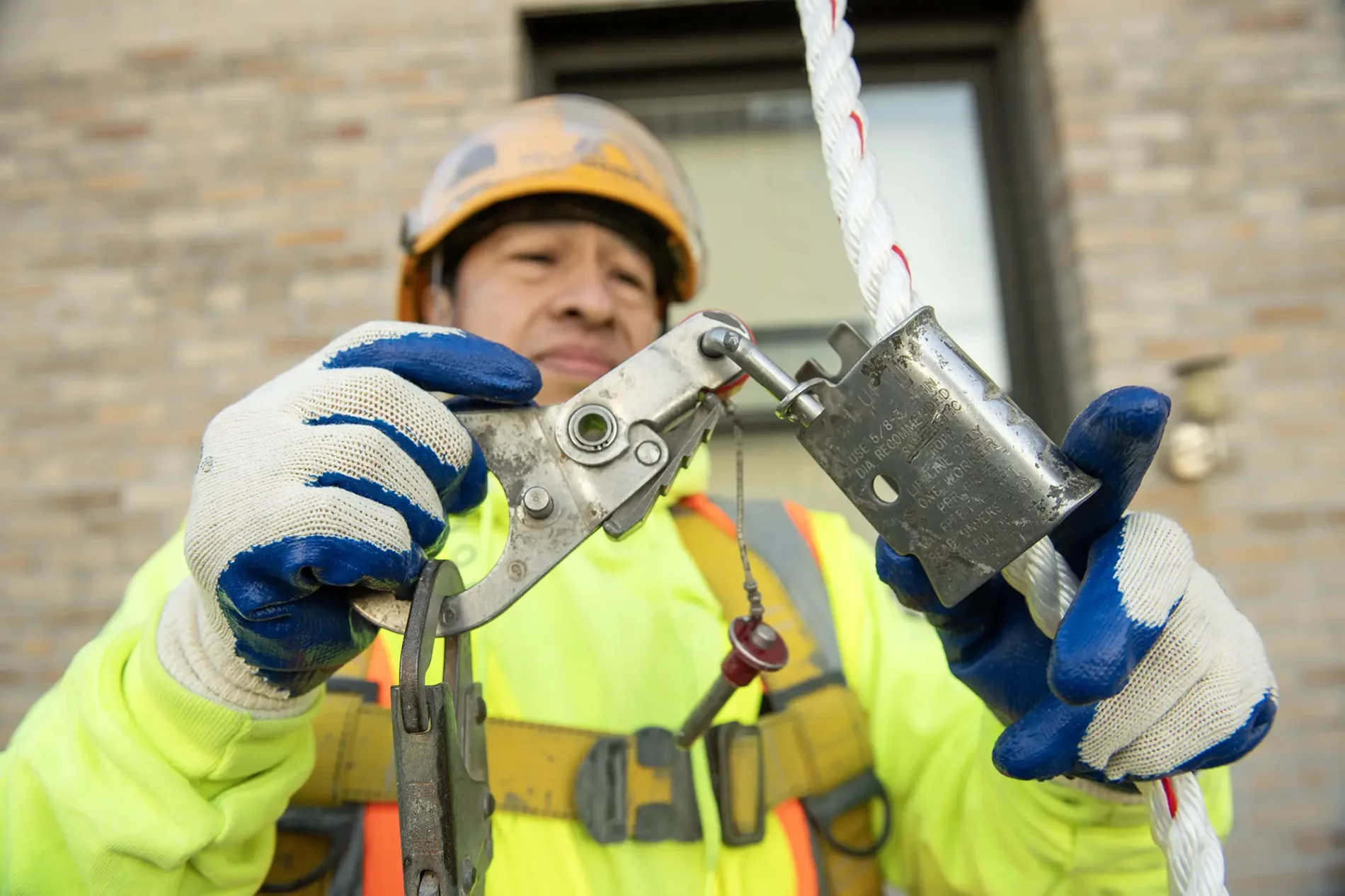
That emphasis on consistency extends to safety, which the company treats as a foundational requirement rather than a secondary consideration. Each team member completes a minimum of 62 hours of certification training, supported by a culture that encourages open communication and proactive risk management. Team members are expected to report potential hazards, ensuring that issues are addressed before they escalate. As the company states, “Safety is paramount in every project we do.” Management prioritizes the well-being of its workforce, clients, and the surrounding community, maintaining environments that meet the highest safety standards.

The results are reflected in the company’s safety record. “Few, if any, restoration companies can boast 0 on-the-job accidents in over 12 years in business. Avarga can.

“We’re one of the few contractors that consistently pass the most vigorous risk assessment evaluations in the field.”

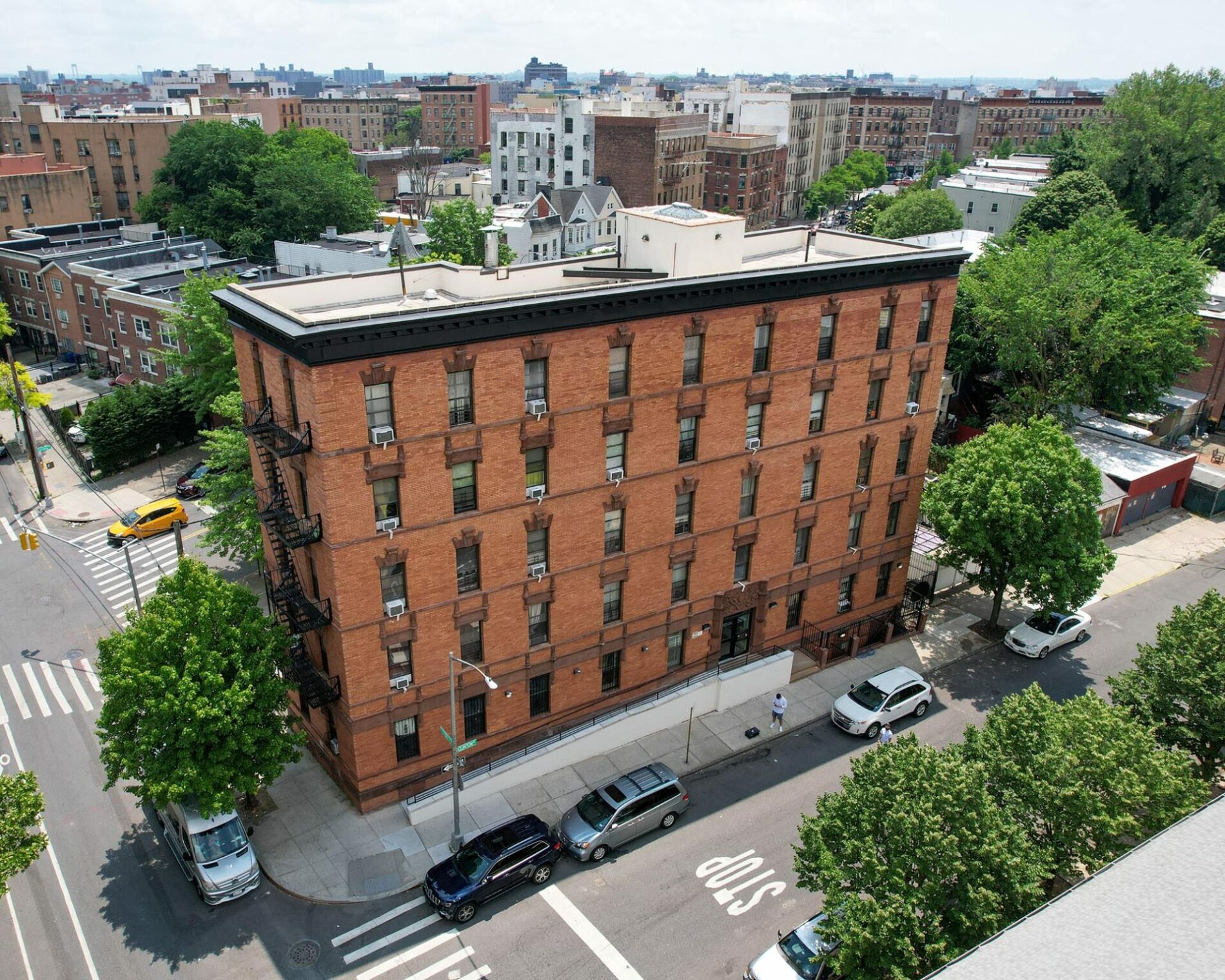
Avarga Construction’s portfolio includes a number of demanding projects across New York City, often involving buildings that had reached unsafe conditions. At 330 Wythe Avenue, the company undertook a full restoration that required extensive brickwork and a coordinated on-site effort. “It was literally coming apart and was completely unsafe,” Antonio recalls. “We were hired by the building; we won the bid number in that manner, and basically, we worked around the entire building simultaneously with a lot of crew, about 18 to 20 people on a daily basis.” The project was ultimately completed successfully, with the building designated safe upon completion.

“We were hired by the building; we won the bid number in that manner, and basically, we worked around the entire building simultaneously with a lot of crew, about 18 to 20 people on a daily basis.”

A similar level of intervention is currently underway at 680 West End Avenue, where falling stonework had created a serious risk to public safety. “There is and was a lot of stones that were falling from the building which could have created deaths if they fell in the street,” Antonio explains. “We secured everything, and we are basically removing all the stones on top of the building and reinstalling all brand-new terracotta stones. Everything is still in the process, besides that, and we also did the entire facade as well.” Now approaching three years in duration, the project reflects the complexity and scale of restoration work in the city’s older buildings.

As Avarga Construction marks its 15th anniversary, its growth has been shaped as much by internal culture as by external demand. For Antonio, the company’s progress is grounded in collaboration. “The key to success for this company has been the fact that we, as a company, all work together. We are a team that communicates; we all work for the same reason. We all have the same projection. It’s more like a family type of thing. We help each other, and everyone is there for each other all the time, and our communication is top of the line.

“I’ve been with this company for 13 years. It’s a great company – the ownership is amazing. They’re more like family, and I’m just happy that I’m here with them to help them make it grow.

“That’s how we’ve gotten here, and it’s the best part of this company.”

Looking ahead, the company’s trajectory shows little sign of slowing. With further growth and expansion already in motion, Avarga Construction is preparing to establish a new entity within the next year and a half, extending its reach beyond its current footprint. “We are expanding and growing even more. Hopefully, in the next year and a half, the company will open up another entity. We are working on a project where the company is going to expand, not only in New Jersey and New York, but also in other states.”

Exterior Solutions with Purpose and Precision

View in E-mag

In today’s construction environment, the building envelope has become far more than an architectural statement. It is the front line of energy performance, durability, occupant comfort and long-term asset value. For Longarone Exteriors Inc., that reality is not simply a market trend; it is the foundation of the company’s identity.

Established in 2022 by Patrick Salvato, Longarone Exteriors was built with a clear intention: to operate not merely as a subcontractor, but as a strategic partner in high-performance façade and exterior enclosure systems. Salvato’s path to founding the company was rooted in years of hands-on experience. After working in construction for a decade, he launched Benedetta Builders in 2019, focusing on exterior cladding production for commercial buildings and smaller residential projects. That early venture involved roughly 20 plus staff to manage the operation.

Longarone Exteriors emerged from that foundation with a sharpened mandate. “From the outset, Longarone Exteriors was positioned not simply as a subcontractor, but as a strategic partner – capable of combining engineering expertise, thoughtful planning, and operational precision to deliver complex façade systems at the highest level,” Salvato explains.

The company’s growth has been rapid. In its first year of operations in 2022, Longarone recorded $1.9 million in revenue. By 2025, this figure reached $10 Million, with a sales revenue of $18 million. The trajectory reflects both market demand and the firm’s deliberate positioning within the high-performance building envelope sector.

Today, Longarone specializes in the design, engineering, supply and installation of comprehensive façade and exterior enclosure systems. “Longarone delivers complete façade and exterior enclosure solutions, working closely with owners, architects, and general contractors to ensure every system meets the highest standards of durability, energy efficiency, and constructability,” Salvato says.

The firm’s expertise spans specialty cladding, ACM and metal panels, terracotta systems, fiber cement siding, rainscreen assemblies, continuous exterior insulation, glazing, flat roofing and architectural panel prefabrication. However, what distinguishes the company is less the individual materials than the integrated approach behind them.

“With a strong emphasis on process, quality control, and production efficiency, the company positions itself as a technical partner, supporting the successful execution of complex building envelope solutions from concept through completion,” Salvato explains. “Each system is carefully selected and detailed to perform as an integrated enclosure, balancing aesthetics, performance, and long-term value”.

“Each system is carefully selected and detailed to perform as an integrated enclosure, balancing aesthetics, performance, and long-term value”.

Sustainability and occupant well-being sit at the center of Longarone’s philosophy. Giulia Bernardi, COO, frames the mission succinctly: “Sustainability is our top priority; buildings are built for people”.

Bernardi notes that much of the firm’s value lies in early-stage technical support. “We usually give a lot of Technical Support when they’re not sure about a specific performance of a material. They usually ask us about how the panels are performed, how the metals are going to have isolation for the building – all those types of concepts”.

In 2025, the company advanced its vertical integration strategy by moving toward in-house production and placement of ACM panels, a shift that further strengthens control over quality and schedule. “There’s a variety of ways to have that design of the facades, as well as integrating the glazing and glassing solutions. By combining all this Technical Support, we can make the buildings happen,” Bernardi says.

A defining moment in the firm’s evolution came in 2025 within Boston’s Passive House market. “A defining moment came in 2025, when the company’s role in Boston’s Passive House market became especially evident. Of the ten Boston projects highlighted at industry conferences for their Passive House design, seven were delivered by Longarone Exteriors, underscoring the firm’s expertise in executing complex, high-performance façade systems at scale,” Salvato recalls.

That milestone signaled Longarone’s transition from regional specialist to recognized leader in high-performance façade delivery.

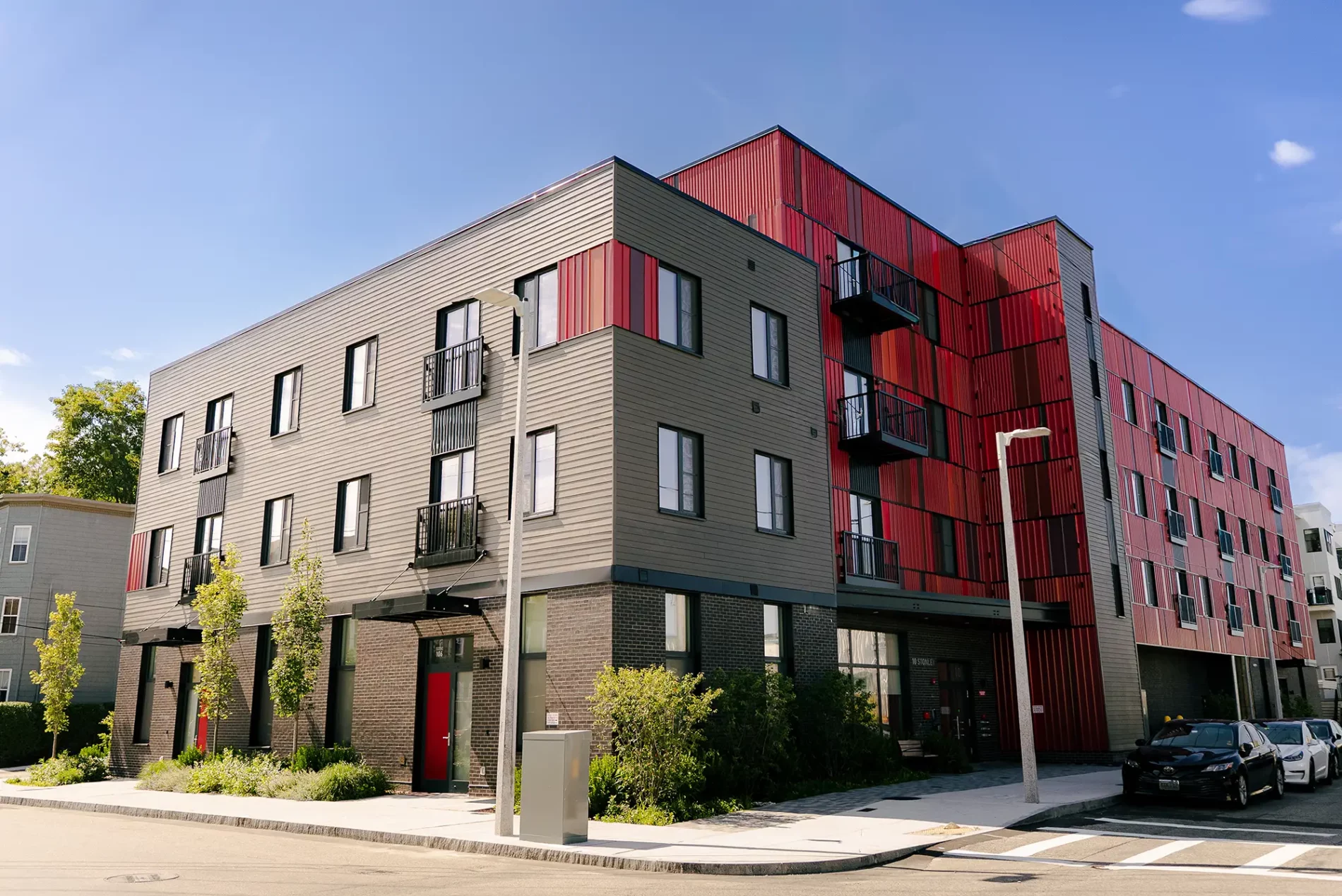
Projects such as Stonley Brook Apartments in Jamaica Plain illustrate that capability. The three-story building features a bold red façade incorporating more than nine different ATAS metal panels in over seven custom colors. “The complexity of the design required precise coordination to ensure each panel was installed in its exact location, maintaining the integrity of the architectural vision,” Salvato explains. Completed in March 2025 and certified by PHIUS in August 2025, the project relied on a peak green card set system with a specific R-value installation to meet thermal requirements.

At 25 Sixth Street Apartments in Chelsea, Massachusetts, proximity to an operational train line added logistical complexity. “This building was very interesting because it was in an L shape and the corner of it was rounded – which added a layer of complexity as we were working with metal panels, Bernardi says. After a year and a half of execution, the project was also PHIUS certified.

The firm continues to explore material innovation. At 121 Prospect Street in Somerville, a luxury condominium project combines Nichiha Miraia high-gloss panels with Nichiha VintageWood and Alucobond systems. “We never had a fiber cement that was high-glossy before, so this project decided to use the material in contrast with their vintage wood, which resembles wood finish. It’s creating a very modern look for the street, and the project is also pursuing Passive House,” Bernardi explains.

Longarone’s scale is expanding as well. At 582 Kelly Blvd, the firm is delivering envelope systems for a 304-unit residential development across six buildings, including a clubhouse, pool house, maintenance room, mail room and five detached garages. “The idea of this project is to have everything the residents need in a single place,” Bernardi notes.

Behind the technical execution lies a clear cultural philosophy. Salvato articulates it directly: “I’ve always believed that big dreams, when paired with discipline, can take you places that talent alone never will”. That discipline is reflected in structured processes, performance metrics and leadership development initiatives.

“At Longarone Exteriors, one of our core values is ‘People First,’” Salvato says. Career plans, staged advancement bonuses, ongoing training and one-on-one feedback sessions form part of that commitment. “At the end of the day, our people, their growth, and their well-being are what make Longarone Exteriors successful—and what allow us to deliver projects that set a new standard in sustainability, quality, and life-long performance,” he adds.

Community engagement also remains integral. The company supports foundations including Fraternity Without Borders and the New Hampshire SPCA through donations and active contributions.

Looking ahead, the next chapter is clearly defined. “Today, Longarone Exteriors is entering its next phase of expansion, and the company remains firmly committed to its long-term vision. Guided by disciplined execution, strong processes, and a performance-driven culture, Longarone Exteriors is working toward a $50 million milestone by 2029. For 2026, our goal is clear: we will double our 2025 revenue,” Salvato states.

In an era where façades must do more than look striking, Longarone Exteriors excels. Through its vast experience working on Passive House–certified projects, and the cultivation of long-term relationships with leading national developers, including Mill Creek and Wood Partners, it creates building systems designed to perform technically, environmentally and operationally. Beneath each panel and behind each finish lies a disciplined approach that views the building envelope not as decoration, but as performance infrastructure engineered for decades of use.

Construction as a Force for Good

View in E-mag

For The Crowther Group, construction is not simply a means of delivering buildings. It is a vehicle for strengthening local economies, supporting communities, and leaving behind something of lasting value. Since its founding, the North Texas–based commercial general contractor has operated with a clear sense of purpose, positioning itself as a partner to the communities and clients it serves while steadily building a reputation for quality, reliability, and impact.

Specializing in high-quality, multi-site ground-up construction, renovations, and interior finish-out projects, The Crowther Group works across private, public, and commercial sectors. According to Kendrick Turner, Business Development Manager at the firm, the company’s approach is rooted in discipline and trust. “We provide exceptional results at a competitive cost – we’re known for our commitment to safety, schedule, and budget,” he said. “That’s how we earn the trust of our private, public, and commercial brands.”

From the outset, the business was designed to support growth. Its service offering spans ground-up construction, renovation, and interior finish-outs, but Kendrick emphasized that the firm’s real strength lies in its ability to deliver consistency across complex programs. “Our capabilities span ground-up construction, renovation, and interior finish-outs,” he said, “but our real strength lies in delivering multi-site programs with unmatched consistency and efficiency.”

That consistency is underpinned by a partnership-driven mindset that goes beyond transactional delivery. “Our clients rely on us because we combine deep technical expertise with a partnership-driven mindset,” Kendrick explained. “We don’t just build projects; we’re helping our partners scale their operations and enhance their customer experiences.”

The Crowther Group was founded in 2017 by Thomas Crowther, following more than three decades of experience as a construction industry leader. From the beginning, his ambition was to build a company that could deliver exceptional construction while also making a tangible difference in the communities it served. As Kendrick described it, “He wanted to be different from some of the other construction companies. He wanted to plant his feet in different communities, not only with a building, but with partnerships and community service.”

That philosophy shaped the company’s identity early on. “From the beginning, the company was built around the idea of operational excellence, strong partnerships, and community impact,” Kendrick said. “Ultimately, what defines us is the belief that construction can and should be a force of good.” He added that every project represents an opportunity to do more than meet a brief. “Every project is a chance to grow local economies, uplift people, expand opportunities, and build environments that inspire pride. Our vision is anchored not just in construction today, but in the lasting impact that those projects will create for tomorrow.”

That ethos is captured in the company’s guiding principle. “At The Crowther Group, our saying is ‘We build communities one partnership at a time,’” Kendrick said.

Since its foundation, The Crowther Group has achieved a series of notable milestones that reflect both its growth and its values. Just one year after its establishment, in 2018, the firm was named Minority Business of the Year by the Dallas/Fort Worth Minority Supplier Development Council, a significant recognition for the young company. Momentum continued in 2019 when it earned the Regional Supplier of the Year award from the National Minority Supplier Development Council, followed by approval into the NMSDC Corporate Plus program in 2020.

In subsequent years, the company continued to gain recognition for leadership and diversity. In 2021, it was acknowledged for its commitment in those areas, and in 2022 it ranked among the SMU Cox Dallas 100 Fastest Growing Companies and received the NAMAC Golden Shovel Contractor of the Year award. The following year, The Crowther Group was listed among Dallas–Fort Worth’s top 50 general contractors by the Dallas Business Journal. Kendrick noted another particularly meaningful accolade. “Most recently this year, in 2026, we received an award that’s extremely difficult for construction companies to win – we were chosen as the 2026 Best Place To Work for Working Parents.”

Beyond its commercial achievements, The Crowther Group’s commitment to community impact is embodied in the April Crowther Foundation, established by Thomas Crowther in honor of his late sister. The foundation reflects her lifelong dedication to giving back, educating others, and advocating for individuals with special needs. Through programs designed to uplift, educate, and inspire, the foundation ensures that her passion for empowering people continues to shape the company’s broader mission.

Internally, the team sees its role not just as builders, but as contributors to long-term community transformation. “Here at The Crowther Group, our work goes far beyond delivering facilities,” Kendrick explained. “We’re committed to safer futures through the partnerships that we have with some of the local school districts and higher education programs, like Dallas ISD Tech, DeSoto ISD Tech, and even the University of Arlington’s Capstone program.” He added that these initiatives are about creating pathways into the industry. “We’re helping deliver the next generation of construction leaders by giving those students real exposure to the industry and tangible pathways to meaningful careers, not just building buildings.”

“We’re helping deliver the next generation of construction leaders by giving those students real exposure to the industry and tangible pathways to meaningful careers, not just building buildings.”

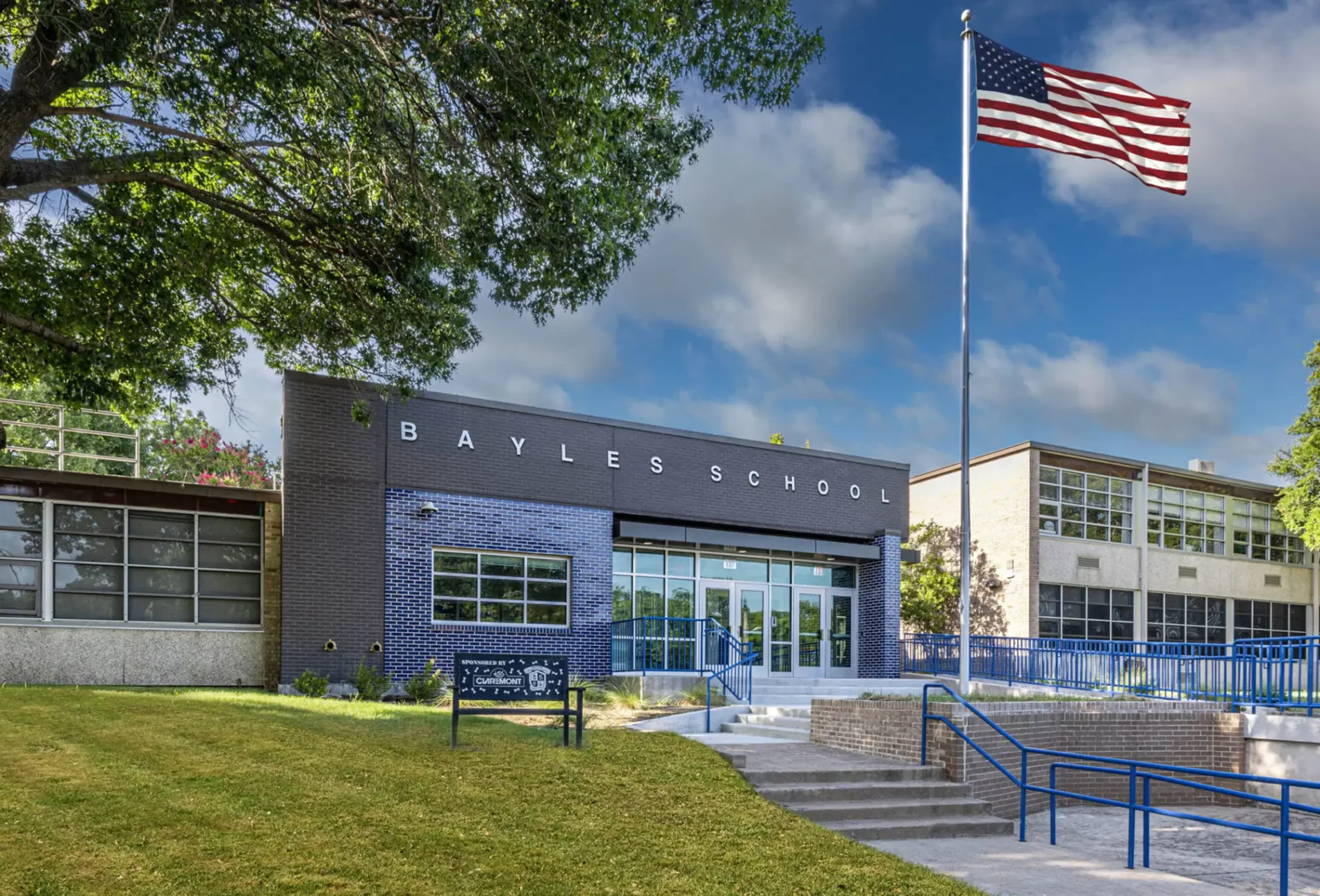
That commitment has been matched by success on increasingly complex projects. One of the firm’s most comprehensive education projects to date was the renovation of Bayles Elementary School in Dallas. Described by Kendrick as a major K-through-12 project, the multi-phase renovation took place on an active campus and included a complete interior overhaul, new teaching services, updated finishes, a new gym, a new kitchen, and a new roofing system. “We also delivered multi-ground-up additions, including the new secure vestibule and kitchen expansion for them,” he said.

Despite the complexity of working in an occupied environment, the project was delivered ahead of expectations. “We completed it ahead of the time they were expecting,” Kendrick noted. “Our team proactively identified a lot of key challenges early in the phasing plan, which helped us execute a timely and safe project. There were loads of conflicts that we ran into, but we avoided delays and any added cost.” The project was delivered in collaboration with Dallas Independent School District, Jacobs, and Alliance Architects, partnerships that Kendrick credited with keeping the work on schedule while minimizing disruption for students and staff.

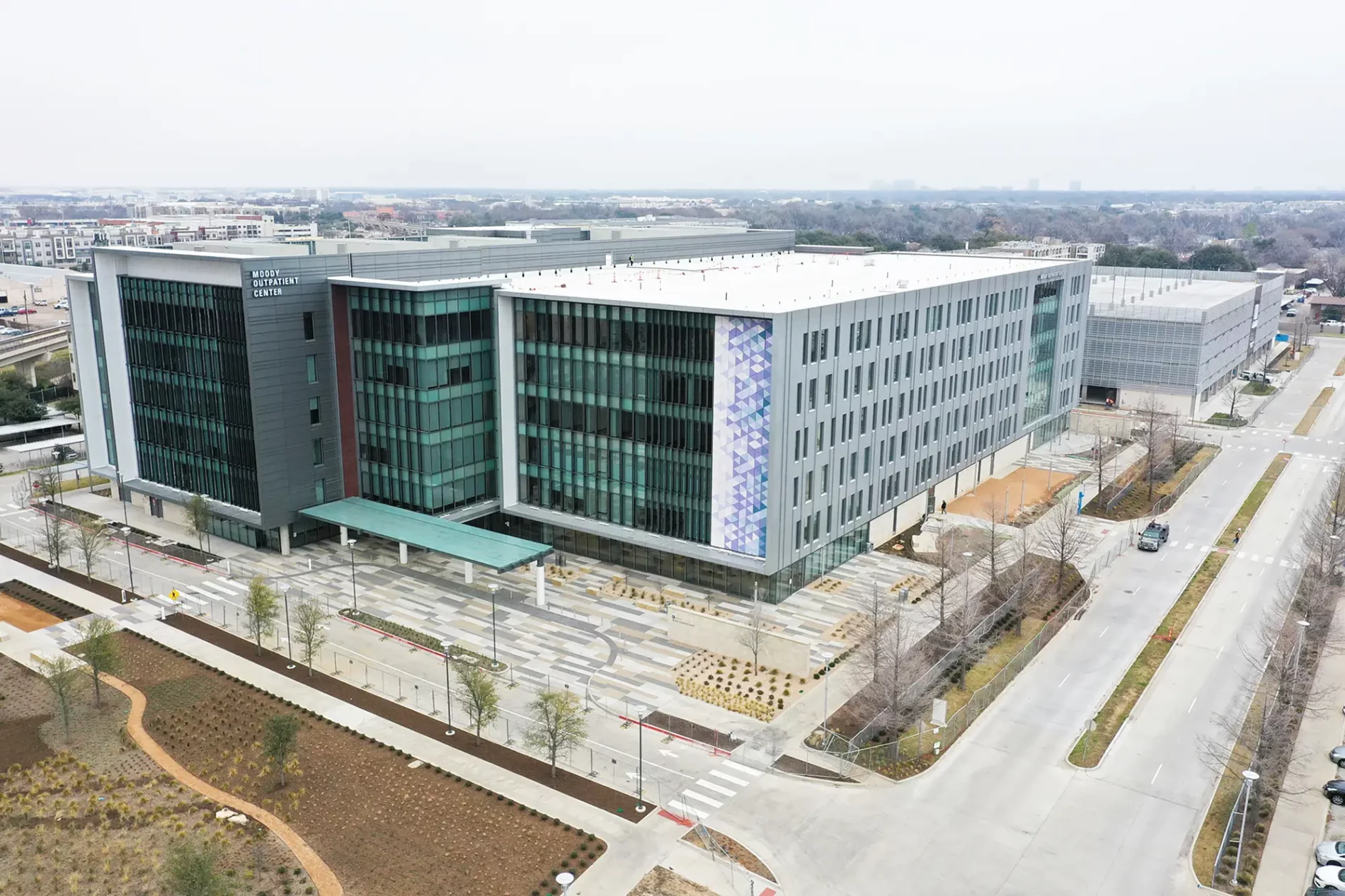
Healthcare has also featured prominently in The Crowther Group’s portfolio. The Moody Center, a major addition to the Parkland Health Campus, stands as one of the firm’s signature healthcare projects. The six-story, ground-up facility houses the Breast Cancer Centre along with administrative operations. Work commenced in February 2019 and included extensive civil and site work, from underground utilities and hydronic piping to sanitary and stormwater connections across multiple roadways. Kendrick described it as “a very complex operation,” noting the extensive off-site fabrication required for façade panels. Despite the challenges and the onset of the COVID-19 pandemic, the project was completed in 2021, approximately two months ahead of schedule. “Despite COVID, the project was delivered on time with no lost time and zero injuries,” Kendrick said. “Our team achieved a 30% participation goal with minority and women-owned businesses, reinforcing our commitment to work with everyone.”

Another significant milestone came with work for the Dallas Housing Authority, which marked a major expansion of the firm’s public-sector portfolio. The project involved 29,000 square feet of office space, including a three-story addition behind the authority’s headquarters. Designed as an open-concept facility with demountable walls, the building was intended to reinvigorate the surrounding community. “It was really huge for us to do this project, because the community really needed something to reignite and put a jolt of energy into it,” Kendrick said. “This facility assists people with housing throughout the Dallas metropolitan area, and for us to provide this type of project was huge.” He described it as “one of the most precious projects that we’ve done when it comes to being community-driven.”

Reflecting on the company’s rapid success, Kendrick pointed to a relentless focus on value, safety, and partnership. The Crowther Group combines operational excellence with an experienced, solution-oriented team whose collective expertise spans more than 80 years. “Safety is very important to us,” he said. “It’s central to everything that we do. Our teams prioritize safety.”

That focus has translated into a strong reputation, to the point where the firm is increasingly approached directly by clients rather than actively pursuing work. “We consistently deliver results that our trusted brands rely on,” Kendrick said. “We used to go look for work – now a lot of people are reaching out to us because we have a history and a reputation for safety and excellent projects.”

As The Crowther Group moves into 2026, its leadership is clear that growth alone is not the objective. “Our focus is on expanding with purpose, strengthening the partnerships that define us, and continuing to raise the bar on what operational excellence looks like in the construction industry,” Kendrick explained. “Growth for us is not just about getting bigger… 2026 represents a year of scaling smart for us, expanding where we add the most value, growing our team intentionally, and continuing to deliver high-quality, safe construction that supports our clients for long-term success.”

For The Crowther Group, construction remains a means to a greater end. Through disciplined delivery, deep partnerships, and a commitment to community impact, the company continues to use building as a force for good.

Designing the Invisible Systems That Make Buildings Work

View in E-mag

Low voltage is no longer a secondary consideration in building design. Once treated as an optional enhancement, it has become a foundational element of how modern spaces function, communicate, and feel. For Jordan & Skala, this shift has not only reshaped the industry but has become central to the firm’s evolution as a national engineering consultancy.

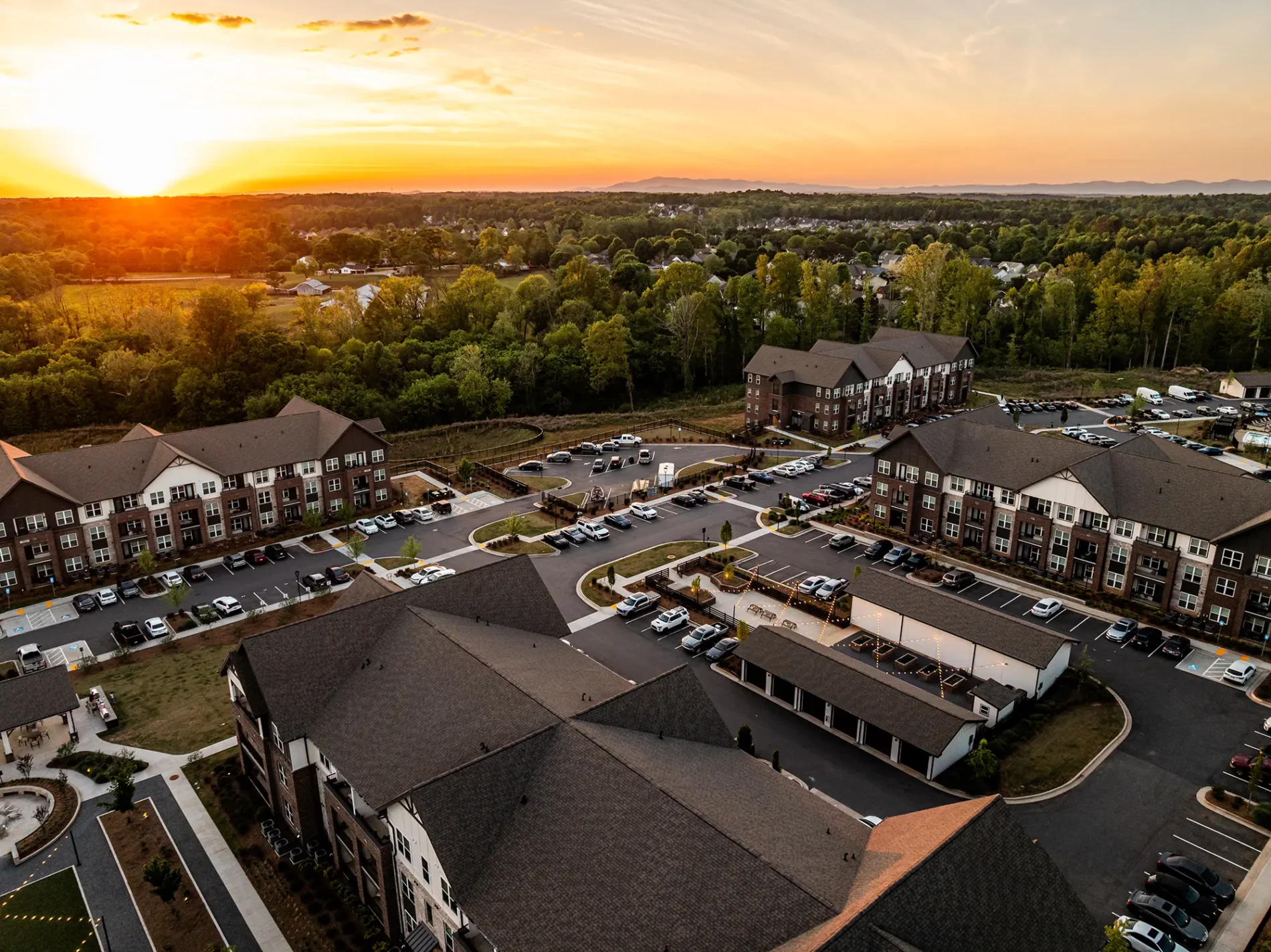
Centennial Yard Image taken by Premier Aerial Images.
Centennial Yard | Premier Aerial Images

Founded in 1953 by Brewer Senior, the firm originally operated as Brewer and Mundy Engineers, with its headquarters in downtown Atlanta. More than seven decades later, Jordan & Skala has grown into a multi-disciplinary mechanical, electrical, plumbing, sustainability, and low-voltage engineering firm with seven offices nationwide, while maintaining its headquarters in Atlanta. Licensed in all 50 states, the company’s work is largely unseen, but deeply felt. “We’re what makes the building comfortable to be in,” said Brittany Schultz, Director of Marketing at Jordan & Skala. “You don’t really see a lot of our work most of the time, because it’s behind the drywall. You may see lighting fixtures and certain electrical components, but really a lot of our work isn’t what’s seen – but it’s what makes you want to be in that building.”

That philosophy extends directly into the firm’s low-voltage practice, which has grown from a supporting role into a critical discipline. As buildings have become more connected, more secure, and more dependent on integrated systems, low voltage has moved to the forefront of design conversations. “We added low voltage later in our history, but now it is absolutely critical,” Schultz explained. “People want items like Wi-Fi, enhanced security, and need these services.”

Jordan & Skala’s low-voltage services encompass communications, security, and audiovisual design. Communications systems complete the building network, including internet, television, wireless services, and life safety systems such as emergency and nurse call systems, as well as emergency responder radio coverage. Security design includes cameras and access control systems, while audiovisual design ranges from background music and video systems to complex auditorium and stage-related installations.

The firm’s engagement with low voltage dates back to 1993, when a dedicated department was first formed, staffed primarily by electrical engineers. However, it was in 2001 that Jordan & Skala made a decisive move to formally expand and specialize in low-voltage engineering, responding to rapid technological growth and changing client expectations. “The public is really recognizing the importance of [low voltage],” Schultz said, “and now building developers, architects, and owners are understanding that if we don’t put these in and we don’t stay up to date with the latest technology, we’re going to miss out on money that our competitors are getting.”

Brian Taylor, Principal at Jordan & Skala and Director of Low Voltage, has seen that transformation unfold from within. “Historically in the low voltage scope, there wasn’t really a network in most buildings,” he said. “Decades ago, you had a phone system, there were maybe some early iterations of access control systems and the same thing for audiovisual.”

“Decades ago, you had a phone system, there were maybe some early iterations of access control systems and the same thing for audiovisual.”

In those early years, low voltage was often treated as an extension of electrical engineering or handled by specialty consultants focused on single systems. “It was very common back through the 70s, 80s, and 90s for people to have that specialty,” Taylor said. “Once you hit the 2000s, we know as a society, high-speed Internet and wireless network systems became much more common.”

As demand increased, so did the need for engineers who could design integrated systems and ensure nothing was overlooked. The industry shifted from having electrical engineers partially covering low voltage to creating dedicated telecom and low-voltage engineering roles. For Jordan & Skala, this shift became one of the firm’s most significant growth milestones. “In 1993, it wasn’t everything that Brian mentioned today,” Schultz noted. “There was maybe a focus on security as opposed to all of the other communication elements that we do now.”

That evolution is evident in some of the firm’s most high-profile work, including Centennial Yards, a mixed-use redevelopment in downtown Atlanta estimated to be a $5 billion project. Long considered a “dead zone” since the 1996 Olympics, the site is being transformed into a destination encompassing hospitality, residential, entertainment, retail, and office space. “What Centennial Yards is trying to do is build a destination where people want to come to downtown Atlanta, whether there’s a sporting event or not,” Taylor said. “They just want to spend time there, and a lot of that is going to come from the low-voltage systems we design.”

Centennial Yard Image taken by Premier Aerial Images.
Centennial Yard | Premier Aerial Images

Jordan & Skala is responsible for MEP, communications, and security design within the entertainment district, which includes a hotel, retail spaces, a music arena, and an experience venue known as Cosm. While the firm is not directly designing the audiovisual systems, coordination remains critical. “These systems have to work concurrently,” Taylor said, referring to the low-voltage work needed. “It’s become very important, especially on a site this size.”

The low-voltage team is also designing the network backbone infrastructure across the broader entertainment district, including advanced Wi-Fi systems, hard-line networks, and extensive security camera coverage. “We’ve been designing pretty advanced Wi-Fi systems across the whole site, advanced hard-line network systems, and on the security side, pretty heavy security camera systems,” Taylor explained.

Security design on a mixed-use development of this scale requires careful balance. Individual components such as hotels, retail spaces, and entertainment venues must operate semi-independently while still functioning as part of a cohesive site-wide system. “The hotel is going to have its own security camera system,” Taylor said. “They’re probably going to have their own in-house security team, same thing with the retail, the music venue, and Cosm. But then at the same time, all of these pieces are part of a greater overall site.”

Access control systems, he added, require an especially careful approach. “The interesting thing about access control is walking that line between security and convenience. You want people to feel safe and secure, but at the same time, you want visitors to feel that sense of convenience where they can move about a space in a way that flows the way the architect envisioned it.”

Jordan & Skala’s involvement also extends to supporting audiovisual systems through infrastructure design. This includes planning cabling pathways, ensuring network connectivity, and providing AV consultants with what they need to complete their systems, whether those involve small digital displays or screens spanning more than 100 feet. “We’ve had a hand in all of that,” Taylor said, “making sure that we have pathways for cabling to be pulled, making sure that network connectivity is there.”

For Schultz, projects like Centennial Yards illustrate how far the firm has come. “Coming from low voltage being seen as part of electrical to now having its own department, and us working on these high-profile projects like Cosm would be a milestone for us,” she said.

Jordan & Skala’s strength lies in the integration of its core disciplines: MEP, sustainability, and low voltage. Housing these teams in-house allows for constant communication and coordination, particularly on large, complex projects. “The ability to do that helps us in those cases like Centennial Yards as well,” Schultz explained. “If someone else is doing this AV scope, we still have that coordination skill set because we’re used to developing that on every project.” That coordination has been central to the firm’s growth from its founding in 1953 to its current national footprint. “I think that’s one of the keys to success for JSE,” Schultz said, “and why we’ve grown so much from 1953 to now, is being that great project partner and having that coordination skill set.”

As technology continues to evolve at pace, low voltage remains one of the most dynamic areas of building design. “The thing that makes low voltage and technology interesting and can make it complex,” Taylor said, “is the speed at which it evolves.”

Unlike plumbing or mechanical systems, which change incrementally, technology can shift dramatically in a matter of months. Jordan & Skala’s ability to stay current has shaped both its design approach and its infrastructure planning, particularly in security and communications systems.

Looking ahead, the firm anticipates continued growth, including expansion into data centers and an increased presence in key U.S. markets. “We’re looking ahead at growth,” Taylor concluded. “We anticipate 2026 to be a strong year and we’re putting a lot of focus on the low voltage department as part of that growth.” Guided by its ethos, “We listen. We communicate. We adapt,” Jordan & Skala continues to demonstrate how low voltage has become not just a technical necessity, but a defining element of modern buildings.

Building on Experience, Building with Integrity

View in E-mag
View Brochure

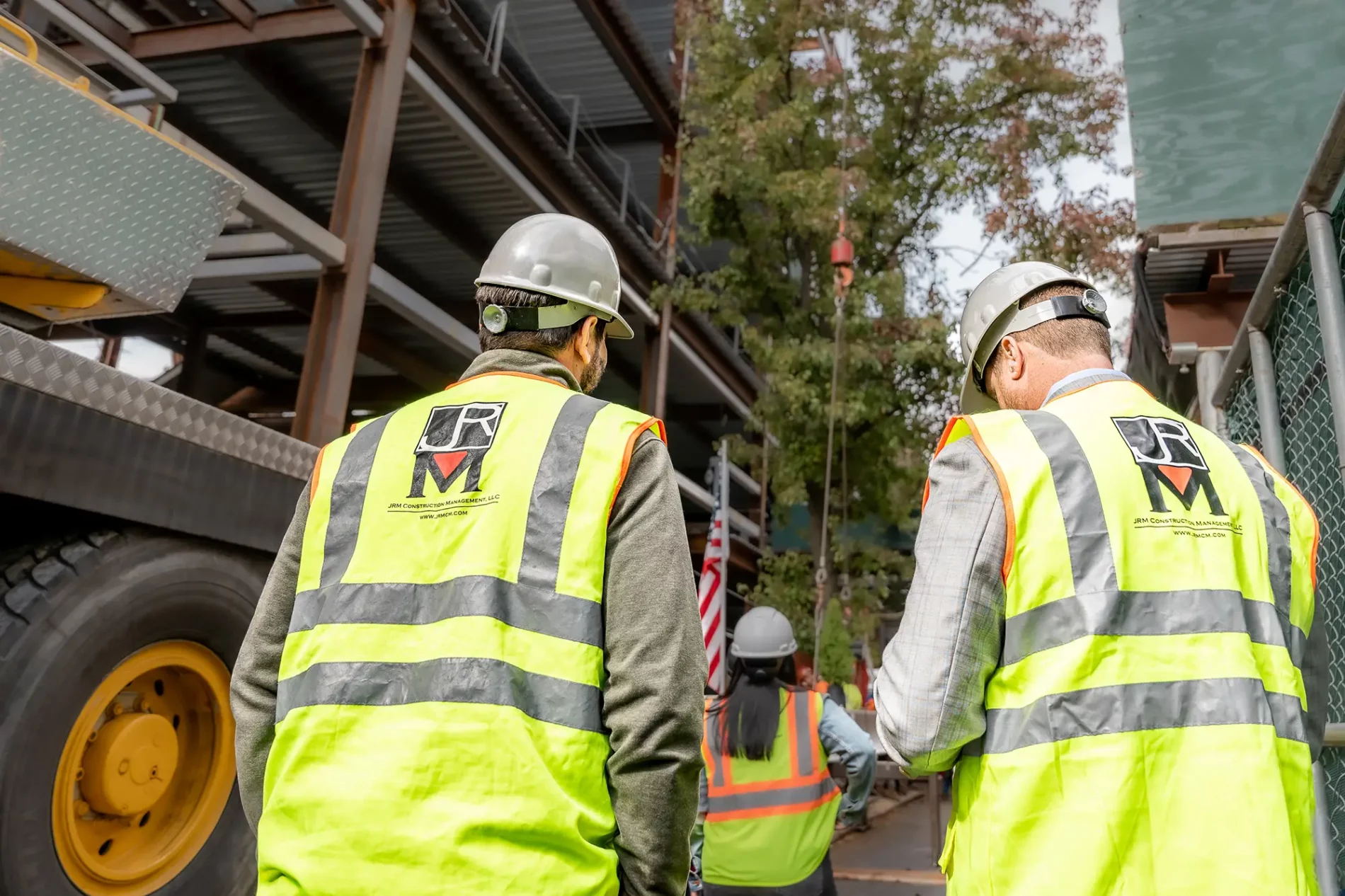
In New York’s commercial interiors market, where speed is unforgiving and expectations are uncompromising, JRM Construction Management has built its reputation on execution. Joseph P. Romano, CEO of JRM Construction Management, is clear about what differentiates the firm in a competitive marketplace. “JRM is a values-driven business that delivers greater value through every relationship. We are known for delivering the best results even on the most challenging jobs often on extremely compressed, mission-critical schedules.” That commitment to precision, discipline, and speed defines how JRM measures itself particularly in environments where timelines are unforgiving and margins for error are minimal. Clients return not simply because projects are completed, but because they are executed with consistency under pressure.

David B. McWilliams, President & COO of JRM Construction Management, describes the breadth and sophistication of the firm’s portfolio: “We deliver a broad spectrum of projects from ground-up developments to some of the most complex headquarters, retail environments, and healthcare facilities. What differentiates us is our ability to execute with both innovation and consistency, regardless of complexity.” At JRM, execution is not treated as a commodity service but as a strategic capability reinforced by strong systems, leadership oversight, and a workforce that understands the stakes of high-profile projects. Whether managing tenant improvements in active buildings or overseeing large-scale developments, the firm applies the same disciplined methodology.

A commitment to client relationships remains at the core of JRM’s operating model. Founded in 2007 by Dave G. McWilliams, Joseph P. Romano, and James Connolly, the firm was built with a clear objective: to elevate the client experience in an industry where it is too often overlooked. As Romano reflects, “While many firms make claims that sound good on paper, we have always been committed to truly doing business the right way. We never wanted to take advantage of our clients and focused on being a true partner in every sense of the word.” That client-first philosophy continues to shape JRM’s culture and long-term partnerships. It’s clear that JRM’s growth has been built incrementally over years of consistent performance and repeat business.

We never wanted to take advantage of our clients and focused on being a true partner in every sense of the word.”

The company’s five core values — honesty and integrity, caring for our people, never settling and always improving, unparalleled client service, and one unified team — are not just words on a wall; they are the standard by which JRM operates every day. As Tommy Miriello, Senior Vice President of Field Operations, reinforces, “We do not shy away from complexity or new challenges. Even if a client asks us for something that stretches us, we lean in as long as we believe we can execute to our high standards.” That clarity of purpose extends to the field, where precision coordination across trades, consultants, and ownership groups is essential particularly in complex urban markets.

JRM’s 100% ESOP structure further strengthens its culture of accountability. Performance, safety, and financial discipline are not abstract metrics; they directly affect employee-owners and the long-term value being built. Romano explains, “We believe safety is a mandate, not an inconvenience. We have invested heavily in technology and transparency because ownership requires clarity. When our team understands the data, they make smarter decisions, protect one another, and think long term.” The ESOP framework aligns incentives in a tangible way and reinforces that operational discipline benefits not only the organization, but every individual who contributes to it. As Romano often says, “People inherently treat what they own with greater care and commitment.” That ownership mindset creates focus, pride, and shared responsibility across the organization.

By 2014, as market conditions improved, JRM undertook two major projects in New York City, each exceeding $100 million in revenue. These assignments elevated the firm’s profile and marked a turning point. That period confirmed the firm’s ability to scale without compromising standards, a discipline that continues to guide its growth today.

Romano reflects, “What got us here is repeat clientele and our people. If clients feel like they’re being treated fairly, openly and honestly, they’re going to want to work with us. We focus on building our business around our people because we’re only as good as our people.” He is equally clear about the company’s purpose: “JRM’s purpose is to Make Construction a Better Experience — better for everyone including clients, owners’ representatives, building management, subcontractors, consultants, and our people. The overall experience in dealing with JRM from start to finish is what separates us from the pack.”

In competitive markets where technical capability is often assumed, the differentiator becomes experience and how issues are addressed, how communication flows, and how trust is maintained under pressure. For JRM Construction Management, excellence in execution must be matched by excellence in partnership. As the company continues to scale, that dual focus on performance and people remains the foundation of its next chapter.

A Century of Relationships, Built to Last

View in E-mag
View Brochure

In commercial construction, longevity is rarely accidental. It is earned through discipline, adaptability, and an ability to deliver under pressure without compromising the values that defined a company in the first place. For Holt Construction, that balance between growth and principle has been the defining characteristic of a business that has thrived for more than a century. Founded 107 years ago by the grandfather of current Chairman of the Board Jack Holt, Holt Construction has evolved from a small-town operation in Rockland County into a national construction management and general contracting firm with more than 280 employees across nine offices. Yet for all its scale, the company continues to describe itself as something different from the industry’s corporate giants. “We consider ourselves a boutique-type contractor; we do a lot of niche projects,” said Christopher Asaro, COO & President of Holt Construction.

Asaro joined the company in 2001 and in 2013, became president. His tenure has coincided with one of the most significant growth periods in the company’s history. Since he joined, Holt has expanded from a $40 million firm to a $500 million enterprise.

“We are a multifaceted company, and we are always growing and evolving within the construction industry,” Asaro explained. “We don’t just build a project; we create relationships that last and build trust not only with the client, but also with the community and the trades that help us build. “We bring in the best of the best, and we produce the best product for our clients – we cover it all.”

That breadth is reflected in Holt’s service offering, which includes construction management, general contracting, Design-Build, Integrated Project Delivery (IPD), and Collaborative Project Delivery (CPD). The company’s work spans multiple aviation programs, food and beverage facilities, high-end first-class lounges, health science properties, corporate interiors, mission critical programs and ground-up developments, among others.

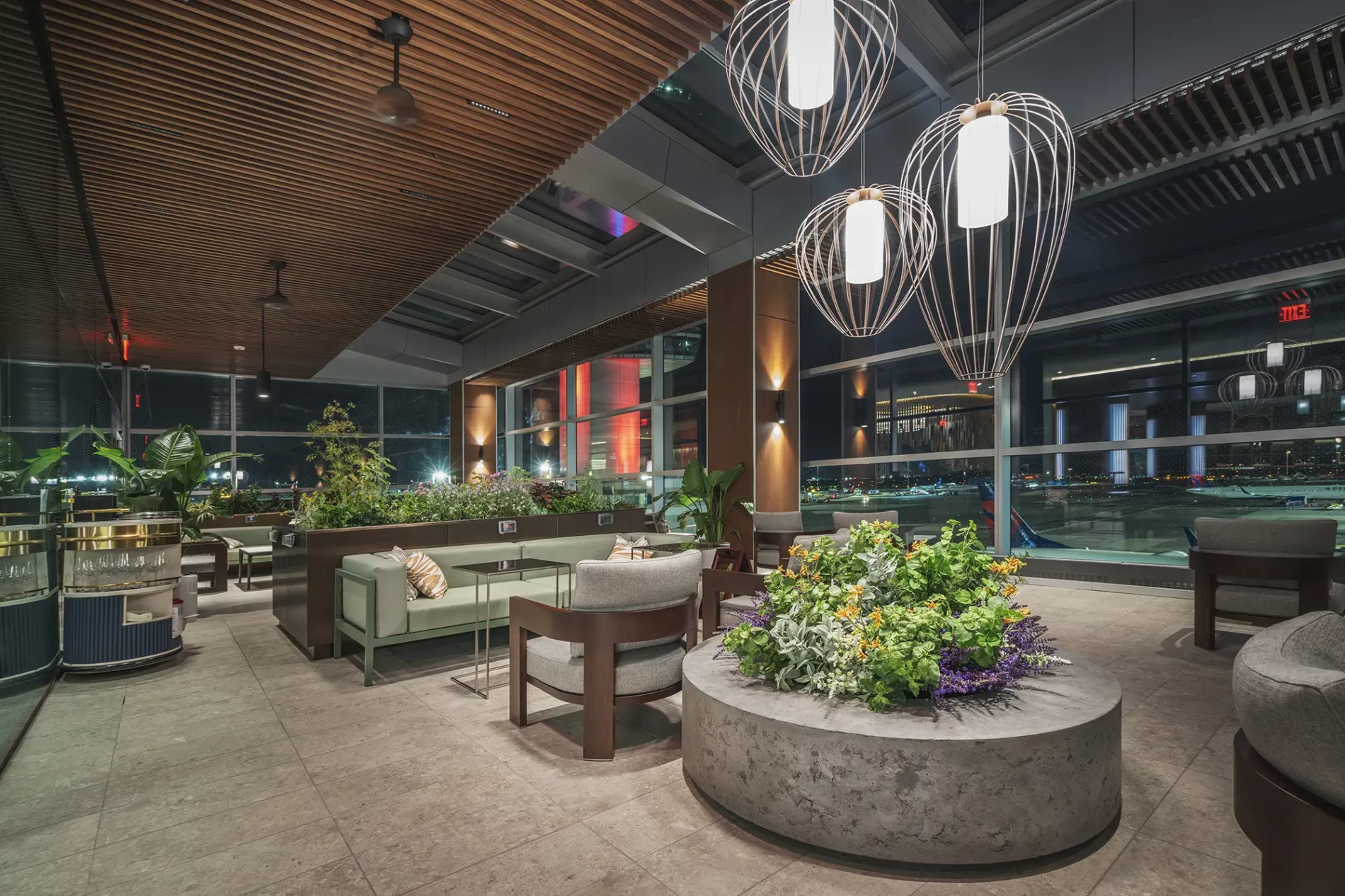
Holt’s aviation portfolio is particularly notable. The company has worked extensively in airports across the country, including at JFK’s New Terminal One (NTO), a $9.5 billion program that Asaro described as “very high profile.” “We were fortunate enough to be a part of that,” he said. Within the terminal project, Holt is completing multiple concessions, retail spaces, back-of-house areas, and infrastructure programs. “The amount of coordination, collaboration and a detailed approach required to work in such an arena is astronomical,” Asaro noted. That capability has translated into long-term aviation relationships, including high-end lounge work for financial institutions such as American Express and Capital One. “The most recognizable projects that we’ve been doing are the high-end lounges,” Asaro said.

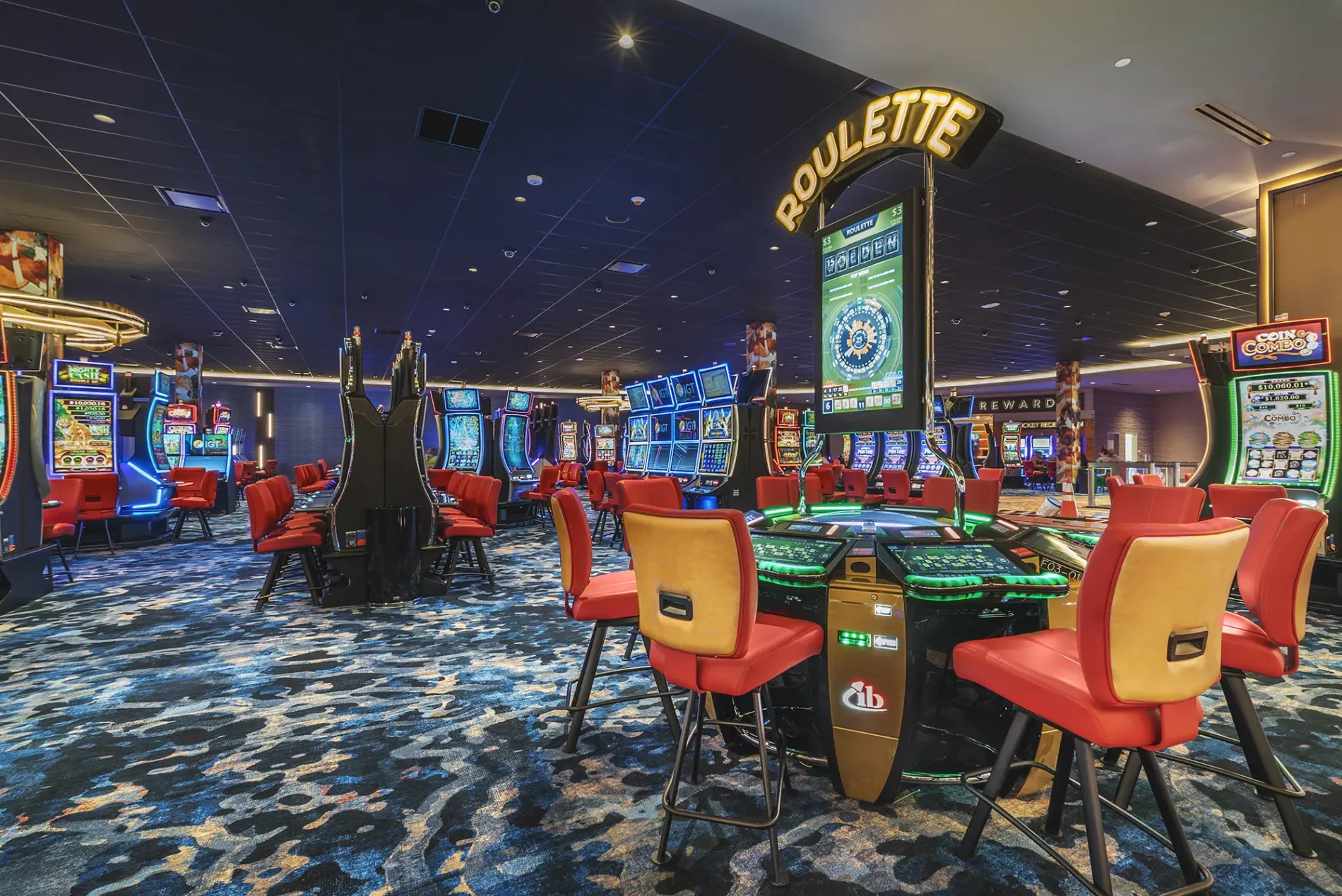
Repeat business has become a defining element of Holt’s model. The company’s work with Resorts World illustrates that approach. Holt originally constructed a new casino for the client in Newburgh, New York, which was attached to an existing retail center. ““We worked with not just the client, but also the town and the shopping center’s owner to make that project a reality.” Asaro Explained. The facility, which originally opened in 1980, required extensive modernization. Infrastructure upgrades spanned electrical, lighting, materials, and security systems. Sixty-five thousand square feet of floor space was raised to accommodate new HVAC systems, millwork, electrical upgrades, and a drink delivery system, while housing over 1,000 slot machines and 82 electronic tables. Fifteen rooftop heating and air conditioning units were installed alongside new UPS units, bringing the facility into what Asaro described as “the 21st century.” “The project was not just a success for the client and us; it helped bring over 250 jobs to the area as well,” he added.

“We worked with not just the client, but also the town and the shopping center’s owner to make that project a reality.”

The relationship has continued, with Holt now collaborating again with Resorts World in Queens. “Since we have worked with them in the past, we made sure our team collaborated with the new team on this project, sharing experiences, lessons learned and processes,” Asaro said.

Holt’s history of high-profile work extends further back. The company worked within the World Trade Center location on various fit-outs and has completed projects in numerous airports. It has delivered work for corporate clients including Avon, IBM, Federal Paper Board, and Pfizer. “The backbones of America and we were a part of it,” Asaro reflected.

Over time, diversification has driven expansion. From corporate interiors and ground-up programs, Holt has entered the mission critical and health sciences market and expanded further into aviation. Alongside that diversification has come internal evolution. “We also grew our teams, utilizing new technology to help streamline communication and collaboration,” Asaro said. “Holt has evolved as a company, but we kept that ideology of a family company, staying true to our core values, building lasting relationships, acting with respect, honesty, and integrity. This is how Holt has thrived for 107 years.” That family mentality remains central to Holt’s identity, even as it has expanded geographically into offices across the New York City metro area, Boston, Houston, New Jersey and Dallas. The company has been listed among the Top 400 Contractors by Engineering News-Record and has received numerous awards and recognitions throughout its history. “Most importantly, our growth has been a wonderful achievement,” Asaro said. “From one employee to now over 280 employees across nine offices and countless states. In each of those states, we have built trust with clients and trade partners alike.”

Community engagement has become embedded within the firm’s operating model. “We have built new initiatives, actively participating in local outreach and hiring programs to advance the communities in which we build – it is now standard practice at Holt Construction,” Asaro said. “Our dedication to providing opportunities for minority and local trade partners, vendors and suppliers is evident in all of our locations and on all of our projects.”

For Holt, success is measured less by volume and more by outcome. “We measure success by the client’s success. If a project is completed on time, at or under cost, it is a great success for us,” Asaro said. “Was the client happy with us? Do they see us as potentially collaborating on another project? Do they recommend us as a builder of choice? Those are our true metrics for success.” He attributes that performance directly to the people within the organization. “This starts with our team and individual employees,” he said. “Not only do we have repeat clients, but we also have team members who have been with Holt for years and they have learned through experience how to achieve these metrics.”

The relationship-driven model extends beyond project completion. “Holt succeeds because of the clients we work for and the employees we have. A synergistic relationship does not stop at a ribbon-cutting or grand opening. We immerse ourselves in the project; when it is complete, we are still there for the owner, making sure systems are tested, training happens and answering questions.” He continued, “That is why we have clients for life and why a small-town homebuilder was able to grow into a national, award-winning firm.”

Looking ahead, 2026 is positioned as another year of controlled growth. Holt plans continued expansion into data centers, while maintaining disciplined scaling to preserve quality.

“Holt is always thinking about growth. Not just nationally, but internally as well,” Asaro said. “New initiatives, community events, learning tools and growing with new technologies, we always try to meet a modern construction world.”

The company’s approach to expansion remains measured. “We plan to keep our repeat relationships growing by giving the best service possible and expanding our locations where we are needed. Holt has always been able to mobilize and synchronize within different locations, clients and trades – 2026 and beyond sees that growth continuing.”

Despite its national footprint, Holt’s core remains rooted in the family-driven model that shaped its first century. “By bringing that family mentality that started over 107 years ago to a modern Holt, we have been able to meet or exceed our goals to create success story after success story,” Asaro said. “The whole construction organization is a family-owned business – our model is very family-oriented. We follow our core values, and it’s a recipe for success.”

For a company that has navigated more than a century of industry change, that philosophy continues to guide its next chapter. “We are builders after all,” Asaro concluded, “and we know how to build a foundation that lasts.”

Believing in Being Built Different

View in E-mag
View Brochure

JBS was founded with a clear intention: to challenge the way construction companies communicate, operate, and build long-term relationships. Established in 2018, the company has grown into a modern construction partner with national reach across leading retail and automotive brands, specializing in ground-up construction projects ranging from 1,500 to 45,000 square feet. From the outset, JBS set itself apart by managing projects comprehensively, from initial planning through long-term operation.

“We set ourselves apart from other companies by our end-to-end approach,” said Alex Silvers, Managing Partner of JBS. “We don’t just construct buildings; we manage the full life cycle of them.” That philosophy is reflected in the company’s comprehensive service offering, which includes ground-up builds, remodels, expansions, program management, permitting, scheduling, and budgeting. As its client base expanded nationally, JBS also launched a dedicated maintenance division to support ongoing property care. “Beyond new construction, we provide ongoing maintenance, repairs, emergency services, and multi-unit oversight,” Alex added.

The company’s origins are rooted in both experience and intent. Founder Joe Dionne grew up watching his father build a successful commercial construction company, an influence that shaped his understanding of the industry and his desire to do things differently. “I knew I wanted to build something similar one day,” Joe explained. “When I started to envision what JBS would be, I knew I wanted to create a company where building wasn’t complicated, communication doesn’t require chasing, where we believe in being honest, even when it’s hard, and we do the right thing, even when no one’s watching.”

Joe partnered with Alex Silvers and Kevin Polley, bringing together complementary skill sets and a shared ambition to rethink traditional general contracting models. In 2022, the trio secured their first commercial contract with Auto Glass Now, a subsidiary of Driven Brands, marking a turning point for the business. From that moment, JBS began scaling rapidly alongside national clients whose growth demanded speed, consistency, and accountability. “Our goal was simple but ambitious,” Alex said. “To build a construction company with better communication, stronger relationships, and relationship first leadership.” As those relationships deepened, it became clear that clients were seeking more than transactional delivery. They needed a partner capable of managing complexity across multiple locations, evolving prototypes, and compressed schedules, without losing sight of quality or operational continuity.

Growth followed quickly. In just a few years, JBS expanded from its three founders to a team of more than 33 employees. “Kevin, Joe and I worked night and day from the beginning to build our dream,” Alex said. “It wasn’t until 2024 that we began to add employees to the fleet. In just two short years, JBS has gone from the three founders to a 33-and-counting group of ambitious employees.”

At the core of that expansion is what the leadership team describes as a ‘relationship first’ model. “We live by a straightforward principle,” Alex noted. “We do what we say and treat people the way we’d want to be treated.” That approach was shaped early on, when the founders were directly managing every aspect of projects themselves. “Everything from permitting to close out, each stage of the job was completed by the three of us,” Alex said. “That’s when we decided that the relationship first leadership was going to be something that we were going to live by.”

Employee development has become another defining feature of the company’s culture. JBS places significant emphasis on leadership, accountability, and ownership at every level of the organization. “Internal employee investment drives growth and success,” Alex explained. “Each of our project managers own their projects. They feel comfortable with proactive communication with the client about project progress through every step of the way.”

The company’s commitment to growth extends beyond technical skills. JBS actively encourages personal and professional development, offering mentorship and leadership programs designed to create confident, capable leaders. “I’m looking for you to better yourself,” Alex said, “to be able to leave JBS with real-life success.” He added that the goal is not simply to produce project managers, but to develop team leaders who reinvest their knowledge into others. “You’re more than a construction project manager, you’re a team leader,” he said. “You’re reinvesting time into your own entity within JBS.”

That same relationship-driven philosophy extends to JBS’ subcontractor base. The company views subcontractors as long-term partners and takes deliberate steps to support them. “The success of our subcontractors directly correlates to the success of JBS. This is why we put value on these partnerships,” Alex stated.

JBS delivers projects nationwide for leading retail brands, handling both new builds and remodels as part of high-volume, multi-site programs. The company’s ability to maintain speed and consistency while adapting to local conditions has become a key differentiator. “Our main focus is to keep the growth of our clients,” Alex explained. “No client or project is more important than another. What truly matters is getting the doors open for everyone we serve.”

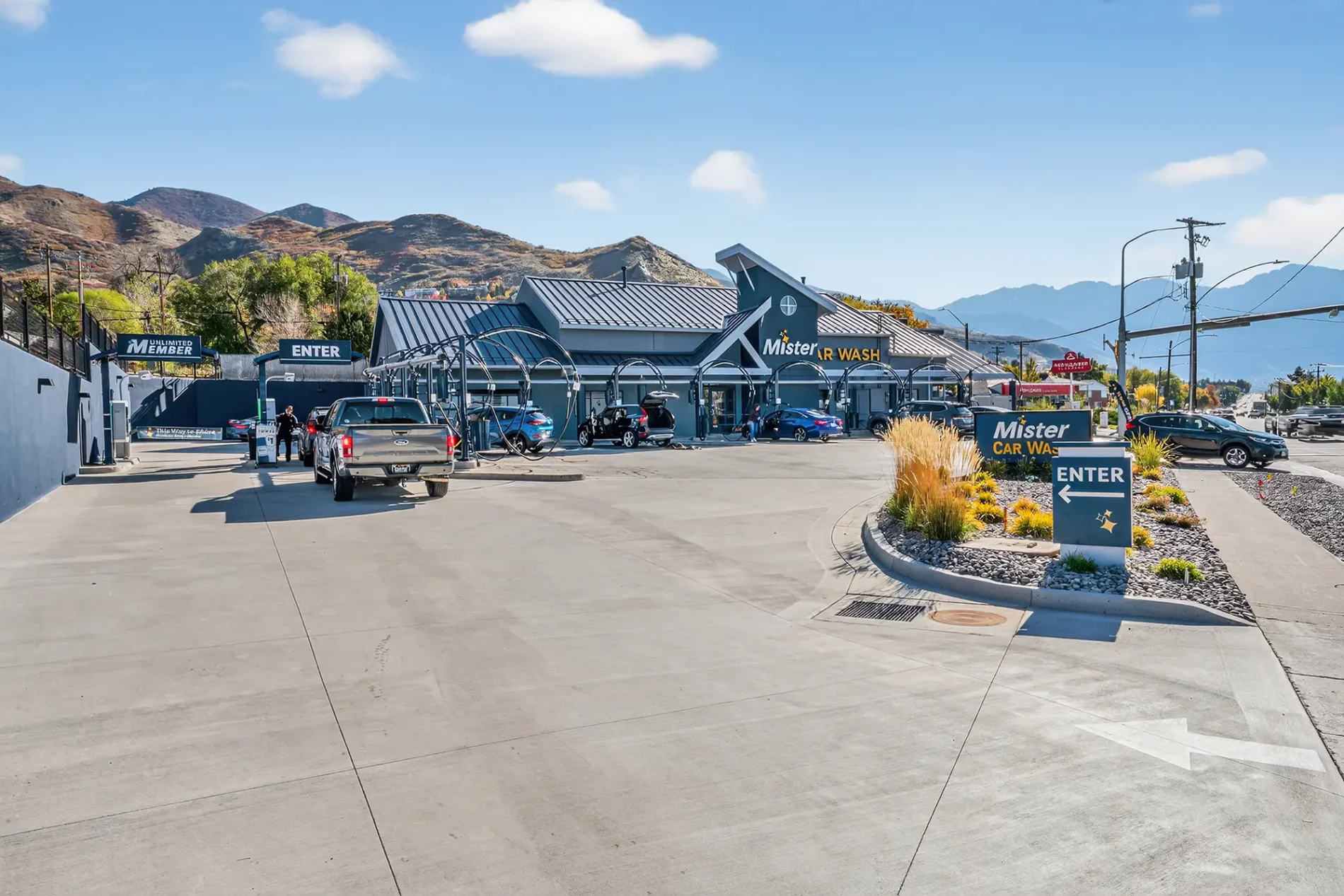
That focus was evident on a 2025 car wash renovation project in Salt Lake City, where JBS was tasked with delivering under a 65-day deadline. “The scope included replacing 12,500 square feet of parking lot, rebuilding a failing 1,600-square-foot retaining wall, and completing a full exterior repaint,” stated Nick Silvers, Senior Project Manager. Through careful phasing and parallel work streams, the team completed the project in just 52 days. “These results were driven by a combination of critical project management and impeccable on-site supervision,” Nick noted, adding that the company’s reputation for speed, integrity, and quality continues to drive repeat business.

“Our main focus is to keep the growth of our clients. No client or project is more important than another. What truly matters is getting the doors open for everyone we serve.”

A similar approach was applied on a ground-up automotive retail facility in Searcy, Arkansas, where JBS delivered a 1,680-square-foot building in under 60 days, finishing 55 days ahead of schedule. Crews worked seven-day weeks to maintain momentum, even through the holiday period. “This performance is not an outlier,” said Zane Curdes, Project Manager. “We have successfully completed multiple projects in 70 days or less, setting a new benchmark for speed without compromising quality. Clients are increasingly choosing to work directly with JBS, even when other companies are competitive to our bids,” he added. The reason is simple: faster delivery enables facilities to open sooner and generate revenue earlier, often offsetting any marginal cost difference. “That alignment of speed, quality, and financial performance continues to reinforce why clients trust us as a long-term construction partner rather than simply a transactional service provider,” Zane explained.

Looking ahead to 2026, JBS expects continued national growth, deeper relationships with existing clients, and expansion into new sectors including quick-service restaurants, medical facilities, and large-scale retail programs. “Our pipeline is strong with the existing clients that we have,” Alex said. “We’re legacy builders for these companies. We want to continue with that relationship first leadership and be strategic as we do expand.”

As JBS continues to scale, leadership remains focused on investing in systems, people, and culture. “We pride ourselves on the fact that JBS is redefining what a construction company can be,” Alex said. “It’s not just about building structures; it’s about simplifying complexity for our clients, creating better experiences for our partners, and then setting a new standard for how modern construction companies should build and operate.”

For JBS, being “built differently” is not a slogan, but a standard. One rooted in relationships, reinforced through delivery, and carried forward by a team committed to doing the work the right way, even when no one is watching.

Built in Steel, Sustained by Craft

View in E-mag
View Brochure

Lawton Welding Company has spent more than four decades doing what many fabricators aspire to, but few achieve: controlling the steel process from concept to installation, at national scale, without losing the discipline of craftsmanship that defined its earliest days. What began in 1982 as a small welding operation has grown into a full-service structural steel and miscellaneous metals firm with fabrication, engineering, detailing, coating, and installation capabilities delivered entirely in-house. Today, with more than 150 employees, multiple fabrication facilities in Massachusetts, and crews installing steel across the United States, Lawton Welding Company continues to expand while remaining anchored to the trade itself.

The company was founded by Ray Lawton straight out of high school, continuing a lineage deeply rooted in metalwork. The trades, as Dan Lawton, Vice President of Lawton Welding Company, explains, are part of the family’s DNA. “Everyone’s really in the steel trade,” he said. Dan’s grandfather was a firefighter who welded on the side, his great-grandfather was a blacksmith, and his great-great-grandfather worked as a boilermaker. That lineage shaped not only the company’s technical direction but its culture.

In the early years, Ray Lawton took on small welding jobs, repairing trucks and fabricating railings. Over time, the work expanded into wrought iron rails, welding repairs, and eventually structural steel and miscellaneous metals. One of the first major milestones came when the company moved out of its original Quonset hut and into its first dedicated shop in Topsfield, Massachusetts, in the 1990s. “Going to a shop from a Quonset hut was a huge milestone,” Dan said, marking the transition from survival-driven work to a scalable fabrication business.

Over the decades that followed, Lawton Welding Company steadily broadened both its scope and its geographic reach. What distinguishes the firm today is the depth of services offered under one roof. The company fabricates and installs structural steel and miscellaneous metals, works with non-ferrous metals, provides engineering and detailing services, and coordinates BIM modeling for complex projects. It also operates a national field installation service using its own traveling crews, ensuring consistency between shop drawings and on-site execution.

Supporting that work is a comprehensive finishing operation. Lawton Welding Company provides sandblasting and coating services using a Blast Tec machine and operates a 5,000-square-foot temperature-controlled paint facility capable of handling two-part epoxy paint, primer, and a wide range of finish coatings. These capabilities allow the company to control quality and scheduling in-house, reducing dependency on third parties and minimizing risk on tight timelines.

Another major turning point in the company’s evolution was bringing engineering and detailing fully in-house. “Being able to have our own structural engineers [is a huge milestone],” Dan noted. That internalization of design expertise allows Lawton Welding Company to respond quickly to design changes, coordinate more effectively with general contractors, and manage constructability challenges before they reach the field. It also supports the company’s growing role on complex, high-profile projects where BIM coordination and precision fabrication are critical.

Among those projects is the Netflix House at the King of Prussia Mall, the first Netflix showcase to open in the United States. Lawton Welding Company provided the structural steel and miscellaneous metals package for the project, executing work within an occupied mall environment. According to Dan, the project’s complexity extended far beyond fabrication. “It was a very hard project as it was in an occupied mall, so a lot of the steel structuring and reinforcing jumbo beams we did were at night,” he said.

The scope included cutting open the existing mall roof and inserting jumbo beams measuring approximately 65 feet long and weighing around 100 pounds per foot. Lawton also fabricated and installed theater railings, staircases, steel framing around the bar, and shelving systems. BIM modeling and coordination were central to the project’s success, and installation itself posed significant logistical challenges. “It was a large project for us that was very in-depth with the detail of the BIM modelling and coordination,” Dan said. “Installation was just tough alone; the whole project was tough. But that’s all wrapped up now, and people are able to go there and enjoy themselves, which is great.”

“We’re always growing, always pivoting.”

The company’s national reach is further demonstrated by its work on solar canopies at Universal Epic Universe in Orlando. This was a supply-only project, but one defined by rapid fabrication schedules and high-paced deliveries. Lawton Welding Company produced several hundred tons of galvanized structural steel for the canopies, working for a California-based solar company, MBarC, with whom it has an ongoing relationship. Throughout the project, design changes occurred while fabrication was underway, increasing pressure on schedules and coordination. “This was a high-profile project,” Dan said. “We were able to overcome the obstacles, fabricate it here and deliver it to the complete other side of the country, to Florida, in a timely manner, which was great for us.”

Currently, Lawton Welding Company is engaged on what Dan described as its largest project for the coming year: the Equinix Data Centre in Georgia. The company is responsible for the miscellaneous metals package, which includes a substantial amount of light structural steel, dunnage frames, and associated components. The scope totals nearly 2,000 tons of steel for miscellaneous metals alone. “Huge,” Dan said simply, underscoring the scale of the work.

Across these projects, the company’s operational philosophy remains consistent. Lawton Welding Company controls the job from start to finish by keeping engineering, detailing, fabrication, finishing, transportation, and installation in-house. The firm owns its own cranes, scissor lifts, and equipment, and operates with an open-shop installation team. “Being able to have everything in-house, being able to design, detail, fabricate and install, then truck the material to the job site and use all of our own equipment, means we control the job from start to finish, which is definitely a huge key to success,” Dan explained.

Equally central to the company’s success is its workforce. Lawton Welding Company employs a large number of fabricators, welders, engineers, and installers, many of whom have been with the company for more than 25 years. The business remains deeply family-oriented, with multiple generations of the Lawton family involved alongside other families who have built long-term careers within the company. “I have guys that have worked here for 25 years, and now their sons are working here, then their sons’ sons are working here,” Dan said. “It’s definitely a big family culture for sure.”

That continuity supports the company’s ability to respond to challenges in fast-moving markets. “One of the biggest keys to success is being able to overcome the obstacles, the timeline and design changes,” Dan said. “We have a relentless workforce that pretty much just focuses on the quality and speed of each project we have. We have extremely and unbelievably talented fabricators and welders, and our installation team is amazing.”

Looking ahead, Lawton Welding Company shows no signs of slowing. The firm continues to pivot between markets as demand shifts, maintaining work across multiple sectors and regions. “We’re always growing, always pivoting,” Dan said. “Whatever market we’re in that might be starting to tone down, we jump into the next market.”

Expansion plans include opening new facilities in Georgia, Florida, and North Carolina, increasing production capacity through new equipment purchases, adding project managers and staff as needed, and continuing to invest in detailing and engineering capabilities. The company is also committed to advancing automation and robotics within its fabrication operations, using technology to streamline workflows and maintain precision at scale.

“Just keep moving forward as the technology comes out,” Dan said. “Our shop’s extremely automated, so we’re staying up with all the technology that’s coming out with the robotics, and just trying to streamline as best as we can.”

After more than 40 years in business, Lawton Welding Company stands as a rare example of a steel contractor that has grown nationally without diluting its trade identity. Built on family, sustained by craft, and reinforced by in-house control of every stage of production, the company continues to shape complex projects in steel, one weld at a time.

Building Federal Trust Along the East Coast

View in E-mag
View Brochure

Imperial Construction & Electric has carved out a distinct position in the construction industry by operating where precision, accountability, and public responsibility intersect. As a minority-owned general contractor working extensively with public and federal agencies, the company has built a portfolio defined by military, infrastructure, and institutional work that demands absolute reliability. From Department of Defense facilities to Veterans Affairs hospitals and municipal waterfront buildings, Imperial’s growth has been driven by its ability to deliver complex projects under stringent requirements across the Eastern United States.

The company’s reach extends up and down the East Coast, with active projects in Florida, Rhode Island, North Carolina, Georgia, and New Jersey. While its headquarters remain in Springfield, New Jersey, Imperial has also established an office in Sarasota, Florida, reflecting a deliberate expansion strategy aimed at deepening its presence in the Southeast. This geographic flexibility has allowed the company to pursue high-value federal and state work while maintaining close relationships with municipal clients throughout New Jersey.

Imperial provides full-service general construction and construction management services, supported by scheduling, estimating, and budget control. A key differentiator is its in-house electrical division in New Jersey, which allows the firm to self-perform critical scopes while maintaining tighter control over quality, safety, and schedule. This integrated approach has proven especially valuable in defense and public-sector environments, where coordination failures can quickly become operational risks.

The company’s roots stretch back nearly four decades. Imperial Construction Group was originally founded in 1986 by Frank Dominguez. After years of operation, Dominguez closed the business in 2016. In 2021, his son, Anthony Dominguez, reinstated the Imperial name, reconnecting the business with its original identity while positioning it for a new phase of growth.

Since that transition, Imperial has expanded rapidly, reaching significant milestones in a short period of time. Among the most notable achievements are the creation of its in-house electrical department four years ago and the attainment of more than $50 million in new work. These milestones reflect both increased capacity and the trust the company has earned from federal, state, and municipal clients.

Imperial’s minority-owned status is not treated as a checkbox but as a core component of its identity and operating philosophy. Anthony Dominguez emphasized the importance of using that position to support others navigating similar challenges. “It’s very important,” he said. “Obviously, my father, my family, and I, being minorities and also having a small business, we always look to support other small businesses and other minority owned businesses out there, because we do understand how challenging it is to start a small business and continue to grow it. Over the years, Imperial has awarded millions of dollars in contracts to SBE, MBE, and WBE businesses, which shows our commitment to support other small businesses.”

 “Over the years, Imperial has awarded millions of dollars in contracts to SBE, MBE, and WBE businesses, which shows our commitment to support other small businesses.”

That commitment extends into Imperial’s subcontracting and procurement practices. The company actively creates opportunities for small and minority-owned subcontractors and vendors, both as a matter of principle and as a practical strategy for strengthening project teams. Imperial supports Minority Owned Business and Small Business Enterprise procurement goals as a prime contractor, consultant, and subcontractor, maintaining active pre-qualifications, licenses, and certifications across general construction, electrical, and construction management services.

The firm holds numerous certifications, including NJSDA Contractor status, NJDPMC Notice of Classification, NJ SBE Certification, NJ MBE Certification, and DPW certification. These credentials, combined with a track record of performance, have enabled Imperial to complete more than 200 projects for the Veterans Affairs Administration, the Department of Defense, other federal agencies, and state work.

Recent projects illustrate both the breadth and complexity of Imperial’s work. One notable example is the Sea Watch Recreation Building in Manasquan, New Jersey. Located directly on the beach, the project required careful coordination to address environmental exposure and seasonal conditions. The building includes a second-floor restaurant with a deck overlooking the ocean, a convenience store, and first-floor public lockers for beachgoers.

“That was a very challenging project because we had to work throughout the winter to get that project done,” Anthony said, “but it came out beautiful, the borough of Manasquan is very happy with how it came out.”

Imperial is also currently delivering a $15 million Jacksonville Air National Guard project in Florida. The scope includes renovations to a full hangar for F-35 fighter jet repairs, along with comprehensive upgrades to office and administrative spaces. The project carries strict deadlines and security requirements, underscoring the level of trust placed in Imperial by military clients.

“It’s a high-priority project because obviously it’s for the military and they have strict deadlines to turn these spaces over for our military,” Anthony noted.

In addition, the company is performing a $10 million renovation of a U.S. Coast Guard station in Moriches, New York. Located on the water, the project involves a full building renovation, demanding careful sequencing and environmental coordination. Imperial is also constructing a three-story MRI wing at the VA Providence Hospital in Rhode Island, a $22 million project that will significantly expand diagnostic capacity for veterans and staff.

Beyond project delivery, Imperial remains actively engaged in industry organizations. The company is a member of the New Jersey chapter of the Associated Builders and Contractors of America and has earned multiple awards in recent years recognizing excellence in construction performance.

As Imperial celebrates its 20th anniversary, leadership attributes its success not to rapid expansion alone, but to culture. “I think having a great company culture is what’s allowed us to be successful and making sure that everybody’s able to work together to achieve our goals,” Anthony said. “I think that’s a big thing, our teamwork and company culture are great.”

That emphasis on people is echoed in the company’s internal philosophy. Imperial describes its organization as built around “a staff of highly diverse and experienced personnel whose collective backgrounds span a variety of construction disciplines.” This depth of experience allows the firm to manage the logistical and technical challenges inherent in federal construction while maintaining consistency across multiple regions.

Looking ahead, Imperial Construction & Electric enters 2026 with confidence and clarity. The company is projecting revenues of $70 million, a significant step forward that reflects both its growing backlog and its expanding footprint along the East Coast. Florida remains a key focus area, but leadership continues to evaluate opportunities throughout the region that align with the company’s expertise in military, institutional, and public-sector construction.

“That will be a big accomplishment for the company,” Anthony said, “and [we are also planning] to continue to work and expand up and down the East Coast, specifically in Florida.”

In an industry where credibility is earned slowly and lost quickly, Imperial Construction & Electric has built its reputation through discipline, partnership, and performance. By pairing federal-grade execution with a people-first culture and a commitment to inclusion, the company has positioned itself not just for growth, but for longevity in some of the most demanding construction environments in the country.

Carrying a 100-Year Electrical Legacy into the Next Century

View in E-mag
View Brochure

Few electrical contractors in the United States can point to more than a century of continuous operation, but M. L. Schmitt, Inc. has reached that milestone while remaining rooted in the same community where it began. Founded in 1923 and still based in Greater Springfield, Massachusetts, the company has spent 103 years adapting to changing technologies, shifting markets, and economic uncertainty, while holding fast to the principles that built its reputation.

Today, M. L. Schmitt is a full-service electrical contractor whose work spans everything from new construction and university dormitories to hospital emergency room fit-outs, wastewater treatment plants, assisted living facilities, housing complexes, schools, and large-scale solar photovoltaic installations. As Jean Pierre Crevier, Owner and Vice President, put it simply, “If it has electrical in its scope, we do it. Everything.”

That breadth of capability reflects both the longevity of the firm and the mindset that has sustained it. While many companies narrow their focus over time, M. L. Schmitt has expanded deliberately, adding new services as technology and client needs evolved, without abandoning the fundamentals of craftsmanship, reliability, and long-term relationships.

The company was founded by Mansuit L. Schmitt, the first of three generations of leadership to guide the business. For decades, it remained a family-owned operation .. That continuity created a deep connection to the surrounding community and a client base built on trust rather than transaction.

In a significant moment in the firm’s history, ownership transitioned to Pete Coppez and Jean Pierre Crevier, who became the first non-family owners in more than 100 years. Both had worked their way up through the company from apprentices and had been with M. L. Schmitt for roughly 25 years before assuming ownership. Their long tenure reflects not only loyalty, but an intimate understanding of the company’s culture and expectations.

Jean Pierre sees that transition not as a break from tradition, but as stewardship. “I’m just glad to be able to continue the legacy of the company, continue to service the clients that we’ve had over all the years, develop new relationships and embrace new technology as it becomes part of our working tools to offer better solutions to our customers,” he said.

That sense of responsibility was tested almost immediately. Pete and Jean Pierre assumed ownership just as the COVID-19 pandemic reshaped the construction industry. “Something that Pete and I were not prepared for at all was surviving the pandemic right at the beginning of our ownership stage,” Jean Pierre explained. “For us it was under the mindset of ‘nothing is going to change, we have been operating the company in the shadows for a while, now we’re just stepping towards the front, and nobody will ever even know the difference.’ And then the world changed.”

While many competitors reacted by chasing low-margin work simply to keep crews busy, M. L. Schmitt chose a different path. “We stayed the course, we stayed true to our principles for estimating and work procurement, and we didn’t take on any bad jobs during that time,” Jean Pierre said. “We took on good jobs. We didn’t get as many jobs as we would have normally had, but we had jobs that we were able to still be profitable with.”

That discipline proved decisive. As other firms struggled under unprofitable contracts, M. L. Schmitt emerged from the pandemic intact and positioned for growth.

In recent years, the company has delivered a number of high-profile projects that reflect both technical complexity and civic impact. One of the most significant is the Fort River Elementary School in Amherst, a new facility combining two older schools that had fallen into disrepair. The project is notable not only for its scale, but for the workforce required to deliver it. “We’re in the process now of building it, and that’s a pretty exciting project for that town and for the workforce because it requires quite a few electricians on that site,” Jean Pierre said. “It’s one of our larger project sites at the moment, as far as the number of employees on a given site.”

The school also incorporates advanced technology intended to enhance the learning experience, aligning with M. L. Schmitt’s growing role in integrating modern electrical systems into public buildings.

Another technically demanding project was the Shutesbury Library. The narrow footprint of the building created challenges for routing circuitry and coordinating underground conduits. “We had to be very concise in our conduit layouts and doing our 3D modelling of the building to be able to figure out where our pathways were going to be,” Jean Pierre explained. The project required careful planning to ensure all systems were precisely located before walls were constructed. It also included rooftop and parking-structure solar installations, highlighting the company’s experience in renewable energy systems.

Residential and infrastructure work has also featured prominently. M. L. Schmitt is currently working on the Curtis Apartments in Worcester, a 120-unit project that involves replacing an older complex with a more modern, technologically advanced community. In Boston, the firm completed five solar projects on public schools and facilities, including a police station and a library. “It reminds me that a lot of the projects that we do are in service of the general public,” Jean Pierre said. “It gives us a lot of pride that the projects that we do are really being used by the communities that they’re being built in and they’re enhancing and enriching the lives of the people within those communities.”

That community focus extends beyond job sites. M. L. Schmitt sponsors a local American Hockey League team, supports youth sports organizations, has hosted charity golf tournaments, and donates to multiple non-profits. These efforts reflect a belief that longevity in business is inseparable from engagement with the people and places the company serves.

The company’s offices reinforce that sense of history. Old ledgers dating back to the early years sit alongside a bicycle that served as the firm’s first delivery vehicle in the 1930s, and the original hand-carved wooden sign that once hung outside earlier buildings. These artifacts serve as daily reminders of the responsibility that comes with carrying a century-old name.

For Pete Coppez, reaching the 100-year mark brings both pride and pressure. “[Reaching 100 years] is exciting and puts smiles on all our faces, but it’s also a lot of weight on our shoulders,” he said. “There’s so much history behind us to make sure we excel and succeed at what we do every day so that the next 100 years are even better than the last 100 years. We’re not settling for ‘good enough.’ We want to be better than everybody around us.”

That commitment is reflected in how the company approaches its clients. Rather than relying heavily on price-driven public work, M. L. Schmitt prioritizes long-term relationships with repeat customers who value quality, collaboration, and trust. “We’re trying to focus on relationships and how we can help customers instead of depending on public work,” Pete explained. “Good partnerships are worth having.”

The people behind the work remain central to that philosophy. Jean Pierre emphasized the importance of securing steady work to support long careers for employees. “We want to be able to secure the work to enable the people that work for us to have the same kind of longevity in their careers that we have had,” he said. Strategic bidding, careful forecasting, and disciplined growth help the company avoid the layoffs that plague much of the industry.

“We want to be able to secure the work to enable the people that work for us to have the same kind of longevity in their careers that we have had.”

Elizabeth Coppez, who works in marketing and communications at the company, summed it up simply: Jean Pierre and Pete are “very much invested in it and they really care for the people who work with them and for them.”

Looking ahead, M. L. Schmitt is not chasing rapid expansion. Instead, the focus is on steady, manageable growth, embracing new technologies where they add value, and continuing to refine what the company already does well. “Nice and easy,” Pete said. “Slow and steady growth, manageable. Keep doing what you’re good at, do a little bit more of it and get better at it.”

After more than a century in business, M. L. Schmitt, Inc. stands as a reminder that endurance in construction is rarely accidental. It is built through discipline, relationships, respect for craft, and a willingness to adapt without losing sight of where you came from.

A Young Firm Redefining Flexibility and Client-Driven Commercial Work

View in E-mag
View Brochure

Upscale Construction has built its reputation on a simple idea: the best general contractors are the ones who stay flexible, listen carefully, and treat every project as if they were the owner. Based in New Haven, Connecticut, the company focuses on construction management and general contracting for commercial projects, with a strong foothold in adaptive reuse, tenant fit-outs, amenity upgrades, and retail and restaurant build-outs. In a region crowded with contractors, Upscale has differentiated itself through transparency, relationship-building, and a willingness to rethink traditional workflows.

From the start, Upscale’s founders made intentional decisions about how they wanted the business to run. Co-founder Avraham Mehl says the company’s biggest advantage is its ability to take on a wide variety of project types without being constrained by in-house trades. “Typically, it’s apartments, but anything that our client would want, we could technically do,” he says. The firm handles office build-outs, adaptive reuse of aging buildings, retail conversions, and complex amenity spaces. Crucially, none of the construction work is self-performed; every trade is subcontracted to allow management staff to focus solely on coordination, schedule, cost, and quality control.

This model is not where the company began. When Upscale was founded in 2018, it operated with nearly 200 employees. That experience changed their view of what a modern GC should look like. “We used to have almost 200 employees on our payroll,” Avraham explains. “We found that we were more in the babysitting business than managing construction, making sure quality and timelines are kept. The second we realized that, we pivoted and decided we’re going to sub out all our trades. Now we can actually focus on quality and pushing the project forward, rather than making sure people are showing up to work.” By restructuring the business, Upscale freed itself from the limitations of a fixed labour force and could partner with trusted subcontractors statewide.

The company’s beginnings go back to the founders’ experience working for a developer that owned more than 5,000 residential apartments. Those years provided deep exposure to every stage of asset development and management. “We gained a lot of our experience during those days,” Avraham says. When he and co-founder David Marasow decided to start their own company, they brought with them the mindset of owners rather than traditional contractors. Their early commercial work focused on multifamily renovations, shared amenities, and common areas before they expanded into development projects themselves — an experience the team describes as challenging but transformative.

With that background, Upscale has built a strong consulting role into its service offering. Rather than just estimating and executing, the company is often brought in at the conceptual stage to help developers translate ideas into cost-effective, durable solutions. Chaz Koch, who works in sales and business development, describes it as a key differentiator. “I would say that our sweet spot is coming into a project early on and being more of a consultant, walking the developer or the builder through their vision and helping them bring that to life in a way that’s cost effective, but also helps the project to stand out,” he says. “One of the things that excites us is that we’re young and flexible and we’re excited to try funky and new projects, so throw it our way and see what happens.”

Their development experience makes them especially cautious about long-term building performance. Avraham explains, “We understand the economics of the project. This is why we like getting involved so early on in the design phase. The architects and designers like throwing in things that are very nice but are not cost-effective, and practically not a great solution for the building long term. So we come in, and because of our experience as owners and managers, say, ‘This might not be the best idea, and don’t spend your money on this, it’s not going to give you back your dollars in rent.’” That owner-mindset informs every recommendation they make.

For David, honesty and clarity remain non-negotiable principles. “I think what led to this whole thing was that we had many trade partners. We always felt that there were a lot of contractors in the space, but nobody was very honest and very easy to work with. We always thought one day we’re going to be honest people and we’re not going to have a lot of competition,” he says. “One of the things that keeps our edge is that we’re looking at a project as if it’s our money; we know what it feels like to be on the other side of the table. We almost have no competition. We always said that honesty and integrity are the number one thing that keeps our company moving.”

“We always said that honesty and integrity are the number one thing that keeps our company moving.”

Alongside client-focused services, Upscale also owns and manages a portfolio of retail, industrial, and residential properties across Connecticut. That ownership background influences the firm’s approach to advising developers, especially when balancing capital expenditure against long-term performance.

Recent projects highlight the range and complexity of the company’s work. Upscale recently completed a retail space and full café build-out, and also delivered the HVAC overhaul of an office complex where the owners approached the team with a fixed budget and asked them to find a way to make the numbers work. The firm brought in its trade partners and worked through multiple options to identify a strategy that could deliver the scope safely and cost-effectively; a demonstration of the consultant-builder hybrid approach they take pride in.

Adaptive reuse has become another strong niche for the company. South Windsor Manor, completed a few months ago, is one of three closed nursing homes the firm helped transform after the buildings sat vacant for nearly a decade. Upscale partnered with the developer to demolish the entire interior and convert the property into a new high-end senior living facility. David describes one of the project’s main challenges: “We wanted to maximize the units and minimize the common area. The building is built like a big square with a hole in the middle for a garden, and instead of creating a big hallway down the middle, which would essentially kill a lot of rentable square footage, we created a road around the property so everybody had their own designated access from the outside.”

The company also converted a former nursing home into Alexandria Manor. The project began before COVID-19, which created significant delays. “When COVID hit, everything went totally haywire,” David says. “It really threw the whole project sideways. It took us a bit longer because we had to shut down for about 3–4 months during COVID, and then it took forever to get the materials. We were waiting for 18 months for it to arrive, so adapting to that was interesting, but we completed it.” The building is now at full occupancy, and the team considers it one of their proudest achievements.

Time-sensitive work has also become a hallmark. One recent contract (Splash Car Wash headquarters) required Upscale to build a 10,000-square-foot office space from a shell in just 60 days. “A lot of the trades came to us and said you can’t do this in 60 days,” David recalls. “We said, ‘OK, let’s figure out how.’ We really like those types of learning experiences where you finish, and you’re like, ‘we actually pulled it off, and everyone said no.’”

Another recent success is an office complex at Pent Park, a five-building property now updated with a modern lobby, amenity spaces, a gym, a games room, a cafeteria, and saunas. The building currently sits at 80% occupancy, with the enhancements helping to drive lease-up.

As 2026 approaches, Upscale plans to lean even further into office amenity upgrades and common-area refreshes. With many office buildings sitting partially vacant, Avraham believes the path forward is strategic investment. “The way to fill them up is to put in the money and make the building stand out from the rest,” he says. In that spirit, Upscale has already begun ordering materials and preparing for a full renovation of the clubhouse at The Pavilions in Manchester, CT, the largest apartment complex in the state, as part of its continued push to elevate and modernize high-density communities.

Growth remains a priority for the company, but not at the expense of its values. David explains, “We are looking forward to 2026. We have a couple of interesting projects in the pipeline, but more importantly, it’s about the growth of the team and learning how to position ourselves to take on much bigger and better projects and more clients.”

Through all the expansion, Upscale remains grounded in the principles it was built on: transparency, care for the client’s budget, and a long-term view of every project. “People want to see a job moving fast with someone who cares just as much as them,” David says. It is that alignment with clients, partners, and the buildings themselves, that continues to set the firm apart.

Building Scale, Opportunity, and Trust from the Ground Up

View in E-mag
View Brochure

Fifteen years ago, TBG Construction began as a modest framing business founded by two brothers guided by their father with a clear belief in hard work, accountability, and the long-term value of doing things properly. Today, the Central Indiana-based contractor has grown into one of the region’s largest framing operations, offering a fully integrated, turn-key construction package that spans exterior and interior scopes. The journey from a small family operation to a multi-division contractor reflects both deliberate growth and a willingness to adapt as projects, clients, and expectations evolved.

The company was founded in 2010 by Carlos Bonilla and his brother, Osman, under the name O&D Bonilla Framing LLC. In those early years, the focus was narrow and practical: framing work delivered reliably, project by project. Over time, as the brothers built relationships with general contractors and developers, the scale and significance of the work began to change. In 2019, the company rebranded as The Bonilla Group, or TBG Construction, a name that Carlos felt reflected both the company’s identity and its future direction. “This is who we’re going to be forever, I think,” he said.

From the outset, TBG’s strength lay in its ability to self-perform. That capability has since expanded into two core divisions that together offer clients a comprehensive, turn-key solution. On the exterior side, TBG delivers rough framing, siding, and roofing. The interior division, launched in 2023, now covers metal framing, drywall, insulation, painting, finish carpentry, and cleaning. For clients managing complex schedules and tight margins, the value of that integration is clear.

Crystal Roxanne, Director of Pre-Construction, explained the approach simply: “We do turnkey on everything – we will provide materials and labor on all the scopes that we self-perform.” That model reduces handoffs, improves coordination, and allows TBG to take greater responsibility for outcomes, something that has become increasingly important as projects grow in size and complexity.

For much of its early life, the company remained intentionally small. Carlos reflected that it was only around five years ago that the leadership team began to think seriously about scale. “We’ve been small until at least five years ago when we started to really get into it and started to think we’re going to grow more,” he said. That decision coincided with a period of rapid development across Indiana and neighboring states, opening opportunities for contractors capable of handling larger, more complex builds.

Since around 2020, TBG Construction has accelerated sharply. Jason Bonilla, Vice President of the Framing Division, pointed to that period as a turning point. “Around 2020 is when we started going higher. Now we’re doing over $20 million a year,” he said. Alongside financial growth came a shift in the types of projects the company was trusted to deliver, many of which carried civic or community significance.

Carlos takes particular pride in that evolution. “We started very small,” he said. “What I like most is that we have done projects that mean a lot to the city. We have gone from a house that means a lot to somebody to these historical buildings.” He recalled driving past Florence, a former school that had been transformed through redevelopment. “That was a school that was built, and it gave the intersection a whole point of view,” he said. “We’ve done feature projects for big cities. To me, that’s what I feel like we have done good.”

 “What I like most is that we have done projects that mean a lot to the city. We have gone from a house that means a lot to somebody to these historical buildings.”

That focus on meaningful work is reflected in TBG’s project portfolio. The team is currently working on the redevelopment of the Old Marion County Jail in Indianapolis, a complex and historically sensitive project. Over the years, they have also completed work for fire departments, schools, churches, senior living facilities, and universities, including Marion University. Each project has added to the company’s reputation for reliability and adaptability.

One of the most significant milestones for TBG was its work on the Flats at Heartland Crossing in Camby, Indiana. The project consists of 13 garden-style apartment buildings owned by TWG, totaling more than 500,000 square feet. Valued at $5 million, the scope saw TBG provide a full turn-key package, including framing and final cleaning, with lumber supplied by Timberland Lumber. “We did the framing, and we’re doing the final cleaning,” Carlos said. “That was one of our biggest contracts. That was a very successful project; the margin was good.”

The company has also built a strong track record in hospitality and residential developments. TBG has worked on multiple Staybridge Hotel properties and is currently framing a four-story, 80,000-square-foot Staybridge Hotel in Illinois. Another ongoing project is The Charles in Lexington, Kentucky, a development comprising approximately 10 buildings and 24 units, totaling around 450,000 square feet, where TBG is providing framing services for CRG Residential.

More recently, the company completed the Sullivan Townhomes project, where it delivered both framing and interior scopes, including drywall, painting, finishing, carpentry, and cleaning. Valued at $1.2 million, the project marked another step forward for the interiors division and demonstrated the benefits of offering integrated services under one roof.

The launch of the interiors division in 2023 stands out as a defining moment in TBG’s growth. By expanding beyond framing, the company positioned itself to offer greater value to clients while smoothing project delivery. Flooring and installation services are now being added, further strengthening the turn-key model and reducing reliance on multiple subcontractors.

Beyond projects and revenue, TBG’s leadership speaks frequently about people. Carlos, who is of Hispanic descent, sees the company’s success as inseparable from its role in supporting the Hispanic community, both within Indiana and beyond. Javier Escobar, Vice President of Operations for the Interior Department Division, emphasized that impact. “I strongly believe that Carlos being of Hispanic descent has helped our community so much here, not just in Indiana, but out of the state of Indiana as well, providing work and giving the Hispanic community more choices and the opportunity to do more as well,” he said.

For Carlos, the team itself is his greatest achievement. “My biggest achievement personally is starting this and having the team that I fortunately have – having you guys here with me, that’s my biggest achievement,” he said. That sentiment is echoed across the leadership group, where versatility and shared responsibility are seen as essential to success.

Javier summed up the culture succinctly. “We do whatever it takes to get it done,” he said. “Sometimes it can be very challenging dealing with GCs and their PMs and whatnot. But at the end of the day, we take pride in what we do now, and we love doing what we do. We’ll keep on pushing forward.”

Crystal highlighted the same ethos from a pre-construction perspective. “We all wear many hats,” she said. “I can be a preconstruction director, but I can also pick up a hammer, I can hang insulation, I can install flooring – whatever it takes, you wear whatever hat is required to meet timelines and complete the project efficiently and hopefully within budget.”

As TBG Construction looks ahead, the focus remains on disciplined growth rather than expansion for its own sake. Vision, according to Carlos, has been the guiding principle. “Vision is the key to success and finally making the right team, the right people that I have fortunately found,” he said. With projects already lined up into 2026 and beyond, the company is positioning itself to continue filling its pipeline while strengthening internal structure.

“We are very busy, and we’ll end 2025 with a lot of work,” Carlos said. “We do have work to begin 2026, and 2026 is going to be better than this one.” Crystal added that the company is preparing for that growth by formalizing roles and planning ahead. “We have new roles coming to the company as we grow,” she said. “We have our vision. We’ve started putting that together and what our goals are and what positions we’re going to have become available as we’re growing to try to keep us all structured, growing, and moving forward successfully.”

After 15 years, TBG Construction’s story is no longer just about framing buildings. It is about building capacity, opportunity, and trust, one project and one team at a time, with a clear sense of where the company has come from and where it intends to go next.

Craft, Scale, and the Discipline of Doing Things Properly

View in E-mag
View Brochure

Nearly four decades after its founding, ROOMI Group Corporation stands as one of the most formidable and respected names in architectural woodwork, stone, and metal fabrication in the United States. Still family-owned, still guided by the values of its founder, and now operating at a scale few in its sector can match, the company’s story is one of deliberate growth rooted in craftsmanship, technical rigor, and an uncompromising commitment to quality.

ROOMI Group Corporation was founded in 1988 by Hafiz Wajid Roomi Hussain, a graduate of the London Institute of Technology. Trained in furniture making, he arrived in the United States with a tradesman’s mindset and an artisan’s standards. For him, the work was never about volume or cash flow first. It was about the quality of the output. That principle became the foundation on which the business was built. “When he arrived in the United States, he was essential in laying the foundation of what our company was built on, and proud to report, we’re thriving,” said Faisal R. Hussain, CEO and President of ROOMI Group Corporation. “He was a true tradesman; for him, the output was not the cash flow, it was high-quality products. The result of which became the brand development core value.  The result: customers lining up for him to do the work.”

From the outset, the philosophy was simple but demanding. “The foundation was built on one principle: we want to do the best possible work at the highest quality that we can produce collectively as a group, and that’s what he instilled in us,” Faisal added.

In the early years, the company was small by any measure. With fewer than ten employees and annual revenue under one million dollars, the work was hands-on and personal. Faisal and his brother Furqan grew up alongside the business, accompanying their father to job sites, carrying tools, and learning the discipline of the trade long before they formally took on leadership roles. That early exposure shaped not just their understanding of the craft, but their respect for process, accountability, and detail.

Over time, ROOMI Group Corporation found its niche in commercial construction, focusing on architectural woodwork and metalwork for complex, design-driven environments. “That is the niche we chased, and we were able to establish ourselves in there, in a scalable manner,” Faisal explained.

Today, the company delivers a fully integrated, turnkey package that spans architectural woodwork, custom millwork, plastic laminate casework, solid surface, quartz and quartzite, metal, brass, stainless steel and aluminum work, as well as custom fabric upholstery. These materials come together in highly customized outputs, including cabinetry, wall paneling, reception desks, conference tables, ceiling features, doors, frames, staircases, and sculptural architectural elements. “Those are all the different textures and materials that we touch to produce items such as cabinetry, wall paneling, reception desks, conference tables, ceiling elements, doors, frames, architectural elements like feature walls, staircases, underside of staircases,” Faisal said.

What differentiates ROOMI Group Corporation is not only the breadth of materials, but the way those materials are engineered into one-off solutions. Custom work is not an exception; it is the rule. “Anything that’s a custom product that intersects with that material register would fall into our scope of expertise,” Faisal explained. “There is no product that is interchangeable between two projects; we are a 100% custom premium fabricator.”

“Anything that’s a custom product that intersects with that material register would fall into our scope of expertise. There is no product that is interchangeable between two projects; we are a 100% custom premium fabricator.”

That level of customization is supported by a deeply technical internal process. Engineering, drafting, testing, and material analysis converge long before fabrication begins. Design completion and design assistance services allow ROOMI to work closely with architects and interior designers, helping establish material registers and resolve constructability challenges early. Faisal describes this capability as a major driver of the company’s growth, particularly because so few contractors operate comfortably in that space.

McKenzie Hoskins, marketing manager at ROOMI Group Corporation, summarized the company’s positioning succinctly. “We’re a design and tangible solutions provider in the woodworking and metalworking specialties of commercial construction,” she said. “ROOMI is a premium woodworker with a focus on ultra-premium, bespoke and custom-manufactured outputs in the commercial construction industry, serving corporate interiors, luxury hospitality, and luxury multifamily markets nationwide.”

Headquartered in Houston, Texas, ROOMI Group Corporation operates as a Division 6 specialty contractor on projects with overall construction budgets ranging from $25 million to $100 million. Unlike many specialty contractors, the company manufactures and installs all of its own products. “We are a true manufacturer and installer of our own products,” Faisal said. “We manufacture everything in-house and send our staff to install it and commission it on-site for our clientele. That’s a very large differentiating factor about our abilities.”

That vertical integration is supported by a manufacturing operation that has grown dramatically. What began as a tradesman’s shop of less than 10,000 square feet has, by 2025, expanded into a nearly 400,000-square-foot facility equipped with robotics, automation, and advanced finishing capabilities across both woodwork and metalwork. Over the same period, the workforce has grown from eight people to more than 200.

The scale has placed ROOMI among the largest woodworkers in the country, though Faisal is clear that size was never the objective. “The company never had a vision to be the second largest woodworker in the United States,” he said. “That was never the goal. We were more enthusiastic about financial success, but that has always come second. Primarily, we’ve chased challenges from the get-go.”

Those challenges have taken the company into 14 cities across the United States and beyond, serving repeat clients in corporate interiors, hospitality, and multifamily developments. Nearly 80 percent of revenue comes from negotiated work with existing clients, a statistic Faisal attributes to trust. “Getting a customer is easy. Making a customer feel like a customer is very difficult,” he said. “You must be very transparent; you must have high trust in your own abilities. You must be able to communicate your own failures.”

That credibility has been reinforced through formal recognition and certification. ROOMI Group Corporation is a member of the Architectural Woodwork Institute and holds AWI Quality Certification Program licensure, a distinction held by fewer than 25 percent of woodworkers worldwide. The company also maintains AIA and FSC accreditation, significant bonding capacity, HUB certification from the State of Texas, and MBE and SBE certification from the City of Houston, alongside multiple industry awards from AWI, HBJ, and ENR.

In 2025, ROOMI established the largest bonding line in its trade, further cementing its ability to take on complex, high-value work. Recent projects include luxury hospitality developments such as Park House Houston, major corporate interiors like RWE Centro, and work for Norton Rose Fullbright, the largest law firm in Houston.

For Faisal, sustained success rests on three pillars: a client-focused mindset, a process-driven organization, and constant reinvestment in infrastructure and people. That investment extends to workforce development, benefits, and long-term planning. The company offers a 401(k) with matching for both office and factory staff and is launching ROOMI University in 2027 to provide CEU-accredited training for employees and industry partners.

Looking ahead, growth remains deliberate but ambitious. Over the next decade, the company plans to double its manufacturing footprint to 800,000 square feet while preserving its internal culture. “There isn’t a woodworker on the planet today that is even at 400,000 square feet besides ROOMI and one other,” Faisal said. “We can already see that in 10 years we’ll be doubling in size, and preserving the culture and accountability is critical.”

As ROOMI Group Corporation approaches its 40th anniversary, the business remains anchored to the values set by its founder: discipline, transparency, and pride in the work itself. In an industry often driven by speed and margins, ROOMI’s success offers a different lesson. Scale, when built on craft and trust, does not dilute quality. It amplifies it.

For management at ROOMI, the team is the main thing that holds them together. When interviewed, the main thing they wanted to include was a thank you to the key members of the team. These include:

JD Rizvi – Chief Financial Officer – 27 Years

With nearly three decades at the company, JD provides the financial leadership and strategic discipline that guide long-term growth. His deep institutional knowledge and steady oversight ensure the company’s stability through every market cycle.

Alex Torres – Vice President, Design & Drafting – 15 Years

Alex leads the design and drafting group with a focus on precision, innovation, and technical clarity. His 15 years of experience have shaped a department known for translating complex ideas into buildable, efficient solutions.

Claudia Monsivais – Vice President, Preconstruction – 17 Years

Claudia oversees preconstruction with a meticulous approach to planning, budgeting, and early-stage coordination. Her 17-year tenure has made her a trusted resource for establishing project certainty from the start.

Seher Hussain – Vice President, Project Controls – 10 Years

Seher brings a decade of expertise to project controls, driving transparency, cost management, and scheduling accuracy across all projects. Her data-driven oversight ensures execution aligns with expectations.

Marius Vasile – Vice President, Engineering – 11 Years

With 11 years at the company, Marius leads engineering with a strong technical foundation and a commitment to continuous refinement. His team delivers highly detailed, structurally sound solutions for complex millwork and fabrication.

Jose Pina – Vice President, Operations – 20 Years

Jose’s two decades of operational leadership anchor the company’s production excellence. He oversees the day-to-day execution with a focus on quality, efficiency, and seamless workflow across all departments.

Zuleyma Diaz – Vice President, Administration – 12 Years

Zuleyma oversees administration and accounting with a focus on accuracy, organization, and dependable internal coordination. Over her 12 years with the company, she has built systems that streamline support functions and reinforce operational efficiency.

Built on Family, Integrity, and Relentless Drive

View in E-mag
View Brochure

For Thomas O’Connell, founder and president of Triple Star Construction Inc., success has never been about shortcuts or quick wins. It has been about resilience, integrity, and a lifelong commitment to the craft of building.

“Behind every successful person, you’ll see that there are a ton of mistakes,” Thomas says with a laugh. “My father’s old saying was, ‘You learn through your mistakes, so you should be a genius by now,’ and it’s true to this day. Every day is a new learning experience; it never stops.”

“Every day is a new learning experience; it never stops.”

That mindset has shaped a remarkable journey. Triple Star Construction began as a natural extension of Thomas’s decades-long career in construction. He first entered the industry at 16 years old, working as an electrician’s helper. Over the years, he built experience across multiple trades eventually establishing his own carpentry company, a business that evolved into the thriving general contracting firm Triple Star is today.

Thomas has seen nearly everything the market can throw at him. He weathered the 2008 financial crash and kept moving forward. “It hasn’t been an easy road,” he admits, “but whoever said building a business was easy?”

Today, the company has grown into a $50-million-a-dollar commercial general contracting firm, operating from corporate offices in New Jersey and Michigan and serving clients nationwide. But its heart remains deeply personal. Triple Star is a family-run business in the truest sense—Thomas now leads the firm alongside three of his children: Christina, Chief Financial Officer; John, Vice President of Operations; and BrookeLynn, Marketing and Office Manager. With the hope that Thomas Jr., who just graduated from engineering school, will be joining the company soon.

The company’s name itself carries that legacy. “CGT Triple Star is my family,” Thomas says. “I’m very grateful this company grew—and it truly is family owned. I get up every morning thinking, ‘How lucky could another man possibly be?’ I didn’t have this in the beginning, but now I get to share it with my family. There’s nothing like that.”

For Thomas, people, both family and employees, are the cornerstone of everything. “We care so passionately about what we do,” he says. “We don’t take shortcuts. The people are the core of this company.”

He speaks with pride of the firm’s seasoned superintendents and project managers. “We have the best project managers of all time,” he says. “We’ve gone through a lot to get the right people. The people we have now, between the office and in the field, are highly trained, and they care about what they do. That’s what it’s about: caring and loving the work. If you don’t love what you’re doing right now, don’t do it. It’s a waste of life.” That philosophy, quality over quantity, has guided Triple Star’s growth. “You can achieve a lot with really good people,” Thomas remarks, “but it’s difficult to achieve anything with people that don’t care.”

Triple Star’s roots are in carpentry, a trade Thomas mastered early in his career. “I learned to build before ever being in business.” The company’s early projects were car dealerships and car washes, a niche that Thomas and his team came to dominate. “At one point, I probably built more car washes than anyone in the Tri-State area.” Over time, the business expanded into retail, restaurants, and animal-hospital construction, the latter of which has become one of Triple Star’s defining specialties.

“We started building animal hospitals about 13 years ago and that’s really become one of our fortes. We’re known throughout the country, especially on the East Coast and in the Midwest.”

Triple Star’s recent projects highlight its technical range and consistency. In Michigan, the company completed a full remodel and renovation of emergency animal center, a 31,000-square-footfacility that now includes state-of-the-art treatment areas, operating suites, imaging rooms, and diagnostic labs.

A New Jersey project, an 11,000 square-foot interior build-out, featured new treatment, exam, dental, and surgical suites. In Pennsylvania, the company just completed a 5,000 square foot interior fit out, including new treatment spaces, exam rooms, radiology, and an elevator upgrade.

Current projects in the animal care industry include a ground up build in New Jersey and a large interior built out in Long Island, New York. Triple Star has also completed projects this past year in NJ, NY, PA, MA, VA, MI, MN, with more on the horizon.

Beyond veterinary facilities, Triple Star is forging strong partnerships in the commercial and retail space. The company recently completed a fit-out for a restaurant chain in Manhattan in addition to another fit-out for the same chain in downtown Detroit.

Across every market, Triple Star’s reputation rests on the quality of its work and its commitment to deadlines. “We have steady major corporate and private clients,” Thomas says, “It takes time to get into this position. We pride ourselves on the quality we deliver. We’re not the least expensive company on the planet, but we always deliver projects on time or ahead of schedule. It’s quality work at a reasonable cost.

This year, the company expanded into larger offices, allowing it to manage operations nationwide while maintaining close oversight on every job. The move reflects both growth and a long-term vision: to keep building the company without compromising its family-owned spirit. This is about legacy as much as business. “It’s going to be owned by these kids eventually,” he says. “That’s the plan.”

For Thomas, the foundation of all success can be summed up in one word: integrity. “If you have integrity in life, you’re going to have integrity in business,” he says. “We are and always will be transparent with our clients. That honesty, he explains, is something he learned from his father. “My dad taught me integrity just by being who he was,” he says. “When I started having children, I realized I needed to show them by action, by doing the right thing. Your life transcends into your business, and your life practices transcend into your business practice.”

After over 30 years, Triple Star Construction continues to accelerate.

“We’re projecting more growth and success going forward; My goal is to keep growing so my children keep this legacy going.”

That confidence is not unfounded. With a loyal client base, a dedicated team, and a family leadership model that keeps values front and center, Triple Star has become a model of sustainable growth in commercial construction. Thomas says simply. “It will always be a family-run business. We’re not afraid of hard work, and we don’t take shortcuts. You do the right thing, you hire good people, and you stand behind your work. That’s how you build a company that lasts.”

From veterinary hospitals to restaurants and retail fit-outs, from one man’s carpentry shop to a multi-state general contractor, Triple Star Construction stands as proof that integrity and perseverance still build the strongest foundations of all.

Building on Family, Tradition, and Trust

View in E-mag
View Brochure

For nearly eight decades, R. Carlson & Sons Inc. has been a name associated with hard work, loyalty, and trusted construction services in the greater Chicago region. Founded in 1947, the company has transformed from a moving and hauling operation into a versatile general contracting firm, serving Chicago, its suburbs, and Northwest Indiana. Through that evolution, one thing has remained constant: the family-centered culture that has defined the business across five generations.

Today, under the leadership of Bill Sieczkowski Jr. and Brenda Smith, the company continues to strengthen its reputation for best-in-class performance and reliability. At its core, R. Carlson & Sons remains a trusted general contractor and excavation subcontractor, serving restaurants, gas stations, car washes, banks, office spaces, and industrial developments. Yet the company is also much more: it is a committed local employer, a training ground for the next generation of superintendents, and a team that treats safety and quality as fundamental to every project. With the next generation—Bill Sieczkowski III and Tommy Sieczkowski—already involved and looking ahead, the foundation is set for many more decades of growth and success.

“Our bread and butter project type is repeat retail,” says Bill Sieczkowski III. “We build new locations and do any size remodel, from painting one wall as a cosmetic touch-up to a full gut of a retail or commercial space.” The variety of work underscores the team’s adaptability, and while repeat retail clients form the base of the business, R. Carlson & Sons has built strong capabilities across multiple markets.

The company’s roots trace back to founder Robert Carlson, who launched the business in 1947 alongside his sons. What began as a moving company—hauling coal, pianos, and furniture, quickly evolved into concrete and excavation work. By the 1950s, R. Carlson & Sons was firmly established as a general contractor, particularly in the growing market of fuel stations. Women also played a crucial role in those early years, even if not officially recognized in the company’s name. “He started the company in 1947 with his sons, hence why the name is R. Carlson & Sons,” Bill explains. “He had two daughters, my grandma being one, Barb Sieczkowski, formerly Barbara Carlson. She worked for the company as much as the sons did, but we always joke that in the 40s, since women did not get as much recognition as men did, the name R. Carlson & Sons and Daughter wasn’t going to stick.”

The company’s lineage has since stretched through five generations, with each leaving its mark. “Robert Carlson even hired his own father at one point in the business,” Bill recalls. “We take a lot of pride in the history of our company because it has been passed down through our family and its legacy for five generations. The aim behind the company has always been to provide quality service at a great value for all of our clients.”

That pride in heritage translates into a strong local ethos. With between 25 and 30 full-time employees, all hired locally, R. Carlson & Sons is committed to ensuring staff can work hard without sacrificing family life. “Everybody’s local, and our work region is local,” Bill says. “So whether we’re working days or nights, our employees get to go home each and every day, and that’s really important to us. We’re all workhorses; we get things done and work long hours. But at the end of the day, family is the most important thing to us, despite our love for being out on the job sites.”

The company’s ability to perform excavation services in-house further sets it apart from competitors. With its own equipment, operators, laborers, truck drivers, and mechanics, R. Carlson & Sons can manage site work for its own projects as well as serve as a subcontractor for other general contractors. “Having all these capabilities allows us to handle our own site work and support other contractors when needed,” Bill says. This flexibility has strengthened the firm’s reputation as both a capable prime contractor and a trusted partner.

Recent projects underscore the company’s versatility and command of complex builds. In Tinley Park, R. Carlson & Sons delivered a ground-up Gas N Wash that goes far beyond a standard fuel station—adding a full convenience store with two food outlets, a dual-lane drive-through, and a 150-foot, state-of-the-art tunnel car wash. “It was a complex site,” Bill says. “We imported hundreds of loads of dirt to raise the grade, navigated major elevation changes, and constructed extensive retaining walls. Building a car wash of this scale isn’t new for us, but this one stands out—prominently located on a major intersection and executed with exceptional detail.”

“We imported hundreds of loads of dirt to raise the grade, navigated major elevation changes, and constructed extensive retaining walls. Building a car wash of this scale isn’t new for us, but this one stands out.”

The company also recently completed a significant remodel for a McDonald’s location at 2609 S. Kedzie in Chicago, IL. The R. Carlson & Sons’ team delivered a modernized facility aligned with the brand’s latest standards. The project focused on upgrading both back-of-house operations and customer-facing spaces, resulting in a refreshed environment designed to support efficiency, sustainability, and an improved guest experience. The successful delivery reflects R. Carlson & Sons’ ability to execute high-profile renovation work while meeting the expectations of nationally recognized brands.

In another standout project, R. Carlson & Sons delivered a stick-built Starbucks at 801 E. Algonquin—executed with a rare zero-punch list. “Our team achieved that on a project of this scale, which both we and the Starbucks team were extremely proud of,” Bill says. Completed on time, on budget, and with no deficiencies, the build showcased the firm’s precision craftsmanship and ability to meet Starbucks’ rigorous brand standards.

For Bill, milestones are not just about revenue or marquee clients, but about employees. “There’s just been tremendous business growth; we’ve seen it really just pop over the last 10 to 15 years,” he explains. “But I’d say some of the biggest milestones, truthfully, are helping our employees get to that next step in their careers. We often hire younger, less experienced employees, especially our superintendent/construction manager role. That’s part of our culture, and we train them up internally. We have a lot of training and development opportunities that we focus on—we really want to give our superintendents opportunities to learn and grow.”

He emphasizes that this investment in people is central to both company culture and client success. “One of the biggest milestones that we’ve achieved is our people taking care of our people, helping them get to that next step in their career, helping them put food on the table for their families, and ultimately as a result providing high-quality construction for our clients.”

This emphasis on culture and training sets R. Carlson & Sons apart in a competitive marketplace. “We try to find good people who care, and at the end of the day, that’s what it’s all about,” Bill says. “If we can hire, empower, and build up the right staff internally, we’re able to continue to execute at a high level for our clients, and that sets us apart from our competitors. I’m really proud of the team we built.”

Safety is another cornerstone. Bill describes it as the company’s “number one focus,” with a world-class program that includes interactive onboarding led personally by company President, Bill Sieczkowski Jr. The Safety Program includes weekly jobsite safety audits, toolbox talks, and the use of solar-powered cameras on larger job sites. “We really have a high emphasis on safety; it’s at our core. That’s our number one focus, and that shines through on our job sites,” Bill says. By investing in technology, including apps to track incidents and exploring AI solutions, the company is staying on the cutting edge while keeping its blue-collar ethos intact.

Looking ahead, Bill sees strong momentum. “Business is booming, we’ve got record backlog and we see a lot of work coming up. We have many current strong partnerships with loyal clients.” The company continues to benefit from repeat retail work with national brands while also maintaining its willingness to take on one-off projects for smaller local clients. “We find success in that repeat retail sector because a lot of clients that are big names in the US or worldwide have many facilities, and they have programs or rollouts they want to accomplish and achieve among many stores in their portfolio,” Bill says. “We have the staff bandwidth and experience to stack and knock those types of programs out. At the same time, we’re capable of doing one-off jobs for clients as well if they just have a single location.”

From its founding in 1947 with a few trucks and a vision, to today’s full-service contracting firm with high-profile projects and trusted partnerships, R. Carlson & Sons Inc. has grown by staying true to its roots. It remains a family-run company, dedicated to safety, quality, and people—both employees and clients. For nearly eighty years, that combination has proven resilient, and as the company looks to the future, it is a formula that promises continued success.

Building Trust First, Then Projects

View in E-mag
View Brochure

In Chicago’s ever-evolving construction landscape, Toro Construction has earned a reputation for integrity, quality, and a deep connection to the communities it serves. Founded in 2004 by Socorro Vazquez and her husband, Luis, the company began humbly; a side business the couple ran while holding full-time jobs. A decade later, in 2014, they took a leap of faith. Leaving their jobs behind, they dedicated themselves fully to building Toro Construction, soon joined by Luis’s brother.

The company’s growth since then has been steady and deliberate. “We started very small, taking on local projects, always working for the public sector,” Luis recalls. “We started growing the company steadily through hard work, reliability, and community trust. We began as a family-run construction company, and it has evolved into a trusted partner for both public and private sector clients across Chicago and beyond. But even as we’ve grown, we never lost our family spirit or our belief that construction should make a positive difference.”

That belief forms the foundation of everything Toro does. The company specializes in commercial, municipal, and residential construction, taking particular pride in projects that uplift communities. “We’re proud to work on projects that really impact communities,” Luis says, “whether it is affordable housing, schools, or city infrastructure. Everything we do is guided by one mission: to build with a purpose and create lasting value for people in neighborhoods.”

Toro Construction offers a full suite of construction and management services, including general contracting, design-build, and construction management. Its team manages every stage of delivery, from pre-construction and estimating to full project execution.

Supporting that capability is Toro’s sister company, Integrity Wall Panel Inc., which manufactures prefabricated wall systems that make the building process faster, cleaner, and more efficient. Prefabrication has become a cornerstone of Toro’s success, allowing it to streamline projects while maintaining the highest standards of quality and safety.

Most recently, the company expanded its operations with the launch of Vazquez Housing Development, an initiative focused on affordable housing and turnkey community projects. Together, these three entities, Toro Construction, Integrity Wall Panel, and Vazquez Housing Development, position the firm to deliver everything from design to completion under one roof. “This gives our team space to collaborate and innovate,” Luis explains. “Launching Vazquez Housing Development was another huge step, allowing us to create housing that supports community growth.”

 “We’re proud to work on projects that really impact communities.”

This past year marked Toro Construction’s 20th anniversary, a major milestone that coincided with the company’s move into a new headquarters. For Luis, it represents not only growth but also a renewal of purpose. “This new space marks a new era for the company,” he says. “It gives our team room to collaborate and continue innovating for the next generation.”

Toro’s projects reflect its commitment to that vision. The company recently partnered with the City of Chicago on the Missing Middle Housing Initiative, which aims to bring new homes to the Morgan Park neighborhood. It has also been selected for key downtown redevelopment projects, including the LaSalle Reimagine Initiative, which involves the 105 Adams and 30 N. LaSalle Street buildings downtown Chicago.

The initiative’s goal is to transform underused downtown offices into vibrant mixed-use spaces, a reflection of Chicago’s broader effort to reimagine its city core. “We’re helping turn dormant spaces into productive, livable areas,” Luis says. “It’s about breathing new life into Chicago’s historic buildings.”

Luis  also personally just  completed the NextGen program sponsored by Illinois Housing Development Authority (IHDA) and LISC Chicago, which helps emerging developers gain expertise in affordable housing through the Light Tax Credits Program. “Each one of these milestones represents a step forward to a long-term vision,” he says. “Building stronger, more inclusive communities across Chicago.”

Toro’s portfolio reads like a map of Chicago’s evolving neighborhoods. One of its standout recent projects, Grace Manor, exemplifies the company’s approach. “Grace Manor is a great example of what we stand for,” Luis says. “It’s a project that combines quality, purpose, and community benefit.” The building provides much-needed housing while enhancing the fabric of the surrounding neighborhood.

Beyond Grace Manor, Toro has been heavily involved in community impact projects through the Missing Middle initiative, including the creation of five new apartment buildings. The company also worked on the renovation of the Chicago Firehouse in the Back of the Yards neighborhood, converting an aging structure into a hub for urban farming and food security; Plant Chicago is a project that reimagines heritage architecture as a platform for stability and growth.

Other ongoing efforts include new home builds in partnership with United Power and The Resurrection Project (TRP), with five homes recently started and six in Back of the Yards, as well as additional work in North Lawndale and Roseland. Each of these homes is being built using prefabricated wall systems for speed and efficiency. “Each one of these projects reflects our commitment to purpose-driven construction,” Luis says, “creating spaces that strengthen communities.”

Another mission-driven development, Deeply Rooted Dance Center Theater, is a $17 million dance studio and arts center that will serve as a cultural anchor within its community. At the same time, Toro is preparing to break ground on 6301 S Western Avenue, a five-story affordable housing complex that will mark a new chapter for the company. “It’s our first ground-up affordable housing apartment job with no joint ventures,” Luis notes with pride.

For Luis, success at Toro has always been about staying true to the company’s founding principles: integrity, quality, and family. “Our key to success comes from staying true to our values,” he says. “We’ve never been afraid to evolve and embrace innovation, but we’ve always kept our people at the center of everything we do. We build trust first, then projects. And as a family-owned business, we lead with unity and passion; our clients and partners feel that in every interaction.”

Toro’s identity as an MBE, DBE, and Hispanic-owned company is also a vital part of its ethos. “Being a minority-owned, Hispanic-led company is a huge part of who we are,” Luis says. “It shapes how we see the world and how we approach our work. Representation matters not just to our company, but also to the communities we serve.”

That sense of responsibility extends to Toro’s approach to mentorship and collaboration. The company actively partners with local and minority-owned firms, helping them grow by providing guidance in estimating, project management, and client relations. “We build a diverse team that brings different perspectives, creativity, and problem-solving approaches,” Luis says. “As an MBE and DBE, we also take pride in mentoring and partnering with other minority firms, helping to grow a more inclusive construction industry in Chicago.”

Toro’s mentoring model is practical as well as inspirational. The company works to pre-qualify local firms, helping them understand their financial capacity and risk levels. For smaller firms that struggle with cash flow, Toro even assists with early payments to ensure they meet payroll. “We try to remove any roadblocks by partnering with new community builders,” Luis says. “Being involved in the neighborhoods and continuing to expand; that’s how we all move forward together.”

Looking ahead, Toro Construction’s priorities are clear: steady, purposeful growth anchored in community impact and innovation. “Our priorities for 2026 include delivering the first Vazquez Housing Development under the Missing Middle program, expanding our affordable housing portfolio through partnerships, and continuing to strengthen our prefabrication capabilities through Integrity Wall Panel,” Luis says.

The company will also focus on growing its development expertise and exploring new opportunities across both the public and private sectors. Despite industry headwinds, Luis remains optimistic. “These are tough times,” he admits. “There are challenges out there for minority-owned companies to keep growing. But we’re not afraid of growth. We continue to invest in people — because our people are our greatest strength.”

That belief has carried Toro through two decades of steady expansion and will continue to shape its future. “Knowing the team we have,” Luis says, “I know we’re going to be very successful. Everyone here works hard every day, making sure they give their best. Integrity, quality, family; those are what define Toro Construction.”

From public infrastructure to affordable housing, Toro Construction continues to prove that the strongest foundations are built on trust, and that in every project, the company’s first construction site is always the community itself.

Building with Heart, Purpose, and 45 Years of Proven Strength

View in E-mag
View Brochure

For 45 years, B Tait Builders has quietly been building more than just commercial spaces. It has built trust. Relationships. A reputation. And above all, a company that values people as much as it does precision. Four and a half decades later, that idea hasn’t just survived, it’s flourished. “We seek to shape a positive built environment by delivering exceptional construction solutions that enhance communities and elevate the spaces where people live, work, and connect,” says Heather Schwemlein, Business Development Manager.

Today, B Tait Builders is regarded as one of the leading general contracting and construction management firms in the region, known for thoughtful work across private and public sectors alike. From the start, B Tait Builders was designed to be more than a builder—it was meant to be, a “vehicle of uncommon innovations.” That vision came from founder Brian Tait, and it’s one that his son, Chris Tait, has carried forward as CEO and President. “Chris has the approach of a down-to-earth person, and I think that’s a big differentiator for us. People like working with him. His character is a big part of what has made us so successful.”

That people-first approach is reflected across the company, from the leadership team to the project managers on the ground. The result is a company culture built on trust, continuity, and high performance. “Behind Chris, there’s an excellent team that’s operationally structured in a way that surpasses a lot of our competition,” she adds.

B Tait offers a broad range of services including design/build, ground-up construction, full renovations and additions, and tenant fit-outs. They’ve worked across sectors, retail, office, education, medical, industrial, financial institutions, and more, with project costs typically ranging from $1 million to $20 million.

But no matter the scope, the team approaches each build with the same mindset: to create spaces that reflect quality, purpose, and care. “We strive to create spaces that inspire,” Schwemlein says. “We aim to be a positive force in the world around us.”

“We aim to be a positive force in the world around us.”

Part of what sets B Tait apart is how they approach long-term relationships. The priority is about doing good work again and again, so clients come back with the next project. “We’re really able to stretch out our neck for the people we’ve worked with before, that we have that long-standing relationship with,” she says.

Reaching the 45-year mark is no small thing, especially in construction. B Tait has weathered economic downturns, market shifts, and the disruptions of COVID-19. In fact, throughout these challenges the company grown and excelled. To date, the company has completed over 200 million square feet of project space. Their team has earned accolades and industry respect, all without chasing headlines. “We have 45 years of clients singing our praises,” Schwemlein notes. “There’s just that general respect in the marketplace for our team.”

One standout recent project: Shore Car Club in Ocean Township, New Jersey. The 40,000 square foot facility includes vintage car storage and a luxury clubhouse space. From site work and new construction to interior build-out, the B Tait team delivered a high-end space that blends function and finesse. “It was a very elite, beautiful, and well-planned space,” she says. “A big accomplishment for the team.”

B Tait has also carved out a strong niche in the car wash sector, working with several major brands in the region. Projects like Cloud 10 Car Wash in Sewell, New Jersey have become showcases for the firm’s adaptability and craft. The Cloud 10 build included full site improvements, a new express car wash facility, vacuum systems, and interior and exterior upgrades. “It’s been a strong category for us,” Schwemlein says. “We’ve built some great momentum there.”

While B Tait’s portfolio continues to grow, the company’s success is deeply tied to its people. The firm places a high value on nurturing both professional growth and personal connection. “Internally, we recognize our staff will bloom if they’re well-planted,” she says. “We see our strongest success through nurturing our staff’s professional development and personal connectivity.”

That investment in people paid off in a big way last year, when the company doubled its revenue; a major milestone by any standard.

In 2025, B Tait also took home South Jersey Biz’s Best of Biz award in the Construction category. What made the win even more meaningful? They didn’t apply, and they didn’t pay. The recognition came organically from peers and clients who trust and respect the work.

Through good years and tough ones, B Tait Builders has shown remarkable resilience. They’ve stayed true to their core values while embracing change, refining systems, and leaning into what they do best. “Our company has weathered so many different economic climates, and we know we’re built to last,” Schwemlein says. “We’ve withstood COVID, market downturns—we’ve seen a lot and we’re still here. That’s a testament to our future potential and the strength of the company now.”

Looking ahead, the team is focused on smart, sustainable growth, pursuing new opportunities that align with their values and strengths. “We’ve really got our eye on continuous improvement, taking lessons learned and being as proactive as we can,” Schwemlein explains. “We’re aiming for controlled growth, refining our strengths in certain project types and regions.”

That growth isn’t just measured in size, but in alignment, with clients who share their commitment to doing business ethically and well. “Our focus is on the relationships that organically lead us to new opportunities, but also associate us with trustworthy, ethical clients who respect what we bring to the table.”

As the company eyes its next chapter, Schwemlein is optimistic; grounded in the past, energized for the future. “There’s been a lot of discussion on who we are and what makes us different,” she says. “We’re using those insights to refine things, be smarter—and it’s working.” She’s confident that 2025 will be their best year yet, with momentum already building toward 2026 and beyond.

At its core, B Tait Builders remains what it has always been: a company rooted in doing good work, led by good people, for clients who know the value of trust. “We love what we do,” Schwemlein says. “And it shows—in the quality of our work, in the relationships we build, and in the spaces we leave behind.”

Redefining the Standard in Fire Protection

View in E-mag
View Brochure

When brothers Jared and Justin Smith, together with their longtime friend Todd Burriello, founded Ironsmith Fire in July 2021, they had a simple but ambitious goal: to build a fire-protection company that would grow fast, stay independent, and never lose sight of its people.

“We were working for another company,” recalls Jared Smith, the company’s Chief Revenue Officer and Co-Founder, “and we felt that we could provide a better opportunity for the employees who were working there with us. So we stepped out on our own and, in four years, have gone from zero to 110 employees.”

That independence is more than a talking point. Ironsmith Fire operates without private-equity or venture-capital backing, a rarity in today’s construction and life-safety sectors. Its founders built it from the ground up and continue to run it on their own terms, driven by the belief that ownership and accountability should remain in the hands of the people who built the business.

“Our goal,” Jared says, “is to become a nine-figure platform company—but to do it without the private-equity aspect.”

“Our goal is to become a nine-figure platform company—but to do it without the private-equity aspect.”

The results so far speak for themselves. From day one, Ironsmith Fire exceeded every target it set. The founders’ original business plan projected $2 million in first-year sales and an increase of $1 million annually thereafter. But the company doubled that target in just five months, recording $4 million in sales between July 26 and December 31 of 2021.

“The next year we doubled that again,” Jared says. “We hit $12 million in 2023, and that’s when we realized we needed to be more analytical with our growth strategies instead of just picking an arbitrary number.”

With the help of business coaching and tighter strategic planning, Ironsmith Fire is now on a trajectory to become a nine-figure company by 2031, its tenth anniversary.

Ironsmith Fire offers comprehensive fire-protection and life-safety services, handling every aspect of a project, from design and installation to inspection and maintenance. The company provides a full suite of sprinkler and suppression systems tailored to industrial, commercial, and institutional facilities. “We’re expanding into other arenas and other areas very soon,” Jared notes. That expansion includes both new geographic regions and an ever-wider range of project types. The company has recently opened a branch in Orlando, Florida, and expects to expand into Texas and other southeastern states over the coming year. “Our goal,” he says, “is to have a geographical reach of about every 100 miles across the Southeast. Once we get to that point, we’ll start expanding west.”

In only four years, Ironsmith Fire has been entrusted with some of the largest and most complex fire-protection projects in Tennessee and beyond. A standout example of this is the Saint Jude Children’s Research Hospital expansion in Memphis, a 16-story high-rise that Jared calls “a breakout, large project” for the company. The two-year build is coming in under budget, a testament to efficient management and precision execution. “Saint Jude’s is a cancer hospital that does excellent work for everybody,” Jared explains. “They don’t charge their patients; all care is done through donations. It’s an amazing Memphis staple organization, and we’re proud to contribute to it.”

Another milestone project is for Hankook Tires in Nashville, a facility requiring the installation of 15,000 sprinklers inside a 120-foot-tall building. “It’s an ASRS rack system,” Jared says. “We had 40 to 50 guys climbing up those racks safely, installing the fire-protection systems.”

The company is also part of the $250 million renovation of Simmons Bank Liberty Stadium in Memphis, home of the University of Memphis Tigers. “We’ve had a good run of high-profile projects lately,” Jared says. “Some very big-name projects that have major implications across the state of Tennessee, the Memphis area, and the Nashville area.”

As Ironsmith Fire continues to grow, its leadership team is earning recognition across the industry. Justin Smith was recently named President of the Tennessee Chapter of the American Fire Sprinkler Association, while Jared has been selected as 2026 Chairman of the Board for the West Tennessee Chapter of Associated Builders and Contractors. These appointments reflect not only personal achievement but also the company’s increasing influence in the national conversation about fire-protection standards and workforce development.

Ironsmith Fire’s mission, Jared says, can be summed up in four words: “Redefining the industry standard.” The fire-protection sector, he explains, is often slow to change. “Our industry is aging,” he says. “We’re coming in with a new look at what can be done and how things can be done, not just doing it the way it’s always been done.”

Fire-protection work is inherently code-driven, leaving little room for creative deviation. But Ironsmith Fire differentiates itself through problem-solving and value engineering—not by breaking codes, but by optimizing performance within them. “There’s not a ton of options for how you can redesign a sprinkler system,” Jared explains. “But what you can do is be the solution provider for your client.”

That mindset has defined the company’s approach from the start. “We’re not here to just install the sprinkler system that’s shown on the plans,” he says. “We’re here to build relationships with the right clients, those who want to collaborate and find the best, fastest, and most cost-effective way to build. Finding the right partners and being that solution provider has definitely been the key to success.”

Ironsmith Fire’s independence has also insulated it from the volatility affecting many contractors that rely heavily on interest-rate-sensitive or government-funded work. “We’ve placed ourselves in a great spot,” Jared says. “We’re able to do projects that aren’t necessarily tied to the typical commercial interest-rate-driven market, and we don’t have to depend on government projects that slow down the economy. “We’ve been able to take on these mega-projects, and they’re not slowing down at all. We’re right there with them in 2025 and heading into 2026.”

The company’s founders take pride in cultivating a hands-on, ownership-driven culture that sets Ironsmith Fire apart from competitors. Every major decision is guided by the same values that motivated Jared, Justin, and Todd to strike out on their own in 2021: respect for employees, accountability to clients, and pride in workmanship. Those values are reinforced by Ironsmith Fire’s autonomy. “Because we’re independent,” Jared says, “our culture isn’t dictated by financial backers. It’s driven by the founders’ ideas and the people who come to work with us every day.” That spirit of independence also gives the company agility. Free from investor pressure, Ironsmith Fire can prioritize long-term stability over short-term gains—reinvesting in training, safety, and technology to sustain growth.

With its new Orlando branch now operational and additional states on the horizon, Ironsmith Fire’s ambitions are national in scope. “Orlando’s coming online in a big way,” Jared says. “Then we’ll expand into Texas very soon. Our goal is to build a nine-figure platform that covers the entire Southeast, and then to move west from there.”

This expansion will require people: skilled technicians, project managers, and estimators who share the company’s vision of excellence and innovation. “We’re growing fast, and we need the best people to come work for us,” Jared emphasizes. “It’s our goal to be that true solutions provider for our clients, and we can only do that with the right team.”

Four years after opening its doors, Ironsmith Fire stands as proof that independent ownership and aggressive growth can coexist. From its first $4 million in sales to its projected nine-figure future, the company has combined entrepreneurial agility with technical mastery, and in the process, has redefined what a modern fire-protection firm can be. “Our focus is simple,” Jared says. “Find the right partners, deliver the right solutions, and build relationships that last. When you do that, everything else follows.”

With its founders still leading from the front, Ironsmith Fire is poised for another year of expansion, innovation, and leadership in life-safety construction; an independent company proving that the strongest foundations are the ones you build yourself.

A Tradition of Building, A Future of Growth

View in E-mag
View Brochure

Since its founding in 1939, Wolverine Building Group has evolved into one of Michigan’s most versatile and enduring construction companies. What began with Peter Baumann, a family-owned business focused on tiling and gas stations, has grown through generations of leadership, acquisitions, and innovation into a full-service contractor with the expertise to deliver everything from schools and hospitals to industrial facilities, multi-family residences, and community spaces.

Today, Wolverine is recognized not only for the scope of its services but also for the depth of its relationships. “We work really closely with our clients to bring their vision to life and to complete it to their satisfaction on time and on budget,” says Daniel Zilzer, Senior Project Manager for the Industrial market segment. It is an approach that underscores Wolverine’s reputation for comprehensive, holistic solutions delivered at every scale. The company has in-house design-build capabilities in-house, and also collaborates with architectural firms for larger projects. “We self-perform our own steel erection for pre-engineered metal buildings. We do it all—early planning, cost estimating, and construction management. We’re really a turnkey solution,” says Michael Beuschel, Vice President of Construction for the Industrial market segment.

The full-service capacity, however, extends well beyond large-scale developments. “There is no size limitation for the projects that Wolverine Building Group can handle,” Daniel notes. Michael adds, “We also offer facilities maintenance. When Daniel says ‘all services,’ I like to tell people that we’ll install a marker board for them if they want; no project too small.”

“There is no size limitation for the projects that Wolverine Building Group can handle.” 

Wolverine is an authorized builder of Metal Buildings for Nucor Building Systems and Metallic Building Systems, giving it further strength in the industrial and commercial markets. The company’s ability to self-perform steel erection for pre-engineered metal buildings also provides flexibility and control across projects.

Wolverine’s history is punctuated by milestones that mark its steady evolution. By the 1970s, the company had become the nation’s largest builder for Butler Metal Buildings, establishing its leadership in pre-engineered structures. Ownership changed hands several times in the 1980s and 1990s, each transition adding new dimensions to the business such as the the acquisition of Fryling Construction in 1995, a move that expanded the business beyond tiling and gas stations into shopping malls and multi-unit construction. In 2018, ownership passed to Curt Mulder and Aaron Yonker, with Curt later becoming sole owner. Under their leadership, Wolverine reached new heights. In 2007, the company delivered the River House Condominiums, the tallest building in Grand Rapids at 412 feet, an achievement that remains a defining symbol of its ambition and capability.

Featured in Apeiron Media in 2023, Wolverine has only accelerated since then, with a series of major projects in southwest Michigan showcasing the strength of its industrial division. Among these is a 240,000-square-foot industrial facility in Portage, built in partnership with IPSUA (Industrial Partners USA) a group of developers from Indiana and Kalamazoo. “They get together and they have this vision to increase the industrial footprint and change the economic environment in Southwest Michigan. We became really good partners with them, and this is the first building that we did,” Daniel explains. The building, constructed with premium Pre-Engineered Steel and Insulated Metal Panels, is now home to one of the largest pharmaceutical companies in the world. “That shows a little bit of the quality of our construction, given the high standard that these companies require to take place in these buildings.”

The team also delivered Phase 2A of FCIP, a 252,000-square-foot facility with an additional 250,000 square feet of expandable capacity. “This customer was really close with Battle Creek Unlimited, which is the economic development organization in the area of Battle Creek,” Daniel says. “They have specific demands that align with what Wolverine is, which is impacting the communities and developing the areas around them. We work together to give priority and include as many local contractors as we can, and bring back to life a little bit of the market that was left behind.” Phase 2A was completed last year, and the first half is now occupied by a tier-one automotive company. Phase 2B is set to break ground soon, with completion estimated for early fall 2026.

Other industrial work includes a climate and not climate storage complex in Vicksburg, delivered alongside Porch Light Group and Honeycrisp Ventures, and a project in Greenville for Marvel Refrigeration. In Texas Township, Wolverine is completing a 100,000-square-foot facility, while in partnership with Clark Logic, it is delivering a 150,000-square-foot speculative building on Beatrice Drive. “We have developed this relationship for the past few years, and now we’re working directly with them,” Daniel explains. “It’s a 150,000 square footage speculative building, also a Pre-Engineered Metal Building, and IMP’s. Clark Logic has high standards in its offerings, so it’s a high-end type of speculative building.” The design-build project is scheduled for completion in summer 2026.

For Michael and Daniel, Wolverine’s strength lies not just in what it builds but in how it builds. “Our approach is very client-focused,” Michael says. “We listen to what the client is looking for and then create a solution around that. Sometimes we challenge the clients on what they think they want just by conversation; taking the time up front in a pre-construction phase is so much more important than just getting to build a project. It’s that upfront pre-construction relationship that we build with the clients to create that trusting relationship.

That trust has translated into loyalty. 85% of Wolverine’s clients are repeat customers, or come through referrals—a testament to the company’s reputation for care and dedication. Daniel adds, “We take pride and believe in what our customers want to do, and we show them that we care as much about their project as they do. We understand their vision, their goal. When we need to provide feedback, it’s because we show that we care, we want the best for them, and to help them accomplish their goal.”

The company’s success is deeply rooted in its culture. Drake Feekings, who handles Business Development and Community Relations, emphasizes that Wolverine is more than just a builder; it is a neighbour as well. “We take pride in being not only a builder but also an active member of the community. When we undertake a project, we make an effort to engage with the community and seize opportunities to contribute to the region. We are truly excited to increase our involvement in Southwest Kalamazoo, expand our network, and spread positivity. Our purpose is to positively impact people and communities, and we excel at it. We look forward to bringing this commitment to a new area.”

Michael emphasizes the importance of Wolverine’s workforce, half of whom are self-performing tradespeople. “Half of our company are self-performed, boots-on-the-ground trades people that are very important to us,” he says.

As Wolverine looks ahead, the focus is on growth while staying true to its client-first, community-focused ethos. Michael explains: “Our plan is to continue to grow locally and geographically and try to expand our services to other areas.”

For a company that began with tiling and gas stations in the 1930s, the trajectory has been remarkable. From River House Condominiums, Grand Rapids’ tallest building, to pharmaceutical facilities, auto-sector expansions, and speculative builds, Wolverine Building Group continues to shape the landscapes of Michigan and beyond. With nearly a century of experience, a strong client base, and a clear vision for the future, it remains dedicated to building not just projects, but lasting impact in the communities it serves.

A Century of Building Communities

View in E-mag
View Brochure

Reaching a hundred years in business is no small feat, but for Higley Construction, the milestone is less about looking back and more about building forward. Since its founding in 1925 by Albert M. Higley in Cleveland, the company has remained committed to honesty, integrity, and an unwavering dedication to client satisfaction. Those values have carried it through a century of growth and transformation, and today Higley continues to expand its reach while staying true to the principles that defined its beginning.

“It really started as a family firm rooted in Cleveland,” says Rebecca Wollenhaupt, Director of Marketing Communications. “For decades, Cleveland was home—until 2018 when we opened our Detroit office. That expansion marked a major turning point, and now, while our Cleveland roots remain strong, we’ve grown to include offices in Detroit, Pittsburgh, and New Jersey.”

From a local builder with deep roots in Cleveland to a multi-state construction management company, Higley now offers a broad range of services, including general contracting, design-build, cost consulting, pre-construction support, scheduling, and project control. These capabilities allow it to serve clients across healthcare, education, culture, corporate, and multifamily sectors with confidence.

The company’s evolution has also meant expanding its market reach. Valerie McKenzie, Marketing Manager, notes that diversification has been a key part of Higley’s growth. “Our markets have really broadened over the past several years,” she says. “Historically, Higley focused heavily on healthcare, institutional, and higher education work, but now we’re seeing incredible momentum in multifamily projects. It’s exciting to be part of that growth—not just in Cleveland, but in new cities and communities where we’re helping to shape what’s next.”

“It’s exciting to be part of that growth—not just in Cleveland, but in new cities and communities where we’re helping to shape what’s next.”

Higley’s current project portfolio reflects both its scale and its ambition. Among its most high-profile undertakings is the expansion and renovation of the Rock and Roll Hall of Fame, a $50 million design-build project in partnership with Practice for Architecture and Urbanism (PAU), Robert P Madison Int., Inc., LERA Consulting Structural Engineers, DLR Group, Osborn Engineering, and Field Operations. Building on more than a decade of prior work at the Hall of Fame, the new expansion will provide exhibition and event space, along with offices overlooking Lake Erie. “Since 2011, we’ve been fortunate to partner with the Rock Hall on several projects,” says Wollenhaupt. “This latest expansion will be truly transformative—it’s going to redefine that entire area of the lakefront area and stand as an incredible landmark for the city.”

Equally ambitious is the Gorilla Primate Forest expansion at Cleveland Metroparks Zoo, a $100 million project in collaboration with DVA Architects and WDM Architects. Scheduled for completion in 2028, the initiative will create a new world-class gorilla exhibit, expand the orangutan habitat, and update food service and visitor amenities. Additional improvements will upgrade driveways, parking areas, pedestrian walkways, ticketing, and gift shops, redefining the zoo’s entrance.

Healthcare, one of Higley’s most established markets, remains central to its portfolio. The firm is currently engaged in the Fairview Hospital Master Plan, a $198 million expansion in collaboration with architect Canon Design. Now in pre-construction and slated for completion in 2028, the project will relocate the main hospital building to expand patient capacity and elevate the overall care experience.

“This is a major undertaking in a key part of the city,” says David Pastir, President and Chief Operating Officer. “It exemplifies our long-standing partnership with Cleveland Clinic and our commitment to advancing healthcare infrastructure. Projects like this are about more than construction—they’re about creating environments that directly support healing, innovation, and community well-being.”

For Pastir, that philosophy extends beyond healthcare. “At the end of the day, it always comes back to people,” he continues. “It’s the clients we serve, the trade partners we collaborate with, and our own team who bring these projects to life. Our relationships are built on trust, and our work reflects that. We’re not just constructing buildings—we’re helping our clients fulfill their missions and create spaces that truly strengthen their communities.”

That philosophy resonates across the company’s centennial year celebrations. To mark its 100th anniversary, Higley’s employees dedicated 100 days of community service in 2025. Each employee received a day of volunteer time off, contributing hours to local organizations and initiatives. The gesture underscored the company’s belief in giving back to the communities that have sustained it for a century.

The rebrand Higley launched this year is part of its effort to align tradition with future ambitions. “Our rebrand celebrates where we’ve come from but positions us for what’s next,” says Wollenhaupt. “It reflects the evolution of our company, how we’re investing in technology, refining how we work, and strengthening our commitment to sustainability and innovation.”

Gareth Vaughan, CEO and Chairman, puts the centennial milestone into perspective: “For 100 years, Higley Construction has been more than just a builder—we’ve been a partner, a problem-solver, and a trusted name in the communities we serve. Our legacy is built on craftsmanship and the relationships we’ve forged along the way. As we look ahead to the next century, we remain committed to innovation, excellence, and the core values that have guided us from the very beginning. The foundation we’ve built is strong, and the future is limitless.”

This mix of history and forward vision is echoed in how the leadership team describes Higley’s trajectory. “At Higley Construction, our leadership is rooted in a century of tradition and a forward-thinking approach that keeps us at the forefront of the construction industry,” the team explains. “Since our founding in 1925, we have built a legacy of excellence through strong values and an unwavering commitment to community. Every leader who has been part of our journey has contributed unique perspectives and strengths to advance our vision and drive the company forward. Our history is marked by milestones and challenges, triumphs and lessons learned. It is these moments that have forged the resilient and visionary leadership that defines us today. And as we move forward, we do so with the same spirit that has driven us for over 100 years: a commitment to excellence, a dedication to people, and a focus on creating lasting impact.”

After a century of growth, Higley shows no signs of slowing down. From cultural landmarks like the Rock Hall to transformative healthcare expansions and community-focused projects, the company continues to shape the built environment across the Midwest and beyond. For Higley, the past hundred years are not an endpoint but a foundation—a base on which to build the next century of progress, partnership, and community impact.

Building on 76 Years: How Gordon Barr Limited Balances Tradition, Innovation, and Growth

View in E-mag
View Brochure

For more than three-quarters of a century, Gordon Barr Limited has been a cornerstone of Kingston’s construction landscape. Founded in 1949 by Gordon Barr and still family-owned today, the company has steadily expanded its reach while remaining deeply connected to its roots in heavy civil work. Now in its 76th year, the business operates across three complementary divisions, Barr Homes, Gordon Barr Limited, and Barr Developments, delivering projects that span from subdivision housing to large-scale infrastructure and long-term holdings.

This dual focus has positioned the firm as both a trusted developer and a versatile civil contractor, able to handle everything from subdivision site servicing to custom home builds and complex downtown reconstructions. “We’re true developers for the last six or seven years,” explains Jordan Barr, Operations Manager. “We’re buying farms now and doing all the engineering and rezoning. We buy the farm and sell the house.”

The company’s expansion into homebuilding has been underway for more than two decades, with 24 years of residential construction in Kingston. Barr Homes offers a diverse product line, including semi-detached units, townhouses, single-family homes, bungalows, and full subdivisions. The company also completes one or two custom builds annually, adding flexibility and variety to its output.

On the heavy civil side, the range is equally broad. Services cover excavation, reconstruction, and greenfield projects, with particular expertise in industrial, commercial, and institutional (ICI) work. As Jordan explains, “It includes ICI stuff where you’re digging foundations for a new industrial or commercial building and putting in all the storm-water infrastructure in the parking lots, building the parking lots, running the servicing in for the water and sanitary.”

This capability allows Gordon Barr Limited to service both its own residential projects and those of other developers across Ontario, strengthening its reputation as a partner that can deliver reliable results at scale.

The Canadian construction industry has evolved significantly in recent years, shaped by inflationary pressures, supply chain volatility, and a persistent shortage of skilled labor. A 2025 BuildForce Canada report projects that nearly 270,000 workers, 20% of the construction workforce, will retire by 2034, intensifying the need for firms to recruit, train, and retain talent. Against this backdrop, the ability of long-standing contractors to adapt has become a differentiator.

“The industry has changed a lot over the last 10 to 15 years,” Jordan observes. “We haven’t done a ton to our field operations, but we’ve added a lot more admin staff in the office. Our office staff is growing; you need project teams, you need project managers, you need project coordinators. From an administrative standpoint, we’ve definitely grown up a lot.”

“The industry has changed a lot over the last 10 to 15 years.”

Another factor reshaping the industry is technology. Like many contractors, Gordon Barr Limited has embraced digital tools and advanced equipment to boost efficiency and precision. Jordan points to GPS-enabled machinery and hydraulic quick couplers as game changers.

“There are some technologies that have changed the game in our industry,” he says. “We’ve got quick oils, which is a hydraulic quick coupler. You can take a bucket off of a shovel and put a whole ram on in a matter of seconds. Before, you had to get out of the machine and hook up hoses, and it was a 15-minute process. Now it’s seconds. We’re purchasing GPS for our dozers and our shovels, so technology has definitely helped change the way we operate in the field.”

These investments reduce downtime, improve accuracy, and lessen reliance on manual surveying. They also reflect a broader industry trend. According to a 2025 Dodge Construction Network survey, 72% of contractors in North America now use GPS-enabled equipment or digital layout tools, up from less than 50% five years ago.

Despite technological advances, Jordan emphasizes that people remain the foundation of success. “It’s a lot of big players now; there’s less room for the little guys to operate,” he notes. “In order to really compete, you need to have the processes in place in the office to make your margins. You need to invest in your project teams and admin staff because the paperwork is astounding compared to what it was 15 years ago. You really need to invest in that human capital.” This philosophy is evident in the company’s recent shop and office upgrades. The Duff Street facility was expanded with a 60 ft x 110 ft addition, complete with a 10-ton crane, and the office underwent a full renovation to support a growing project management staff. These investments in infrastructure reflect a long-term commitment to operational excellence.

Reaching 75 years in business was a proud moment for the Barr family. “Seventy-five years in business is not a simple accomplishment,” Jordan says. “Every year we keep saying, ‘holy smokes, how did we get to this volume,’ and every year we seem to beat it again. Year over year for the last five years, we’ve steadily been increasing our revenue and share in the market.”

The company’s project portfolio tells the story of that growth. Recently completed work includes more than 40 kilometers of water mains on a reserve in Shannonville, providing servicing to 700 homes. The project spanned four consecutive contracts and was described by Jordan as “a game changer.”

Another landmark job was the completion of Front Road in Kingston, a project inherited after another contractor failed to finish it. The site’s location, with Lake Ontario on both sides of an 800-meter stretch, created complex water control challenges. “It’s a very interesting job, because there’s a huge risk there. You’ll likely never encounter the same methodologies again,” Jordan recalls.

Other projects highlight the company’s technical capabilities, such as the Marathon underground in Ottawa, where the team is constructing a self-supporting concrete wall out of caissons. Similarly, the firm contributed to the Nappanee generating station, installing a battery storage system designed to capture off-peak electricity and release it during peak demand. “If you can create enough of these battery farms where that energy that’s being wasted off peak hours can be stored and reused during peak times when the grid is potentially going to overload, it’s beneficial to a growing population that’s using more electricity with electric vehicles and in a hotter climate,” Jordan explains.

In addition to infrastructure, Gordon Barr Limited is expanding its residential development pipeline. Current projects include Lakeside, a modern subdivision acquired mid-development, and Odessa, a 300-acre parcel with 60 acres moving through rezoning. “The Lakeside subdivision is cool. It’s an interesting build; nobody’s really done anything like it in our area. The concept definitely came from Toronto. It’s very modern,” Jordan notes.

Looking forward, the company is preparing to launch a major apartment complex consisting of two buildings, one four-storey and one six-storey, with a combined 150 units. “That’s going to be a big milestone for us once we get that one in the ground. We’re going to go from 30 units to almost 200 when that one’s finished.” The company is also embracing sustainability through its 100-acre recycling site, where concrete, rock, and asphalt from jobsites are processed into reusable material. This approach not only reduces landfill waste but also lowers costs and supports circular economy practices that are increasingly important in Canadian construction.

The outlook for 2025 and beyond remains positive. “We’ve got a good season ahead of us, we’re almost where we want to be revenue-wise,” Jordan says. “There’s lots of projects out, we’re anticipating some more good years ahead. We’ve seen a little bit of an uptick in the last couple of months with house sales, and we’re optimistic that the market’s going to go back to normal over the next 12 to 18 months.” With a growing project pipeline, a diversified business model, and investments in people and technology, Gordon Barr Limited is building on its 76-year legacy with confidence. The firm’s resilience is grounded in its ability to balance tradition with innovation, ensuring it remains competitive in an industry where both continuity and adaptability are essential.

Building Bridges, Expanding Horizons

View in E-mag
View Brochure

For twenty years, Clearwater Structures Inc. has stood at the forefront of Canada’s heavy civil construction industry—building, repairing, and reimagining the country’s bridges and infrastructure. From its beginnings as a modest regional contractor, the company has grown into a national leader with more than 300 employees, a reputation for technical precision, and a deep commitment to community engagement.

Founded in 2005 by Mike Ciceri, Clearwater Structures began as a bridge builder focused on rehabilitation and new construction. “Over the years, we’ve done other miscellaneous things, when the markets allow,” explains Mark Philpott, General Manager and one of the company’s owners. Today, Clearwater remains firmly rooted in its structural expertise but has expanded into complementary fields that strengthen its position as a full-service contractor.

Alongside Clearwater Structures, management oversees two sister companies: Clearwater Municipal Services, a trenchless sewer rehabilitation company, and The Ganawa Company Ltd., a steel fabrication shop. Together, they provide a seamless pipeline of capabilities—from steel fabrication and hydraulic bridge jacking to municipal infrastructure work. “That’s part of the specialty work,” says Mark. “We figure out how to lift the ends of bridges so you can rehabilitate the abutments and change bearings, that kind of stuff.”

Clearwater also takes on project management for larger jobs requiring coordination across multiple disciplines. Seasonal highway and bridge rehabilitation projects, trenchless sewer lining, and CIPP lining—a process that secures a fold and form liner inside existing pipelines—are all part of its expanding portfolio. The company even performs lateral lining for the City of Toronto, a contract it has held for seven years.

The in-house steel fabrication arm, Ganawa, produces custom bridge rails, expansion joints, and other components essential to both internal and client projects. Established in 1992, Ganawa laid the groundwork for Clearwater’s future in heavy civil work before transitioning to general contracting in 2005.

In the two decades since, Clearwater Structures has seen extraordinary growth—rising from just 30 employees in 2005 to more than 300 by 2024. The company’s trenchless division, launched in 2018, was developed in response to market shifts. “We had been doing some of that work with Clearwater Structures to develop the marketplace, but some of the competitors had left the market,” Mark explains. “We jumped into that, and we’ve grown that over the last eight years with new, bigger safety initiatives and more employees there.”

That ability to adapt has become one of Clearwater’s defining characteristics. From a small regional contractor to one of Canada’s largest and most respected infrastructure firms, the company now operates across the province, with crews stationed in Southwestern Ontario, the GTA, Belleville, Ottawa, and Huntsville. As General Superintendent Ross Porter puts it, “The growth throughout Ontario, the fact that we are now not just servicing one location, along with the mobility of our crews and specialty work, has been great. We’re able to go outside our traditional areas if there’s a specialty job.”

That mobility has taken Clearwater far beyond its original base. In 2018, the company expanded into Atlantic Canada, establishing Complete Concrete Solutions, in which Clearwater holds an 80% ownership stake. “I’m from Newfoundland, so for me it was a really important moment in my life when I got to go home and do work back in my own province,” Mark says. “We started that in 2018.”

Equally significant has been the company’s work within Indigenous markets. Clearwater recently launched an Indigenous-owned company in which Mark is the majority shareholder. “We’re looking to grow our relationships with customers, but then also try to engage the Indigenous community here and offer opportunities that maybe they don’t have,” he explains. “We can provide more Indigenous subcontractors and more Indigenous employees if we can find people that are right for the jobs.”

For Mark, this initiative carries personal meaning. Having formally recognized his Indigenous status in 2023, he has made it a priority to reconnect with and support his community. “It will let me do better for us, but at the same time do better for them,” he reflects. “I’m recognizing my heritage, and historically, in some places here, that’s been an undervalued community. It’s important to recognize their contribution to our culture and incorporate it into our work.”

“I’m recognizing my heritage, and historically, in some places here, that’s been an undervalued community. It’s important to recognize their contribution to our culture and incorporate it into our work.”

The company’s growth is reflected not only in its workforce and geographic reach but also in its infrastructure. In 2024, Clearwater moved into a new 36,000-square-foot head office, designed to accommodate its expanding operations and serve as a hub for project coordination, training, and management.

Among the company’s many milestones are several high-profile projects that have showcased its technical expertise. One standout is the Thorold Tunnel rehabilitation, where Clearwater handled all engineering, development, drawings, and fabrication in-house. The work involved replacing panels under strict lane closures, requiring meticulous planning and precision. “There were very time-sensitive aspects of the work,” Ross explains. “It involved developing and building a specialty lift table to move the slab into place with the work zone constraints that were placed on the contract. We did that in-house, and it worked quite well.”

Another highlight was the Highway 401 Eastbound Collector rehabilitation, the largest contract in company history at the time. “It was a step up in scope and volume,” Ross recalls. “We took that on and successfully completed the project on time—and within that, we were able to, with our own crews, do work that was outside our traditional scope, such as fast-track work or road-based repairs. It allowed us to be a more diverse contractor and bid on other work down the road.”

Current work on the Highway 400 North of Orillia is another example of the company’s ability to deliver ahead of expectations. The project, expected to wrap at the end of October, is completing a full year ahead of schedule. Through collaboration with the Ministry of Transportation, Clearwater implemented a change proposal that resulted in cost savings for the province, a reflection of both its technical expertise and its client-first mindset.

As Clearwater marks its 20th anniversary, the company’s focus remains on controlled, sustainable growth. “We’ve grown in volume by more than 20% in the last couple of years,” Mark notes. “Now we’re looking to stabilize growth, administrative processes, and continue to put our best foot forward. We want to catch up to growth in the field so that we continue to be one of the premier contractors in the province.”

Part of that forward strategy includes diversification into new sectors. The company has recently been approved to work for Ontario Power Generation, marking its entry into supporting the energy sector. “We want to maintain the volume with the MTO and all the other clients that we have,” Mark says, “but now we’re looking to diversify a little more. I’m trying to get approved to work in the nuclear industry, and then we’re also looking at work in the defense sector because the government budgets in that sector are going to grow rapidly in the next few years.”

For Ross Porter, Clearwater’s success is built on people. “When we first were growing as a company, the individuals that we were able to bring in have grown with the company, and they’ve moved from coordinators or other positions and taken on more senior roles,” he says. “Most of our senior management have been promoted from within, and as the company is growing, so are they. We take pride in the amount of retention that we’ve had with our employees and the long-term relationships we’ve built with them.”

Mark agrees, pointing to the many team members who began their careers at Clearwater and have stayed for more than a decade. “There are a number of examples I could give of people who began their career with us or came to us very early in their career that have developed and stayed,” he says. That loyalty, combined with ambition and adaptability, continues to power Clearwater Structures as it builds the bridges—literal and figurative—that connect Canada’s future.

Powering Smarter, Safer, More Efficient Buildings

View in E-mag
View Brochure

For forty years, Custom Electric & Communications has been shaping the way buildings function across New England. Founded on principles of service and reliability, the New Hampshire-based company has grown into a full-service electrical contractor licensed in New Hampshire, Massachusetts, Maine and Vermont. Today, under the leadership of President Nick Balster and General Manager Chris Foley, Custom Electric is looking firmly ahead—focusing not just on delivering power safely and reliably, but on preparing clients for the energy transition that will define the next generation of construction.

“Our projects go beyond wiring and switchgear,” Balster explains. “We’re building out electric vehicle infrastructure, preventative maintenance programs, and advanced energy efficiency upgrades. Our mission is to not only deliver the power safely and reliably, but to help our customers prepare their buildings for the future.”

“Our mission is to not only deliver the power safely and reliably, but to help our customers prepare their buildings for the future.”

It is this balance of traditional expertise and forward-looking vision that has set Custom Electric apart. While many firms in the industry focus on either new construction or maintenance, Custom Electric has made a point of excelling across both. The company’s reach spans commercial, industrial, and institutional projects, with teams that can deliver tenant fit-ups, ground-up building construction, and sophisticated energy upgrades with equal confidence.

“What sets us apart is our breadth,” Foley emphasizes. “On one end, we’re handling tenant fit-ups and ground-up building constructions. On the other hand, we’re executing preventative maintenance programs tied to NFPA 70B, installing EV chargers, and integrating building automation and energy management systems.”

That breadth is underpinned by a service culture that makes customer support as important as technical delivery. The company operates a 24/7 licensed electrician support line, a service that clients rely on in emergencies. “If there’s an issue at 2 AM, they know they’ll get a real electrician on the phone, not a call center,” Foley says. “That’s the culture—we bring service excellence backed by technical capability.”

The company’s 40th anniversary in 2025 is a major milestone, but leadership sees it less as a moment for reflection and more as a springboard for growth. “This year marks our 40th anniversary, which is exciting,” Balster says, “but we’re very much focused on the next 40.” That forward focus has already led to significant investments in people and training, including the launch of Custom Electric University.

The program is designed to prepare electricians not only for current codes but for future technologies, giving employees career-long pathways and equipping clients with teams trained in the latest systems. “Today, we aim to scale that foundation into a platform that can lead on energy transition projects while investing in people,” Balster explains. “That’s why we’ve launched Custom Electric University—to make sure our electricians are trained not just for today’s codes, but for tomorrow’s technologies.”

For Foley, the program underscores the company’s long-term perspective. “We’re building something bigger than projects,” he says. “We’re creating a career path for tradespeople. We’re supporting communities with resilient electrical infrastructure, and we’re shaping how buildings function in the energy transition. Custom Electric is a partner you can trust not just today, but through the changes that are coming to our industry.”

Milestones for the company often revolve as much around culture as they do around project wins. Foley notes that establishing Custom Electric University as a permanent development program is one of the team’s proudest achievements. Just as important has been earning the trust of general contractors and construction managers by demonstrating the ability to handle complex systems, from manufacturing floors to automation-heavy buildings. “Those milestones position us for the bigger energy transition projects we’re now taking on,” he says.

Safety, meanwhile, remains non-negotiable. Both leaders stress that it is not a box to check but a mindset ingrained in the company. “We built a safety-first culture where every team member feels responsible for themselves and for each other,” Foley says. Balster echoes the point: “We don’t view safety as a program; it’s more of a mindset. Every day for us starts with safety, and every project and service is judged on it.”

That mindset is evident in the company’s current projects, many of which reflect the future of building performance. Examples include installing advanced HVAC controls in schools, rolling out EV charging infrastructure, and implementing preventative maintenance programs for large institutions. “The exciting part isn’t just the technology,” Balster says, “but how these projects let us deliver continuity, construction, service, maintenance, and upgrades all through one trusted partner.”

One project he highlights is a group of four schools in Massachusetts upgrading to advanced building management systems. “It’s a pretty interesting set of projects that will result in improved comfort and operations for each of the schools, in addition to energy savings long term,” he says. Supported by funding from the Green Communities Act and local utility incentives, the upgrades represent a significant investment in smarter, safer buildings. For Custom Electric, they are also marquee projects that showcase the firm’s ability to integrate advanced controls into educational environments. “We are part of a project team that’s helping them do that—it’s a significant investment for the schools,” Balster explains. “It’s a very interesting and engaging project, and one that we are very proud of.”

The company’s philosophy rests on two key pillars: consistency and culture. By showing up when promised, keeping safety at the top of the list, and embracing continuous improvement, Custom Electric has built lasting partnerships. “We’ve built long-term partnerships because we show up when we say we will do the work, and keep safety at the top of the list,” Foley says. “At the same time, we’re not static. Our culture model is about continuous improvement. Every project is an opportunity to get sharper, safer, and more efficient. That combination of dependability and adaptability has kept us successful for four decades.”

As the company looks to the rest of 2025 and beyond, the focus is on scaling up while preserving its values. Preventative maintenance programs are expanding, investments in energy transition projects such as EV charging and efficiency retrofits are accelerating, and training through Custom Electric University is deepening. “Our goal is to be the contractor that helps customers modernize their buildings while protecting their systems, and we’ll continue to invest in our people because that’s how we sustain growth and excellence long term,” Balster says.

For Custom Electric & Communications, the future is clear. Smarter, safer, and more efficient buildings are no longer optional—they are the standard clients expect. With forty years of experience, a culture of service and safety, and an unwavering commitment to continuous improvement, the company is positioning itself not only to keep pace with that change but to lead it. “We believe that the next decade is about smarter, safer, and more efficient buildings,” Balster says, “and we’re positioning ourselves to lead that shift.”

Building with Precision and Purpose

View in E-mag
View Brochure

Hollis Construction Management may be one of New Hampshire’s younger firms, but in just a few short years it has built a reputation far beyond its age. Founded in 2022 by owner Wes Taggett, the company has quickly established itself as a trusted partner in general contracting and construction management, delivering projects across multifamily housing, commercial developments, and hospitality spaces. For Wes, success has come not from trying to look bigger than they are, but from focusing relentlessly on detail, fostering strong relationships, and bringing national-level experience home to New England.

The company’s services span the entire project lifecycle, from pre-construction planning to final commissioning. Hollis works closely with developers, owners, and design teams to provide budgeting, scheduling, and constructability reviews long before a project breaks ground. “Those services can start during preconstruction, where we would support those teams with activities such as budgeting, scheduling, and constructability reviews—all the way through active construction, closeout, and commissioning,” Wes explains. This comprehensive approach ensures clients receive not just a contractor, but a full-service partner who helps navigate challenges from the outset.

Although Wes describes Hollis as “a fairly young firm,” its growth has been remarkable. Wes himself spent years working on large commercial projects in New York, Los Angeles, and San Francisco before returning to his home state to establish a company that combined the professionalism of big-city projects with the accessibility of a local partner. “After working on projects across the country for many years, I saw an opportunity to provide that type of partnership in my home state of New Hampshire,” he says. “We moved back around that time and started our own firm. Our goal has always been to combine national experience with personal client-focused approaches.”

That formula has worked. Within just a few years, Hollis Construction Management has delivered a diverse range of projects. Wes notes, “Although Hollis Construction Management is a relatively young company, we’ve quickly established a track record across a wide range of sectors, including multifamily. We’ve done office fitouts, commercial projects, and mixed-use projects.” The firm’s adaptability has allowed it to build momentum quickly, translating varied experience into a versatile portfolio.

Two projects highlight both the scope of Hollis’s capabilities and the challenges the team thrives on. At 55 Canal Street in Laconia, the firm transformed a historic building into a new Edward Jones Financial Advisors location. “55 Canal St., Laconia was a building that truly had some character and history in the community,” Wes says. “We transformed it into a new Edward Jones Financial Advisors location. We were working in quite a tight neighborhood with very limited lay-down. In fact, the area required precise scheduling of material deliveriers, not just with the neighborhood, but with the city and the other municipalities.” The project included a full gut and renovation to create multiple offices, a reception and waiting area, a conference room, and storage space. Hollis also navigated multiple code updates, installing a new fire alarm system and bringing the building’s entries up to ADA compliance—no small feat in a structure that hadn’t been touched in nearly seventy years.

The second example is 11 Jamison Street, where the team converted a single-use building into a multi-family residential property. The project involved a full interior and exterior renovation, including new electrical, HVAC, plumbing, fire alarm, and sprinkler systems. “A major challenge that we faced was replacing a large section of the existing foundation,” Wes explains. “We had to jack up the building and pour a new foundation underneath it after removing the old, and then set the building back down on top of it.” This painstaking work was essential to give the building a new lease of life as functional and safe apartments. Together, the two projects underscore Hollis’s ability to manage complex renovations, coordinate multiple stakeholders, and deliver spaces that make a real difference in their communities.

For Wes, milestones are not measured solely by square footage or contract values but by the trust earned along the way. “I think a key milestone for us has been our ability to successfully manage these diverse projects in a short period of time, while maintaining strong relationships,” he says. “Over the past few years, our growth and expanding portfolio reflect the confidence our clients place in us, which is something we’re particularly proud of.”

That philosophy is embodied in the company’s slogan: “relentless attention to detail.” Wes laughs that this level of planning can sometimes verge on frustration for those unused to it, but he insists it is a cornerstone of success. “Our slogan is ‘relentless attention to detail,’ and that was created from the fact that we will plan through things—probably to a point of annoyance for most people. Construction is ultimately about people building trust with clients, collaborating with architects and engineers, and working closely with our subcontractors at the same time.”

“Construction is ultimately about people building trust with clients, collaborating with architects and engineers, and working closely with our subcontractors at the same time.”

The company’s process reflects that belief. Every project begins with careful planning, followed by close collaboration with design teams and subcontractors. Nothing is left to chance. Wes explains: “We approach every project as if it’s something new, carefully planning and managing each step. I think that combination of meticulous planning and strong partnerships allows us to successfully deliver a wide range of projects.”

Looking ahead, Hollis Construction Management is focused on building its presence across New England, particularly in the multifamily housing and hospitality markets. “We’re very excited about the months ahead, and really optimistic about coming into the spring of 2026,” Wes says. “Our focus is on continuing to grow our presence throughout New England and specifically New Hampshire at this point, particularly in the hospitality and multifamily housing markets.” Growth, however, is not just about scale. Wes is clear that it must align with the company’s values. “For us, though, I don’t think growth is just about taking on more work. It’s about pursuing projects that matter and building a team that can deliver them. I think a lot of people feel this way in the industry, and that’s why it’s such a fun industry to work in.”

This sense of purpose drives Hollis as much as profit. “Construction’s never just about buildings, it’s about the impact that they have on people and communities. We’ll get through a project, and at the end, it really comes down to, did we make a difference?” Wes reflects. “At Hollis Construction Management, we approach every project with careful planning, attention to detail, and a focus on strong partnerships—from creating new housing to revitalizing downtown areas or supporting local businesses. Our projects reflect these values and make a lasting difference in the communities we serve. That sense of purpose is what I think drives us and keeps us motivated with every new project.”

From a standing start in 2022 to a diverse portfolio of office fitouts, commercial work, historic renovations, and multi-family housing, Hollis Construction Management has demonstrated how quickly a company can build credibility when it combines national expertise with local commitment. With a philosophy anchored in detail, transparency, and relationships, Wes Taggett and his team are not only managing construction but also shaping communities. As the company looks to the future, its path is clear: grow carefully, pursue projects with purpose, and continue proving that even the youngest firms can set a high bar for quality and impact.

Built on Hard Work and Family Values

View in E-mag
View Brochure

In 1990, Richard and Donald DuBreuil left their jobs as superintendents at Pike Industries and set out to build something of their own. They did not start with much: just their retirement savings, equipment stored in the backyard, and a kitchen table that doubled as the company office. Yet from that modest beginning, R&D Paving has grown into one of the largest asphalt companies in northern New England, recognized for its reputation, consistency, and family-centered ethos.

Today, the company is led by Richard’s sons, Matthew and Joe, who operate as 50/50 partners. For Matthew, the family ownership has been one of the company’s proudest milestones. “It began with my father’s and uncle’s families, but now we support 35 to 40 families, many of whom are relatives or close friends. Originally, we started to support two families with smaller jobs, but we’ve grown to support many, which has required us to reach this level.”

The scope of R&D’s work reflects that growth. While the company specializes in reclaiming, milling, and dirt work, its core lies in the asphalt industry, serving residential, commercial, municipal, and state markets. “We offer our services to the residential markets, commercial municipality, and state—anything from someone’s driveway to a commercial parking lot, to a town contract to repave any of their roads, to state contracts—those are the four areas that we work with,” says Matthew. “We offer paving, grading, milling, reclaiming, digging out, driveways, prepping, and shoulder gravel.”

“We offer our services to the residential markets, commercial municipality, and state—anything from someone’s driveway to a commercial parking lot, to a town contract to repave any of their roads, to state contracts—those are the four areas that we work with.”

Over 35 years, that offering has evolved to serve both small communities and major institutions. The company has maintained a long relationship with the town of Windham, where it has held contracts for 12 years. “It’s a town we bid on every year, with an aggressive and competitive bid where the town feels comfortable accepting us. We have a great relationship with the town. They would just prefer to work with us, but they do have to go out to bid each year. It’s a $1,000,000 contract, pretty much every year, and it utilizes a lot of what we offer.” The work spans reclaiming, dirt preparation, fine grading, and paving, and over time has generated further commercial and private opportunities in the region.

The company has also worked with the town of Hollis in southern New Hampshire for just as long. Here too, trust and consistency have made the difference. “They enjoy our business and really enjoy working with us to the point where we try to work something out each year, where it doesn’t necessarily go out to bid because they’re so happy with what we’re able to offer. We always put such a competitive price in, that the majority of the time we’re able to just submit a price, work with the road agent and the Board of Selectmen, put a good program together, and then they usually accept it and sign us up very early so that way we place them on the schedule, which is one thing they love.”

That early scheduling ensures projects are completed before summer, allowing towns to roll into peak months with fresh roads and minimal disruption. “We put them in early in the year, so by the end of April, middle of May, their town—which is another 3/4 of a million to $1,000,000 contract—is complete; their paving is all done, and they can roll into summer with new roads and no issue with traffic or having construction going on all summer,” Matthew says. He contrasts this with towns that delay bidding processes until summer, often creating months of disruption. “The town of Hollis does a great job of making sure that they get what they want with the company they want, and takes care of their citizens. It’s worth the money that they spend.”

Such relationships now extend across 26 municipalities, proof that R&D has become a trusted name throughout the state. Beyond municipal work, the company has also completed unique projects, such as the rebuilding of the running track at the University of New Hampshire. “This is already a big project, as if any records are broken or any championships are held there, the track has to be certifiable and up to standard in terms of specs for the title to hold,” Matthew explains. The company has now completed five such tracks across schools and universities, and the UNH track was even recognized in 2023 as the University System of the United States’ Top Outdoor Project.

Another notable contract is R&D’s ongoing work at the New Hampshire Motor Speedway, the only NASCAR track in New England. Each year, the company handles the majority of its paving requirements, ensuring that the facility meets the highest standards demanded by the sport.

The story of R&D Paving is also a story of continuity. Matthew recalls the values his father and uncle instilled in the company’s earliest years. “Our father and our uncle were adamant about hard work. You did what you had to do to make it happen, whether it’s to stay on schedule, to get better at what you do, or to keep the quality at the standards they wanted—it’s a matter of doing what you have to do; the hard work, the perseverance, and making sure all goals are met.”

That ethic carried into the next generation, as Matthew and Joe grew into leadership roles while ensuring clients felt the same confidence in the company. “I think people can honestly say that we’re very consistent with our work ethic, quality and attitude—people remember when my brother and I were on the job sites at a very young age, and here we are still on the job sites. We still have uncles working for us and anyone we bring in is going to work the way that we’ve always worked over the last 35 years.”

Culture has become central to the company’s success. For Matthew, the consistency clients value is matched by an internal culture that draws employees in. “Consistency is what a lot of people enjoy with us. We’re building a culture that is unique to the industry, where people want to come to work. They enjoy working for us and with us—we work side by side. We’ve become more of a presence on social media, not just our quality of work, but also what we do after work, whether it’s taking the guys to a Red Sox game, a Celtics game or axe-throwing. We’re building a culture that people want to be part of—at the end of the day, we need people who want to pave, we have to get roads in better shape. We want people who want to do it and enjoy doing it.”

That commitment has allowed the company to expand carefully. In 2025 alone, R&D is set to handle a significant workload, with two paving crews, a reclaim/mill crew, and a grading crew in operation. “We’re booked, and I’m trying to see how I can accommodate every customer and everyone that calls in. We’ve been able to establish another crew when it comes to the dirt side, so now we have two paving crews, a reclaim/mill crew and a grading crew, and we’ll build off that next year, where we can allow even more to be done in the same amount of time,” Matthew says.

Operating in New Hampshire means working within a limited season, which makes growth a necessity rather than an option. “Unfortunately, in New Hampshire we’re seasonal—we only have so much time to get it done, so when there’s a large demand for us to do work for many people, the only way we can accommodate everybody is to grow. We can’t come up with any more days, the season’s not going to get any longer, so we just have to grow.”

Still, growth for R&D Paving must remain sustainable. As Matthew stresses, expansion will never come at the cost of the company’s identity. “We’re not going to grow to the point where people don’t recognize us—being a company that people are accustomed to and they can relate to over 35 years by keeping a lot of things the same, we don’t want to outgrow that. We’ve got to pace ourselves, which we are doing and we will continue to do. Each year will be some sort of growth, but at a rate that’s determined by how comfortable we are with the people who are available to hire. They’ll allow us to build and grow.”

Thirty-five years on from its kitchen-table beginnings, R&D Paving stands as proof of what hard work, perseverance, and family values can achieve. From small-town contracts to university tracks and NASCAR facilities, the company has built its reputation one project at a time—always with an eye on quality, consistency, and the people who make it possible. As it looks to the future, R&D remains focused on sustainable growth, strong relationships, and the culture that has defined it from day one.

Building on Strength, Shaping the Future

View in E-mag
View Brochure

Boccella Precast is marking nearly six decades in business with the same qualities that defined its beginnings: hard work, dedication, and a commitment to doing things right. Founded in 1965 by Joseph Boccella Sr., an Italian immigrant who arrived in the United States at just sixteen, the company has grown from a small family venture into one of the largest producers of hollow core precast planks on the East Coast. Today, it is still family-owned, led by Joseph’s sons, CEO Anthony Boccella, alongside his brother Joe Jr., vice president, and a team that continues to carry forward the values of their founder.

The origin story has become part of the company’s culture. Anthony recalls how his father came to America looking for opportunity and found it in precast concrete. “He came to America from Italy when he was 16 with his family, just for a better life and opportunities—that’s where the business was growing. He came here, he worked in a precast plant, he learned the business, and started one on his own.” From those modest beginnings, Boccella Precast has become a name synonymous with reliability and scale in the precast industry.

The company manufactures pre-cast and pre-stressed hollow core planks ranging from six to sixteen inches thick, with a standard width of four feet. These planks are the backbone of countless commercial and residential structures, valued for their efficiency, strength, and adaptability. Boccella Precast’s role begins long before the product leaves the yard. The team works with clients in the early design stage to assess whether hollow core solutions are feasible, providing budgeting and design input that helps set projects on the right track. In-house engineers prepare drawings that meet the engineer of record’s loading specifications, and project managers guide each job through to delivery and installation.

Many clients seek turnkey solutions, and Boccella Precast is able to provide them by partnering with experienced installation firms throughout the Northeast. “They are experienced installers,” explains Northeast Sales Director Steve Biernacki. “So we’re not just a material supplier, we can provide a turnkey price.” That ability to combine design input, production, and installation gives clients a high level of confidence and a streamlined experience.

“They are experienced installers. So we’re not just a material supplier, we can provide a turnkey price.”

Growing into one of the top hollow core producers on the East Coast has been a defining milestone. The company’s reach now extends from Maine to Buffalo and down through the Mid-Atlantic states, with projects underway or planned as far south as North and South Carolina. “From Maine to Buffalo and then down the Mid-Atlantic states through Pennsylvania, Virginia, Maryland—we’re looking at projects in South Carolina, North Carolina, and West Virginia, so basically the Mid-Atlantic and the Northeast,” Steve explains. That expansion reflects both strong demand for precast solutions and Boccella Precast’s growing reputation for service and reliability.

Despite the scale, the business has held onto the family culture that shaped it. “It’s more like a family,” Anthony says. “Everybody definitely helps each other out. It’s pretty close; we work together. If there’s an issue or someone needs help, we’re definitely there to help each other and pick up the slack or whatever needs to be done.” This spirit of collaboration and mutual support is as evident in the plant as it is in the company’s relationships with clients.

One of Boccella’s key differentiators is speed. With a manufacturing capacity of up to 15,000 square feet a day, the company can deliver planks within two to three weeks of approved shop drawings. This ability to meet tight schedules is, in Steve’s words, one of their greatest “strengths.” Combined with the scale of its operations, it allows Boccella to deliver quickly without compromising on quality. “From the beginning, from sales or pre-engineering, or if we can help with design, we produce a great product,” Anthony says. “It’s delivered on time, and we’re here to support and work with our clients.”

Customer service is at the core of that promise. Both Anthony and Steve emphasize responsiveness as a central value. “That’s the big thing,” Steve notes. “If somebody has a question or needs assistance, our team members are all available right away to respond to them quickly.” For Anthony, that attentiveness is what turns first-time clients into long-term partners. “It’s our product and our service. We’re attentive, we’re there with the clients or design teams. Even if someone calls with a question, we’re here where you can reach us, and then once they see our product, that sells it even more.”

Product innovation has also been important in distinguishing the company. While common plank thicknesses in the industry are eight, ten, and twelve inches, Boccella Precast goes further by offering a six-inch plank for lighter applications and a sixteen-inch hollow core plank capable of carrying additional floors above. This flexibility provides designers with more options and underscores the company’s focus on meeting diverse needs.

Education plays a role as well. Anthony and his team take pride in helping architects, engineers, and clients understand the possibilities of pre-stressed hollow core planks. “That’s something that we really love doing, showing people the manufacturing process and going over the design and usage of our products,” Anthony says. Education can take the form of plant tours, Q&A sessions with engineers, or early design meetings where Boccella’s expertise helps guide material choices. “Working with the design team early on to educate them about the use of our products and where it will be the best fit for whatever kind of building they’re looking to design for use is very important,” Steve adds. This collaborative, educational approach builds trust and ensures that projects are designed with precast in mind from the outset.

Market growth has been steady, particularly in recent years. Traditionally, Boccella Precast served Western Pennsylvania, New Jersey, New York City, Long Island, and upstate New York. But with expanded capacity, the company has been able to push into new geographies. “The last three years we’ve been expanding into newer markets, and prior to that, based on the competition, Boccella Precast was servicing Western Pennsylvania, the state of New Jersey, New York City, Long Island, and upstate New York. Now, since we have a large capacity, we’re going further in servicing other markets where we have a lot of success,” Steve explains.

The scale of production speaks for itself. The company typically delivers around two and a half million square feet of product annually, but it can ramp up to between 3.6 and 4 million square feet when demand is strong. “We actually had a banner year where we produced just over 3.6 million square feet in a year,” Steve recalls. “So, being in the newer markets, the outcome looks great for us to be in that two and a half million square feet in a year range for production.” That kind of capacity ensures Boccella can respond to market needs quickly and effectively.

Looking ahead, the outlook for 2025 and 2026 is positive. With an expanded geographic reach, the ability to scale production, and a culture that balances family values with professional service, Boccella Precast is well positioned to continue its growth. At its core, the company’s success remains grounded in the same principles that guided Joseph Boccella Sr. when he first started: dedication to craft, a willingness to work hard, and a focus on building strong relationships. Nearly sixty years on, those values continue to shape one of the East Coast’s leading precast producers.

Innovation in Concrete, Strength in Values

View in E-mag
View Brochure

Few companies in the construction industry can claim a history that stretches back nearly a century while still pushing the boundaries of modern technology. Dailey Precast is one of them. Founded in 1927 by William E. Dailey, the business began as a quarry supplying gravel and sand. In 1945, Dailey’s sons Don and William Jr. expanded into ready-mix cast-in-place concrete, then into precast underground products. By 1997, the company had become PCI Certified and shifted its focus toward structural precast.

Today, Dailey Precast focuses largely on structural precast concrete, with the original quarry now serving predominantly for its own operations. In 2004, the company was acquired by Peckham Industries, a move that paved the way for a major expansion completed in 2008.

That expansion was driven by Dailey’s increasing involvement in structural precast. As Director of Preconstruction, Tim Andre explained: “To take on the scale of projects we envisioned, we needed a larger facility.”

In 2015, the company shortened its name from William E. Dailey Precast to Dailey Precast, and at the same time, made a decisive move into digital technology. “Back then, the industry was going heavily into BIM, so we were trying to figure out exactly what was the best system for us to use as a precaster.”

The system they chose revolutionized production. Using lasers to project BIM and 3D model data directly onto beds, the team could visualize each precast piece digitally before it was produced. “Every bed has a computer displaying the 3D model. By the time a piece hits the bed, we already know exactly how it will come together,” says Tim

The system also manages logistics and yard storage, integrating the entire workflow from production to erection. This has reduced conflicts, eliminated errors, and allowed Dailey Precast to take on more challenging projects with confidence. Reflecting on the changes in the industry, Tim Andre highlighted the role of technology:  “In 2015, we saw the design, construction, and precast industry changing—projects were becoming much more complex. Architectural firms and construction managers were increasingly using BIM, and the system we use ties BIM and 3D models together for everything we need.”

Technology has been central to Dailey Precast’s success. Since adopting its BIM-based system in 2015, the company has transformed how it plans and delivers projects. “Implementing the system took a year, but it completely changed how we work. Now we virtually erect each project in advance, planning the exact sequence—from the first piece shipped to the last piece set on site,” explains Tim.

Dailey Precast has found a strong foothold in parking structures, which now form the bulk of its projects. “We don’t just build parking garages; we provide structural precast concrete parking solutions—from standard-grade garages to ones with architectural elements that elevate their design,” says Tim. 

Dailey Precast’s innovative approach has propelled the company into high-profile projects across the region. A standout example is the Assembly Innovation Park Garage near Boston that earned a PCI Northeast Showcase Award in 2025. From the outside, the building appears to be clad in sleek metal—but beneath the surface, Dailey Precast designed and manufactured a fully integrated structural precast concrete system, demonstrating both technical mastery and creative vision.

Another standout project was the parking structure at the new arena for the New York Islanders hockey team, alongside Belmont Park, one of the United States’ historic Triple Crown racetracks. The job involved integrating the details of the architectural precast from the Arena, a challenge heightened by Dailey Precast’s late entry into the project. “We were late to the table, and we had to take the architectural language that they had on the entire arena and apply it to the structure for the garage. The garage structure is all precast concrete. Every detail, from the different colored thin brick to the cornices, and column capitals, was integrated into the structural precast,” says Tim.

Complicating matters further, the project came at the height of COVID-era supply chain issues. “We had challenges sourcing white cement from our usual vendors and had to secure a new supplier quickly. It was a complex project on a tight timeline—we likely couldn’t have done it without our technology,” Tim notes. Despite the hurdles, he describes the finished project as a testament to the power of our technology and team expertise.”

Dailey Precast pushed the boundaries of innovation with its integration of Cross Laminated Timber (CLT). The company was asked to deliver precast stair cores for a building type usually constructed with cast-in-place methods. “It normally takes 6 to 8 weeks to build a cast-in-place core, but we knew with precast concrete, it could be done much faster,” Tim recalls. “We worked closely with the contractor, owner, and design team to create a precast concrete solution that could handle the entire building’s seismic and wind loads.”

“We worked closely with the contractor, owner, and design team to create a precast concrete solution that could handle the entire building’s seismic and wind loads.”

Rising to the challenge, Dailey Precast’s erected 2 stair cores in just four weeks—cutting two to three months off the construction schedule and saving the client significant costs. The project not only demonstrated the speed and efficiency of precast, but also the company’s ability to deliver innovative, high-stakes solutions that redefine what’s possible in modern construction.

Behind these technical achievements is a company culture shaped by values. In 2020, as parent company Peckham Industries approached its centennial, Peckham Industries surveyed its employees about what made them different from larger corporations. The feedback was distilled into the values framework “Peckham By Your Side”, with SIDE standing for Safety, Integrity, Dedication, and Efficiency.

“There were 16 items that were consistently noted in the survey. We were able to group them into four categories that became the foundation of ‘Peckham By Your Side,’” Tim explains. “Safety includes obligated, communicate, focused, and safety always wins. Integrity means honesty and truth, respect and engagement, transparency and learning, ownership and caring. Dedication reflects humility, loyalty, determination, and mastery. Efficiency covers innovation, measurement, work-life rhythm, and what we call ‘compulsive tinkering.’ As a parent company, Peckham is committed to keeping those family values, and we’re making sure we carry them forward as we grow.”

peckham.com/thepeckhamway

For Tim, these values are visible every day in the way his team approaches their work. “As a leader, I see how much our people care—not just about doing quality work, but about each other. That caring shows up in the way teams support one another on the job, and in the small things too, like asking, ‘Did you have a good weekend?’ or ‘How’s your family doing?’ At Dailey, dedication isn’t only about building great projects—it’s also about building trust and respect among the talented people who make them possible.”

As Dailey Precast looks ahead to 2025 and beyond, the company intends to keep growing while maintaining its balance between innovation and people. For Tim, the priority is clear: “Our focus is to keep growing while always doing what’s best for our partners—delivering solutions that help them succeed.”

From its beginnings as a family quarry in 1927 to its present role as a leader in structural precast innovation, Dailey Precast’s history reflects both resilience and reinvention. With advanced technology, award-winning projects, and values rooted in family and community, it continues to build not only structures but also trust—piece by piece, project by project.

Strength in Concrete, Strength in Family

View in E-mag
View Brochure

The story of L.C. Whitford Materials Co. is one of adaptation, resilience, and family. Part of the wider L.C. Whitford Company—founded in 1916 as a small construction firm specializing in local buildings, institutional facilities, and bridges—the materials division was established in the 1980s as the company’s work expanded into manufacturing. What began as a practical solution to a supply problem has since grown into one of New York State’s most important producers of pre-stressed beams and precast products.

The origins of the materials division were rooted in necessity. “We started out with just making and producing our first set of beams for ourselves—it started out as an necessity,” recalls Jessica LaFleur Hunt, General Manager at L.C. Whitford Materials Co. “Our company was originally awarded a job that called for pre-stress beams, and the company we had contracted with to purchase the beams from ended up going out of business, so we needed to find a way to get these beams made because our construction company needed them. So we decided to purchase one of their forms from them and manufacture the beams ourselves.”

From that first set of beams, produced in a single bed, the division has expanded significantly. Today, the plant operates with eight beds and is widely recognized for its ability to deliver high-performance products quickly. In fact, the company became New York State’s first manufacturer of high-performance concrete pre-stress beams, a milestone that firmly established its reputation. Over time, it has expanded into Pennsylvania, producing beams for PennDOT and manufacturing a wide range of products including box beams, prestressed girders, NEXT beams, and double tees.

Pre-stressed concrete has become central to infrastructure in New York and beyond, offering both strength and speed. “Beams are extremely strong when they’re pre-stressed, and the turnaround time is very quick,” Jessica explains. “With a normal beam or a precast unit, you would have to factor in cure time. But when you pre-stress, you can make a beam in a matter of a day or two—and it’s done and ready to ship.”

That speed has proven invaluable in emergencies. “If a bridge was washed out or collapsed and you needed to get something in place and running quickly, prestressed beams are perfect,” she adds. “We can almost always squeeze it in for an emergency and get you beams in the fastest amount of time possible.”

In a region where harsh winters and increasingly frequent flooding shorten construction seasons and stress infrastructure, that ability to deliver quickly is more than a competitive edge—it is a necessity. “A lot of times in New York State, you have a very short period of work time. You have winter you have to deal with, and in the past two years, we’ve had lots of flash flooding and bridges getting washed out, so routine capital projects got set aside for many years, which means there’s a lot of bridges that need to be redone or rehabilitated. Our pre-stress beams ensure that we’re able to repair as many bridges as possible in a short period of time, working through construction season. It also allows us to react to emergency work and repairs in a very quick timeframe.”

For L.C. Whitford Materials Co., success has always depended on the ability to adapt. Jessica points to several instances where customer needs pushed the company to expand its capacity. “There have been a couple of instances where a customer might have needed a beam that was larger than we could produce—so we reacted quickly, got a bigger bed in place, and got the engineering needed from our on-site engineer, who’s able to make sure that we get everything up to par and we can react quickly.”

“There have been a couple of instances where a customer might have needed a beam that was larger than we could produce—so we reacted quickly, got a bigger bed in place, and got the engineering needed from our on-site engineer who’s able to make sure that we get everything up to par and we can react quickly.”

On average, the company ships around 300 beams per year, though volumes fluctuate with the types of jobs being delivered. “We have a lot of railroad precast jobs, so we only produced 200 beams this year, but in the past it’s been upwards of 300 to 400, if you count all the precast components and we’ve done for parking garages and such,” Jessica says. Whether the job involves multi-level parking garages, railroad infrastructure, or highway bridges, the team’s focus remains the same: deliver quickly, efficiently, and to the highest standards.

The L.C. Whitford Company has been in business for 110 years this coming spring, and much of that legacy has been built on bridge work. Jessica emphasizes how that history benefits the materials division today. “Our company is very knowledgeable about timelines, bridge performance, and what is needed to make a good bridge. That 110 years’ worth of experience benefits us when it comes to making prestressed beams.”

Equally critical are the people behind the production. “We have a dedicated staff and a lot of key players here at the materials company,” Jessica says. “The head of our quality department, Chad D’arcy, has been with the business for 34 years. He was one of the first people to work on the beams when the materials company started up. Our plant manager, Randy Geffers, has worked here since he was in high school. I don’t think there’s a product that he hasn’t made. Their knowledge alone allows us to troubleshoot any problems we come across and answer questions if our clients call and have concerns about a beam or want to know if they can make adjustments to get it to fit within a better timeline or within the bridge abutment itself—we’re very knowledgeable in that aspect.”

This deep bench of experience has enabled the company to maintain an enviable record for on-time delivery. Jessica notes that in the past eight years, the company has been late on just a single delivery—and only by a matter of days. That reliability is reinforced by the company’s decision to maintain its own trucking fleet, giving it complete control over delivery schedules.

Like the larger L.C. Whitford Company, the materials division remains a family-owned enterprise. It was founded by Chan Whitford in the 1980s and today is run by Brad Whitford, the fourth generation of Whitfords to carry the torch. For Jessica, that family orientation is a point of pride. “One of my biggest prides with this company is they’re very family-oriented. My father worked for this company for 40 years before he retired, and was happy working for them. A lot of the family we have here are father-daughter teams, father-son teams, and uncles thereof.”

That sense of continuity is all the more striking given the company’s rural setting. “We’re a rural area out here and not very populated,” Jessica says. “Being as rural as we are, to be in business for 110 years and be able to do what we do and produce beams for all of New York State and Pennsylvania is really quite a feat in itself—along with the fact that our company has been owned by multi-generations and it’s always stayed right in the family; they have a lot of heart in the game.”

If 2024 was a full year, 2025 is shaping up the same way. “We’re going to continue pouring our beams. We had a pretty full schedule this year, and we’ve got to get all our beams shipped—we have an excellent on-time delivery rate. We take great pride in making sure that we can work around our contractor’s schedule, especially since their schedules change almost daily, and we’re really good at accommodating that.”

Beyond beams, the company also supplies barrier for New York State. “When the weather starts getting cooler, we plan on producing tube & key barrier, which we sell within New York State. It’s probably the most versatile barrier that New York State uses, and we plan on producing that to help the contractors out.”

Future plans include further tapping into the precast industry, broadening the company’s product range beyond prestressed beams and parking garages to include more culverts. The team has also been increasing its work with the company’s railroad division. “We produced four projects for the railroad division of our company, which is more than we’ve done for them in the past. We’re hoping that we can support them more and tap into the railroad market for other contractors,” Jessica says.

From one beam bed to eight, from emergency bridge replacements to parking garages and complex railroad bridge jobs, L.C. Whitford Materials Co. has built its reputation on speed, adaptability, and family continuity. As it looks ahead to another busy year, the company remains committed to the same values that have defined it for generations: hard work, reliability, and a deep-rooted commitment to both family and community.

Powering Growth with Dedication and Care

View in E-mag
View Brochure

When Marc Frey founded MAK Electric in 2014, he never imagined it would grow into one of the Southcoast’s leading electrical contractors. What began as a modest venture has become a larger outfit, delivering complex projects across commercial, industrial, residential, and state sectors. “It wasn’t intended to grow the company as much as it has to this day,” Marc reflects. “More than originally intended, I started getting a lot of requests for work which allowed us to maintain a full schedule while increasing our employee workforce.”

Growth has been accompanied by recognition. MAK Electric has won Best of the Best Electrician of the Southcoast for three consecutive years, and in 2024, it marked its 10th anniversary—a milestone that underlines how far the company has come in a decade. For Marc, the formula has always been straightforward: exceptional service, quick response, and care for every client, no matter the job size. “We offer top-notch electrical work. We try to provide exceptional services. When someone calls, we jump right on it, we don’t wait. We’re not big believers of procrastination, and we thoroughly try to take care of every customer that we have, whether it’s a large job or a small job.”

From residential wiring to large-scale state projects, MAK Electric’s versatility is one of its strongest assets. The company is DCAMM certified, giving it access to state contracts ranging from government and public buildings to fire stations and police stations. “We have many certifications that have opened the doors to high-profile projects.” Marc describes. 

Some of MAK Electric’s notable work includes fire stations in Avon and Falmouth, with newly awarded projects soon starting at the Milton Fire Station and the Taunton Community Center. MAK Electric has also completed a full renovation of the French Cultural Center in Boston, a five-story building that hosts events and cultural programming for the city. For Marc and his team, these projects demonstrate both technical expertise and the trust clients place in their ability to deliver under pressure.

Recently, MAK Electric also completed an occupied renovation of a 92-unit property in Attleboro. The project required moving 12 units of residents out at a time, completing renovations, and moving the residents back in—a complex process with a tight schedule. “They had certain timelines that we needed to complete our work within and we’ve hit each one of them successfully.”

Ask Marc about the key to MAK Electric’s success and his answer is clear. “The main thing that I always say is the hard work and the dedication that we put into the company. It’s day in and day out that we’re always striving to get better, and that makes us successful in the end. Every day we try to make something better, make changes that may need to be made, and then really just the hard work—showing up in the morning and going home late. It’s not always easy to do, but we find a way to do it.” That ethos has been a constant since the company’s beginnings. It’s what has allowed MAK Electric to grow from a handful of residential jobs into a recognized player in the commercial and state contracting world. It is also what continues to drive the team forward in a competitive industry.

For Marc and his wife Chelsey, who serves as Office Manager, success also comes down to relationships—with clients, with contractors, and with their own employees. “At MAK Electric, we strive on making sure our clients and our general contractors are happy with the work we perform. Not just the clients or the general contractors, but also our employees,” Chelsey says.

Chelsey notes that this commitment extends inside the company as well. “We have a very tight-knit group of employees. Everyone seems to be close and get along. We host company events that we try to keep up with seasonally, which helps boost morale. I feel like, we seem to have a good group here at MAK Electric, and we take pride in that.”

Marc agrees, adding that care for employees is as important as care for clients. “We truly care about every single employee, contractor, homeowner, and anybody that we deal with. At the end of the day, we’re not looking for a one-stop shop. We’re looking to continue business for years with each person we deal with.”

“We truly care about every single employee, contractor, homeowner, and anybody that we deal with. At the end of the day, we’re not looking for a one-stop shop.”

This philosophy is evident not only in how the company approaches projects but also in how it presents itself to the community. On its website, MAK Electric explains: “As a local electrical services provider, we genuinely care about the Southcoast MA community. At MAK Electric, we take pride in delivering top-notch electrical services tailored to meet the unique needs of our valued clients throughout Dartmouth, New Bedford, Westport, Fall River, Somerset, Swansea, Fairhaven, Mattapoisett, and the surrounding Southcoast MA communities. With our team of highly skilled electricians and a commitment to excellence, we are your go-to source for all your electrical needs.”

As 2025 unfolds, MAK Electric is preparing for another strong year. The company is bidding on a number of large commercial projects while also starting a few new state and municipal contracts. The outlook, Marc says, is “solid.” He adds: “We’re just looking to grow and continue the success.”

From its beginnings as a small business electrical contractor to a trusted larger electrical outfit, MAK Electric has built its reputation on hard work, responsiveness, and community care. For Marc and Chelsey, the goal is not only to grow but to keep the company grounded in the values that have guided it from the start: dedication, client service, and a genuine commitment to people.

Building Trust in Affordable Housing

View in E-mag
View Brochure

ConRock Construction LLC was founded in 2019 to address a gap in New York’s affordable housing market. In just five years, the company has grown from one $5 million project to more than $250 million under construction, positioning itself as a full-service general contractor with a unique expertise in tenant-in-place renovations and affordable housing redevelopment.

The company’s defining strength lies in its ability to balance construction progress with tenant needs. As John O’Connor, Principal and Project Executive at ConRock Construction, explains, “We can have tenants living in the apartment while it’s undergoing construction for the interior and exterior parts of the building, including building systems, the roof and parapets. We specialize in tenant in place renovation, this allows limited relocation of the tenant population, which is very cumbersome for most of the not for profit owners we work with.  For substantial gut rehabs, tenants will be relocated line by line while Construction begins in the vacant lines, limiting the amount of relocation required at once. Based on the type of substantial rehab, if the public hall work is being replaced with new stairwells, it is typical that the entire building will need to be relocated and construction can begin with a fully vacant building. There are typically three different types of rehabs, moderate rehab, tenants living in the apartments while construction is occurring, substantial rehab, tenants are relocated line by line, during construction and full gut rehab, whereby all tenants are relocated for a full vacant building before construction can commence.”

Coordinating such complex projects requires both creativity and flexibility. Finding relocation options for tenants has proven one of the most persistent hurdles in the industry, yet ConRock has worked to give its clients alternatives. “What we’ve brought to the table is giving them the opportunity of tenants actually living in the apartment or supporting them with relocating tenants to different lines,” says John.

Much of the company’s work takes place in New York City and the wider NYC metro area, where it provides general contracting services, owner representation, and self-performed trades. This often means acting as a bridge between owners and agencies. “We do a lot of liaison support with state and city agencies during the pre-development phase of construction, in an effort to maximize the scope into the budget. Typically, ConRock will bid on a project during the pre-development phase, once awarded our value add really kicks in during this pre-development, pre-construction phase. Having the general contractor involved from the beginning allows ConRock to liaison with the architectural, and ownership team to understanding the phasing of tenant relocation, which is a direct correlation to construction scheduling.  Additionally, ConRock will provide critical value engineering ideas, supporting the team in identifying the critical needs of the buildings,” John explains.

These early stages can stretch anywhere from six months to a year and a half before construction begins. ConRock’s role is to help owners and architects determine the priorities of a project and shape budgets accordingly. “That’s really what we specialize in; the pre-construction and pre-development end of it is helping ownership identify the needs of the building from the wants, and participating in the electrification requirements for building conversions” says John.

This electrification initiative, supported by funding sources like NYSERDA and other city and state agencies, has become a growing part of ConRock’s portfolio. By integrating features for partial or future-ready electrification into existing budgets, the company helps owners position buildings for long-term sustainability while meeting immediate funding criteria.

Co-Founder & Principal, Niall Murray points out that the affordable housing construction process differs significantly from the private sector. “Unlike a typical construction job where there’s a design phase, a bidding phase and a  value engineering phase, in the affordable housing industry, we are restricted by the budget that is provided to us in terms of the different programs and subsidies that are available at the city and state agencies. It’s this iterative process that we go through in the pre-construction stage around determining what subsidies are available that helps you determine the amounts that you have to work with. Then we reverse engineer to a certain extent, back into what the scope of work is, but also with a view to understanding what the building needs are and the building owners wishes are. All of this is done in conjunction with the financing agencies, which are public and private financing entities. It’s different to the more traditional private sector side, so the pre-con services that ConRock provides are critical—that’s really the value add of the organization to our clients, we are part and parcel of that iterative process.”

“Unlike a typical construction job where there’s a design phase, a bidding phase and a value engineering phase, in the affordable housing industry, we are restricted by the budget that is provided to us in terms of the different programs and subsidies that are available at the city and state agencies.”

That process is inherently collaborative, involving owners, architects, engineers, and agencies at every stage. As Niall explains, “It’s a big collaborative effort between the ConRock, the engineers, the architects and ownership. That takes into account the needs of ownership, how the architect can get certain things approved, complying with the code requirements once you touch the building—you have to get up to date with the most recent code.”

ConRock itself grew out of such collaboration., After 25 years of working on the preservation of affordable and supportive housing, Rockabill Consulting & Development recognized that there was a shortage of contractors with both the skill set to manage occupied-building renovations and the financial expertise to assemble funding packages. “The lack of depth in the GC marketplace for dedicating the necessary resources for going through the iterative process—that was really the initiative behind forming ConRock,” says Niall. “We thought we should form a GC company and together with John, Bill and the other folks at Parish Property Management,  we formed a partnership which is ConRock. It was  a natural partnership between PPM and Rockabill driven by a need that we saw in the marketplace for this type of expertise.”

From its first moderate rehab of 72 units in Glendale, Queens, ConRock has grown substantially. “The growth of ConRock in five years has been pretty substantial with the different sources of work that’s coming in,” John reflects. The company now has over 1000 units of restoration underway with a continued growing pipeline, as annual construction continues to grow each year.

Recent projects showcase both scale and sensitivity. In Manhattan, the company partnered with a non-profit to convert a hotel on 107th Street into 69 single-occupancy units for formerly homeless, managing the relocation of existing tenants in phased stages while overcoming bureaucratic delays. Niall describes it as “a beautiful Beaux-Arts building” that presented challenges “not the least of which was that you had existing tenants in place. It was a two phase project where we had to complete one phase and then move tenants over into the completed phase before starting phase two. There were also lots of challenges vis-à-vis the bureaucracy at the New York City level in terms of delays in issuing permits, but it’s now completed.”

In the Bronx, ConRock is leading an $86 million redevelopment for MBD involving 175 units across more than 175,000 square feet. The three-year project requires half-relocation of tenants while construction proceeds and represents the company’s largest job to date. Other milestones include Joseph House on Staten Island, a $7 million state-funded senior housing project comprising 75 units, which John says is already 90 percent complete and running six months ahead of schedule, and Casabe Senior Housing in Manhattan, a $6.5 million project currently 60 percent complete and four months ahead of schedule.

Underlying these projects is a philosophy of partnership and opportunity. “In terms of the skill sets and the ability to generate business and execute—for me at the outset, it’s with a very clear, defined, succinct idea around what the opportunity for ConRock was, how we were going to go about obtaining contracts and then executing on them—and that’s proven over the course of time,” says Niall. John adds that, “In five years, to go from a $5 million company to a couple $100 million in construction, the key to this success, has been taking into consideration the scalability required and needs of the not-for-profit ownerships and funding agents. Therefore, we’ve hired people from the across the different landscapes of the industry, we ensure that our subcontractors are sensitive to the needs of the tenants.”

Hiring locally and supporting minority communities has been central to ConRock’s approach. As Niall explains, “The barriers to entry into the affordable space are pretty high. You’re not competing necessarily on price; it’s about reputation for execution, understanding and sensitivity to the clients, which are the key to you gaining that confidence. Hiring minority staff to work in buildings has been an instrumental part of ConRocks’ philosophy to the success of our projects.  Additionally providing a pathway for growth within the company and a career path, where a person who starts out as a laborer has the opportunity to grow to become a junior super or junior project manager.”

Looking ahead, 2025 is expected to be ConRock’s busiest year yet, with annual gross revenue doubling from the prior years. The company plans to continue scaling, securing larger projects and improving delivery by building a stronger network of subcontractors capable of meeting higher insurance and performance standards. With its emphasis on collaboration, pre-construction expertise, and tenant-focused execution, ConRock is set to remain a vital player in New York’s affordable housing landscape.

Built From the Ground Up

View in E-mag
View Brochure

When Jack Henderson-Adams started Western Earthworks, he had $200 to his name and a vision shaped more by grit than by a safety net. With no family business to inherit and no guarantees ahead, he cashed out his 401(k), sold his home, and took on multiple jobs just to keep his fledgling operation alive. He was determined to build something different in the construction world; a company where problem-solving came first, employees had a clear future, and the culture prioritized pride and purpose.

“I was determined to start a construction company on my own in 2014,” said Jack, now General Superintendent at Western Earthworks. “I went about coming up with a name and a logo and an idea of what it was I wanted to do, markets I wanted to go after and figured out what I would need for equipment.”

In the early days, Jack wore every hat: project manager, bookkeeper, foreman, estimator, mechanic, and operator. Then in 2018, he met Mariel Lima. With a background in operations and a sharp eye for systems, Mariel joined full-time in early 2019 to overhaul the website and lay the groundwork for growth.

“I knew that would be the first step—when you have your name out there, people are going to look you up,” said Mariel, now Operations Manager. “So I started there and then streamlined all of the processes that we currently have in place, along with policies and procedures to build that framework of what it is to be a construction company and be able to support more employees and customers better. The rest has been history.”

From three employees to forty, Western Earthworks has extended its reach throughout the Northeast. With projects stretching from Bangor, Maine, to Albany, New York, to Cape Cod and throughout Massachusetts, the company takes on everything from public infrastructure and private developments to utility solar installations.

Their services are wide-ranging: heavy highway construction, earthmoving, access roads for green energy projects, grading, retaining walls, drainage, hydroseeding, slope stabilization, and landscape construction. They build bridges and culverts. If it involves reshaping land or preparing it for infrastructure, Western Earthworks is in its element.

Ten years in, the company is celebrating a major milestone. But the journey hasn’t been easy. “We’ve grown over the years pretty quickly,” Mariel said. “It’s been a lot of hard work and built completely organically from the ground up.”

For Jack, that drive came from his own experience in the field. Before founding the company, he had worked as a heavy equipment salesman and across multiple facets of the construction industry. What he saw left him disillusioned. “I saw the producer side of the market, the sales end, parts, and the labor side,” he explained. “And, I saw owners that were disconnected from their workforce, employees that looked at their employment… as just a job. I looked at relationships with companies and their customers as being a little confrontational, and I wanted to do a better job at that. I wanted to do a better job for those who work for me and for those customers we work for.”

But he also knew time was running out.

“I didn’t feel like I had any chance left in my life and that I better hurry up and get to it, or else the opportunity and the time were going to pass me by.”

Jack believes the company’s success rests on two foundations: proactive problem-solving and investing in people. “We’re a problem-solving organization and we provide cost-effective solutions where we see issues,” he said. “We solve problems, and we’d never approach an issue where fault becomes the priority. Fault is never really important.”

Instead, the team focuses on identifying actionable solutions, agreeing on a path forward, and executing.

The second key is hiring intentionally and helping employees grow.

“We work with a young workforce and one of the biggest questions we ask in an interview is: ‘Where do you want to go? What do you want to do? What can we do to get you there, and how can you help us?’” Jack said.

“We work with a young workforce and one of the biggest questions we ask in an interview is: ‘Where do you want to go? What do you want to do? What can we do to get you there, and how can you help us?’”

This clarity of purpose extends into everything from annual bonuses and employee assistance programs to financial planning and work-life balance. The company strives to make construction more than just a job. “A lot of people were just showing up to a job in construction, but we look at it as a career,” said Mariel. “We instill pride in our employees about what they are going out and building every day… the infrastructure that their communities are relying on.”

Western Earthworks has also been an early adopter of technology. They were among the first in Western Massachusetts to implement GPS systems in their heavy equipment. That commitment to innovation caught the attention of equipment manufacturer Develon, who invited Jack to become their first ambassador; a partnership that would later evolve into a formal program.

Their project portfolio reflects both scale and complexity. One standout is a solar site in Williamsburg, Massachusetts. The job required blasting through 275,000 cubic yards of bedrock, carving a 38-foot-deep road into the hillside, and managing an earthmoving operation of 495,000 cubic yards of cut-and-fill—all in the middle of July, during a stretch that brought 32 inches of rain in just 28 days. “The drive and having to keep pushing through—that was a big deal for us,” Jack said.

The company is also under multi-year contracts with both the Department of Conservation and Recreation and MassDOT. The DCR work has included sensitive environmental and recreational sites, such as Bash Bish Falls, the largest waterfall in Massachusetts, and a historic tavern dating back to the 1700s. The MassDOT contract, meanwhile, focuses on emergency and scheduled drainage maintenance to prevent flooding.

Their green energy work began in 2018 and has since grown to nearly 40 solar sites across New England, totaling approximately 280 megawatts of civil infrastructure.

Western Earthworks is also committed to supporting women in construction. Mariel is a proud member of the National Association of Women in Construction, and the company recently hired its first female truck driver; an employee whose long-term goal is to start her own trucking business. “She said, ‘I want to be transparent, I want to own my own trucking business someday,’” Mariel recalled. “Jack and I looked at each other and said, ‘We want you here and we want to help you get there.’ That’s been a proud moment for me.”

Looking ahead, the company is preparing for the future with the same tenacity that defined its beginning. They are building a new facility to house offices, a shop, and a yard. They are focused on refining efficiencies week by week. And they are planning for the next generation. “A big part of our success is we are fully aware and accountable, looking into seeing where this labor crisis is headed,” said Jack. “All of the owners of these construction companies I had ever met were old and ready to retire and had no succession plan… And then you had younger guys out there that were just taking the risk.”

Jack was one of those younger guys who took the risk. Now, Western Earthworks is the proof of what’s possible when you bet on vision, values, and people.

“We’re grateful we don’t have a labor shortage here,” he said. “We’re committed to bringing in the next generation of what construction will be.”

From Vision to Elevation

View in E-mag
View Brochure

Founded in 2018, Elevate Construction Partnership has quickly become one of the standout names in the Mid-Atlantic construction sector. In just seven years, the firm has earned a place on the Best 100 Places to Work in Philadelphia list twice, recognition that underscores not only its rapid growth but also its reputation for building a people-first culture. The design-build, and construction management company works across a wide spectrum of industries, serving clients in semiconductor, life sciences, healthcare, industrial manufacturing, distribution, multifamily, and commercial construction. Its service offering spans from site selection, pre-construction, estimating, scheduling, and full project delivery. “For construction, we use trusted subcontractors for the majority of the work, but our staff are skilled and have knowledge of all the trades,” explains Chip McAteer, one of the Founding Partners at Elevate Construction Partnership. “We’ll have project managers and superintendents overseeing construction projects, and we do both ground-up work as well as renovations.”

The partnership between McAteer and Jeff Pietrak, Elevate’s co-founders, is built on decades of shared experience. The two first met in college and began working together at another firm in 2002. After that company was acquired, they continued their careers together at two subsequent businesses before deciding to strike out on their own. “There were numerous differences in perspective with the ownership at the company we were working for at the time, and we ultimately decided to move in different directions,” recalls McAteer. “So we started up Elevate at that time.” What set Elevate apart from the start was its grounding in core values. In fact, the company name itself is an acronym for those guiding principles: Effort, Lasting Relationships, Excellence, Value, Attitude, Teamwork, and Enjoyment. McAteer says those values have shaped everything from hiring to client selection. “We’ve worked hard to remain true to those values, in terms of the people that we’ve hired as well as the people that we do work for, making sure there’s alignment. Overall, ensuring that we can provide the best overall value, taking those core values and being able to work with people of similar mindsets was the idea. From there, it’s a focus on treating people well, treating our subcontractors and clients well, and creating a long-lasting organization.”

Although a relatively young company, Elevate has already been recognized for its performance and culture. In recent years, the firm has not only ranked among Philadelphia’s Best Places to Work but also climbed the charts of the city’s fastest-growing businesses, placing fourth for growth last year and sixth the year prior. Elevate has also secured a place on the ENR Top Contractors list in consecutive years, while several of its projects have earned industry awards. For McAteer, however, recognition is as much about people as it is about projects. “Most importantly, we’ve been able to hire a very solid staff of employees and create a very strong organization throughout that time.”

At Elevate, culture is not an afterthought but a strategic driver of success. “Part of our culture and part of the reason why we’ve been on the list for Best Places to Work the last few years is we really do focus on our employees and bring people together,” McAteer explains. The company organizes a year-long team-building competition, where employees are divided into groups that participate in monthly activities and challenges. At year’s end, the winning team receives a prize, reinforcing camaraderie and collaboration. Beyond this, Elevate invests in benefits that set it apart from competitors. “We try to be on the leading edge of benefits for employees, trying to do things creatively,” says McAteer. “Even small items like providing a 200-dollar allowance for people to go have dinner on their birthday and take their family out, along with all the other traditional-type benefits. That’s really been the focus for us, making sure the culture is working and everybody’s pulling in the same direction.”

Michelle Giere, Marketing Manager at Elevate, echoes this sentiment. “The culture is a huge part of it. Chip and Jeff have done a great job of making it feel like a team and a family. We do monthly events and incorporate competition. Everyone in the company is broken out into a team, and we do competitions where you have to work together. Even though you’re not seeing each other regularly, you still feel like you’re part of a group and a team. It’s just a great group that we have.”

For Elevate’s leadership, the company’s name is a constant reminder of its philosophy. “I think the key to success really has been sticking with our core values and learning from the lessons that we’ve had over the course of our careers,” McAteer reflects. “The road to get here hasn’t been a straight line by any means, but it’s all helped in putting this organization together and being more deliberate about the projects that we go after, the people that we work with, and the people that we hire. I think just reinforcing those core values has been the key in creating that culture.”

“I think the key to success really has been sticking with our core values and learning from the lessons that we’ve had over the course of our careers.”

Elevate has already proven itself on complex, large-scale projects. A notable example is the Watermark Apartments in Easton, a 150-unit multifamily project built on a podium structure with a parking garage beneath. Completed in partnership with VM Development, the project was finished in 2025 and, as McAteer notes, was a “solid job.” The firm has also played a role in Pennsylvania’s growing semiconductor sector. For a major client in eastern Pennsylvania, Elevate delivered a project that included a new 70 MW substation, critical utility infrastructure, a second floor mezzanine spanning most of the 300,000 sf space, clean rooms, clean spaces, office areas and production space. The assignment, which spanned more than three and a half years, represented the company’s most technically demanding project to date. “That has been the largest project that we’ve been able to do and the most technical projects that we’ve ever done,” McAteer says.

While about 70 percent of Elevate’s work is in Pennsylvania, the firm is active in New Jersey, Delaware, Maryland and select markets with clients throughout the United States. Regardless of geography, the company maintains strong ties to its local communities. “We’re involved in the community where we work,” McAteer explains. “Many of our employees coach youth teams. We hold an annual golf outing that’s a charity event raising money for underprivileged youth that can help them get supplies and things to enjoy athletics, and we also sponsor some other significant charities.” The team also participates in the Breast Cancer Walk in Lehigh Valley, engaging employees across all levels of the organization. Such commitments reflect a broader industry trend: according to the 2024 Deloitte Global Construction Survey, 77 percent of construction firms in North America increased their community investment budgets between 2020 and 2024, citing benefits in recruitment, employee retention, and client perception. Elevate is part of that movement, positioning its community involvement as both a cultural and strategic asset.

The past year brought some challenges. Like many firms, Elevate faced a period of slower growth as interest rate hikes dampened real estate and development activity. “Looking forward, things are seem to be moving in the right direction, although there is significant volatility,” McAteer says. “Hopefully, interest rates will head in the right direction, which will help some things get moving in our industry. Fortunately, we’ve been able to expand on our client relationships, although the revenue side of things has been slower to move. The number of clients that we are now working with consistently has grown, and that should underpin us for growth in the future.” With a strong cultural foundation, a growing client base, and recognition from both employees and the wider industry, Elevate Construction Partnership appears well-positioned to sustain its momentum. The company’s guiding acronym continues to serve as both a reminder and a roadmap: effort, lasting relationships, excellence, value, attitude, teamwork, and enjoyment. By holding true to these principles, Elevate is not only building projects but also shaping an organization designed to endure.

Building Bold, Breaking Boundaries

View in E-mag
View Brochure

From a startup focused solely on roofing to a nationwide general contractor managing multimillion-dollar projects, Black Rock Construction has grown fast, fearlessly, and with a relentless commitment to quality.

Founded in 2014 and rebranded into its current form in 2019, Black Rock is now recognized as a one-stop construction partner with a reputation for getting things done efficiently, reliably, and all under one roof. “What makes us unique is that we’ve actually purchased certain entities for remediation work, emergency servicing, disaster relief, asphalt, concrete, roofing, and framing,” said CEO Cody Oakes. “We’ve wrapped them underneath Black Rock Construction, so we’re all-encompassing. A lot of contractors tend to sub a lot of work out, but we facilitate a lot of stuff in-house.”

Black Rock offers a wide range of services, including underground development, civil work, capital improvement (CapEx) projects, and remediation. And with each new client, the team brings more than expertise; they bring the ability to simplify complex construction needs through vertical integration and a solutions-driven approach.

The company also works heavily in investments. One branch focuses on real estate rescue, rehabilitating properties on the brink of foreclosure. These projects often partner with nonprofit organizations, giving distressed assets a second life. “We’re looking to become our own investment, our own developer,” said Cody. “To do multifamily, residential build-outs, and start developing for ourselves. It’s one thing to do great work for others. It’s another to build something for yourself—and we’re excited about that.”

“To do multifamily, residential build-outs, and start developing for ourselves. It’s one thing to do great work for others. It’s another to build something for yourself—and we’re excited about that.”

Black Rock’s story began with modest roots. Cody launched the original company as a roofing specialist, but when the market became overcrowded, he and his team pivoted. By 2019, Black Rock shifted focus to asphalt, and within a year, it had transitioned again; this time into a fully licensed general contracting company.

“The aim behind it was to serve,” Cody said. “We came from a different industry. Roofing was becoming saturated, and we wanted to get into something harder to pierce through. We’ve just been moving forward ever since.”

The company’s upward trajectory is driven by a clear internal philosophy: invest in the right people, maintain high standards, and build long-term relationships. “We’ve got a good team,” Cody said. “We’ve got a good vision of where we want to go, where we want to be, and how we want to succeed. Processes and systems are critical, making sure that things aren’t falling through the cracks.”

Hiring strategically and building a culture of trust has been a major focus. “Having the right people on board to go after certain jobs and just keep pushing forward is essential,” Cody added. “It’s about finding good relationships, people we want to work with, homing in on those, and giving them high-quality work—never overpromising or underdelivering.”

For COO Stephan Stanfill, the strength of the company lies not only in its capabilities but also in its values. “We want to be the construction team people can trust,” Stephan said. “When we say we’re going to do something, we do it. Construction is kind of controlled chaos, and a lot of things can go wrong, but we’re always there for our clients; for them to lean on. Whether that’s resolving issues, figuring out how to execute, or owning mistakes, we’re the rock for our clients.”

Black Rock’s growth has been nothing short of remarkable. What began as a $500,000 company in its first year has scaled into a multimillion-dollar operation with projects in the tens of millions. “That’s a pretty challenging goal in itself,” said Cody. “Most businesses tend to go under within two years; something like 78 or 80 percent of small businesses. But we’ve grown year over year, in revenue, in people, and in success. When you start getting up into eight figures, that’s an admirable achievement.”

Milestones along the way include securing an unlimited tier general contractor’s license, which opened the door to larger and more complex projects. “That was pretty big for us,” Cody said. “It allowed us to go after a wider range of work and really round out our service offerings.”

The company also made significant strides in bonding, enabling them to take on higher-stakes work and prove their credentials to large-scale clients. “We’ve gotten in with bonds; a lot of these companies don’t go through with certain criteria or requirements for bonding,” he said.

And many of the goals Cody and Stephan outlined early on, revenue targets, personnel hires, geographic expansion, have been met or exceeded. “Myself and Cody have hit milestones with the business that aligned with our original vision,” Stephan said. “We had goals for specific team members we wanted to bring on, places we wanted to be headquartered. We’ve just really valued the people we have, the clients we have, and what we’ve been able to accomplish through those relationships.”

Black Rock recently opened a new office in San Antonio, Texas, a move that expands their reach into a booming market full of construction and investment opportunities. “There’s a lot of money being invested into Texas,” Cody explained. “Many of the companies we work with are in multiple states, and this gives us bigger outreach and more opportunity.”

Next up: Florida.

“We take individuals from our company, we teach them, we grow them, we accelerate them, and then we offer them opportunities to go to Texas or Florida; wherever the next market is,” said Cody.

Disruption is central to Black Rock’s strategy. Whether through technology, structure, or execution, they aim to challenge outdated practices and raise the bar.

The company has already delivered high-profile projects, including two major Walmart redevelopment contracts in Georgia; one in McDonough and one in Villa Rica.

Each project required a complete overhaul from the subgrade up, including large-scale concrete work, parking lot reconstruction, and delivery lane development. Combined, the contracts reached close to $20 million and were completed between the beginning and middle of last year.

Alongside retail, Black Rock has expanded into healthcare, completing facility renovations, including dental clinics and banks. “We’ve touched a lot of sectors,” Stephan noted. “But it’s not just about volume. It’s about doing the job right, no matter the type.”

Looking to the second half of 2025 and beyond, the company has its eyes set on government and municipal work, expanding into public sector projects and further diversifying its portfolio. “We’re growing our estimating team and continuing to build a great culture around Black Rock Construction,” Cody said. “We’ve got a lot of potential government projects that we’re looking into—that’s the next sector we want to break into. Government, municipalities, bond work. That’s the future.”

Through it all, Black Rock remains committed to its roots. People first, promises kept, and progress earned through consistency. “We really value our employees,” said Stephan. “Making sure they feel appreciated, making sure they know we have their back. That matters. Without them and our relationships with clients, we don’t have a business. So we stick to what we say, and that’s been a big part of our growth.”

After a decade in business, Black Rock Construction has proven it’s not just a name. It’s a philosophy. And it’s one that keeps building.

Raising the Standard, One Roof at a Time

View in E-mag
View Brochure

When Naomi Gasson and her husband purchased Georgia Roof Advisors in 2016, they weren’t just buying a business, they were stepping into a new country, a new industry, and a bold vision for what roofing service should look like. Moving from England to Georgia, the couple knew they were entering a competitive market. What they quickly discovered was that the business model they inherited, focused exclusively on insurance claims, was turning away potential customers, including homeowners in urgent need of repairs. “If someone’s roof was leaking, we literally walked away from business telling the customer, ‘Sorry your roof’s leaking, give a call after the next storm,’” Naomi recalled.

That didn’t sit right. After some soul-searching and conversations about what kind of company they wanted to run, they overhauled the business from the ground up. The company pivoted to include roof repairs, full retail offerings, and flexible financing options, all while continuing to support insurance-based work. “In the Georgia market, there’s not as much storm damage in comparison to other markets, so we now offer really great financing options too,” she said.

Today, Georgia Roof Advisors is one of the top two percent of roofing companies in North America. That distinction doesn’t just refer to volume; it’s about trust, standards, and consistency. They’ve achieved Master Elite status with GAF for 6 years, a credential that only a select few companies earn. It verifies licensing, insurance, customer satisfaction, and workmanship. “We offer a workmanship warranty which is backed by GAF,” Naomi explained. “So, if we decided to move to Hawaii for wherever for example, then they will stand behind that warranty, that’s peace of mind for homeowners.”

Since 2018, the company has also been awarded Triple Excellence status from GAF six years in a row. Triple Excellence status shows that a contractor isn’t just selling roofs—they’re doing them right, protecting homeowners, and investing in continuous improvement. It’s one of the most respected indicators of a roofing company’s integrity and professionalism within the GAF Master Elite program. On the local level, they’ve taken home the “Best of Cobb” award for the last seven years, an affirmation of their deep roots in the community.

Their reputation, Naomi says, comes from keeping it simple: treat people well, do the work right, and communicate every step of the way. “You only need a business license in Georgia to be a roofer,” she said. “So, we focus on educating the homeowners about roofing. We focus on experience and communication. We respect people’s time and give them an hour window of arrival. We send them a text message that allows for an Uber-like experience, so you see a little truck coming along toward you, so you know exactly where we are and when we’ll be there.”

“We respect people’s time and give them an hour window of arrival. We send them a text message that allows for an Uber-like experience, so you see a little truck coming along toward you, so you know exactly where we are and when we’ll be there.”

The customer relationship doesn’t end after a repair or installation. Homeowners receive regular newsletters, educational materials, and reminders about roof care and maintenance. “It’s not an install and move on,” Naomi said. “They have to keep it clean, and we have newsletters that go out to help with this.”

That philosophy of long-term relationships and support is what has made Georgia Roof Advisors a go-to name for both residential and commercial clients. Their work spans shingles, metal roofs, flat roofs, gutters, gutter guards, and top-grade commercial products.

Of all those, one category is gaining serious traction: metal roofing.

“Metal is a huge growth area in roofing because of the longevity as well as the aesthetic look of the roof,” Naomi said. “Our metal blog is the most-read blog that we have, so I can certainly see a huge growth in that area.

The company is one of very few in the state selected by GAF to offer TimberSteel roofing; a metal system installed like shingles using nail guns. That cutting-edge offering combines the endurance of metal with the accessibility of traditional materials.

Fortified roofing is another area of expansion. Georgia Roof Advisors is now certified under the new Fortified Program by the Insurance Institute for Business & Home Safety. The goal: to build beyond code to make roofs last longer and perform better under stress. Getting a roof installed to the Fortified standard is highly likely to reduce your homeowners insurance, we have heard in other markets that it saves people up to 40% but we don’t know what that will be in this market yet and may vary from insurance carrier to insurance carrier.

Naomi describes it as “exciting,” not just because of the new technology, but because it aligns with their commitment to smarter, longer-lasting solutions.

Behind all the growth, recognition, and innovation is a team that genuinely cares. Naomi credits their success to the people who show up every day and do the work with pride. “The people that we work with; we’ve got a dedicated team of professionals who are interested in not just replacing a roof, but really looking at the best solution for the homeowner, including short- and long-term financing” she said. “Buying a new roof is seen as an expense. People would rather buy something tangible like a new kitchen or a new car, so being able to help provide a solution for their roofing needs [is great].”

Customer loyalty reflects that mindset. Many clients come back years later for additional work or refer friends and family. “It’s the honest repairs that we do, to extend the life of a roof rather than just suggesting a replacement. Roofs are expensive, so let’s get the most out of them!” Naomi said.

Among the projects that stand out is one involving a 24-hour Pet Emergency Specialty Facility. Due to the nature of the project, the company needed to use its skill and precision to complete the task quickly and accurately. “Usually, we work on the off hours for commercial projects to cause as little disruption as possible but this critical and urgent care facility could not stop. We replaced 12,000 square feet in one day while the business continued to operate.”

Despite the logistical complexity, the team got it done. And that project, like so many others, underscored their ability to handle both the technical and the symbolic weight of roofing, protecting not just buildings, but the communities that depend on them.

Looking ahead, Georgia Roof Advisors is building on a strong first half of 2025 with a clear focus: keep delivering quality, keep nurturing relationships, and stay top-of-mind with current and future clients. “It’s that repeat business,” Naomi said. “So, with the newsletters that are going out, we’re constantly top of mind. Homeowners are thinking about us, and I believe that’s going to be the future success, if you do the right thing people keep coming back.”

For Naomi and her team, roofing is more than a trade. It’s about trust, transparency, and turning a necessary service into a valued relationship.

Berkim Construction at 60: Building on Legacy, Driving Forward with Purpose

View in E-mag
View Brochure

Berkim Construction is on the cusp of a major milestone: its 60th anniversary. For nearly six decades, the Ontario-based firm has delivered full-service construction solutions, spanning tendering, budgeting, value engineering, and execution, through a steadfast commitment to quality and transparency. As Berkim prepares to celebrate this legacy, the company’s leadership is doubling down on a clear strategy: honor the past, elevate the present, and grow with purpose. At the helm are Executive Leaders Silvia & Jonas Birket, who, acquired the company in 2021. Under their leadership, Berkim is expanding its reach, forging new partnerships, and embracing specialized contracting models that position the company for sustainable growth in an evolving construction market.

Berkim’s reputation is anchored in its full-service, turnkey model. Depending on the contract, this can mean managing projects as a general contractor or under a construction management system; an approach Jonas Birket strongly advocates. “We offer construction management and general contracting services; it really depends on who the client is and what the work is,” said Birket. “We really encourage people to go into construction management because it’s the most balanced, favorable and unbiased approach and with Berkim includes fully transparent accounting.”

In a construction management setup, Berkim works closely with clients through budget iterations until a final, mutually accepted figure is reached. That budget then forms the basis of the contract. The advantage? A cooperative process that minimizes surprises and promotes shared accountability. “Any other version of the work, whether it’s under a purchase order or a lump sum type contract, certainly there is more risk to us. However, there is also larger reward on our side.” he explained.

Founded in 1966 by Walter Kimmerle, Berkim originally operated under the name Kim Construction. After a partnership formed, the name was changed to Berkim, a brand that has endured for nearly 60 years. In 2021, Silvia and Jonas took over the company from Walter’s son, choosing to maintain the Berkim name while ushering in a new era of leadership. “We figured that the history of the name is a good one,” Jonas said. “We’re getting prepared to celebrate our 60th anniversary next year.  Since we’ve taken over the business, we’ve entered into some new relationships which I think are worthwhile.”

Those relationships, along with a company-wide dedication to doing things right the first time, are what Jonas sees as Berkim’s competitive edge. “Our biggest key successes is our focus on excellence and our people; our people have been with us for a long time, and we produce very high-quality projects,” he said. “We instill in our people the importance of building well, doing it right the first time. The objective is to minimize the requirement for ongoing maintenance from the client. Build it right and there will be less maintenance.”

One of Berkim’s most impactful developments in recent years has been its partnership with Gordian Group in the U.S., a move that opened doors to public-sector work in Canada. Gordian, through its ties with Kinetic Group Purchasing and Canoe Procurement Group, enables pre-qualified contractors like Berkim to engage directly with public agencies, skipping traditional design-bid processes. “We were the first full service contractor in the mix for Gordian here,” said Jonas. “It allows public agencies to work directly with us on a transparent basis, issue a purchase order and get going on the work without going through the process of design, documents and tendering.”

This streamlined model, known as job order contracting (JOC), is becoming a strategic focus for Berkim. Though many JOC projects are smaller in scope, they align perfectly with Berkim’s commitment to quality and flexibility. From tennis court refits to flooring replacements in arenas, Berkim is showing that scale doesn’t dictate standard.

Berkim’s entry into job order contracting came about almost by chance, when a Gordian representative contacted Berkim out of the blue.  An example of some of the unique projects that Berkim has untaken is when they were asked whether the company handled line painting, Berkim responded affirmatively. Soon after, it was negotiating a contract with the Township of Norfolk to repaint every town’s road markings. “It’s an opportunity that we not have ever seen before, which was very interesting,” Jonas noted.

Since then, Berkim has taken on diverse public-sector projects including work at Orillia Soldiers’ Memorial Hospital and the Ontario College of Design. These unique jobs often involve unconventional elements that challenge the team’s adaptability and resourcefulness. “We get involved in all these unique projects, so that makes an added complication,” Jonas said. “It’s quite nice, the opportunities that this has presented to us and the type of work that it’s brought forth.”

Importantly, Gordian’s pre-qualification process, covering capabilities, staffing, bonding, and more, removes friction for agencies seeking reliable contractors. By combining this vetting with purchasing group networks, clients can bypass the full design and tender cycle, fast-tracking smaller projects with confidence. “They can simply meet with us, talk with us about what they want, Berkim can do up a sketch, put together the budget and they can put a purchase order together and get it done,” Jonas explained.

“They can simply meet with us, talk with us about what they want, Berkim can do up a sketch, put together the budget and they can put a purchase order together and get it done.”

As Berkim approaches its 60th year, its focus remains clear: deliberate, sustainable growth. While economic uncertainty continues to cast a shadow, driven by tariffs and a slow-moving contracting market, Jonas sees signs of recovery ahead. “My general feeling for 2025 is that the market is going to get better as we get later into summer,” he said. “I feel like we’re going to finish strong; we should start seeing an uptick in projects later in the summer and that should allow 2025 to finish strong.”

That cautious optimism reflects the company’s leadership style. Silvia and Jonas bought Berkim during the height of the pandemic, with a bold vision for expansion. But ambition has always been balanced with strategic patience. “We bought this company in 2021 with the intention of growth but coming out of the pandemic has been difficult, and as a result, it means slow growth,” Jonas said. “I want to make sure that we grow in a sustainable way so that we’re not just reacting to certain demands, but we’re purposefully growing.”

That growth will be guided by an emphasis on niche markets and specialized projects, areas where Berkim excels and where competition is limited. “It’s important as a construction firm that you adapt to the climate of the economy around you,” Jonas emphasized. “We are one of a few companies that do JOC projects.  We do them well and we pride ourselves on that.”

As Berkim Construction heads into its 60th year, the company stands as a testament to how legacy, adaptability, and precision can coexist. Under the Birket’s leadership, Berkim is navigating new sectors, strengthening its client base, and investing in methods that prioritize trust, quality, and efficiency. With a sharp eye on the future and deep respect for the past, Berkim is not just surviving the challenges of a complex market, it’s building a blueprint for long-term success.

Forged in Steel: How Notch Mechanical Constructors Built a Legacy of Excellence

View in E-mag
View Brochure

From humble beginnings in a Massachusetts garage to becoming one of Southern New England’s premier industrial mechanical contractors, Notch Mechanical Constructors has charted a course defined by craftsmanship, customer focus, and community commitment. Specializing in industrial piping, plumbing, repairs, and now engineering, Notch has become a go-to name across industries ranging from pharmaceuticals to power plants. With an ESOP structure, a loyal team, and an ambitious design-build division, Notch is building for the future.

The story began in 1972 when Roger Neveu, a seasoned pipefitter, started the company out of his garage alongside three employees. Frustrated by time away from family due to job travel, Roger sought to stay close to home without leaving the trade he loved. “He felt that if he started his own company, he could still be in the industry that he loved and still be home each night to see all of his kids and be home for dinner, it was really important,” said Nick Clement, Business Development Manager.

By 1991, the business had grown enough to establish a permanent headquarters, and in 2000, Roger sold the company to five of his seven children. They ran it for two decades until 2020, when the company transitioned into a 100% employee-owned ESOP model. “Over the years we just grew from a really small pipe welding service into a full-service mechanical contracting firm–we have probably close to 100 employees by now,” Clement said.

Today, Notch Mechanical offers a broad range of services: industrial piping, mechanical construction, code fabrication, and plumbing. The company recently launched a design-build department, further expanding its engineering capabilities. Notch holds ASME stamps and tackles specialized work, including steel tank fabrication and complex piping systems. “We’re not really bound to just one industry, we go around to a variety of different industries; food and beverage, power plants, pharmaceuticals–we’re all over,” Clement explained. “We have plenty of different services to help out [with] anything anybody needs.”

Notch’s history is punctuated with milestones that reflect its growth and values. In 1985, Roger’s son Steve joined as his “right-hand man,” eventually becoming company president in 1997, a role he continues to hold today.

In 1999, Steve created the Notch Pipe Welding Challenge, an annual competition inviting trade school students from across New England to test their welding skills. The event not only showcases talent but often leads to apprenticeship opportunities at Notch. “We use this event as a way to give back to the community as well as promote our support for local trade schools and people looking to get into the trades… it also creates a pipeline for us to hire young men and women as apprentice pipe fitters and welders each year,” said Clement. “It’s something we’re really proud of.”

In 2008, the company opened a satellite office in Hudson, Massachusetts, to better serve the coastal and central regions of Connecticut and eastern Massachusetts. “It’s an office we can mobilize out of and it’s really just for us to serve that area better,” Clement noted.

According to Clement, the company’s biggest asset isn’t its equipment or projects, it’s the people. “I would definitely say the people, we have such a great group of smart and talented individuals. They’re so customer-focused and always strive to deliver top-notch quality and safety regulations to our end users,” he said.

“I would definitely say the people, we have such a great group of smart and talented individuals. They’re so customer-focused and always strive to deliver top-notch quality and safety regulations to our end users.”

That customer-centric approach has defined Notch’s reputation across Southern New England, and now, it may soon shape a new territory as the company considers expansion into western New York. “We’ve just stayed in the Southern New England region–that’s our playground,” Clement said. “We’re looking at possibly expanding our service area to include the western part of New York, realistically the Albany area.”

Notch has played key roles in major industrial builds. A standout was the WatersCorp project, where the team collaborated for nearly two years to build out production suites using a wide variety of materials and orbital welding techniques. “It was a great collaboration between us and a couple of other teams. We were there for nearly two years doing that job, so that was one of our claims to fame,” Clement said.

Another signature job was a $1 million utility piping overhaul for Plant Solution. Over the course of 12,000 man-hours, the team removed and replaced critical piping that supported an extrusion system used in manufacturing car windshield components. “That plant works with certain chemicals and resins that relate to the safety and structural integrity of car windshields, so these upgrades really modernized their process,” Clement explained.

Transitioning to employee ownership in 2020 was a defining moment for Notch. The ESOP model has deepened team engagement and strengthened company-wide accountability. As Clement noted, “Without the great group of people that we have, who knows where it would be? But we’ve been lucky enough to have such a great team that it’s contributed to our success since we started.”

Looking ahead, the company is preparing for a major leadership transition. Company President Steve Neveu will retire in October 2025 after four decades with Notch. Vice President Nick DePalma is set to step into the role. “He is going to be taking over for him and ushering in a new era for us here, which is really cool,” Clement shared.

Notch is also banking on innovation to drive future success. The new design-build department, led by Steve’s brother Phil Neveu, has already developed creative solutions to complex engineering challenges. “He himself is an engineer and we have a great team of engineers that are on staff here,” said Clement. “We’ve got some other great ideas up our sleeve that will ensure that we’ll be around for a long, long time.”

From plant startups to regional powerhouses, Notch Mechanical Constructors has forged its reputation through hard work, skilled craftsmanship, and a commitment to excellence that spans generations. With new leadership, expanding services, and a strong team culture, the company is positioned to thrive in the decades ahead.

Building Momentum: How Demo Plus is Redefining Site Preparation in Construction

View in E-mag
View Brochure

Demo Plus is leading a shift in the construction industry by uniting multiple critical services into one streamlined package. Since its founding in 2004, the company has evolved from a demolition-focused operation into a comprehensive site preparation provider, offering earthwork, utilities installation, aggregates, and more. This transformation reflects not only a response to client needs but also a forward-thinking approach to project efficiency. With a growing footprint across Middle Tennessee, a top-tier fleet, and a people-first culture, Demo Plus is shaping the future of site development, one site at a time.

Roberts Academy

Founded by a group of seasoned construction professionals, Demo Plus initially concentrated on demolition, which made up roughly 80% of its business. “In the beginning, our work was primarily focused on demolition services, making up nearly 80% of our operations, with earthwork accounting for the remaining 20%,” said Alyssa Butler, Marketing Manager.

As the market evolved and client demands changed, so did Demo Plus. The company invested in expanding its capabilities, purchasing advanced equipment, and upskilling its workforce. As a result, the business model underwent a strategic pivot: today, 80% of the company’s work is centered on earthwork, with demolition continuing as a key component of its services. “This shift reflects our ability to adapt, grow and meet the demands of an ever-changing industry while staying true to the core values that founded our company,” Butler said.

What sets Demo Plus apart is its ability to consolidate essential services under one roof. The company wraps demolition, earthwork, utilities, and aggregates into a single, integrated package. This approach simplifies logistics, reduces delays, and ensures consistent quality across every phase of site preparation. “For us, it’s a new wave of how we do projects, with wrapping the demolition, the earthwork, the utilities all under one package,” said Owner, Tyler Serbus.

By offering bundled services, Demo Plus removes the typical fragmentation that can stall construction timelines. Clients gain a single point of accountability and benefit from the company’s ability to respond swiftly to on-site challenges.

A key driver of Demo Plus’s success lies in its commitment to both technological advancement and human capital. The company has significantly scaled its fleet, acquiring top-of-the-line Caterpillar equipment to tackle complex, high-volume projects with enhanced speed and accuracy. “We started with a small set of machines, and we built a robust fleet of state-of-the-art Caterpillar equipment, allowing us to take on high volume, high stakes projects with greater speed and precision,” Butler explained.

But it’s not just about machinery. At its core, Demo Plus is a people-first company. “Our team is the backbone of everything that we do, from the field crews to the project managers. We built a culture based on trust, accountability and pride in craftsmanship,” Butler emphasized. This focus on team empowerment has resulted in a highly motivated workforce that consistently upholds the company’s values and delivers excellence on the job. “We really trust our team, they are the face of our company when they’re out on these job sites, and we trust our team to be able to portray us in a good light, and I think that we all do a great job at that,” she added.

Another pillar of Demo Plus’s growth is its client-focused mindset. The company prioritizes long-term partnerships and maintains open lines of communication throughout each project. “Many of our clients return to us time and time again because they know we do what we say we’re going to do better than anybody else will do it,” said Butler. That reliability is matched by a relentless focus on quality and safety. “We’re committed to quality and safety; we hold ourselves to the highest standards in both the quality of our work and the safety of our job sites,” she continued.

“Many of our clients return to us time and time again because they know we do what we say we’re going to do better than anybody else will do it.”

Crestmoor

Leadership at Demo Plus is not confined to boardrooms. The company practices a hands-on approach, with key personnel actively involved in daily operations. “This hands-on approach allows us to make informed decisions quickly, resolve issues efficiently and maintain a level of accountability that sets us apart from any other subcontractor in the area,” Butler noted.

Demo Plus’s capabilities are most evident in its standout projects. One such project was the Roberts Academy for Vanderbilt University, located on Nashville’s iconic Music Row. The job involved demolition of parking structures, residential buildings, and infrastructure replacement, including new roadway construction and concrete recycling. “There was a lot of new infrastructure on Music Row and around the Vanderbilt campus. In the roadways, there was a new roadway built to remove an existing roadway; there was a lot of concrete processed and recycled on the job, as well as rock blasting,” said Serbus.

Another highlight was the Crestmoor project in the Green Hills District of Nashville. This included demolition of a two-story office complex followed by drilling and blasting to prepare the site for a multi-family development. “The Crestmoor project was a prime example of accelerated schedules and being able to combine multiple packages to give the client a package that was going to expedite their schedule and give the client what they want. Robert’s Academy was another one like that,” Serbus added.

Demo Plus is also stepping into a leadership role in sustainability. The company runs a recycling facility outside Nashville where aggregates are repurposed for new construction. “Some cities do a really good job of it. Nashville’s new to it and doesn’t put a big emphasis on recycling solid fill, so that’s something that we’re pushing forward to do and to recreate,” said Serbus.

Equally important is the company’s emphasis on community connection. Each year, Demo Plus hosts its signature event: Day of the Dozer. The event brings clients and their families together to operate real construction equipment while enjoying music and food. “It’s pretty awesome to get to see them be able to do that, and their faces just light up. We’ve had kids say that it’s their favorite amusement park that they’ve ever been to,” Serbus said.

As Demo Plus moves into the second half of 2025, the outlook is strong. The company is scaling rapidly, fueled by a robust project pipeline and growing regional presence. “Our team is very energized by the momentum that we’ve built and committed to maintaining that pace through continued operational excellence,” said Butler. To meet rising demand, Demo Plus is actively hiring and training skilled labor while strengthening leadership roles to support scalable growth. “We’re focused on recruiting and training skilled labor to uphold the quality and efficiency our clients expect from us. We’re also building our leadership roles within the company to better support growth,” Butler explained.

In a highly competitive industry, Demo Plus is setting the standard for what modern, integrated site preparation should look like. With its bold approach, trusted team, and proven results, Demo Plus is primed to lead the next era of construction excellence.

Building Communities with Innovation and Heart

View in E-mag
View Brochure

In the competitive landscape of construction, Level 3 Construction stands out as a California-based general contractor specializing in hospitality and multifamily projects. Founded in 2006 by Ian Mahon, the company builds smart, future-ready spaces that blend form and function—and respond to the way people live, work, and connect. This include multifamily, mixed-use, affordable, hotel, student housing, and senior living projects. With a client roster that includes industry giants like Marriott, Hilton, IHG, and Starwood, Level 3 has earned a reputation for delivering high-quality projects on time and within budget. By blending cutting-edge technology with a family-oriented approach, the company is redefining the role of a general contractor, creating spaces that enhance communities while fostering lasting client relationships.

Mahon’s journey into construction began in 2004, fresh from earning his general contractor’s license. He initially ventured into building speculative homes, but the endeavor proved challenging. “That didn’t really pan out,” Mahon recalls, “but I knew I loved building, and that’s what I wanted to do with my life.” Undeterred, he sought to refine his craft, working for framing and roofing companies to gain hands-on experience. This groundwork led him to a project manager role at Level 3 Design Group, a firm focused on hospitality design and procurement. Recognizing a gap in their offerings, Mahon partnered with the company to integrate construction services, creating a comprehensive solution for design, procurement, and building. “The rest is history,” he says. By 2017–2018, Level 3 expanded beyond hotel renovation and restoration work. The move into ground-up construction proved to be a pivotal turning point that broadened the company’s scope and ambition.

This transition from renovations to ground-up projects marks one of Level 3’s most significant achievements. “Going off on my own was a huge step as a young entrepreneur,” Mahon reflects, “but as a company, moving from just renovations to ground-up construction was our biggest achievement.” Today, Level 3 offers a robust suite of services, including pre-construction planning, constructability review analysis, budgeting, and value engineering. Positioning itself as “a trusted building partner,” the company transforms client visions into reality, serving both emerging developers in Southern California and global hospitality brands. Its ability to deliver tailored solutions across diverse project types underscores its versatility and commitment to excellence.

At the heart of Level 3’s success is its unique blend of technological innovation and a family-oriented ethos. Mahon, a San Diego State University graduate with a degree in business and information systems, has embedded advanced technology into the company’s operations. From project management software to real-time data analytics, Level 3 leverages tools typically associated with larger firms, all while maintaining the intimacy of a smaller, client-focused organization. “We’re a smaller mom-and-pop, family-oriented company, but we’re heavily focused on information technology,” Mahon explains. “The ownership is always a phone call away, and my involvement in being close and intimate with all of the projects helps.” This direct line of communication ensures clients receive personalized attention, fostering trust and collaboration.

Wendy Dube, Level 3’s marketing lead, emphasized the strength of Level 3’s client relationships and solid reputation. “Trust is everything in construction. Our clients know they can rely on us for both ground-up and renovation projects because we understand their needs and the markets they serve. It’s why we earn their business time and again,” she says. “We’re currently building our second WoodSpring Suites extended stay hotel for a developer based in Florida. We’re also underway on our second affordable housing community in North County San Diego for a local developer.” This loyalty is a testament to Level 3’s reliability and reputation. The WoodSpring Suites Santee project, a 122-unit ground-up hotel, exemplifies the company’s growing presence in larger-scale developments. Mahon describes it as “very exciting,” noting its significance as a milestone in their ground-up construction journey.

Level 3’s portfolio reflects its adaptability and commitment to quality craftsmanship. The recently completed South River Village, a 43-unit, 47,000-square-foot affordable housing project in San Diego County, marked the company’s first ground-up affordable housing endeavor. “It was a significant milestone for us,” Mahon says, emphasizing the project’s role in addressing the region’s housing needs. Another recent success, an 18-unit high-end coastal apartment complex with retail space in trendy South Oceanside, was described as “a nice tight infill project.” These projects showcase Level 3’s ability to navigate complex urban environments while delivering high-end spaces that blend functionality and aesthetic appeal.

The company’s work extends beyond technical expertise, guided by seven core values: exceptional service, uncompromising quality, integrity, safety, technological innovation, creativity, and continuous improvement. “Level 3 Construction brings visions to life through trusted collaboration, expert craftsmanship, and proactive construction management—creating lasting value for our clients and communities,” the team states. This ethos permeates every project, from small-scale renovations to multimillion-dollar developments. Safety, in particular, is paramount, with Level 3 prioritizing the well-being of personnel and clients “above all.” By staying at the forefront of emerging technologies and building trends, the company ensures its projects are both innovative and sustainable, meeting the evolving demands of the industry.

“Level 3 Construction brings visions to life through trusted collaboration, expert craftsmanship, and proactive construction management—creating lasting value for our clients and communities.”

Level 3’s focus on hospitality and multifamily construction aligns with broader market trends, particularly in California, where demand for affordable housing and modern hospitality spaces continues to grow. The company’s expertise in multi-unit ground-up construction positions it to capitalize on these opportunities, delivering projects that cater to diverse demographics, from students and seniors to workforce families. Its renovation arm remains a cornerstone of its business, with a track record of revitalizing hotels to meet contemporary standards. Meanwhile, the shift to ground-up construction has opened new avenues for growth, allowing Level 3 to tackle larger, more complex projects.

Looking to the future, Level 3 is poised for strategic expansion. Mahon’s vision for 2025 and beyond centers on scaling the company’s ground-up construction portfolio. “Our focus is to keep our renovation arm going while bringing in more ground-up construction, bigger projects,” he says. Currently, Level 3 handles ground-up projects valued between $5 million and $12 million, but Mahon has set an ambitious goal: securing a $20 million ground-up project, whether a hotel or apartment complex. “We want to do more of these projects simultaneously throughout the year,” he adds. This growth strategy is underpinned by a commitment to maintaining the company’s core values, ensuring that expansion does not compromise quality or client relationships.

Level 3’s ability to balance innovation with a personal touch sets it apart in a crowded industry. By leveraging technology to streamline operations and enhance project delivery, the company competes with larger firms while retaining the agility and warmth of a family-run business. Its repeat clients, ranging from local developers to international hospitality brands, reflect the trust it has earned through consistent performance. As Level 3 pursues larger projects and expands its footprint, it remains dedicated to its mission of creating transformative spaces that uplift communities.

From its humble beginnings in hotel renovations to its current role as a leader in ground-up construction, Level 3 Construction embodies resilience, adaptability, and a passion for building. With a clear vision for the future and a steadfast commitment to its values, the company is well-positioned to shape the built environment of California and beyond.

Family Values, Civil Excellence, and a Vision for the Future

View in E-mag
View Brochure

For many people, the dream job is one that doesn’t feel like work. At Williams Fence and Excavating, that vision is reality. What began as a small, family-run business has evolved into a multifaceted civil and fencing contractor with a deep commitment to quality, community, and legacy.

Left to right: Corey Glaizer – Owner, Daniel Williams – Owner, Keith Frisbey – President

Founded in 1993 by David Williams in Central New York, the company started with a simple goal: to serve the fencing needs of the local agricultural community. David’s son, Daniel, joined the business after college, and under his leadership, Williams Fence and Excavating grew far beyond its original scope. “Under Dan’s direction, the company expanded beyond fencing into excavation and site development, allowing us to serve a broader range of clients,” said Keith Frisbey, President of Williams Fence and Excavating.

The expansion didn’t stop there. In 2009, Corey Glazier came on board as Operations Manager, driving the company deeper into large-scale excavation and site preparation. That shift opened the door to projects like oil and stone driveways and civil site work, marking a pivotal step in the company’s growth. Corey became a 50% partner in 2022. Then in 2024, Keith was brought in as president to guide the company into its next era. “My role now is taking David and Daniel’s vision of a ‘mom-and-pop’ family business and scaling it into a full-fledged corporation,” Keith explained. “We’re now taking on projects not just in Central New York, but across the East Coast.”

Today, Williams Fence and Excavating is a full-service site and fencing contractor with a strong presence in both the civil and renewable energy sectors. The company handles everything from land clearing, grading, stormwater management, and drainage to fencing, utility trenching, and access road construction. “We’re doing a lot of work on solar fields, both on the fencing side and the civil side,” Keith said. “We’re involved from start to finish; land clearing, drainage, trenching for utilities, electric transmission, erosion control. We work in transportation, infrastructure, and general land development.”

The company installs solar fields ranging from 15 to 1,000 acres and is increasingly active in New York’s booming renewable energy sector. Their recent work includes a 150-acre utility-scale solar installation in Herkimer County, where they provided both civil services and fencing. They’re also working on wind generation infrastructure and are increasingly providing construction management services to clients. “If you’re a client looking to build a project and need someone to manage it from permitting to completion, we can do that,” Keith said. “We handle subcontracting, vendor coordination, everything needed to get your project done efficiently.”

Milestones have marked the company’s progress through the decades. One of its earliest came in 1999, when the team completed a four-mile fencing project, enough to justify investing in their first excavator and bulldozer. That project became a stepping stone into excavation and civil services.

In 2000, the company launched a retail fence supply store, which operated successfully for over two decades before closing in 2024. The 2008 recession was a turning point, forcing Williams Fence to diversify into excavation and residential services to stay afloat.

Eventually, the company chose to exit the residential fencing market. “We found we couldn’t compete with small-scale contractors who didn’t have our level of overhead,” Keith explained. “That led us to rethink and restructure what the company was in 2024.” That strategic shift paved the way for a focus on large-scale civil and renewable energy projects, an area where Williams Fence has found significant traction.

In addition to renewable energy, the company has completed high-profile projects for the New York State Department of Transportation (DOT), including fencing and civil site work along highway corridors. They’ve also done drainage and site prep for major warehouse developments and security fencing for the United States Postal Service. They recently completed netting for a 10-acre drone testing site for a major tech company which is yet another example of how the company has diversified its capabilities.

More than anything, Williams Fence and Excavating is a business built on relationships within the company, with clients, and in the wider community. “We live by the core values of family, commitment, and innovation,” Keith said. “Being a family-owned business means we treat our employees, clients, and partners with respect and accountability. They’re part of our extended family.” That philosophy extends to how the company does business. “We’re not in it to just win jobs or chase profits. We’re here to build long-term relationships,” he added. “We want clients who will work with us for the next 50 years.”

 “We live by the core values of family, commitment, and innovation. Being a family-owned business means we treat our employees, clients, and partners with respect and accountability.”

Left to right: Corey Glaizer - Owner, Daniel Williams - Owner, Keith Frisbey - President

Legacy is especially meaningful for Keith, Corey, and Daniel, particularly because their children now work at the company, with more expected to join soon. This generational continuity reinforces the company’s long-term vision and values.

Williams Fence and Excavating doesn’t just operate in Central New York; it’s deeply embedded in the community. With 58 employees, 55 of whom live within 20 minutes of the office, the company prioritizes local hiring and economic impact. “That’s something we’re very proud of,” Keith said. “Most of the money stays local, supporting the communities where we live and work.”

The company actively supports local sports teams, agricultural fairs, and educational programs. One area of emphasis is workforce development, especially among high school students. “We work closely with local schools to show kids that not everyone needs to go to college to have a successful, fulfilling career,” Keith said. “Trades and construction are viable, rewarding paths.”

One of the company’s most heartfelt contributions to the community is the Daniel Barden Mudfest, an annual charity event held in memory of a first-grade student lost in the Sandy Hook tragedy. The event, hosted on Dan Williams’ property, features obstacle courses and muddy trail runs designed to bring people together for a cause. “It’s a really good way to unite people and raise money,” Keith said. “We had nearly 1,100 runners this year alone.” Over the last 12 years, the event has raised more than three-quarters of a million dollars for charitable causes.

Looking ahead, the future for Williams Fence and Excavating is bright. Demand for renewable energy and civil infrastructure continues to rise across the Northeast and beyond. Keith expects strong growth for the remainder of 2025. “We’re well-positioned to support that growth,” he said. “We’re executing multiple projects right now with a strong backlog already contracted. I’m projecting 20 to 25% revenue growth this year.” The company is also continuing to invest in talent, innovation, and operational efficiency all while staying grounded in the values that have driven its success from the start.

For Keith, leading Williams Fence and Excavating is more than just a job—it’s a calling.

“I’ve worked at a lot of companies since graduating in the early ’90s,” he said. “But this is the first time I’ve truly looked forward to coming to work. Every day is different, every challenge is new, and this is a place where not only my input is valued, but so is the input of every single employee.”

Engineering Innovation Into Every Dock

View in E-mag
View Brochure

Wahoo Docks may be widely recognized for its residential aluminum docks, but the company’s capabilities run far deeper. For more than 20 years, it has been actively shaping the commercial marina sector, drawing on a foundation of innovation, precision engineering, and in-house development. Founded in the late 1980s as a modest family-run operation, Wahoo Docks has since evolved into a leader in the aluminum dock industry, known for delivering highly customized and durable dock systems. With a growing national footprint and a strong dealer network, Wahoo Docks is now preparing for what may be its best year yet, powered by proprietary technology, unique design systems, and a focus on quality over cost.

Originally launched as a small shop, Wahoo Docks began as a localized operation serving residential customers. Its turning point came around the early 2000s, when engineers Tim Osby and Chip Hawkins acquired the business and began systematically transforming its product line. “They are the ones who really put forth the efforts to grow Wahoo into the company that it is today,” said Michael Hallock, Operations Manager at Wahoo Docks. “They spent a lot of time developing patents, custom extrusions and developing an aluminum dock that was unique to the market and offered strength and durability that wasn’t previously seen in aluminum docks.”

Their efforts laid the groundwork for the company’s long-term differentiation. With a product line built around patented components and exclusive extrusions, Wahoo Docks carved out a defensible niche in the marketplace that prevented competitors from duplicating its systems.

In 2018, the company was acquired by Tuckahoe Holdings, a Virginia-based investment firm. This move brought Wahoo into the Meeco Sullivan family of dock manufacturers, giving the brand a broader platform for national expansion.

Wahoo Docks’ engineering-first approach has shaped every part of its operations. The company handles most of its design and technical development internally, maintaining full control over its quoting, drafting, and quality assurance systems. “We have a dedicated team of 14 CAD engineers, and every dock we build is fully custom,” he said. “That means each design is developed in-house before heading to our production floor.” Hallock said.

To support this workflow, Wahoo Docks developed its own proprietary software platform. This internal system streamlines everything from quote generation to shop drawings and helps ensure that finished docks float level and perform as intended once installed.

Though manufacturing is kept in-house, installation is outsourced through the company’s dealer network. This model enables Wahoo to maintain a high rate of production. On average, the team delivers around 15 custom residential docks per week. The most common dock type typically includes typically includes a 1,000-square-foot platform, a roof, an upper deck, and a gangway. According to Hallock, the company’s success hinges on continuous innovation and a refusal to compromise on durability. “[The key to] the success we’ve seen has been innovation,” he said. “The fact that we hold those patents means we offer a unique product that competitors can’t simply replicate.”

“[The key to] the success we’ve seen has been innovation. The fact that we hold those patents means we offer a unique product that competitors can’t simply replicate.”

While aluminum is often associated with lightweight construction, Wahoo Docks developed what Hallock refers to as a heavy-framed aluminum system. This distinction is critical in the marina industry, where docks must withstand constant movement, impact, and environmental exposure. “Our docks are comparable in weight to steel, which is ideal for the marina industry,” he said. “You want something solid underfoot that won’t shift or move with wave action.” Although Wahoo Docks is best known for its residential systems, it has been building commercial marinas for two decades. In recent years, the company has taken on increasingly high-profile commercial and government projects.

One standout example is the Savannah Dock project, described by Hallock as one of the company’s most substantial commercial builds to date. Wahoo has also worked on contracts for the U.S. Navy and completed smaller commercial projects for clients like the Georgia Aquarium, Coca-Cola, and Bud Light. “We’ve done projects for quite a few higher profile celebrities and sports stars as well,” Hallock added. “A lot of them being residential docks that have been sold and installed through our dealer network.”

“With a growing commercial presence, the company serves clients throughout North America.” Its capabilities extend beyond docks to include wave attenuators—structures designed to reduce wave action and protect marina infrastructure. Wahoo currently has multiple installations in high-traffic locations like Lake of the Ozarks.

The integration with Meeco Sullivan expanded Wahoo’s reach well beyond its own aluminum systems. Through this partnership, the company now provides clients with a broader range of dock materials and solutions, including timber and steel. “Through Meeco Sullivan, we’re able to sell not only through our dealer network, but also through internal sales representatives who specialize in aluminum, steel, and timber dock systems,” Hallock said. “It has allowed us to expand into the commercial marina industry and offer a wider range of solutions. Instead of just one product type, we can now provide customers with quotes for multiple systems, giving them more flexibility and better options.” This flexibility strengthens Wahoo’s position in a competitive market, especially when dealing with large-scale marina projects where material selection can affect both cost and long-term maintenance.

Despite widespread concerns about economic volatility, Wahoo Docks is forecasting strong performance in 2025. According to Hallock, the company’s high-end clientele and long product lifecycle insulate it from broader market fluctuations. “We’re focused on continued growth and excited to keep that progress going,” he said. “Despite a lot of the issues with the economy right now, it doesn’t seem to really be affecting our target market.”

Wahoo Docks positions its products as long-term investments, emphasizing value over price. While not the least expensive on the market, the docks are built to last across generations; an attractive proposition for customers focused on durability and performance. “Wahoo Docks may not be the cheapest option, but they’re among the highest quality docks you can buy,” Hallock said. “You’re purchasing an investment that’s going to last for many generations.”

Wahoo Docks has built more than docks. It has built a reputation rooted in engineering rigor, innovation, and a dedication to quality. From its patented aluminum systems to its expanding commercial footprint, the company continues to evolve without compromising its core values. As it looks to 2025, Wahoo Docks is poised not only to grow but to lead, setting the standard for what dock systems should be in both the residential and commercial markets.

Redefining the Industry with Innovation and Inclusion

View in E-mag
View Brochure

The construction industry has long been perceived as male-dominated, but trailblazers are reshaping that narrative. Among them is F&F General Construction, an Atlanta-based firm that stands out not only for its expertise but also for its identity as a women and minority-owned business. Since its founding on February 25, 2019, F&F has rapidly gained recognition for its full-scale design-build services and commitment to quality and inclusivity.

F&F General Construction was established with a clear mission: to provide seamless, end-to-end design-build solutions. Certified by the City of Atlanta as an SBE (Small Business Enterprise), the company also holds AABE (African American Business Enterprise), FBE (Female Business Enterprise), and DBE (Disadvantaged Business Enterprise) certifications. These credentials enable F&F to compete for a diverse range of private and public sector projects, ensuring that minority- and women-owned businesses have a strong presence in the construction industry.

Founded by three dynamic women—Claudette Freeman, Monica Fenderson of MOSA Design Studios, and Carmen William of WR Contractors—F&F was born out of a shared vision to take control of the entire construction process. “We just kept coming across each other in different work, and we decided to be our own bosses and handle everything from start to finish,” says Freeman, Managing Partner at F&F.

The firm differentiates itself through its ability to manage projects from conceptual design to final build-out. “We eliminate the need for multiple contractors,” Freeman explains. “Clients come to us with a vision, and we make it happen. From architectural planning to interior finishing, we handle it all.”

This comprehensive approach ensures smoother project execution, reducing delays and inefficiencies often associated with coordinating multiple service providers. “Many people don’t realize the number of steps involved in constructing a building,” Freeman notes. “You need plans, structural descriptions, a team of skilled workers, and precise execution. We deliver a turnkey solution.”

F&F’s design-build approach provides a competitive edge, particularly in commercial and government projects, where efficiency and coordination are critical. By maintaining control over the entire process, the company ensures quality, consistency, and cost-effectiveness.

F&F faced a significant challenge right after its launch—the COVID-19 pandemic. While many businesses struggled, F&F leveraged its strategic positioning to secure and complete one of its largest projects: a plastic surgery office originally budgeted at $500,000, which ultimately expanded to $1 million. “The timing worked in our favor,” Freeman says. “It was a major milestone that demonstrated our capabilities.”

The ability to navigate uncertainty and continue growing in a challenging economic environment speaks to F&F’s resilience and adaptability. “We had to pivot and find ways to continue working safely while meeting our clients’ needs,” Freeman explains. “That experience strengthened our business model.”

Being a minority- and women-owned company has, if anything, fueled the founders’ determination to excel in an industry traditionally resistant to change. “We strive to be the best,” Freeman asserts. “People appreciate that we bring a fresh perspective. Our attention to detail, efficiency, and ability to provide a one-stop-shop for clients set us apart.”

F&F’s portfolio spans various sectors, including retail renovations, educational institutions, and government projects. One of its current undertakings is a $1 million renovation project at Chattahoochee Technical College. The firm is transforming a classroom into a state-of-the-art conference center after extensive water damage from a sprinkler system malfunction. The project, which began in October, is scheduled for completion in May.

The company’s ability to secure and execute large-scale educational projects highlights its growing influence. “Our expertise extends beyond private sector jobs,” Freeman says. “We’re moving into state-level government contracts and aiming for more federal work.”

Since its inception, F&F has significantly expanded its capabilities. “When we started, we weren’t bonded at all,” Freeman reflects. “Now, we’re bonded up to $3 million and managing projects between 7,000 and 10,000 square feet.”

The firm’s certification with the federal government allows it to compete for larger contracts, a move that aligns with its growth strategy. “We have our certifications for MBE and DBE, and we’re now certified with the federal government,” Freeman notes. These certifications allow F&F to bid on major public-sector contracts, further strengthening its position in the industry.
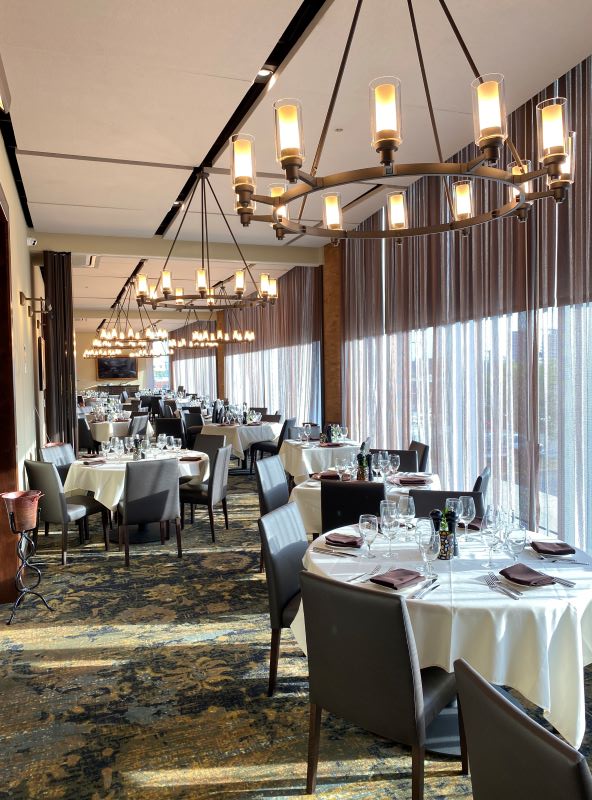
Additionally, F&F is expanding its capabilities by investing in workforce training and technology. The firm integrates project management software to streamline operations, ensuring real-time communication between teams and clients. “We leverage technology to improve efficiency and keep projects on schedule,” Freeman explains. “It’s all about providing value to our clients.”

“We leverage technology to improve efficiency and keep projects on schedule. It’s all about providing value to our clients.”

Looking forward, F&F is positioning itself for substantial growth in 2025. “Our goal is to push further into federal contracts, expand our presence in higher education construction, and explore opportunities in the freight sector,” Freeman states.

The firm’s success can be attributed to its streamlined management approach, which ensures quick decision-making and agile project execution. “Our management structure allows us to keep projects on track, delivering efficiency and quality,” Freeman explains.

The company is also exploring new markets, aiming to expand operations beyond Georgia. “We see opportunities in other states where minority and women-owned businesses can make an impact,” Freeman shares. “Expanding into new regions will help us grow sustainably.”

For Freeman, the journey has been both inspiring and fulfilling. “With six years behind us, I’m incredibly proud of what we’ve achieved,” she says. “By our tenth anniversary, I want F&F to be a force to reckon with—standing shoulder to shoulder with the biggest names in the industry.”

With a commitment to excellence, F&F General Construction is poised to leave a lasting impact on the construction landscape, proving that innovation and inclusion can drive industry transformation. By continuing to expand its reach, invest in its workforce, and prioritize client satisfaction, F&F is on track to redefine the industry for years to come.

Building a Legacy of Service and Safety

View in E-mag
View Brochure

In the fast-paced world of construction, where established giants often dominate, Dynamic Interiors has emerged as a formidable newcomer. Founded in December of 2023, this Massachusetts and Rhode Island-based company has quickly made its mark, specializing in drywall installation, metal and wood framing, and a range of interior finishing services. Despite its youth, Dynamic Interiors is proving that with a relentless focus on service, safety, and innovation, a new company can achieve extraordinary heights. As 2025 unfolds, Dynamic Interiors is poised for continued growth, driven by a commitment to quality and a vision to redefine the industry.
Dynamic Interiors was born from the vision of its founder and president, Jason Rocha, who saw an opportunity to fill a gap in the construction landscape of Massachusetts and Rhode Island. “There wasn’t really a niche for [drywall, metal, and wood framing],” explained Brianna Raposo, the company’s Marketing Specialist. “That’s what his aim was, to bring a bigger awareness to it and bring more people into the field.” Rocha’s goal was not just to build a business but to inspire a new generation to explore the endless opportunities in drywall and framing trades, which are often overlooked in high school and vocational programs.

Since its inception, Dynamic Interiors has focused primarily on multi-family housing, delivering services that include drywall installation, metal and wood framing for buildings like medical facilities and museums, acoustical ceiling tiles (ACT), and the installation of doorframes and hardware. “That’s been our strongest point as we’ve been going along in 2024 and 2025,” Brianna said. “We do ACT tiles, which are acoustical ceiling tiles, and we do a lot of doors, frames, and hardware if that’s what the scope entails.” This versatility has allowed the company to carve out a niche while building a reputation for reliability and precision.

In just two years, Dynamic Interiors has achieved remarkable milestones, including a prestigious recognition in November 2024: its first ABC Excellence in Construction Award. The award celebrated the company’s clean, efficient, and safe execution of a project, a testament to its high standards. “We are rated silver in the ABC Step Program, which means our safety is up to par in everything we do,” she noted. “We have our safety manager on site every day making sure that our team is complying with OSHA regulations and making sure everyone is being safe on the job site.” This commitment to safety is not just a checkbox—it’s a core value that permeates every project.

Among its high-profile projects, Dynamic Interiors has left its mark on Nantucket, working on both the Beachside Hotel and the Veranda House. These projects, which involved drywall installation, showcased the company’s willingness to go the extra mile. The Veranda House project was particularly significant, as it was one of the buildings affected by fires in the area. “We wanted to plant a flag in Nantucket showing that we’re very versatile going to those islands through the boat,” she explained. “It was one of those where not a lot of people were willing to go onto the island just because of all the extra steps that you had to take. We wanted to show people that we are willing to take that extra step to produce the work that we did.” This determination to tackle challenging logistics has set Dynamic Interiors apart as a company that delivers, no matter the obstacles.

For Brianna, the key to Dynamic Interiors’ rapid success is clear: an unwavering commitment to service. The company’s motto, “superior services, dynamic results,” is more than a tagline—it’s a guiding principle. “We pride ourselves on our service,” she said. “We provide extreme service to all of our customers and employees, and if a customer needs material out on the job site tomorrow, we will get it to them, no questions asked.” This customer-first approach ensures that clients can rely on Dynamic Interiors for timely deliveries and flexible pricing. “If they need a specific price, we will work with them with that price,” she added. “We just really pride ourselves on making the customer happy no matter what it takes.”

“If they need a specific price, we will work with them with that price. We pride ourselves on making the customer happy no matter what it takes.”

This dedication extends to the company’s employees, who are seen as the backbone of its success. Dynamic Interiors invests heavily in its team, ensuring they have the tools, training, and support needed to excel. “In order to grow our company, we need to invest in our people. We make sure all our guys are equipped with any piece of equipment that they need because in order for them to do their job, we need to be able to provide the stuff for them to do their job.” This includes comprehensive training programs, such as CPR, ladder safety, and boom and lift safety, reflecting the company’s prioritization of safety alongside service. “Safety is one of our number one [priorities] along with our service,” Brianna said. “We just had a CPR training service last weekend to get our guys comfortable on the field.”

Dynamic Interiors’ growth strategy also embraces modern tools, particularly social media, which has proven to be a powerful ally. “If you’re ever curious about anything that we do, basically everything we do is on those social media platforms,” Brianna explained. “We rely heavily on that free marketing through LinkedIn and Instagram; we don’t really do paid advertisements.” By showcasing their projects and culture online, the company has built a strong digital presence, attracting clients and talent alike. This approach has allowed Dynamic Interiors to amplify its reach without the need for costly marketing campaigns, proving that innovation extends beyond the job site.

Hiring the right people is another cornerstone of the company’s growth. “We’re investing in our team through training, leadership development, and just making sure we’re hiring the people that are qualified to do the job,” she said. By fostering a culture of empowerment and accountability, Dynamic Interiors ensures that its workforce is equipped to meet the demands of a rapidly evolving industry.
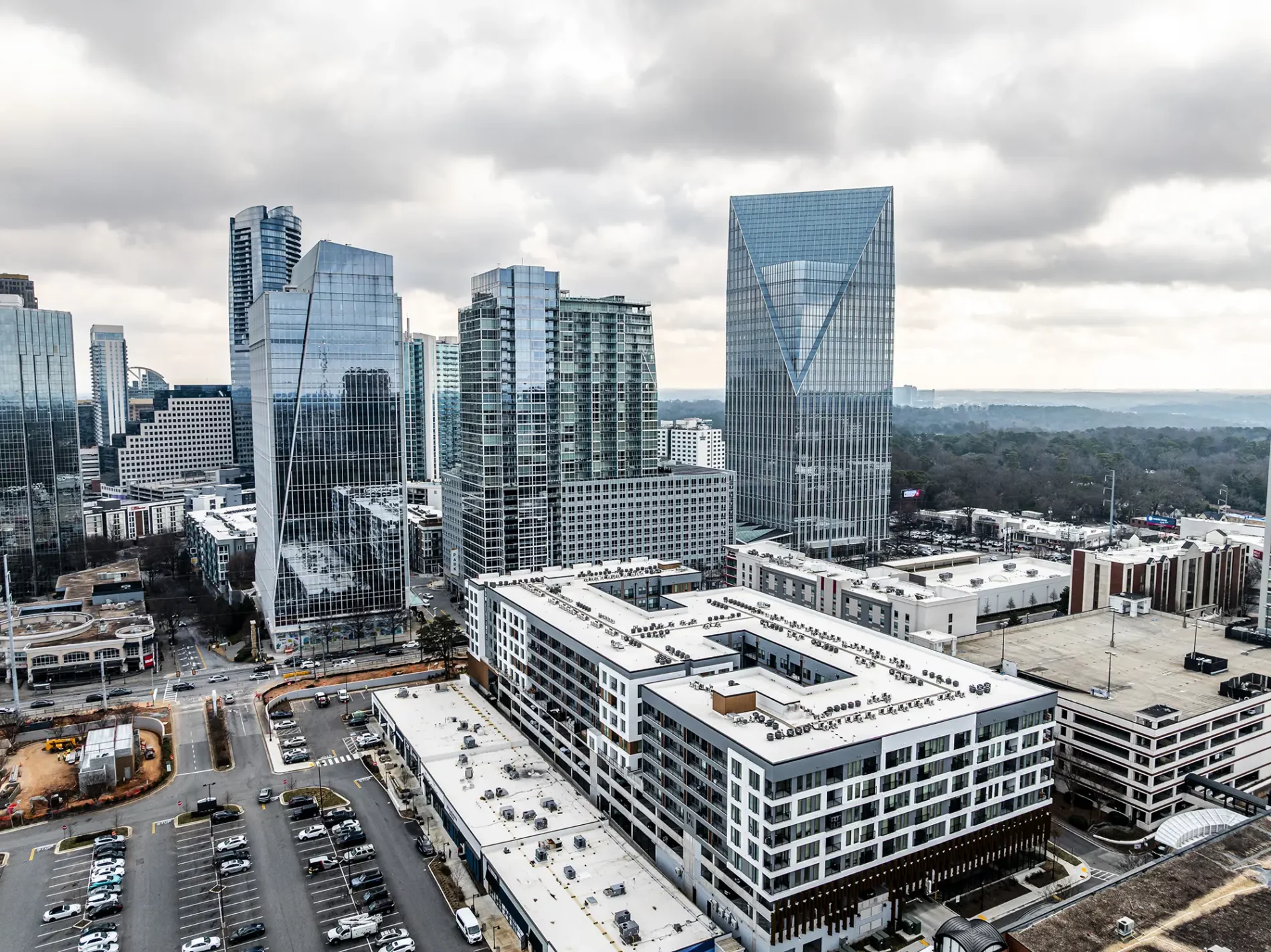
As Dynamic Interiors looks toward the rest of 2025, the outlook is “incredibly promising,” according to Brianna. The construction industry is rebounding and evolving, with consistent demand for high-quality drywall solutions in both commercial and residential sectors. “We’re seeing consistent demand for high-quality drywall solutions across both commercial and residential sectors, just like the multi-unit affordable housing that has been the top talk of 2025,” she noted. With an increase in project volume and a continued focus on customer satisfaction, the company is on track for a strong finish to the year.

To sustain this momentum, Dynamic Interiors is investing in responsible scaling. This includes expanding its team, enhancing training programs, and maintaining its commitment to safety and quality. “We’re expecting a strong finish to the year,” Brianna said, highlighting the company’s strategic approach to growth. By focusing on multi-family housing and other high-demand sectors, Dynamic Interiors is positioning itself as a leader in the region’s construction landscape.

In just two years, Dynamic Interiors has transformed from a startup with a bold vision to a recognized name in the industry, earning awards and tackling challenging projects with ease. Its commitment to service, safety, and innovation has set it apart, proving that a new company can make a lasting impact. As Brianna put it, “We always try to service [our customers] no matter what—if they need that material, they’ll get that material tomorrow.” With a bright future ahead, Dynamic Interiors is not just building interiors; it’s building a legacy of excellence that will shape Massachusetts and Rhode Island for years to come.

Redefining Construction with Quality and Vision

View in E-mag
View Brochure

In an industry where only 11.2% of workers in 2024 were women—a 45% increase from 2015 but still a stark reminder of its male-dominated roots—CMP Exterior LLC stands as a trailblazer. Founded in 2017 by Christine Pandolfi, this majority-female-owned company is not just building exterior building skins for commercial projects: it’s reshaping the construction landscape with a commitment to quality, innovation, and inclusivity. As CMP Exterior LLC looks toward a robust 2025, its journey from a small startup to a trusted name in the industry reflects the power of vision, strategic growth, and a dedication to excellence.

Christine Pandolfi’s path to founding CMP Exterior LLC was anything but traditional. With a college degree in design and 25 years of experience in the design industry, she brought a fresh perspective to the world of construction. Her career took a pivotal turn during a home renovation project that drew the attention of a client who owned a construction company. “He liked my work ethic,” Christine recalled. That client soon became her business partner, and together they set out to build something extraordinary.
“We worked out the details of what we would do, and our goal was to bring that unique focus on design and quality that can get lost in the commercial market,” Christine explained. “Our projects are beautiful, and we’re really quality-driven.” This ethos became the cornerstone of CMP Exterior LLC, a company specializing in installing exterior building skins—fiber cement, vinyl PVC, and specialty phenolic products like high-pressure laminate (HPL)—for large-scale commercial projects such as senior living facilities, multifamily residences, mixed-use developments, and retail spaces.

Since its inception, CMP Exterior has focused on “smart growth,” a strategy guided by Christine’s partners, whom she describes as “dynamos in the construction industry.” “We didn’t want to just jump in and not be able to manage our growth—things get messy, and the quality gets lost,” she said. By starting small and prioritizing manageable projects, the company ensured that its commitment to service and quality remained unwavering. “We are a small company that operates like a large company; from submittals to installation, our work is on point.”

CMP Exterior’s work centers on the exterior envelope of buildings, encompassing everything outside the sheathing package. “We focus on everything outside of the sheathing package, often including the weather barrier, the insulation, and the final exposed finished on the building,” Christine explained. This expertise allows the company to deliver durable, aesthetically pleasing solutions that withstand the elements while meeting the specific visions of architects and clients.

The company’s portfolio is marked by high-profile projects that showcase its ability to transform communities. One standout is the Steelpoint Harbor waterfront development in Bridgeport, Connecticut, which Christine described as “our largest project to date.” Spanning 632,000 square feet, the development is the final phase of a long-term effort to breathe new life into a once-overlooked area along the I-95 corridor. “Bridgeport has faced its share of challenges,” Christine noted. “There’s a beautiful waterfront there, and this project is the last piece of its transformation. I think it’s an important part of Bridgeport history, and we really wanted to be part of it because it brings so much positive change to the area.”

Another significant project is the Poet Hill Residences in Worcester, Massachusetts, a 370,000-square-foot development in an up-and-coming community just off the 290 corridor. As Boston’s housing costs drive residents to more affordable towns, Worcester has become a magnet for growth. The project, however, was no small feat. “It was a unique challenge because of the weather,” Christine said. “Combine the weather with the site’s location on top of a mountain and we worked all winter there, and New England winters are historically rough.” Despite these challenges, CMP Exterior delivered a “pristine-looking, crisp and clean New England building” with the help of strong trade partners, cementing its reputation for quality under pressure.

As a women-owned business in a field where women remain underrepresented, CMP Exterior LLC is a powerful force for change. “I think that women in construction have been certainly underrepresented for many, many years, and I think that is really changing,” Christine said. Her 30 years in the industry have given her a front-row seat to this evolution. “I used to be the only woman,” she reflected. “There are so many more women that I see joining the industry; it’s really amazing.”

Christine’s leadership brings a unique perspective to CMP Exterior. “I believe women have an incredible eye for detail, something that’s especially valuable in our line of work,” she said. “Given the aesthetic nature of the products we install, that attention to detail is essential and truly sets us apart,” she said. “Women can really write their own ticket in the construction industry if they have an interest.” As the owner, Christine shapes the company’s direction with a focus on quality and innovation. “I get to drive its growth, and I lead with a more unique perspective and experience than men, so that part’s probably been one of the best parts of this,” she added.

Challenges persist in a male-dominated field, but Christine sees them as opportunities. “I think that we definitely have made an impact, and I certainly feel like that’s going to continue to have an even greater impact as more women learn the trades, and are managing these projects,” she said. “We’re willing to learn and focus on our knowledge, and I think we’re going to bring that right back to the field, and it’s going to show up in large ways in these buildings.”

As CMP Exterior LLC heads into 2025, the company is poised for a banner year. “We really implemented our strategic plan,” Christine said. “It goes back to being a small company and strategically thinking like a big company.” With projects like Poet Hill and the Choate School—a “beautiful building” in progress—the company is riding a wave of success. “This has just been a great year,” Christine noted. “We were concerned, obviously, with the uncertainty of the market and what might happen, but we’ve been very lucky to have landed some great jobs.”

Looking ahead, CMP Exterior is targeting 20 to 25% growth over the next three years, with projects already booked into 2026 and 2027. “We’ve been very, very lucky with what we’ve been able to nail down for projects, and financially I think it’s going to serve us well,” Christine said. The company’s reputation as a “trusted go-to contractor” is built on lasting partnerships and a relentless focus on quality. “We’re of the mindset that relationships are everything, and we work as a team,” she explained. “I think that quality has set us apart from our competitors, and I think we’re going to continue to do great things based on our business model.”
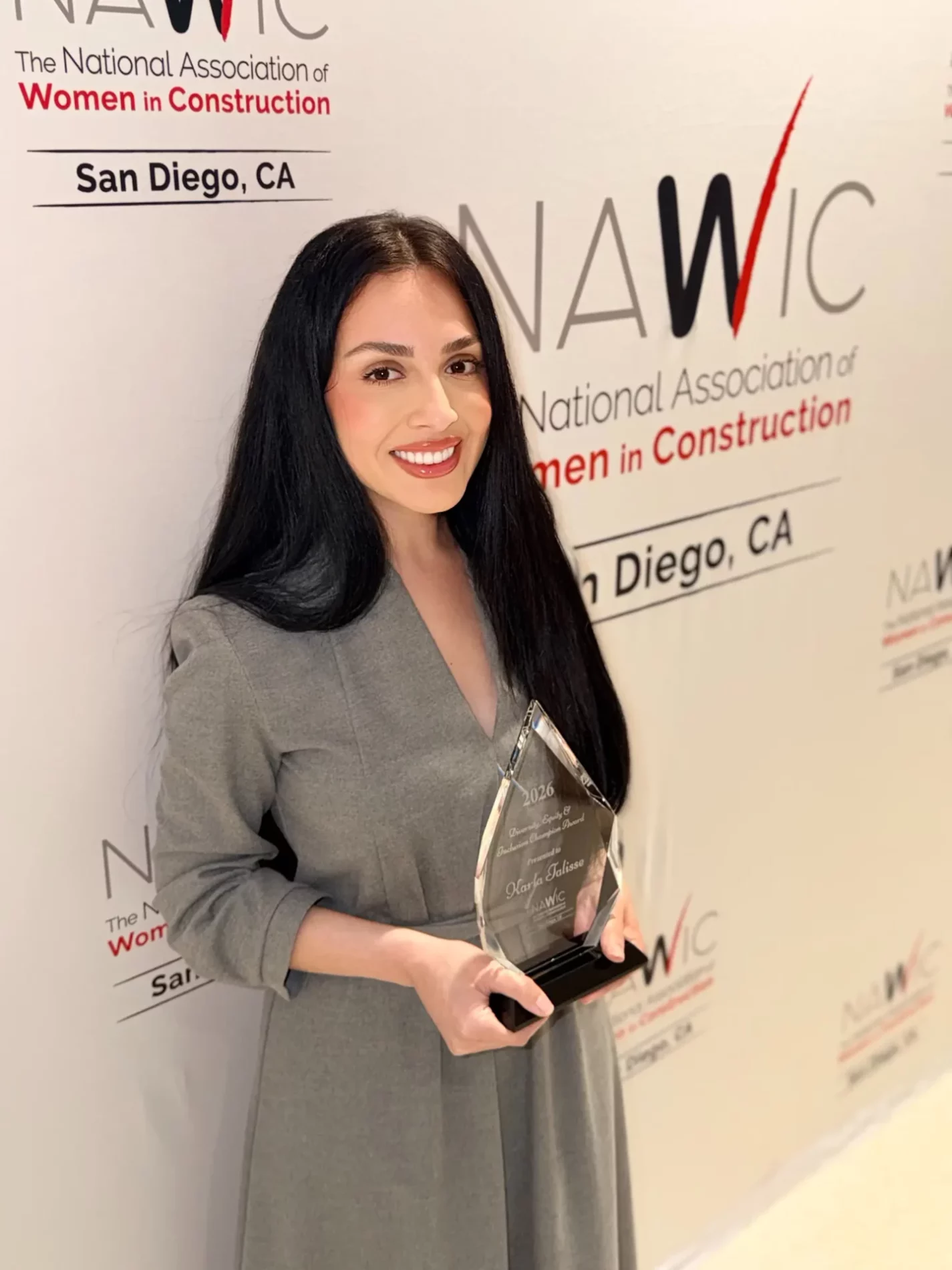

“I think that quality has set us apart from our competitors, and I think we’re going to continue to do great things based on our business model.”

In just eight years, CMP Exterior LLC has become a household name in the construction industry, proving that quality, vision, and inclusivity can redefine what’s possible. As Christine leads her team into the future, she remains grateful for the journey and optimistic about what lies ahead. “We’re already trying to book work into 2026 and 2027,” she said, promising “great things” by 2028. With a foundation built on excellence and a commitment to breaking barriers, CMP Exterior LLC is not just constructing buildings—it’s building a legacy.
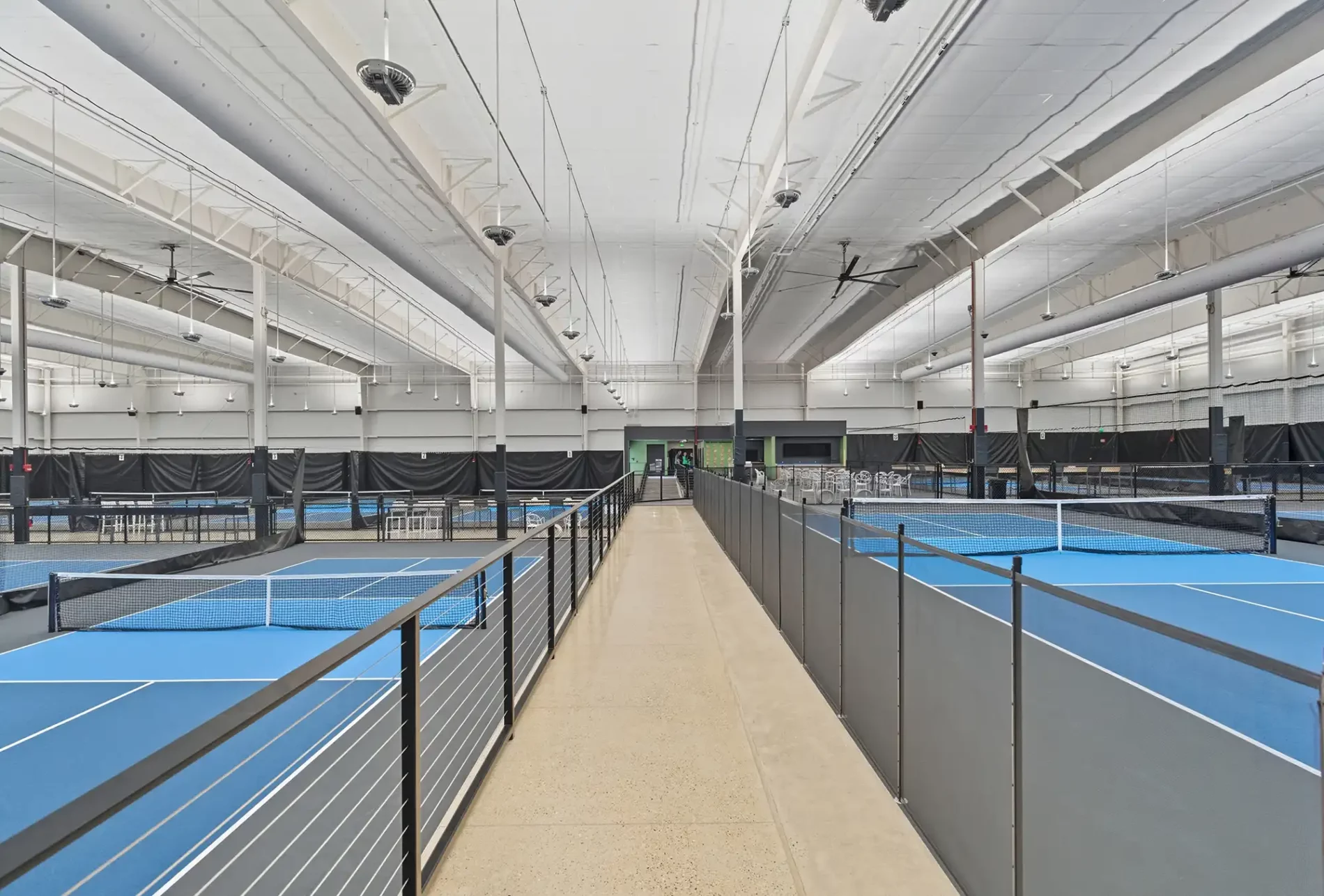
More Stories

A Third Generation Prepares to Expand Water-Utility E...
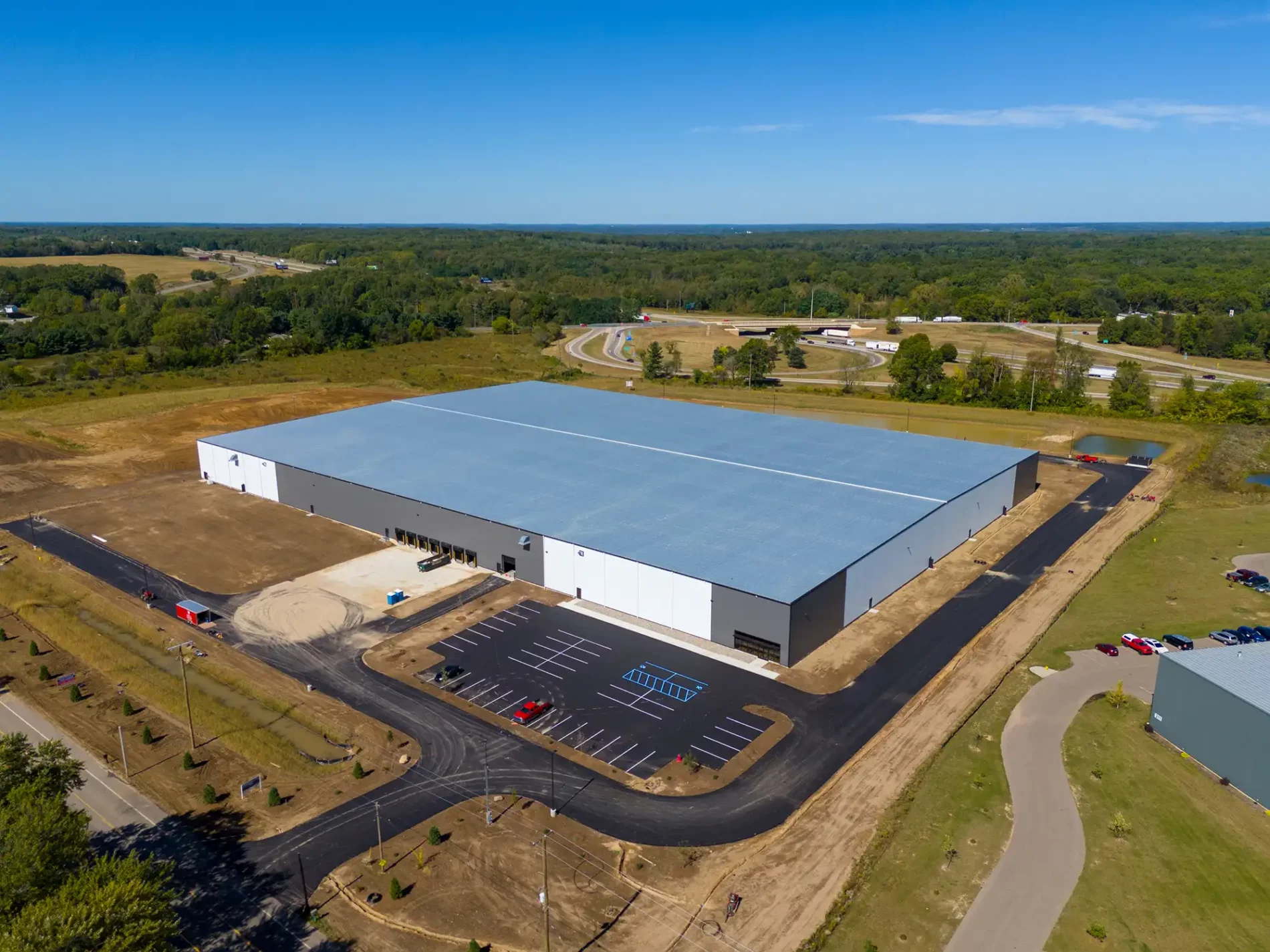
Dunigan Bros. — By Elizabeth Howell

Safe drinking water remains one of the most urgent infrastructure needs across the United States, and for the Dunigan family, meeting that need has (…)

Lean & Local in New Hampshire

Weaver Brothers Construction — By Aoife Chaney

In the early 1950s, not long after Weaver Brothers Construction (WBCC) was incorporated, the Interstate Highway Era began in the State of New Hampshire. (…)

Building on 76 Years: How Gordon Barr Limited Balance...

Gordon Barr Limited — By Emma Kilcawley Hemani

For more than three-quarters of a century, Gordon Barr Limited has been a cornerstone of Kingston’s construction landscape. Founded in 1949 by Gordon Barr (…)

Building Bridges, Expanding Horizons

Clearwater Structures — By Emma Kilcawley Hemani

For twenty years, Clearwater Structures Inc. has stood at the forefront of Canada’s heavy civil construction industry—building, repairing, and reimagining the country’s bridges and infrastructure. From (…)

Expertise with a Collaborative Spirit

Freyssinet Inc. — By Elizabeth Howell

Freyssinet Inc. is celebrating its 30th anniversary this year, marking three decades of work that spans bridges, stadiums, and some of the most complex (…)

Built on Hard Work and Family Values

R&D Paving — By Emma Kilcawley Hemani

In 1990, Richard and Donald DuBreuil left their jobs as superintendents at Pike Industries and set out to build something of their own. They (…)

Built From the Ground Up

Western Earthworks — By Emma Kilcawley Hemani

When Jack Henderson-Adams started Western Earthworks, he had $200 to his name and a vision shaped more by grit than by a safety net. (…)

Family Values, Civil Excellence, and a Vision for the...

Williams Fence and Excavating — By Emma Kilcawley Hemani

For many people, the dream job is one that doesn’t feel like work. At Williams Fence and Excavating, that vision is reality. What began (…)

Getting the Job Done

Branch Civil — By Emma Kilcawley Hemani

For over 62 years, Branch has believed in its people – and it’s the cornerstone of the company’s success. “It’s always been that way,” (…)