

Architectural System Fabricators produces custom panels and metal components for contractors working across the construction industry. Founded in 2019, ASF began when Adam Tokarzewski recognized that machinery purchased for his construction business could serve a wider market. The company started with bending work for outside contractors and developed into a fabrication shop serving roofers, glazing firms, siding contractors, masons and others across the construction metal market. Its work now ranges from individual replacement components to larger architectural fabrication packages.
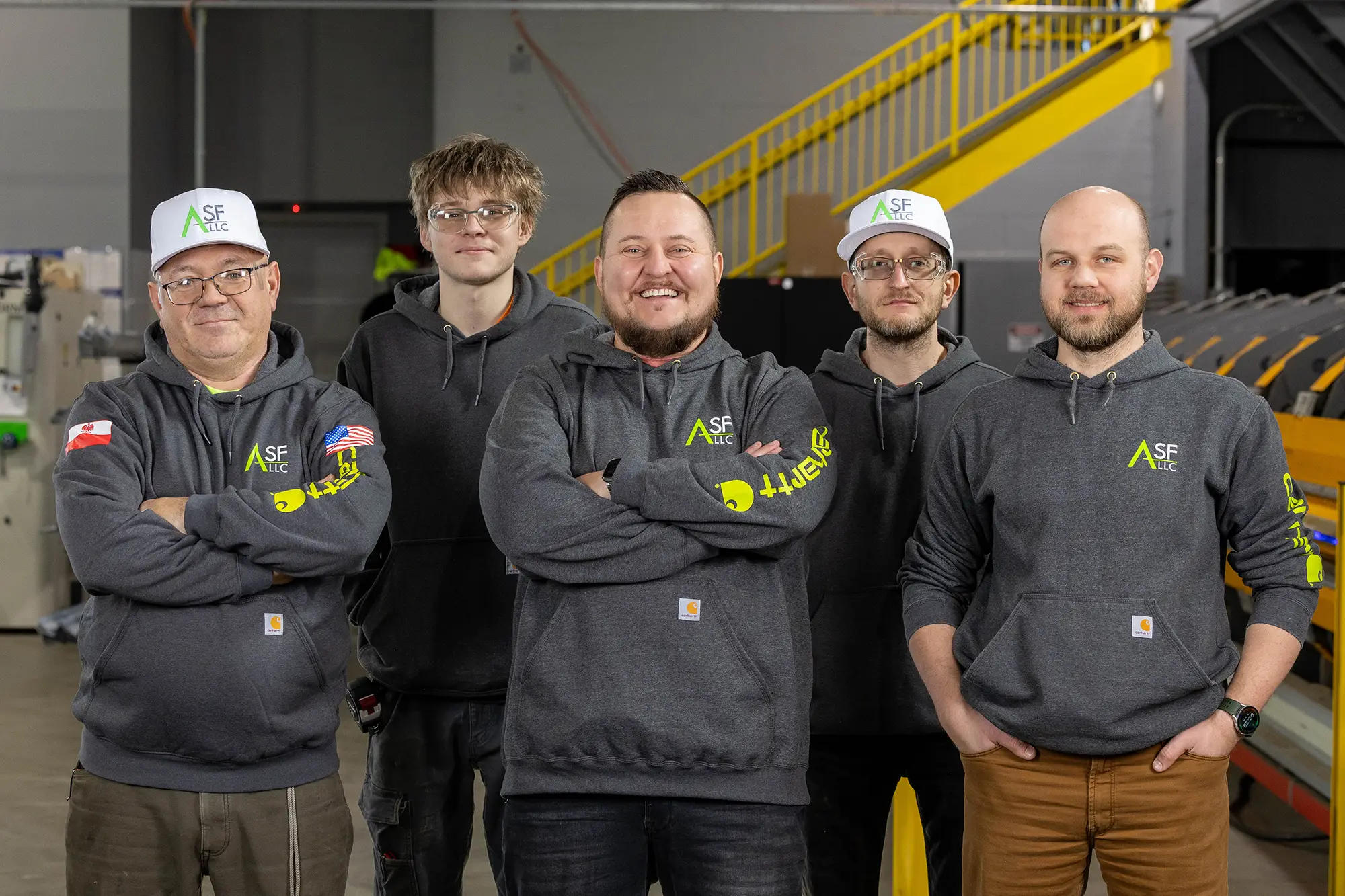
Building that customer base required changes within the shop. Tokarzewski says the early years prompted him to reassess ASF’s staffing and operating model, with a focus on serving contractors with different fabrication needs.
That experience reinforced a lesson Tokarzewski says has shaped ASF ever since: growth depends on controlling the parts of the process that matter most. For a fabricator, that means accuracy, speed and access to machinery suited to the components customers need. He sees investment in equipment as central to that approach. “That’s why we have very sophisticated equipment.”
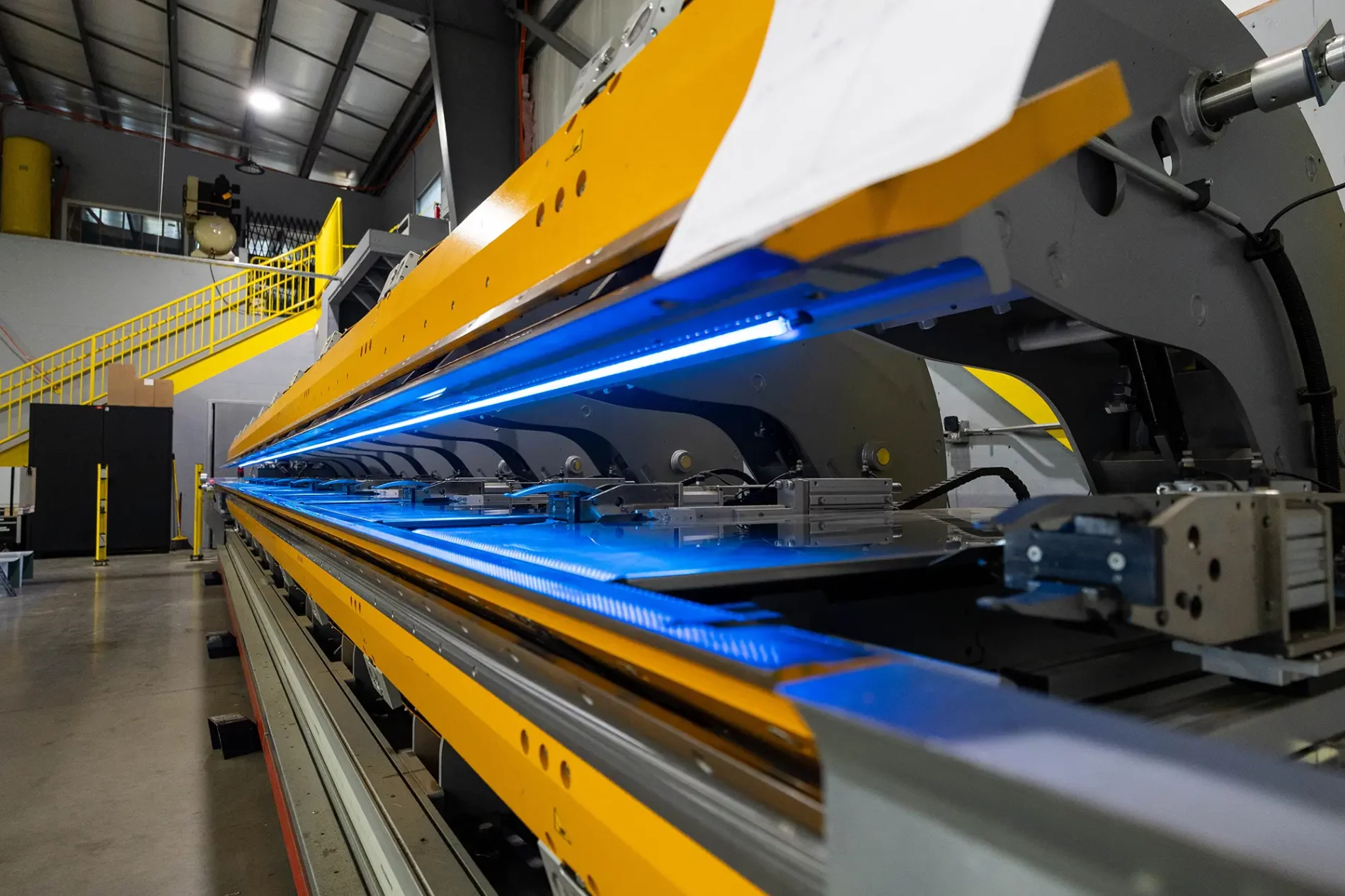
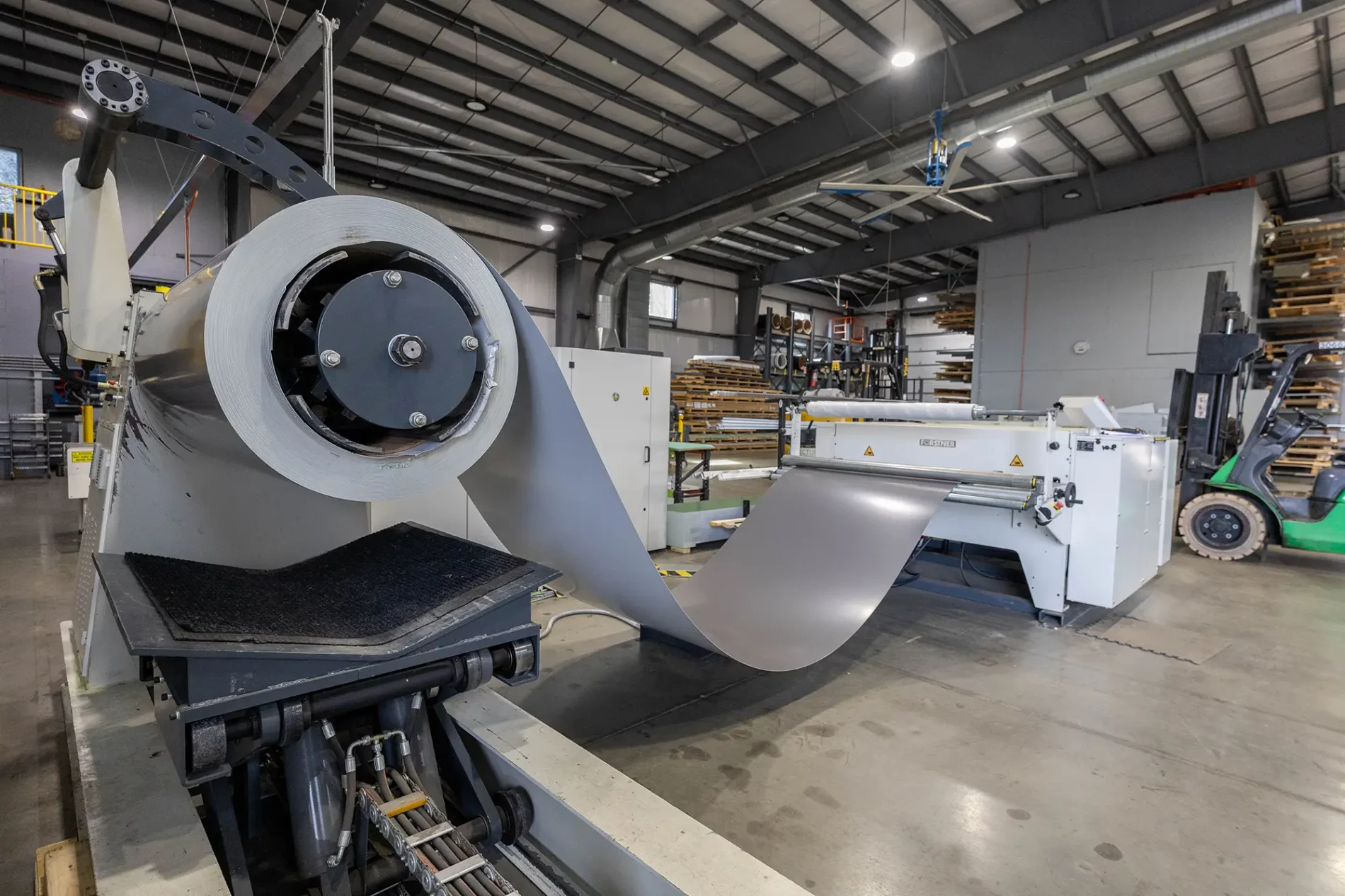
ASF’s capabilities now include CNC routing, laser cutting, shearing, punching, welding and fabrication of ACM, HPL and fiber-cement panels, along with other architectural metal components. Its long-form bending and in-house coil processing give the company flexibility over component dimensions. Tokarzewski says that capability grew from a sourcing problem he encountered: standard sheet sizes could make longer pieces difficult to obtain or require multiple sections and seams. Bringing more of that work into the shop gave ASF another way to respond to customers’ requirements.
Coil processing became another important piece of the strategy. Instead of relying entirely on palletized sheets, ASF began buying coil stock that could be cut to the length required for a specific application. Tokarzewski says the change helped reduce material costs and improve the company’s competitiveness. “The last piece of the puzzle was being able to process coils,” he said.
The technical advantage was not limited to cost. Producing longer components as single pieces meant fewer seams, an attribute customers appreciated in applications where additional joints could create potential weak points or complicate installation.
Tokarzewski says ASF also found a niche as an emergency fabricator. When a contractor needed to replace a damaged or incorrectly installed panel, the company could produce a single component rather than requiring a large production run. That ability to move between small repair work and substantial fabrication packages has become part of the appeal. “People saw a one-stop shop at ASF where they can get a little bit of everything or a whole bunch of everything, and we started seeing repetitive business,” Tokarzewski said.
Capacity has expanded accordingly. According to Tokarzewski, ASF grew from one fabricator working part-time to three full-time fabricators working across two shifts, supported by an in-house drafter and operations manager.
Technology has played an equally important role in increasing throughput. One of the more consequential investments was a laser cutter introduced to replace processes that had previously required significant manual work. “We used to do a lot of manual labor, and certain types of products you would have to cut with scissors and shears,” Tokarzewski said. “It just didn’t make any sense.”
Tokarzewski says the laser system has helped reduce the manual work involved in producing certain components. A press brake has added further forming capacity, while the company says turnaround times depend on the scope, materials and complexity of each job. Tokarzewski says ASF supplies contractors with attachment systems, panels and custom metal components, drawing on those capabilities to handle a range of fabrication requirements.
Tokarzewski points to several projects as examples of that broader customer base. He says ASF supplied ACM panels for Connecticut Children’s Hospital in Hartford, a decorative fence for the Connecticut Science Center and soffit panels for Norwalk High School. The company also cut cement panels for Southington Public Library, he says.
Each assignment draws on the same core proposition: turn measurements and design requirements into precisely fabricated components that can arrive ready for installation. Tokarzewski believes remaining competitive will require continued investment. “We’re not afraid to invest money,” he said. “I am a firm believer that you have to stay on top of technology and equipment for fabrication.”
“We’re not afraid to invest money. I am a firm believer that you have to stay on top of technology and equipment for fabrication.”
Tokarzewski says ASF is pursuing additional machinery to expand its fabrication capabilities. His longer-term goal is to develop engineered and tested systems for the siding industry and other markets, building on the company’s custom fabrication work. “My goal is always to stay a few steps ahead of the competition by simply investing in equipment,” Tokarzewski said. “My guys are very capable; we can learn, we’re not afraid to work, but you need the proper tools to perform the job.”
Market access has also changed. ASF reports a move into union work, which Tokarzewski says has opened opportunities on projects with specific labor requirements, including those governed by project labor agreements. The company continues to serve private clients.
The next stage is intended to make ordering easier as well as fabrication faster. Tokarzewski is planning an online store that would allow customers to request standard parts through a more automated process. “Launching an online store is my next goal,” he said. The proposed store would support his aim of simplifying the steps from an inquiry through fabrication and shipment.
For all the machinery behind ASF, Tokarzewski still sees accessibility as an important differentiator. He describes a business where customers can call with anything from a one-off replacement component to a substantial package and expect someone to engage with the problem. “I don’t sell bad services or bad products. I sell solutions,” he said. That approach has shaped the shop’s development: demand for longer components led to coil processing and long-form fabrication, while labor-intensive cutting prompted investment in laser technology. Each step expanded the ways ASF could respond to a customer’s fabrication needs.
Since its founding in 2019, ASF has continued to develop by identifying the next constraint and trying to remove it. The machines may be increasingly sophisticated, but the business logic remains straightforward: make the part accurately, make it quickly and make it easier for the contractor waiting on the other side.